Small groups of leek seedlings make useful kitchen clumps. This method saves nursery space and suits manageable leeks lifted as needed. Choose for your harvest season, keep roots together at planting and allow more room between clumps than between individual plants.
Sow small groups
Keep rootballs intact
Sunny beds
Useful smaller leeks
Season depends on variety
| Botanical name | Allium porrum |
| Family | Amaryllidaceae |
| Crop | Edible leaf bases and leaves |
| Method | Several seedlings per module |
| Main sowing | March to April |
| Optional early start | February under cover |
| Seeds per cell | About 4 to 6 |
| Final plants per clump | Aim for 3 to 4 |
| Sowing depth | About 1 to 1.5cm |
| Planting out | Usually May to June |
| Later transplanting | July if variety and growth allow |
| Clump spacing | About 30cm each way |
| Position | Full sun |
| Soil | Fertile, moist and well drained |
| Root handling | Keep each clump intact |
| Expected size | Generally smaller than widely spaced singles |
| Harvest | Late summer to spring, by variety |
| Winter crop | Choose hardy winter varieties |
| Pruning | No routine leaf clipping |
| Storage | Usually lifted fresh as needed |
| Plant name | Crop type | Spacing |
Sow indoors
Plant outdoors
Harvest
Polytunnel | |||||||||||
|---|---|---|---|---|---|---|---|---|---|---|---|---|---|---|
| Jan | Feb | Mar | Apr | May | Jun | Jul | Aug | Sep | Oct | Nov | Dec | |||
| Leek (Multi sown) | Alliums | About 30cm between clumps | Harvest | Sow indoors, Harvest, Polytunnel | Sow indoors, Harvest, Polytunnel | Sow indoors, Harvest, Polytunnel | Plant outdoors | Plant outdoors | Plant outdoors | Harvest | Harvest | Harvest | Harvest | Harvest |
Sow indoors: February, March, April. Plant outdoors: May, June, July. Harvest: January, February, March, April, August, September, October, November, December. Polytunnel: February, March, April.
February is an optional protected start; March and April are the main sowing months used here. Plant clumps when rooted and ready, commonly May to July. The harvest band combines early and hardy late varieties across two calendar years. It does not mean one variety crops continuously. Polytunnel months describe propagation only.
Clumps suit households that value several manageable leeks over one exceptionally thick specimen. They reduce individual planting jobs. Start with a trial alongside single plants to compare results.
The trade off is competition within each group. Too many seedlings can leave thin stems, particularly on dry or poor ground. Long white shanks are also less straightforward than with traditional deep planting of individual leeks. Choose the method that matches your cooking.
Photo: Karen and Brad Emerson, CC BY 2.0. Resized and optimised; cropped for display.
Use a sunny vegetable bed with enough room for the crop to stand into autumn or winter. Avoid placing young clumps beside vigorous plants that will shade them before they establish.
Prepare fertile soil with mature compost, keeping its structure open enough for water to drain. Leeks occupy the ground for months, so remove persistent weeds before planting rather than trying to extract them from established clumps.
Start around 30cm between clump centres in both directions. Reduce the final number of plants if larger leeks matter to you. Do not squeeze four plants into the normal space intended for one.
A deep container can carry a small trial with regular watering. In a pot around 40cm wide, one modest clump is more realistic than a densely planted miniature bed.
Photo: Maurice Pullin, CC BY-SA 2.0. Resized and optimised; cropped for display. Maurice Pullin
Raise a deliberate group of seedlings, then move its rooted compost plug into the final bed. This differs from separating individual leeks and lowering them into deep holes.
1.
Choose an early, winter or late variety for the season you want. Hardy winter leeks are the appropriate choice if the crop must remain outdoors through cold weather.
2.
Fill clean modules with moist peat free seed compost. Use cells with enough depth for steady root growth and clear drainage holes. Label the variety and date.
3.
Sow about four to six seeds per cell, around 1 to 1.5cm deep or as the packet directs. Aim to finish with three or four strong plants per clump.
4.
Keep seedlings well lit and evenly moist. Remove surplus seedlings early if germination is particularly strong. A thin crop needs better growing conditions, not extra seedlings packed around it.
5.
Move clumps into larger modules if they outgrow their cells before the bed is available. Do not let a planned follow on crop leave them starved in tiny plugs.
6.
Acclimatise sheltered plants to outdoor conditions. Water the tray before planting and prepare holes about 30cm apart, wide enough to receive each rootball without forcing it.
7.
Set each clump at roughly its nursery depth, firm gently and water in. Keep the roots together. Do not trim them or try to push a complete plug into a narrow deep hole.
8.
Inspect new plantings during dry weather. Hand weed nearby and fit appropriate insect mesh where local allium pests require protection. Keep the cover clear of growing foliage.

Watering
Young clumps need reliable moisture while roots establish. Check beneath the surface rather than relying on a light shower. Water the soil so the whole rootball and surrounding ground become moist.
Established bed grown leeks need most help during prolonged dry spells. Containers dry faster. Avoid alternating severe drought with heavy soaking, and keep water moving away from the roots during wet weather.

Feeding
Improve the bed before planting with mature compost. A long growing crop benefits from a sound start rather than repeated emergency feeding after its leaves have weakened.
If growth is poor, inspect moisture, weeds and roots before reaching for fertiliser. Use an appropriate feed only where needed, following its label. Excess nitrogen can encourage soft growth and worsen rust problems.

Pruning
Leave healthy leaves intact. There is no need for routine clipping to make the plants thicken. Remove competing weeds carefully without slicing through the crowded bases.
For longer pale bases, soil can be drawn around growing stems, but keep it out of leaf joints. This is harder within a clump. Accepting shorter white shanks is often simpler than forcing this method to imitate deep planted singles.

Winter care
Leave suitable hardy varieties in well drained ground and take what you need. Lift less hardy early varieties first. Before a hard freeze, harvest enough for immediate cooking while the soil remains workable.
Check covers after storms and prevent puddles collecting around roots. Winter growth is slow, so late planting cannot be expected to catch up quickly. Use spring approaching crops before flower stalks make their centres tough.
Leeks have flat leaves arranged in fans rather than the hollow tubes of bulb onions. Their edible pale shank consists of overlapping leaf bases. Each plant in a multisown clump remains a separate leek.
The photographs illustrate leeks and conventional cultivation as well as harvests. Individual plants in deep holes show an alternative method, not a requirement for intact clumps. Multisown groups are planted with their roots undisturbed.
Photo: Netha Hussain, CC BY-SA 4.0. Resized and optimised; cropped for display. Adapted image under the same licence.
Sowing under cover can help where spring ground remains cold, but give seedlings strong light and ventilation. In milder areas, the main spring sowing usually provides ample time for an autumn or winter crop.
For exposed northern plots, prioritise a hardy winter variety and timely establishment. Clumping is a space management choice; it does not add frost tolerance to a variety bred for an earlier season.
Lift the largest outside leek first when practical, loosening its roots with a fork and supporting its neighbours. In firm soil, lift a complete clump instead of wrenching stems apart. Wash carefully between leaf layers before cooking.
Photo: Schlaghecken Josef, CC BY-SA 4.0. Resized and optimised; cropped for display. Adapted image under the same licence.
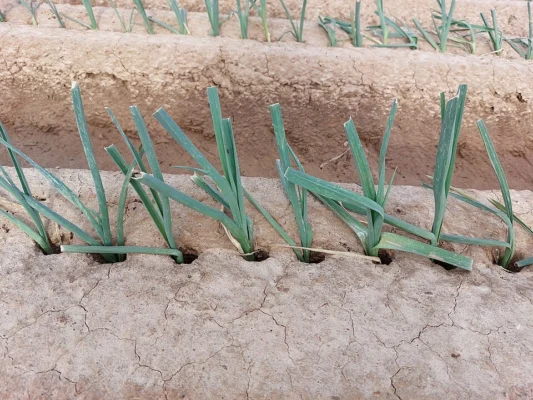
Review plant count, spacing, soil moisture and planting date. Overcrowding cannot be corrected simply with extra feed. Harvest some small leeks to ease competition and retain fewer plants per group next season.
Raised orange pustules suggest leek rust. Keep airflow open, avoid excessive nitrogen and remove badly affected debris. Choose varieties with useful resistance where rust repeatedly limits the crop.
Allium leaf miner or leek moth may be responsible. Inspect the damage before deciding which pest is present. Suitable insect mesh and careful crop placement help protect subsequent plantings.
Check drainage and look for white rot signs such as white fungal growth with small black resting bodies. Avoid spreading contaminated soil. Ordinary short rotation will not eliminate established white rot.
Harvest the affected leek promptly before its centre becomes woody. Remove the stalk if noticed early, but do not assume the plant will return to normal long term cropping.
Sow fresh seed for each planned crop. A clump is created by grouping separate seedlings, not by dividing a mature supermarket leek. Record the number retained in each cell so your spacing decisions remain consistent.
Seed saving is a separate second year project. Keep healthy plants from an appropriate open pollinated variety and account for crossing with other flowering leeks. Seed from an F1 variety will not reliably reproduce its parents.
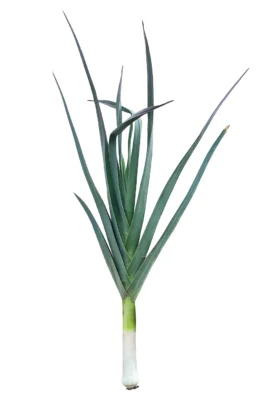
Choose the shank you will use
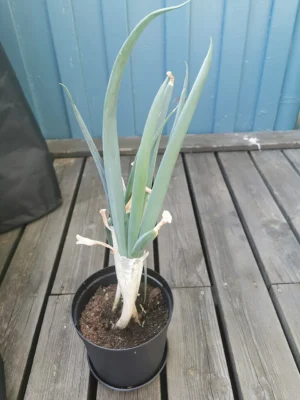
The pale base shown is a typical leek structure. Multisown plants may have shorter pale sections than deeply planted singles. This photograph does not identify a cultivar.
Photo: Amada44, CC BY-SA 4.0. Resized and optimised; cropped for display. Adapted image under the same licence.
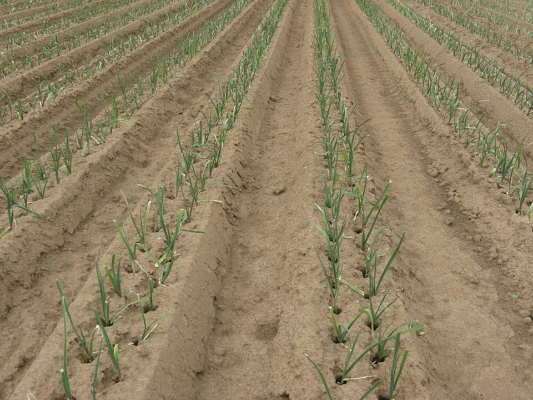
Plan the growing space
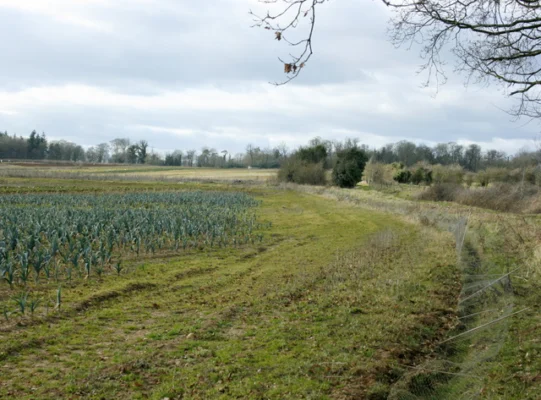
Field rows illustrate how much foliage a mature crop carries. Small clumps still need light and access. The pictured planting is not evidence of a particular multisowing technique.
Photo: Schlaghecken Josef, CC BY-SA 4.0. Resized and optimised; cropped for display. Adapted image under the same licence.
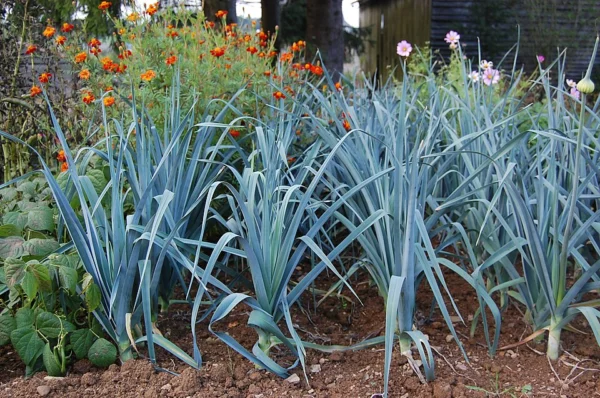
Select for the harvest season
Hardy winter cultivars suit standing crops, while early leeks supply late summer meals. The mature garden leeks pictured are illustrative, with no confirmed variety.
Photo: Lucyin, CC BY-SA 4.0. Resized and optimised; cropped for display. Adapted image under the same licence.
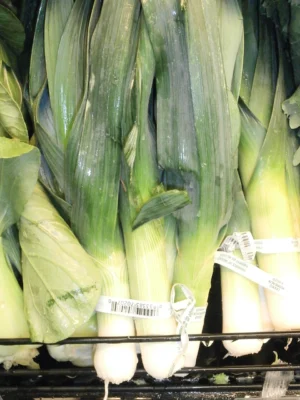
Harvest useful sizes
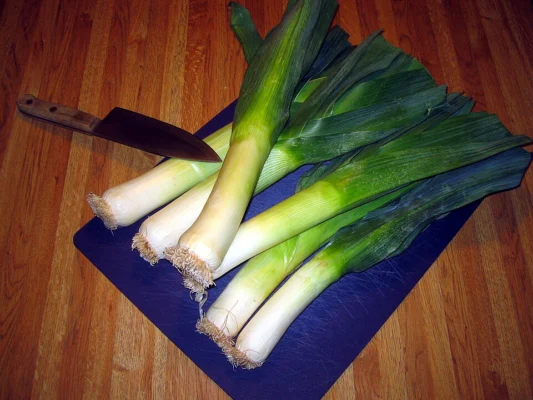
A bundle of medium leeks can be more convenient than a few giant stems. Choose your plant count around the harvest you want. The photographed bundles are not a confirmed cultivar.
Photo: Jeffery Martin, CC0. Resized and optimised; cropped for display.
Compare a few clumps with single planted leeks. Note planting dates, stem size and how easily you harvest them, then use those results to plan next season.
Leeks grown for eating do not need to flower. Insect mesh can protect the crop without preventing production of the edible shanks, provided it has room and does not trap wildlife.
A few healthy plants left to flower can attract visiting insects the following year. Treat these as a separate flowering patch, since developing seed stalks make the eating crop less tender.
Aim for three or four healthy seedlings as a practical starting point. Fewer give each plant more room; more tend to produce thinner leeks. Soil and watering also affect the result.
No. Keep the rooted group together and plant the whole plug. Separating seedlings is a valid alternative method, but it is no longer a clump planting.
Plant intact clumps near their nursery depth. Traditional narrow deep holes are intended for individual leeks. Do not crush a plug or bury leaves to copy that technique.
Often, by loosening an outside plant and supporting the others. Use a fork in firm soil. Lift the whole group if individual removal would damage neighbouring stems.
A suitable hardy winter variety can stand outdoors in well drained soil. The planting method does not change a variety's hardiness, so harvest less hardy early types first.
Yes. Tender smaller leeks are useful whole or sliced. Harvest size is a kitchen choice, not simply a measure of success. Avoid leaving them until a flower stalk becomes tough.
Give small leek clumps enough room, choose the right harvest season and lift gently. The aim is a dependable supply of useful leeks rather than the largest possible individual stem.
Want to get food independence, support your local grower, get better prices and shop more privately?
Local food isn’t just something you find. It’s something you protect. A free account helps keep local supply visible, supported, and resilient.

….it takes 30 seconds for food lovers and 5 minutes for suppliers
We built this for people who care where their food comes from. For people who want to remain food secure. For Farmers to get to the local people, who deserve a better income and to deliver a better price for you. For the environmentally conscious and the privacy-conscious. An account simply helps us make the map and supplier reach more useful to you, without changing how open it is. You’re always in control.


Find local food. Stay connected to it. Create a free account to support local producers and be part of a growing food network.


