True lilies, Lilium, rise from bulbs to carry striking summer flowers. Some are compact enough for pots, while others become tall border plants with scented trumpets or recurved petals. Choose the type before choosing the compost and planting depth. Good drainage, steady moisture during growth and healthy leaves after flowering give the bulb a better chance of returning well. All parts are highly dangerous to cats, so consider that before bringing lilies into a home or garden.
True lilies in the genus Lilium
Summer flowers from bulbs
Match soil to the lily type
Keep leaves after flowering
Highly toxic to cats
| Botanical genus | Lilium |
| Family | Liliaceae |
| Plant type | Bulbous perennial |
| Not the same as | Daylily, calla lily or lily of the valley |
| Main flowering | Summer, with timing varying by type |
| Flower forms | Trumpets, bowls and recurved forms |
| Common groups | Asiatic, Oriental and trumpet hybrids |
| Height | About 40cm to over 2m depending on selection |
| Fragrance | Strong in some groups, absent in others |
| Position | Sun or suitable partial shade |
| Root conditions | Cool, moist and well drained |
| Soil reaction | Depends on species and hybrid group |
| Planting seasons | Autumn or spring when bulbs are available |
| Storage | Plant promptly; do not let bulbs dry out |
| Planting depth | Depends on rooting type and species |
| Working spacing | About 15cm or several bulb widths |
| Support | Tall stems may need staking |
| Deadheading | Remove spent flowers while keeping leaves |
| Propagation | Offsets, scales or suitable seed |
| Cat safety | All parts including pollen are hazardous |
| Plant name | Crop type | Spacing |
Sow indoors
Plant outdoors
Harvest
Polytunnel | |||||||||||
|---|---|---|---|---|---|---|---|---|---|---|---|---|---|---|
| Jan | Feb | Mar | Apr | May | Jun | Jul | Aug | Sep | Oct | Nov | Dec | |||
| Lily | Not recorded | Single 15cm, In row 15cm, Row gap 30cm; follow species and bulb size | No activity recorded | Plant outdoors | Plant outdoors | Plant outdoors | No activity recorded | No activity recorded | No activity recorded | No activity recorded | Plant outdoors | Plant outdoors | Plant outdoors | No activity recorded |
Sow indoors: no months recorded. Plant outdoors: February, March, April, September, October, November. Harvest: no months recorded. Polytunnel: no months recorded.
February to April and September to November show typical bulb availability and planting opportunities; plant sound bulbs promptly and follow their specific instructions. Some species have special planting requirements, so the bands do not override a supplier label. No edible harvest or routine sowing band is assigned. Seed and scaling are optional propagation projects rather than the normal path to a named flowering plant. There is no general polytunnel season: established hardy lilies usually grow outdoors with suitable drainage, while individual tender species or propagation stock need their own protection plan.
Lilies suit growers willing to choose a type for their soil and available space. A pot can give control over compost and move a flowering plant into a prominent position, while a border offers a more permanent home. Compare the full height before placing a tall lily where every stem will catch the wind.
Cat safety is a decisive part of choosing this plant. True lilies can cause severe poisoning, including from pollen and vase water. Pollen free flowers are not cat safe. Where contact is likely, choose a different plant; suspected exposure needs immediate veterinary advice rather than waiting for symptoms.
Photo: Paulhaberstroh, CC BY-SA 4.0. Resized and optimised; cropped for display. Adapted image under the same licence.

Choose a position with useful light and good drainage. Many lilies appreciate roots kept cool by nearby low planting, but their stems still need room and light. Avoid forcing a bulb into a dense root mat where it must compete from the moment it starts growing.
Match soil or compost to the group. Oriental lilies generally prefer acid conditions, while other lilies tolerate a wider range. A label identifying the type is more useful than treating every bulb sold as a lily as though it needs identical soil.
Heavy saturated ground can rot bulbs. Where the garden soil is unsuitable, a drained container with appropriate compost may offer better control. A layer of stones cannot compensate for a pot with blocked holes or one left standing in an outer container full of water.
Use a stable deep pot for taller varieties and plan support before shoots are large. Set it where wind will not repeatedly rock the stems. Keep the plant away from routes used by cats and remember that fallen petals, leaves and pollen can extend beyond the pot itself.
Photo: Yoshimasa Uchiyama, CC BY 4.0. Resized and optimised; cropped for display.
Buy plump sound bulbs and plant without unnecessary delay. The species and rooting habit decide planting depth; a single deep planting rule is not suitable for every Lilium.
1.
Read the botanical or hybrid group label and expected height. Check hardiness, soil preference and any special planting instructions.
2.
Inspect bulbs for obvious decay, shrivelling or damaged growing points. Lily bulbs have fleshy scales and should not be left drying on a shelf for weeks.
3.
Choose a well drained bed or a pot with enough depth for roots and the specified covering of soil. Remove persistent weeds and prepare suitable compost.
4.
Set the bulb with its root plate down and growing tip up. Follow the supplied depth for the species: stem rooting and basal rooting lilies differ, and Lilium candidum is a notable shallow planting exception.
5.
Space garden bulbs roughly 15cm apart or according to their size and label. Allow extra room where a vigorous species spreads.
6.
Put necessary stakes in place with care so they do not pierce bulbs. Backfill gently, label and water to settle if conditions require it.
7.
Watch emerging shoots in spring and protect vulnerable growth from slugs where needed. Inspect for lily beetle as foliage develops.
8.
Continue care after the flowers finish. Remove spent blooms if seed is not wanted, keep the foliage healthy and allow stems to die naturally.

Watering
Keep the root area moist during active growth without leaving it saturated. Container lilies may need frequent checks in warm weather, especially as their leafy stems fill the pot. Water thoroughly when needed and let surplus drain.
Continue appropriate watering after flowering while leaves remain green. The bulb is still rebuilding its reserves. Reduce watering as growth dies back, adjusting to the weather and compost rather than stopping abruptly on the day the last flower drops.

Feeding
Healthy bulbs in suitable fertile soil need a sensible level of nutrition, not repeated heavy doses. A container has a limited supply, so use a suitable flowering plant feed according to the product and compost instructions during active growth.
Avoid treating every yellow leaf as a feeding shortage. Check drainage, drought, normal seasonal dieback and disease first. A measured programme combined with sound roots is more useful than trying to force a damaged bulb to grow with concentrated fertiliser.

Pruning
Remove fading flower heads if seed is not required, cutting only the spent part of the stem. Leave the green leaves in place. If taking stems for indoor display, retain substantial healthy foliage on the plant and consider the same cat safety concerns indoors.
Clear stems once they have died back naturally. Do not pull forcefully at a stem that remains attached to the bulb. Remove diseased debris appropriately and keep the planted area marked so the next season's shoots are not damaged during winter work.

Winter care
Many familiar garden lilies are hardy when their soil drains well, but the label should guide species specific protection. Winter wet can be more troublesome than ordinary cold. Check pots for blocked drainage and place them where they will not sit in collected rainwater.
Dormant containers may benefit from sheltered outdoor storage or a suitable cold frame, with occasional moisture checks. An unheated structure can still freeze, and a tender species may need more protection. Do not keep every hardy lily in a warm room simply because it is in a pot.
True lilies grow from scaly bulbs and usually carry leaves along an upright stem topped by flowers. Flower shapes vary widely, from open bowls to long trumpets. Daylilies, Hemerocallis, grow from a different root system with strap leaves arising mainly from the base.
Common names can be misleading: calla lilies, peace lilies and lily of the valley are not Lilium. Check the botanical label before applying planting or safety advice. The photographs show several true lily forms and do not claim to identify an unverified named hybrid.
Photo: Marko Randjic, CC BY-SA 4.0. Resized and optimised; cropped for display. Adapted image under the same licence.
A sheltered position helps tall stems withstand changeable summer weather. Fit support before buds become heavy and tie loosely enough for growth. In a windy exposed garden, compact varieties may give a more manageable display than very tall hybrids.
In wet districts, choose the planting medium carefully and watch winter drainage. In dry summers, keep containers from repeatedly wilting. Both extremes can weaken bulbs even when the flowers initially look impressive.
Regular inspection through spring and summer is worthwhile. Lily beetle adults, eggs and dark coated larvae can all occur on plants, while damp weather can favour leaf disease. Identify the cause of damage and respond proportionately rather than using a routine spray schedule.
Photo: Екатерина Борисова, CC BY-SA 4.0. Resized and optimised; cropped for display. Adapted image under the same licence.
Check for lily beetle, including eggs beneath leaves and dark coated larvae. Remove where practical and tolerate small amounts of damage where the plant remains healthy.
Lily diseases such as Botrytis can affect foliage. Improve airflow, avoid unnecessary leaf wetness and remove badly affected material. Confirm the problem if decline continues.
Inspect drainage and the condition of the bulb. Discard decayed stock and correct persistent wetness before replanting. More feed will not repair rotten tissue.
Tall varieties may need earlier support or a more sheltered position. Check that the pot is stable and roots have adequate room rather than tying a failing stem tightly to a thin cane.
Viruses or other disorders may be involved. Keep suspect plants separate and seek identification. Do not use unhealthy plants for division or scaling.
Offsets from a healthy established bulb can be separated at a suitable dormant repotting or lifting time. Keep useful roots, handle the scales carefully and replant promptly. Label the young plants and give them time to reach flowering size.
Scaling and seed raising are optional projects requiring clean material and patience. Named hybrids may not come true from seed, while offsets or scales preserve their parent more reliably. Start with a small quantity and keep propagation stock separate from any plant showing disease.
Asiatic hybrids
Often chosen for colourful open flowers and a range of heights. Check the individual label for size and soil guidance; many have little fragrance.
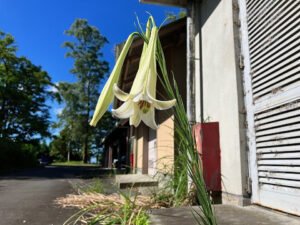
Formosa lily illustrates Lilium; an Asiatic hybrid is not shown.
Photo: Laitche, CC BY-SA 4.0. Resized and optimised; cropped for display. Adapted image under the same licence.
Oriental hybrids
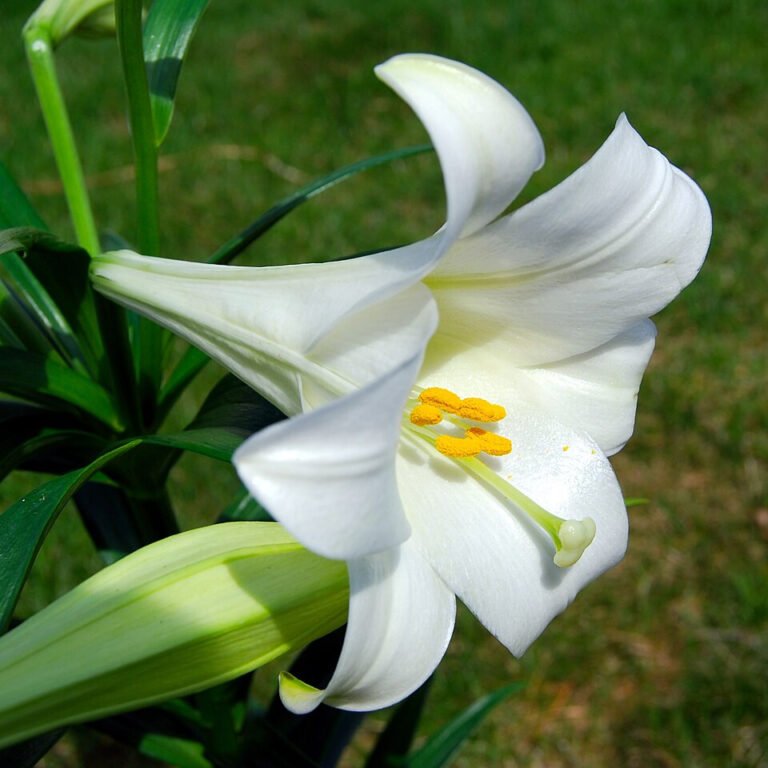
Known for large flowers and often strong scent. Their preference for acid conditions makes suitable container compost helpful where garden soil is alkaline.
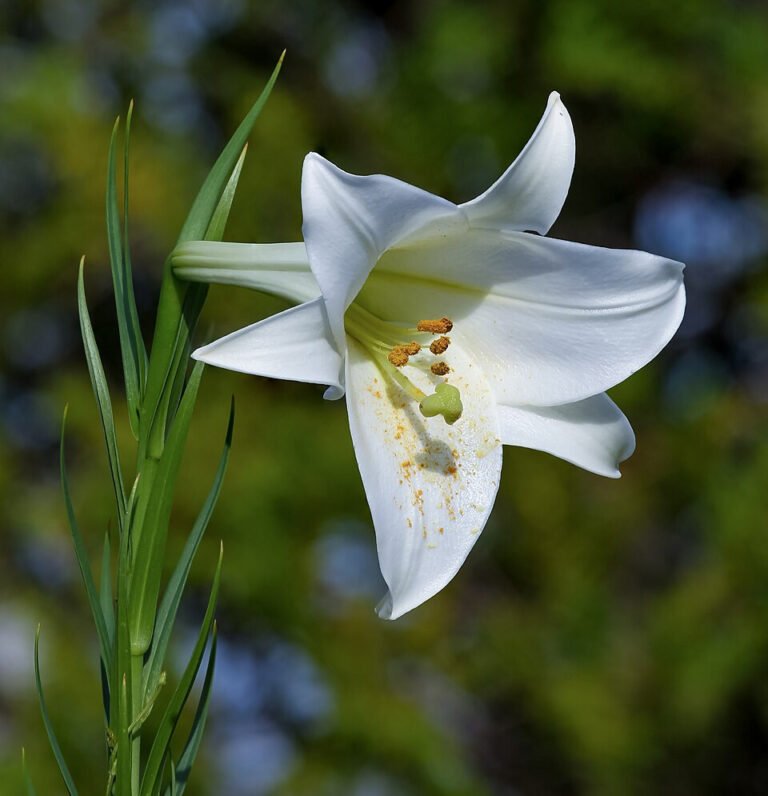
Lilium longiflorum flowers illustrate the genus, not an Oriental hybrid.
Photo: UpstateNYer, CC BY-SA 3.0. Resized and optimised; cropped for display. Adapted image under the same licence.
Trumpet lilies
Long trumpet shaped flowers give a different effect from open bowl forms. Many become substantial plants, so compare height and provide support when needed.
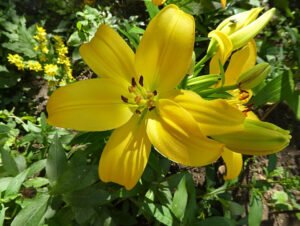
Lily foliage with a paper wasp; no trumpet hybrid identity is claimed.
Photo: RaminusFalcon, CC BY-SA 3.0. Resized and optimised; cropped for display. Adapted image under the same licence.
Species lilies
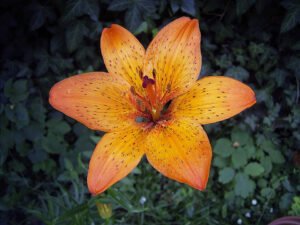
Botanical species offer distinctive shapes and habits. Buy with precise planting and hardiness guidance rather than assuming every species behaves like a familiar bedding hybrid.
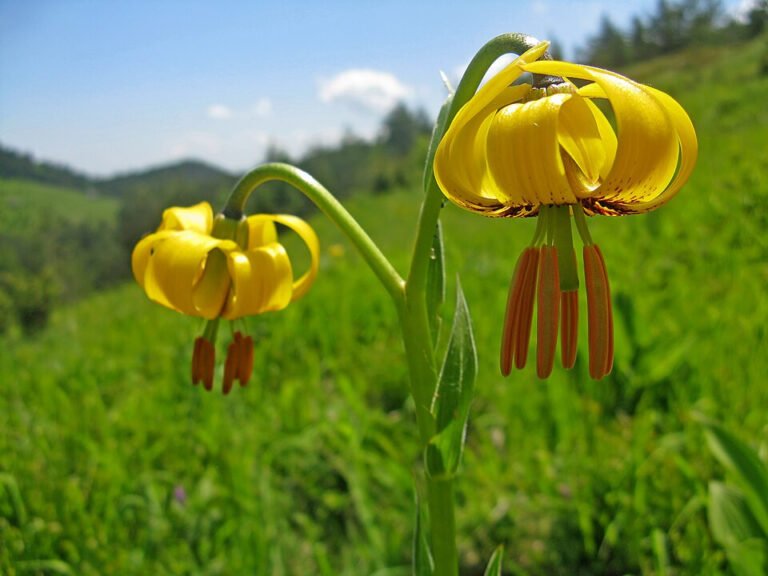
Lilium bulbiferum flower, identified in the source.
Photo: Denis Barthel, CC BY-SA 3.0. Resized and optimised; cropped for display. Adapted image under the same licence.
Start with a clearly labelled bulb and a suitable place to grow it. Check soil requirements and the danger to cats before choosing flower colour or fragrance.
Open flowers can be visited by insects, with usefulness varying between lily types and flower forms. Include other flowering plants through the season and avoid unnecessary insect treatments around blooms.
Cat protection remains essential even in a wildlife friendly garden. Keep hazardous plant material and vase water inaccessible, and consider alternative plants where access cannot be prevented. Contact a vet immediately if exposure is suspected.
Published by Buy From Farmers Direct. Growing guidance reviewed 11 October 2026. The seasonal timeline uses the shared BFFD Growers Calendar record; adjust timings to your variety and local conditions.
No. This guide covers Lilium. Daylilies, calla lilies and lily of the valley belong to different genera and require their own care guidance.
Follow the specific label. Rooting types differ, and some species have special requirements. Lilium candidum, for example, is planted much shallower than many stem rooting lilies.
Yes, with suitable compost, enough root depth, drainage and watering. Use stable containers and support for tall selections.
Remove spent flowers if desired, but keep healthy leaves until they die naturally. They help replenish the bulb for the following year.
No. The rest of the plant is still hazardous. True lilies and their pollen or vase water can cause severe poisoning; suspected contact needs immediate veterinary advice.
Many hardy garden lilies can remain in well drained ground. Check the species and manage winter wet, particularly in containers, instead of lifting every bulb automatically.
Match the lily to its growing conditions, protect healthy foliage and keep its safety needs in view. Good bulb care continues after the flowers have finished their display.
Want to get food independence, support your local grower, get better prices and shop more privately?
Local food isn’t just something you find. It’s something you protect. A free account helps keep local supply visible, supported, and resilient.

….it takes 30 seconds for food lovers and 5 minutes for suppliers
We built this for people who care where their food comes from. For people who want to remain food secure. For Farmers to get to the local people, who deserve a better income and to deliver a better price for you. For the environmentally conscious and the privacy-conscious. An account simply helps us make the map and supplier reach more useful to you, without changing how open it is. You’re always in control.


Find local food. Stay connected to it. Create a free account to support local producers and be part of a growing food network.


