Lupins bring upright flower spikes and fresh, fingered leaves to a summer border. The familiar perennial garden hybrids are especially useful among rounded shrubs and softer grasses. Start with healthy plants, allow room around their crowns and watch the new shoots in spring. This guide focuses on ornamental border lupins, with tree lupins explained separately.
Colourful summer flower spikes
Sunny borders and deep pots
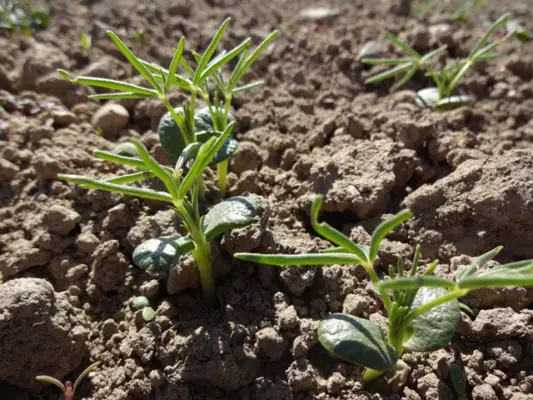
Protect young spring shoots
Cuttings preserve named plants
Ornamental, not a food crop
| Botanical genus | Lupinus |
| Family | Fabaceae, the pea family |
| Main garden type | Herbaceous perennial hybrids |
| Alternative spelling | Lupine is also used |
| Typical border height | About 60 to 120cm, depending on selection |
| Compact types | Often around 40 to 60cm |
| Tree lupin | Lupinus arboreus, a woody shrub |
| Preferred light | Full sun |
| Preferred soil | Moist but freely drained |
| Soil reaction | Neutral to slightly acidic is usually best |
| Main flowering | June and July, with variation |
| Planting window | Spring to early summer |
| Seed sowing | Early to mid spring |
| Suggested border spacing | About 60cm, adjusted to the label |
| Leaf shape | Several leaflets radiating from one point |
| Flower form | Upright spikes of pea shaped flowers |
| Winter habit | Border types normally die back |
| Propagation | Seed or basal cuttings |
| Main checks | Slugs, lupin aphid and anthracnose |
| Edibility | Do not eat ornamental lupins or their seed |
| Plant name | Crop type | Spacing |
Sow indoors
Plant outdoors
Harvest
Polytunnel | |||||||||||
|---|---|---|---|---|---|---|---|---|---|---|---|---|---|---|
| Jan | Feb | Mar | Apr | May | Jun | Jul | Aug | Sep | Oct | Nov | Dec | |||
| Lupine | Not recorded | Single 60cm, In row 60cm, Row gap 60cm | No activity recorded | No activity recorded | Sow indoors, Polytunnel | Sow indoors, Plant outdoors, Polytunnel | Plant outdoors | Plant outdoors | No activity recorded | No activity recorded | No activity recorded | No activity recorded | No activity recorded | No activity recorded |
Sow indoors: March, April. Plant outdoors: April, May, June. Harvest: no months recorded. Polytunnel: March, April.
March and April sowing refers to ornamental lupin seed in individual pots. The April to June planting band is for sturdy plants ready for a border, with earlier or later timing governed by local weather. Early summer flowers may be cut for display, with later repeat blooms possible. No harvest band is assigned to these ornamental lupins, which are not a food crop. March and April under cover means seed raising only, not a requirement to keep mature border lupins in a polytunnel. The 60cm spacing is a starting point for ordinary border hybrids, not the much larger tree lupin.
Choose lupins where early summer height will help link shorter border plants with a hedge or taller background. Repeating a few colours gives a calmer effect than placing an unrelated colour in every gap.
Compact selections can work in deep containers where garden soil is unsuitable. They still need space for their roots, consistent watering and somewhere sheltered for winter.
Photo: Biolandhof Kelly, CC BY-SA 4.0. Resized and optimised; cropped for display. Adapted image under the same licence.
An open sunny position produces the most convincing display. Avoid squeezing lupins beneath established shrubs, where shade and root competition work against them.
Aim for soil that holds some moisture while letting surplus rain drain away. If a test hole remains full of water after rain, choose another position or use a suitable container. Adding a little grit to one hole does not solve an underlying drainage problem.
Slightly acid or neutral soil is a useful starting point. On strongly chalky ground, compare local garden performance or try a pot before committing to a large planting.
Planting is straightforward when the rootball is moist and the border has been prepared before the pot comes off.
1.
Buy stock with firm healthy shoots and no suspicious stem lesions. Inspect the undersides of leaves for grey aphids. A compact plant with sound roots is a better starting point than an exhausted specimen carrying one oversized flower spike.
2.
Grow tiny plugs on before placing them outside permanently. Give young plants increasingly long periods outdoors when moving them from protected conditions. Choose a mild planting day when the soil is workable and the forecast is reasonably settled.
3.
Remove persistent weeds and loosen the planting area. Check how wet the ground is below the surface, rather than judging only the dry crust. Avoid filling the hole with rich manure or adding strong fertiliser against the roots.
4.
Set pots out roughly 60cm apart for typical border hybrids, then adjust for the mature spread on their labels. Leave working space around the group so that watering, deadheading and pest checks do not involve trampling neighbouring plants.
5.
Water the pot thoroughly and slide the rootball out with care. Lupins have substantial roots that are best handled gently. Do not deliberately pull apart the whole root system in an attempt to make several plants from one purchase.
6.
Dig a hole that accommodates the rootball at its existing compost level. Backfill around it and firm lightly with your hands. Keep the growing crown visible rather than burying it under a thick mound of soil or mulch.
7.
Water in slowly so that moisture reaches the rootball and surrounding ground. Where tall stems need support, put unobtrusive supports in early. Use soft ties loosely enough to allow growth and movement without cutting into the stem.
8.
Check the planting during its first weeks, especially after dry or windy weather. Look for feeding on the new leaves as well as signs of drought.

Watering
New plants need regular attention while their roots spread beyond the original pot. Check the soil before watering and soak the root area when necessary. Frequent splashes on dry leaves do little for roots and can keep the foliage unnecessarily damp.
Container plants need closer summer monitoring. During dormancy, reduce watering and make sure a decorative outer pot is not collecting winter rain.

Feeding
Avoid pushing border lupins into excessively lush growth with repeated nitrogen feeding. Begin with a suitable site and healthy roots, then judge the plant over a season. Weak flowering can reflect shade or congestion rather than a shortage of fertiliser.
Potted plants have a limited supply of nutrients and may benefit from a flowering plant feed during active growth. Follow its dilution and frequency instructions. Never apply concentrated feed to a severely dry rootball as a rescue treatment.

Pruning
Remove faded spikes before they develop a full crop of pods if you want to encourage further flowering. Follow each stem down carefully and cut without damaging fresh shoots. Leave the healthy leaves to continue supporting the plant.
Once border lupin foliage has died back, remove it if tidiness or disease management calls for it. Do not treat a woody tree lupin in the same way. Its permanent branches remain, and removing spent flower heads is usually the more appropriate routine task.

Winter care
Most familiar border lupins can overwinter outdoors in a suitable position. Drainage matters as well as temperature, particularly when a crown sits in cold saturated ground. Mark dormant plants discreetly so they are not accidentally dug up during winter work.
Move pots out of persistent rain and severe exposure, while keeping them ventilated. A cold frame or the sheltered side of a wall can be useful. Inspect occasionally rather than leaving dormant pots completely unattended until spring.
The divided leaves resemble small fans, with leaflets spreading from the end of a leaf stalk. The flowers open along a vertical spike, usually from the lower section upwards. Colour alone cannot reliably identify a named hybrid.
Tree lupin has a woody framework and is usually a much larger, rounded plant. It should not be confused with a herbaceous border selection simply because both carry recognisable lupin flowers. Keep botanical labels when purchasing unfamiliar species.
Photo: Микола Василечко, CC BY-SA 4.0. Resized and optimised; cropped for display. Photo by Mykola Vasylechko . Світлина Миколи Василечка .
Plan around your own spring rather than a fixed date. In colder gardens, new shoots can emerge later and small plants may benefit from extra time in pots. An exposed border may need support even when the same selection stands upright in a sheltered garden.
For indoor flowers, take only a few stems from a strong plant and place them promptly in clean water. Keep all ornamental stems and seed pods separate from kitchen ingredients. This calendar entry does not describe commercial edible lupin production.
When a planting repeatedly struggles, review its position before buying the same replacement again. Photograph the symptoms and note whether the problem followed wet weather, drought or a sudden flush of aphids. Those details are more useful than adding several treatments at once.
Photo: Olga-lisenkova, CC BY-SA 4.0. Resized and optimised; cropped for display. Adapted image under the same licence.
Slugs and snails can remove tender shoots quickly. Check on mild damp evenings and protect vulnerable young plants with targeted attention. Grow small seedlings on until sturdy and support garden predators; a ring of eggshells is not dependable protection.
Lupin aphid forms conspicuous greyish colonies and can cause wilting. Check from spring onwards, tolerate small populations and remove concentrated colonies by hand where practical. Watch the plant afterwards, because a single inspection may miss newly developing colonies.
Lupin anthracnose can cause characteristic twisted leaf stalks and damaged stems, sometimes with orange spore masses. Remove affected material, improve spacing and avoid overhead watering. Severely affected plants may need removing, and their seed should not be saved.
Powdery mildew can affect lupin foliage. Improve air movement and avoid allowing roots to suffer repeated drought stress. Remove badly affected leaves where practical, but diagnose the cause before assuming every pale mark needs a spray.
Check sunlight, root space and the age of the plant. A badly congested pot or repeated disturbance can limit performance. Review watering and modest feeding in containers, while accepting that young seedlings and stressed plants may need time to establish.
Sow in individual pots in early to mid spring, following the packet on seed preparation and temperature. Keep the medium moist without saturating it. Label every batch and pot seedlings on gently so their young roots are disturbed as little as possible.
For a particular named plant, basal cuttings give a more predictable result than unselected saved seed. Take healthy young shoots in spring with a small piece of basal tissue, use clean equipment and a free draining rooting medium, and protect from harsh sun while roots form.

Tall border hybrids
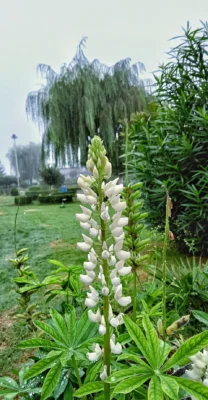
These provide the familiar vertical accent among other summer perennials. Russell type hybrids offer a wide colour range, but check the individual plant label for height, spread and whether a seed mixture will vary.
A garden lupin flower spike; the named cultivar is not established.
Photo: Tim Green, CC BY 2.0. Resized and optimised; cropped for display.
Compact border selections
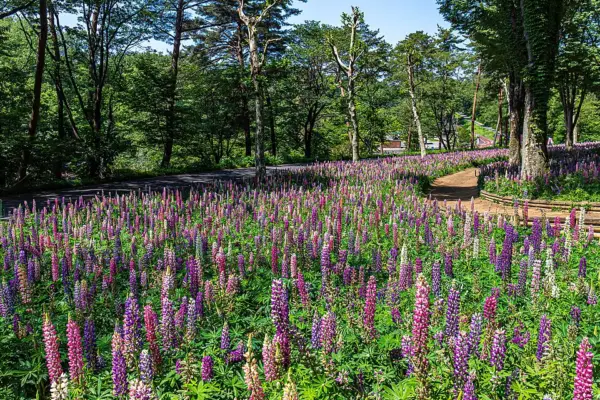
Shorter series such as Gallery suit the front of a border or a deep patio container. Compact height does not remove the need for root space or watering. Buy labelled plants if a particular colour is essential.
A mixed lupin display illustrates the colour range, not a verified Gallery cultivar.
Photo: くろふね, CC BY 4.0. Resized and optimised; cropped for display.
Tree lupin
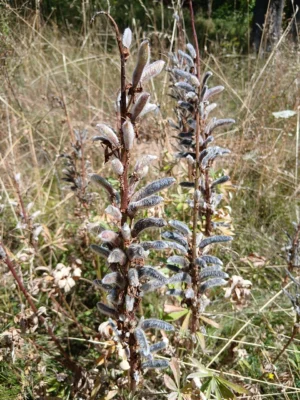
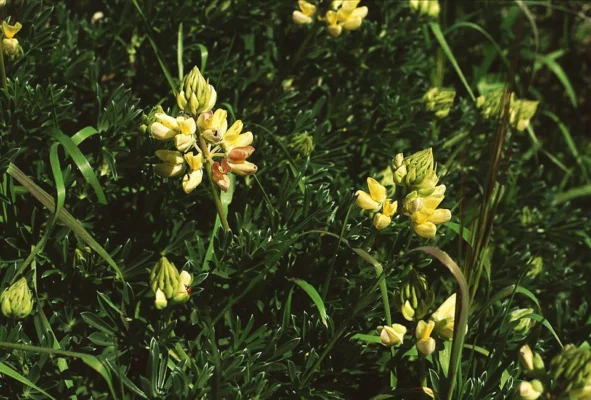
Lupinus arboreus makes a woody shrub, often with yellow flowers, and needs substantially more room than a border perennial. Choose a sheltered sunny site and check its suitability for your local winter conditions.
Lupinus arboreus, the woody tree lupin.
Photo: Franz Xaver, CC BY-SA 3.0. Resized and optimised; cropped for display. Adapted image under the same licence.

Seed raised mixtures
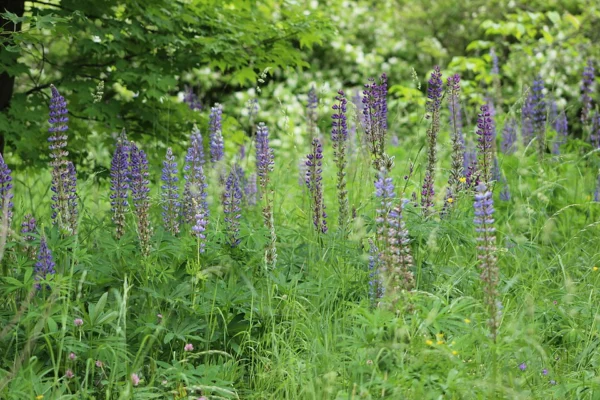
A useful option when variation is welcome and you enjoy raising plants. Check whether the packet contains perennial border types or annual species. Keep the best healthy plants and use cuttings if you later want to preserve one particular selection.
Purple lupin flowers illustrate a possible colour, not a guaranteed seed mixture result.
Photo: Dmitry Makeev, CC BY-SA 3.0. Resized and optimised; cropped for display. Adapted image under the same licence.
Match the mature height to your border, choose healthy labelled plants and prepare drainage before planting.
Lupin flowers are visited by bumblebees and other insects. Leave plenty of flowering spikes when cutting for the house, and combine the planting with flowers that open earlier and later in the year.
Avoid blanket treatments over flowering plants. Small insect populations are part of a functioning garden, though young lupins sometimes need targeted protection. Keep garden seed and plant waste out of surrounding natural habitats rather than encouraging escape beyond the border.
Published by Buy From Farmers Direct. Growing guidance reviewed 7 October 2026. The seasonal timeline uses the shared BFFD Growers Calendar record; adjust timings to your variety and local conditions.
Both spellings refer to Lupinus. Lupin is the usual UK spelling. The genus contains herbaceous perennials, annuals and woody shrubs, so the botanical name and plant label still matter.
Perennial border lupins normally return from their crowns after winter, but individual plants can decline or be lost to wet soil, pests or disease. Annual species live for one season, while tree lupins retain a woody framework.
Remove spent spikes if you want the plant to put more effort into further flowers. Keep a few pods only when deliberately saving healthy seed. Do not save seed from plants showing anthracnose symptoms.
Yes, particularly compact selections. Use a deep container with drainage, suitable compost and regular summer watering. Protect the pot from persistent winter rain and avoid leaving it standing in a water filled saucer.
No. Treat ornamental lupins as poisonous and do not eat their seeds or other parts. Edible commercial lupin products involve specifically selected crops and preparation; that does not make garden hybrids safe to eat.
Possible causes include drought, root problems, heavy aphid colonies or anthracnose. Inspect the root moisture, leaf undersides and stems before acting. Twisted stalks and brown lesions need a different response from a dry rootball.
Give lupins a sunny place, room around their crowns and a little attention when spring shoots appear. Their strongest contribution is a lively early summer display that fits naturally among other garden flowers.
Want to get food independence, support your local grower, get better prices and shop more privately?
Local food isn’t just something you find. It’s something you protect. A free account helps keep local supply visible, supported, and resilient.

….it takes 30 seconds for food lovers and 5 minutes for suppliers
We built this for people who care where their food comes from. For people who want to remain food secure. For Farmers to get to the local people, who deserve a better income and to deliver a better price for you. For the environmentally conscious and the privacy-conscious. An account simply helps us make the map and supplier reach more useful to you, without changing how open it is. You’re always in control.


Find local food. Stay connected to it. Create a free account to support local producers and be part of a growing food network.


