Mangetout are peas grown for their tender, flat pods, picked before the seeds inside become prominent. They make a useful crop for a small vegetable patch because the whole young pod goes into the kitchen. Choose a height you can support, sow in manageable batches and pick frequently once flowering turns into pods.
Pick flat young pods
Spring and summer sowing
Support climbing stems
Water during flowering
Repeat sowings for continuity
| Botanical name | Pisum sativum, mangetout cultivars |
| Family | Fabaceae |
| Crop type | Annual pea grown for edible pods |
| Also called | Snow pea |
| Harvest stage | Flat pods with barely developed seeds |
| Sugar snap difference | Sugar snaps have fleshy, rounded edible pods |
| Shelling pea difference | Shelling varieties are grown for peas removed from their pods |
| Position | Sunny and sheltered |
| Soil | Fertile, well drained and able to retain moisture |
| Main outdoor sowing | March to June, once soil is suitable |
| Optional early start | February or March in modules under cover |
| Sowing depth | About 5cm; follow the seed packet |
| Spacing within a row | About 7.5cm between plants |
| Tall double rows | 30cm between the two lines |
| Space between row groups | About the expected plant height |
| Germination | Often 7 to 19 days, depending on conditions |
| First harvest | Often around 10 to 14 weeks from sowing |
| Typical outdoor harvest | June to September, depending on variety and sowing |
| Container size | At least 45cm wide with drainage |
| Pollination | Mainly self pollinating |
| Plant name | Crop type | Spacing |
Sow indoors
Plant outdoors
Harvest
Polytunnel | |||||||||||
|---|---|---|---|---|---|---|---|---|---|---|---|---|---|---|
| Jan | Feb | Mar | Apr | May | Jun | Jul | Aug | Sep | Oct | Nov | Dec | |||
| Mangetout | Legumes | Single 7.5cm, In row 7.5cm, Row gap 30cm within tall double rows; wider between groups | No activity recorded | Sow indoors, Polytunnel | Sow indoors, Plant outdoors, Polytunnel | Sow indoors, Plant outdoors | Sow indoors, Plant outdoors | Sow indoors, Plant outdoors, Harvest | Plant outdoors, Harvest | Harvest | Harvest | No activity recorded | No activity recorded | No activity recorded |
Sow indoors: February, March, April, May, June. Plant outdoors: March, April, May, June, July. Harvest: June, July, August, September. Polytunnel: February, March.
The calendar covers the main outdoor pod crop, with an optional February start under cover. Planting means transplanting modules; direct sowings stay in place. Protected months are for starting plants, not keeping them in a tunnel. Adjust for variety and local weather.
Mangetout suits gardeners who enjoy picking little and often. A short row can supply several meals, but one sowing will not produce indefinitely.
Tall varieties need strong supports. Compact varieties suit a large pot, although fewer plants mean a smaller harvest.
Photo: Forest and Kim Starr, CC BY 2.0. Resized and optimised; cropped for display.

Choose an open, sunny bed sheltered from strong winds. Avoid waterlogged ground where seeds can rot before they emerge.
Clear weeds and improve the soil with mature compost before sowing. Use a settled seedbed for an even sowing depth.
Leave access along the support so pods can be picked from both sides. Place tall rows where they will not shade smaller crops for most of the day.
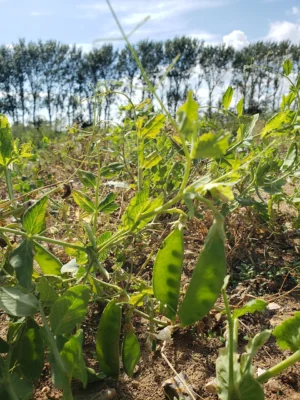
Buy seed clearly labelled as mangetout or snow pea. The same basic sowing method also grows other peas, but the variety determines whether the pod is suitable for eating whole.
1.
Read the packet for height, sowing window and harvest stage. Plan where supports and access paths will fit.
2.
For an early start, sow one seed per deep module in moist compost. Keep seedlings bright and protected from mice.
3.
For direct sowing, wait until spring soil has warmed to around 10°C and drains freely. Do not force an early sowing into cold, saturated ground.
4.
Sow about 5cm deep and 7.5cm apart. Tall varieties can use paired rows 30cm apart; shorter varieties can use staggered lines in a broad drill.
5.
Cover, water and label the seed. Space each group of rows according to the variety’s eventual height.
6.
Acclimatise plants raised under cover before transplanting. Move root plugs intact and water them in before they become cramped.
7.
Add twiggy sticks for short plants or mesh on sturdy posts for taller ones. Guide tendrils towards the support gently.
8.
Check seedlings for damage and keep the root zone moist. Sow another small batch within the recommended season when the previous sowing is growing well.

Watering
Pay particular attention when flowers and young pods appear. Water the soil thoroughly during dry spells instead of repeatedly wetting just the surface.
Check containers frequently because they dry much faster than beds. A compost mulch around established plants helps conserve moisture, while clear spacing keeps access easy.

Feeding
Peas in a fertile bed usually need no additional fertiliser. More feed is not a reliable solution to drought, weak roots or damaged seedlings.
Feed container peas from flowering with a suitable high potassium liquid feed. The RHS suggests fortnightly feeding; follow product dilution instructions.

Pruning
No routine pruning is needed. Let shoots attach to supports and remove badly damaged material when necessary.
Pick pods every few days while they remain flat and tender. Hold the plant with one hand while picking with the other so the stem and roots are not pulled loose.

Winter care
Mangetout is normally grown as a spring and summer annual. Remove finished plants and plan a fresh sowing for the following season.
Autumn sowing under protection needs suitable varieties and conditions. Cold wet weather can cause losses; this is outside the main calendar.
Pea plants have rounded leaflets and curling tendrils that grip nearby supports. Flowers may be white or coloured, while edible pods can be green, yellow or purple depending on the cultivar.
Harvest flat, tender mangetout pods before they swell. Keep the seed label to identify your crop; ornamental sweet peas are different plants and are not food.
Photo: Forest and Kim Starr, CC BY 2.0. Resized and optimised; cropped for display.
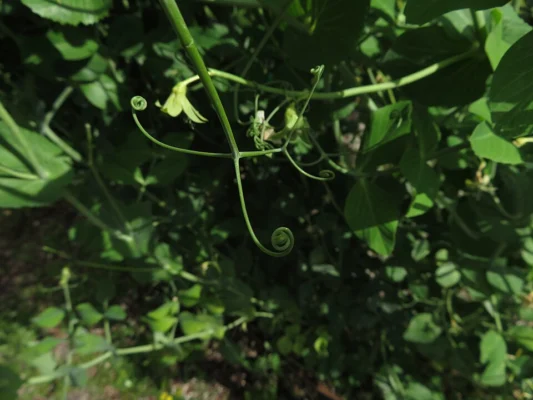
March to June suits many UK gardens. Begin later in cold districts or start protected modules, planting out as conditions improve.
Check the crop more frequently as temperatures rise. Successive sowings spread the harvest, but warm weather can make batches catch up with one another, so use their actual growth to judge the next sowing.
Pick from the lower part of the plants first and use the pods promptly. Harvest size varies considerably between cultivars, so tenderness and flatness are more useful than one fixed pod length.
Photo: Salicyna, CC BY-SA 4.0. Resized and optimised; cropped for display. Adapted image under the same licence.
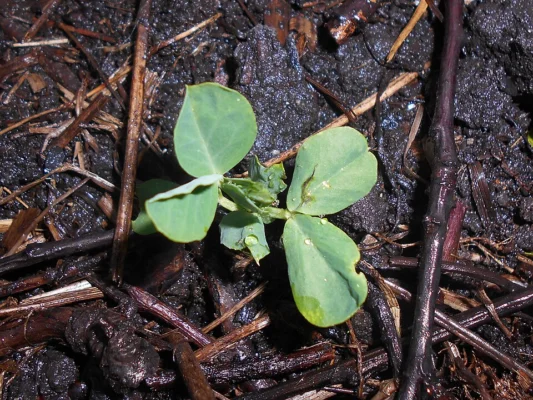
Cold wet soil may rot seed, while mice can remove it. Check a few sowing positions before watering again. Resow in suitable conditions or raise the next batch in protected modules.
Slugs can remove seedlings and pigeons can tear foliage. Inspect the crop to identify the cause. Protect vulnerable plants with appropriate barriers, keeping any bird netting taut and checking it regularly.
Pea and bean weevils often leave small U shaped bites. Established plants usually tolerate them. Keep seedlings growing steadily; severe damage matters more on tiny plants than on a strong row.
Powdery mildew can spread on stressed, crowded plants. Improve airflow, avoid repeated drying and remove badly affected growth. Choose suitable resistant varieties where available rather than relying on extra fertiliser.
Overmature pods and interrupted watering can reduce quality. Pick young pods regularly and check soil moisture. A crop naturally finishes after several weeks; a later sowing provides the next supply.
Grow new plants from seed. For seed saving, set aside healthy plants of a suitable open pollinated variety and leave selected pods to ripen fully instead of picking them for meals.
Peas usually self pollinate, but occasional crossing is possible. Keep varieties separated as far as practical, dry the ripe seed thoroughly and store it labelled somewhere cool and dry. Seeds for sowing must be mature, unlike the young pods harvested for eating.
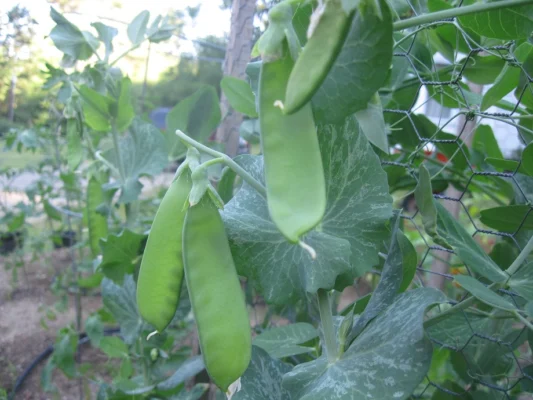
Norli
A compact variety with white flowers and green pods. Several small sowings extend its concentrated early crop. Check the supplier’s stated height.
Illustrative mangetout pods; not a verified photograph of Norli.
Photo: Rob Duval, CC BY-SA 3.0. Resized and optimised; cropped for display. Adapted image under the same licence.
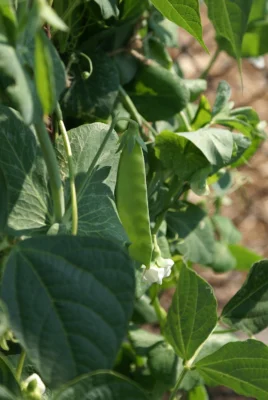
Oregon Sugar Pod
An established green mangetout with white flowers, reaching roughly 90cm to 1m in the RHS description. Give it support and keep picking to make use of its cropping period.
A green mangetout pod; the cultivar is not verified here.
Photo: JS, CC BY-SA 3.0. Resized and optimised; cropped for display. Adapted image under the same licence.
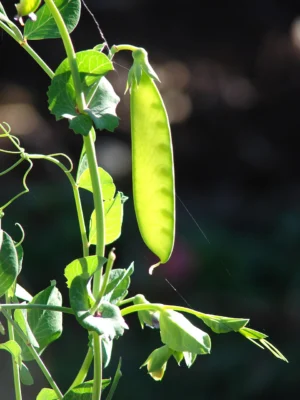
Golden Sweet
A tall variety with purple flowers and yellow pods that are easy to spot among the leaves. Pick while tender and provide sturdy support.
Illustrative green mangetout; Golden Sweet produces yellow pods.
Photo: Forest and Kim Starr, CC BY 3.0 us. Resized and optimised; cropped for display. Forest & Kim Starr
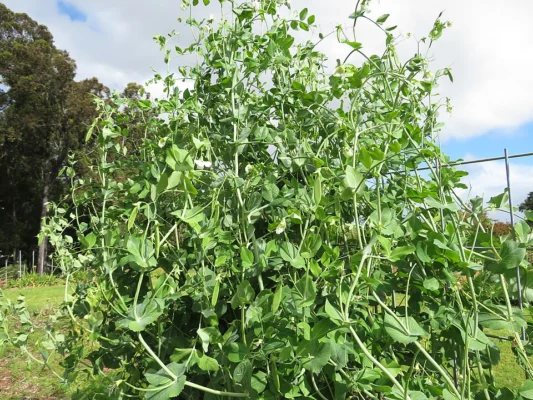
Green Beauty
A vigorous, tall mangetout with purple flowers and unusually large flat pods. Real Seeds describes plants reaching around 1.8 to 2.4m, making support height an important part of the choice.
Illustrative tall mangetout plants; not confirmed Green Beauty.
Photo: Forest and Kim Starr, CC BY 2.0. Resized and optimised; cropped for display.
Compare mangetout type, support height and sowing season. Choose a crop you can comfortably reach, support and water.
Peas mainly self pollinate, so fine protective mesh need not prevent pod set. Secure covers carefully and allow enough room for the growing plants.
Young mangetout pods are generally less troubled by pea moth than shelling peas because they are picked before the seeds develop. Encourage a varied garden and inspect damage before assuming every insect needs removing.
Published by Buy From Farmers Direct. Growing guidance reviewed 6 October 2026. The seasonal timeline uses the shared BFFD Growers Calendar record; adjust timings to your variety and local conditions.
Mangetout is picked flat. Sugar snaps have thicker, rounded edible pods, while shelling peas are grown mainly for the peas inside.
March to June is the main outdoor window. February or March sowing in modules under cover can give an earlier start if the variety is suitable.
Most benefit from support. Use twiggy sticks for short varieties and sturdy mesh or trellis matched to taller varieties’ expected height.
Pick while they are flat and tender, before the seeds make obvious bulges. Check often because pods can pass their best quickly.
Yes. Choose a compact variety, a drained pot at least 45cm wide and a support. Water reliably and expect a smaller crop than from a long garden row.
Usually not. Sow small batches through the recommended window and pick regularly; each planting has a limited productive period.
Choose a manageable variety, support it early and make young pods a regular picking job. For mangetout, timing the harvest is as important as getting the plants established.
Want to get food independence, support your local grower, get better prices and shop more privately?
Local food isn’t just something you find. It’s something you protect. A free account helps keep local supply visible, supported, and resilient.

….it takes 30 seconds for food lovers and 5 minutes for suppliers
We built this for people who care where their food comes from. For people who want to remain food secure. For Farmers to get to the local people, who deserve a better income and to deliver a better price for you. For the environmentally conscious and the privacy-conscious. An account simply helps us make the map and supplier reach more useful to you, without changing how open it is. You’re always in control.


Find local food. Stay connected to it. Create a free account to support local producers and be part of a growing food network.


