Olives bring evergreen silver foliage to sunny patios and sheltered gardens. In Britain, their ornamental qualities are the dependable reward. Fruit is an occasional bonus, requiring suitable pollination and enough warmth to develop and ripen.
Evergreen Mediterranean tree
Full sun and shelter
Excellent drainage essential
Containers suit colder gardens
UK fruiting is conditional
| Botanical name | Olea europaea |
| Family | Oleaceae |
| Plant type | Slow growing evergreen tree |
| Main UK value | Foliage, shape and year-round structure |
| Leaf character | Narrow leathery leaves with silvery undersides |
| Flower colour | Small cream white flowers |
| Flowering season | Usually early summer in suitable conditions |
| Pollination | Mainly wind; compatibility varies by cultivar |
| Fruit reliability | Occasional in favourable UK sites and summers |
| Light | Full sun |
| Exposure | Sheltered from cold winds |
| Soil | Well drained, without persistent winter wet |
| Preferred planting season | Spring |
| Container starting size | At least 30–35cm wide and deep, larger for a substantial tree |
| Compost | Peat free loam based mix with added grit |
| Eventual height | Often 4–8m in the ground; form and pruning influence size |
| Pruning window | Late spring or early summer |
| Winter care | Protect from severe frost, especially in containers |
| Watering | Regular in pots; established ground plants tolerate drought |
| Fruit use | Correct curing is needed before eating |
| Plant name | Crop type | Spacing |
Sow indoors
Plant outdoors
Harvest
Polytunnel | |||||||||||
|---|---|---|---|---|---|---|---|---|---|---|---|---|---|---|
| Jan | Feb | Mar | Apr | May | Jun | Jul | Aug | Sep | Oct | Nov | Dec | |||
| Olive | Orchard fruit | Single 300cm for a modest ground-grown tree, In row 300cm, Row gap 400cm; allow more for large cultivars and follow the intended mature canopy | Polytunnel | Polytunnel | Plant outdoors, Polytunnel | Plant outdoors, Polytunnel | Plant outdoors | No activity recorded | No activity recorded | No activity recorded | No activity recorded | Polytunnel | Polytunnel | Polytunnel |
Sow indoors: no months recorded. Plant outdoors: March, April, May. Harvest: no months recorded. Polytunnel: January, February, March, April, October, November, December.
The calendar follows nursery-grown olives. Spring planting helps roots establish before winter. No fixed harvest band is shown: UK fruit may not form or ripen, although successful crops are assessed in autumn. October to April protection is a planning guide for colder gardens; use forecasts and bright frost-free shelter when needed.
Choose an olive for evergreen foliage in a warm sunny position. A healthy tree is successful even without a harvest.
Choose a sunny courtyard or sheltered south-facing position, avoiding dark corners and persistent cold winds.
Drainage matters more than rich soil. If the site stays saturated in winter, use a suitable container or improve the wider growing area instead of filling one planting hole with grit.
Allow room for the mature crown, airflow and maintenance. Clipped standards occupy less space than unrestrained trees.
For winter shelter, choose somewhere bright and cool, such as a frost-free greenhouse or conservatory. A dim heated living room is not a good long-term substitute for outdoor conditions.
Photo: Hans Hillewaert, CC BY-SA 3.0. Resized and optimised; cropped for display. © Hans Hillewaert
Choose healthy nursery stock, checking the cultivar if fruit matters. For ornamental planting, prioritise shape and manageable size.
1.
Plan summer positioning and winter protection. Measure access if the container must pass through a doorway.
2.
Plant in spring when the soil is workable and severe cold has eased. Container-grown stock can be planted at other suitable times, but avoid frozen or saturated ground.
3.
Water the existing rootball before planting. Prepare a hole wider than the roots, or a pot with ample drainage holes and enough room for modest growth.
4.
For pots, use peat free loam based compost with approximately one fifth horticultural grit. Choose a stable frost-resistant container, at least 30–35cm wide and deep for a small tree.
5.
Ease the tree out of its nursery pot without stripping the roots. Set it at its previous planting depth, keeping the base of the trunk clear.
6.
Backfill gently and water to settle the growing medium. Stake a substantial ground-planted tree until its roots provide reliable support.
7.
Raise containers on pot feet so excess water escapes. Empty standing water from trays and avoid decorative outer pots that trap it around the roots.
8.
Check moisture regularly through the first growing season. Revisit ties, drainage and pot stability as the canopy grows and catches more wind.

Watering
Water new ground-planted olives during dry spells until established. Drought tolerance develops with a functioning root system; a newly planted tree still depends on you.
Pots need regular checks from spring to autumn. Water thoroughly when required, then let excess drain. In winter keep the rootball slightly moist, never permanently soaked or allowed to become completely dry.

Feeding
Established ground plants often need little feeding if growth is healthy. A modest mulch can support the soil; keep organic material away from the trunk.
Refresh the surface compost in pots in spring without damaging roots. Where needed, use a balanced feed at the label rate during active growth, accounting for any fertiliser already in the compost.

Pruning
Lightly shape in late spring or early summer once cold damage can be assessed. Remove dead or crossing growth and thin congested branches rather than repeatedly cutting the entire crown hard.
If maintaining a clear stem, remove unwanted shoots on the trunk and at its base. Avoid late pruning after August; new growth needs time to mature before winter. Heavy clipping can also remove potential flowering wood.

Winter care
Frost severity, duration, wind and wet roots affect damage. Protect young plants and exposed pots more carefully than established sheltered trees.
Move vulnerable containers to bright frost-free shelter. Where a tree remains outside, protect the pot and canopy during severe spells with suitable insulation and fleece, removing unnecessary wrapping in milder weather.
Olea europaea has opposite leathery leaves, greener above and silvery underneath, followed by small pale flowers. Older trunks can become rugged and twisted. The fruit contains a single hard stone.
Green and dark olives are not automatically different species: colour changes as many cultivars mature. Leaf appearance or fruit colour alone cannot confirm a named cultivar; retain the nursery label.
Photo: Rnbc at en.wikipedia, CC BY-SA 3.0. Resized and optimised; cropped for display. Rnbc at the English-language Wikipedia
Attractive summer growth need not produce fruit. Cool flowering weather, incompatible pollen, pruning and insufficient warmth can limit cropping.
Ask a specialist about a named cultivar and compatible partner. A self-fertile label cannot guarantee a British harvest.
Follow cultivar-specific maturity advice. Fresh olives are intensely bitter and need a tested curing method before eating.
Photo: Javier martin, Public domain. Resized and optimised; cropped for display.
A little older-leaf shedding in spring is normal. Widespread loss calls for a moisture check: a dry rootball, waterlogging, poor light or cold stress may be involved.
Frost and drying winds can damage shoots. Wait until late spring growth shows which wood is alive, then trim dead sections and improve protection for the next cold spell.
Inspect for scale insects, including beneath leaves. Check neighbouring sheltered plants and use a suitable targeted control if the infestation is significant.
Olive scab can cause spotting and leaf fall. Improve air movement, avoid persistently damp crowded conditions and seek a diagnosis if spotting or decline continues.
This is common in Britain and does not by itself mean the tree is unhealthy. Check cultivar, sun and pollination, while judging success by healthy growth rather than a promised yield.
Semi-ripe cuttings taken in July or August can be tried in free draining propagation compost with careful humidity and temperature control. Rooting may be slow, so a purchased tree is the simpler starting point.
Seed-grown olives vary from their parents and take time to develop. For a known cultivar or trained form, buy correctly identified nursery stock rather than expecting a seedling to reproduce it.
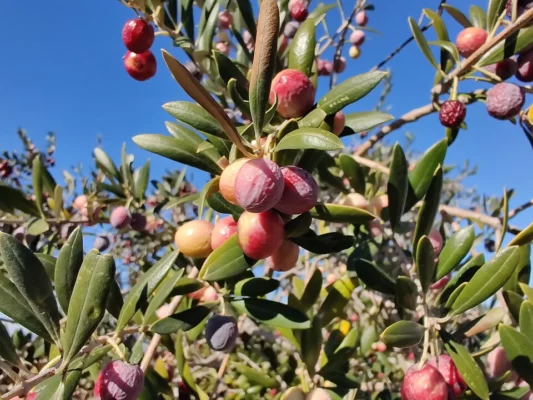
Arbequina
A Spanish cultivar often offered for a relatively manageable tree. It is commonly sold as self-fertile, but fruiting still depends on the growing conditions.
Arbequina olives, identified by the photograph’s source; photographed outside the UK.
Photo: Veinticuatro de Jahén, CC BY-SA 4.0. Resized and optimised; cropped for display. Adapted image under the same licence.
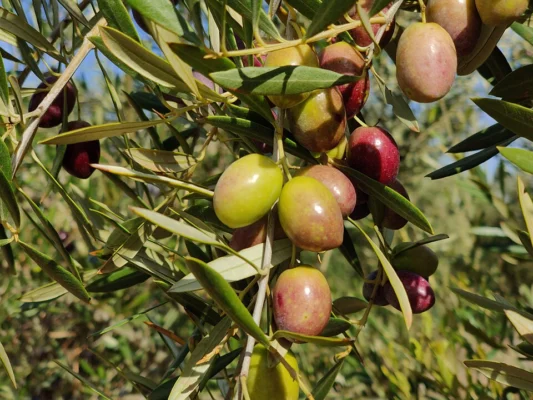
Picual
A widely grown Spanish olive with attractive grey foliage. Consider the supplied tree’s shape and eventual size as well as its fruiting reputation.
Picual olives, identified by the photograph’s source in Spain.
Photo: Veinticuatro de Jahén, CC BY-SA 4.0. Resized and optimised; cropped for display. Adapted image under the same licence.
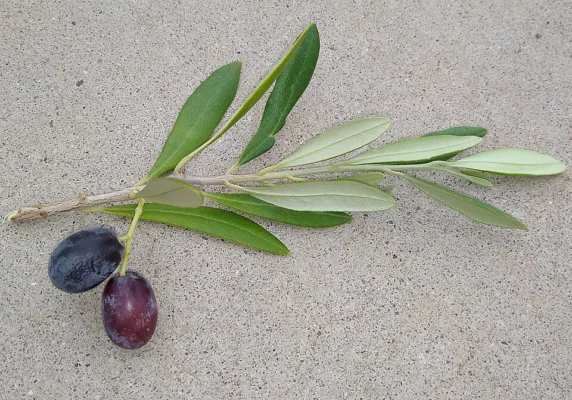
Frantoio
A traditional Tuscan cultivar grown for oil production. It can make an ornamental garden tree, with any British crop treated as an additional reward.
Illustrative olive fruit and foliage, not confirmed Frantoio.
Photo: Prahlad balaji, CC BY-SA 4.0. Resized and optimised; cropped for display. Adapted image under the same licence.
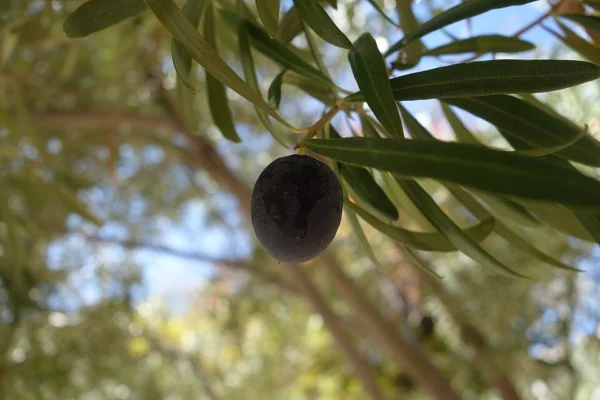
Leccino
An Italian cultivar offered by UK specialists. It needs a suitable pollinating partner for fruit; ask for a compatible combination if cropping is your aim.
Illustrative olive on a branch, not a confirmed Leccino specimen.
Photo: Relativity, CC BY-SA 4.0. Resized and optimised; cropped for display. Adapted image under the same licence.
Compare tree shape, container weight and winter shelter needs. Young trees are generally easier to establish and protect.
Evergreen branches offer cover and a varied structure within a garden. Combine the tree with locally suitable flowering plants to provide a broader food supply for insects.
Olives are mainly wind pollinated, so adding flowers nearby is not a guarantee of an olive crop. Inspect the tree before pruning and avoid disturbing occupied nests.
Published by Buy From Farmers Direct. Growing guidance reviewed 6 October 2026. The seasonal timeline uses the shared BFFD Growers Calendar record; adjust timings to your variety and local conditions.
Sometimes, especially in warm sheltered southern gardens. Flowering, pollination and a long enough warm season must align. Most gardeners should value the foliage first.
Established trees can in favourable sheltered sites. Severe frost, cold wind and saturated roots are more challenging; protect vulnerable plants and move pots under cover where necessary.
Check the compost rather than using a fixed timetable. Pots dry quickly in warm weather, while winter demand is lower. Water when needed and allow excess to drain.
Usually in late spring or early summer. Keep shaping light and avoid late growth-stimulating cuts after August, especially in colder gardens.
Fresh olives are very bitter. They need a suitable, tested curing process before use; colour alone does not mean they are ready to eat.
Pollination requirements differ between cultivars. Some are sold as self-fertile, while others need a compatible partner. Ask the supplier about your particular tree.
Give an olive light, drainage and a practical winter plan. Healthy silver foliage is worthwhile, with ripe fruit an extra achievement.
Explore more growing guides: Bay, Apple (Dwarf), Blueberry.