Culinary bay, Laurus nobilis, supplies aromatic leaves year round and evergreen garden structure. It can become a substantial tree, but pruning keeps it manageable as a shrub or container plant. Provide shelter, drainage and root space. Buy a clearly labelled Laurus nobilis: other plants called laurel are not cooking substitutes.
Evergreen herb
Good in containers
Sun or partial shade
Leaves all year
Sheltered position
| Botanical name | Laurus nobilis |
| Family | Lauraceae |
| Plant type | Evergreen shrub or small tree |
| Culinary part | Leaves |
| Harvest season | All year from established plants |
| Position | Sun or partial shade |
| Exposure | Sheltered from cold winds |
| Soil | Well drained |
| Height unpruned | Can exceed 10m over time |
| Managed size | Determined by training and pruning |
| Main planting window | Spring to early summer |
| Container compost | Loam based, peat free and well drained |
| Watering | Regular checks for pots and new plants |
| Feeding | Container feed during active growth |
| Flowering | Small yellowish flowers in spring |
| Pollination | Male and female flowers on separate plants |
| Light pruning | Spring or summer |
| Topiary trimming | Summer |
| Propagation | Cuttings, layering or fresh autumn seed |
| Winter care | Protect vulnerable pots during hard frost |
| Plant name | Crop type | Spacing |
Sow indoors
Plant outdoors
Harvest
Polytunnel | |||||||||||
|---|---|---|---|---|---|---|---|---|---|---|---|---|---|---|
| Jan | Feb | Mar | Apr | May | Jun | Jul | Aug | Sep | Oct | Nov | Dec | |||
| Bay | Herbs | Allow the intended mature spread; commonly 2m or more for a managed shrub, much more if unpruned | Harvest, Polytunnel | Harvest, Polytunnel | Harvest, Polytunnel | Plant outdoors, Harvest | Plant outdoors, Harvest | Plant outdoors, Harvest | Harvest | Harvest | Sow indoors, Harvest | Sow indoors, Harvest, Polytunnel | Harvest, Polytunnel | Harvest, Polytunnel |
Sow indoors: September, October. Plant outdoors: April, May, June. Harvest: January, February, March, April, May, June, July, August, September, October, November, December. Polytunnel: January, February, March, October, November, December.
April to June is a useful establishment window for young bay plants; planting can extend beyond this in suitable conditions. Autumn sowing refers to fresh ripe seed, a slow optional propagation method. Leaves can be picked all year from a healthy established plant. Protected growing months show optional winter shelter for vulnerable containers, not an essential tunnel crop; an unheated polytunnel can still freeze.
Bay suits someone who wants a long lived herb. A modest bush supplies occasional cooking without the maintenance of formal topiary.
Containers allow winter relocation but need care year round. Before buying a tall standard, consider its weight, wind exposure and passage through the doorway to winter shelter.
Photo: Giancarlo Dessì, CC BY-SA 3.0. Resized and optimised; cropped for display. Adapted image under the same licence.
Choose shelter in sun or partial shade, with access for picking and pruning. Keep future branches clear of narrow paths.
Drainage matters more than soil texture. Where a bed stays saturated in winter, use a container instead.
Standards need a stable pot, drainage holes and loam based peat free compost. Increase pot size gradually rather than placing a small rootball in a huge wet container.
Plan winter shelter before planting. Monitor a cool porch or greenhouse for temperature and moisture; rain shelter does not guarantee frost protection.
Photo: Agnieszka Kwiecień, Nova, CC BY-SA 4.0. Resized and optimised; cropped for display. Adapted image under the same licence.
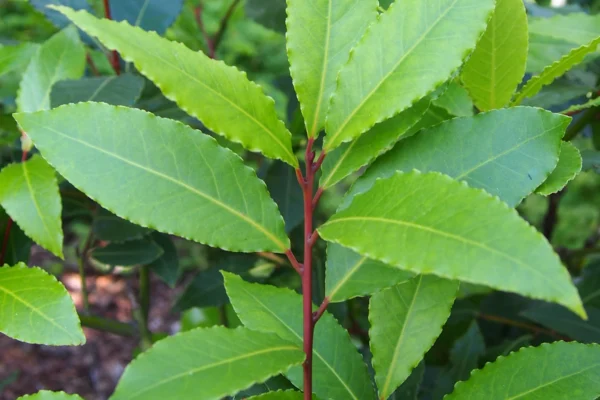
Buy a healthy labelled bay and choose between a shrub, clipped plant or standard. These are management choices, not different levels of edibility.
1.
Check the label says Laurus nobilis and retain it with your planting records.
2.
Inspect leaves and stems for scale insects, curled new growth and damage before introducing the plant beside other pots.
3.
Choose spring or early summer for straightforward establishment, avoiding frozen or waterlogged ground.
4.
Water the rootball and prepare a hole wide enough to spread roots without bending them into a tight circle.
5.
Set the plant at its existing depth, keeping the base of the stems clear rather than burying it under soil.
6.
Backfill and firm gently, then water thoroughly so the surrounding soil settles around the roots.
7.
For a container, leave a watering space below the rim and raise the base enough for drainage holes to remain clear.
8.
Label, monitor moisture through the first season and allow establishment before taking repeated large harvests.

Watering
Newly planted bay needs help through dry spells until roots reach the surrounding soil. Check beneath the surface rather than watering simply because the leaves look slightly dull.
Potted plants rely on you for water even in winter if sheltered from rain. Let excess drain, empty saucers and reduce frequency in cool weather. Never allow the rootball to become permanently saturated or completely desiccated.

Feeding
Container plants benefit from a suitable balanced feed during active growth. Follow the product rate and account for any fertiliser already included in the compost.
Poor growth does not automatically mean starvation. Check root space, drainage and exposure first. Refresh tired surface compost or repot in spring when necessary, rather than repeatedly adding fertiliser to a failing root system.

Pruning
Trim topiary in summer with secateurs, cutting shoots back to a leaf or bud without shredding the remaining leaves. Free growing shrubs need only selective shortening in spring or summer.
Reduce a large overgrown bay gradually in late spring, allowing recovery between substantial cuts. Remove winter damaged shoots once new growth shows what is alive. On a standard, remove unwanted shoots arising below the crown to retain the clear stem.

Winter care
Established bay in sheltered ground is more resilient than exposed roots in a small pot. Cold drying winds and prolonged frost can damage leaves and shoots even where the plant survives.
Move vulnerable containers into shelter during severe spells and protect the pot itself from freezing. Keep drainage open and check moisture periodically. Do not prune apparently dead growth during the cold spell; reassess in spring.
Laurus nobilis has leathery aromatic leaves and small yellowish flowers in spring. Mature female plants may bear dark fruits when pollinated. These fruits are not the culinary harvest described here: use the leaves from your known plant.
Common names are unreliable. Cherry laurel, Prunus laurocerasus, and spurge laurel, Daphne laureola, are different potentially harmful plants. Never gather leaves for cooking from an unidentified laurel hedge or rely on smell alone to decide that a plant is edible.
Photo: Javier martin, Public domain. Resized and optimised; cropped for display.
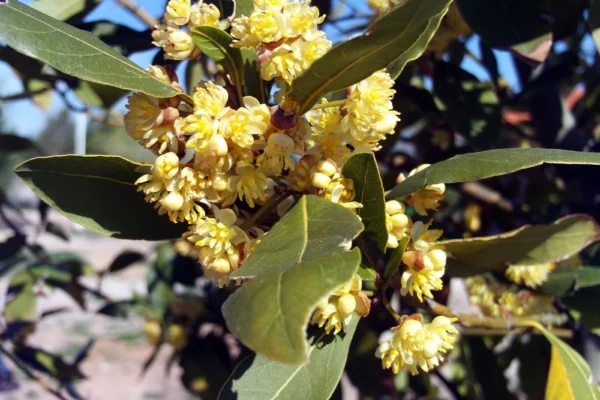
Bay grows well in many UK gardens, but the combination of winter wet and cold exposure can be more limiting than a headline hardiness figure. Judge the actual site and the size of the root system.
In colder northern or inland gardens, a manageable container can be easier to protect than a large outdoor specimen. In mild sheltered gardens, a bay planted in the ground may eventually need substantial space.
Doorway standards require recurring shaping. Inspect each pot separately: opposite sides of a doorway may receive different rain, wind and sunshine.
Photo: Didier Descouens (Archaeodontosaurus), CC BY-SA 4.0. Resized and optimised; cropped for display. Adapted image under the same licence.
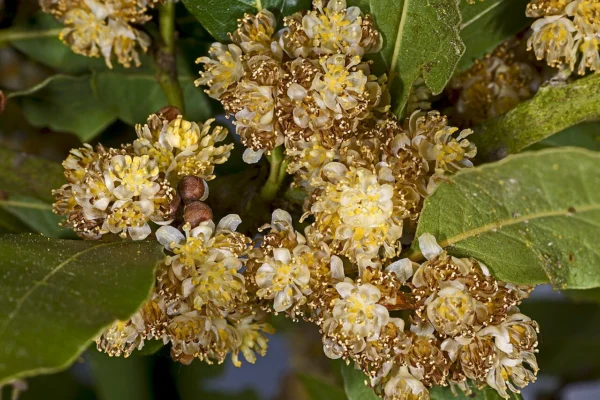
A few older leaves dropping can be normal. Widespread yellowing needs a drainage and cold damage check first; nutrient shortage is another possibility in a long occupied pot. Do not feed blindly.
Bay sucker can thicken and curl parts of young leaves, with pale waxy material underneath. Damage is usually cosmetic and established plants can normally tolerate it without treatment.
Cold winds, frost or root problems can scorch foliage. Check whether stems remain alive and wait for spring growth before removing damaged parts. Improve shelter for the following winter.
Inspect leaves and woody stems for scale insects. Isolate affected containers where practical and remove small infestations by hand, then keep checking for new insects.
A congested rootball or degraded compost may no longer hold water evenly. Inspect the roots and repot or renovate in spring, using fresh suitable compost and a pot with working drainage.
Take semi ripe cuttings in late summer from healthy growth, keeping the pot labelled and protected while roots form. Bay can be slow to root, so retain the parent plant and treat propagation as a patient project rather than a quick replacement supply.
Fresh ripe seed can be sown in autumn after removing the fleshy covering. Germination is variable and seedlings take time to become useful plants. Layering a low branch is another option; keep it attached until it has made roots of its own.
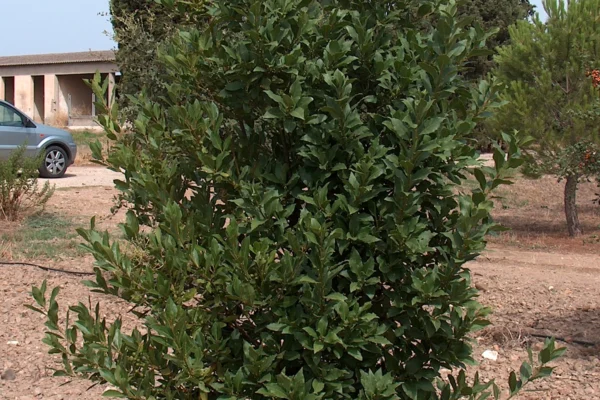
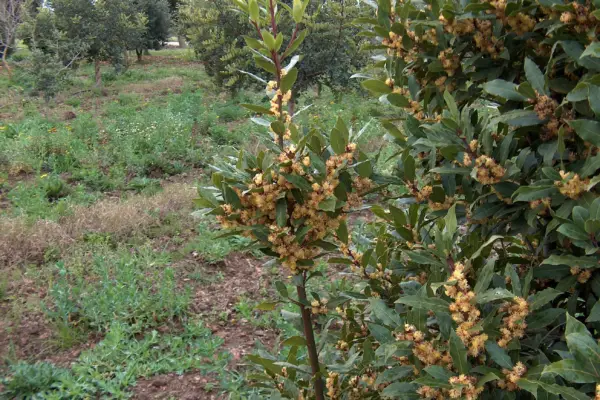
Green bay shrub, Laurus nobilis
The ordinary green species is an adaptable kitchen and garden choice. Grow it as a bush for easy harvesting, or allow greater height where there is space. A natural outline requires less frequent clipping than formal topiary.
Photo: Giancarlo Dessì, CC BY-SA 3.0. Resized and optimised; cropped for display. Adapted image under the same licence.
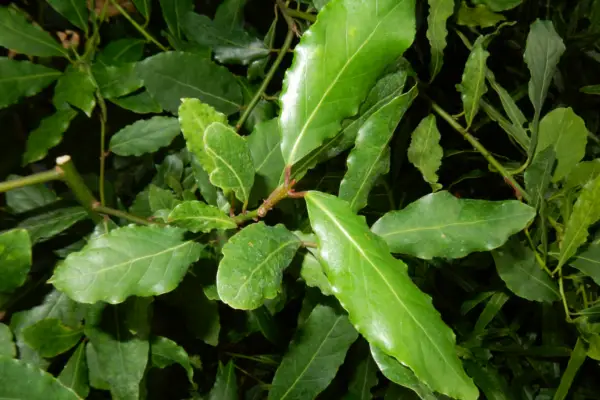
Golden bay, Laurus nobilis ‘Aurea’
This named cultivar has golden yellow foliage, especially noticeable in winter and spring. Its colour is a plant characteristic, so it should not automatically be diagnosed as nutrient deficiency. The leaves are culinary bay.
Illustrative green Laurus nobilis foliage; this photograph does not show the golden ‘Aurea’ cultivar.
Photo: Shuvaev, CC BY 4.0. Resized and optimised; cropped for display.
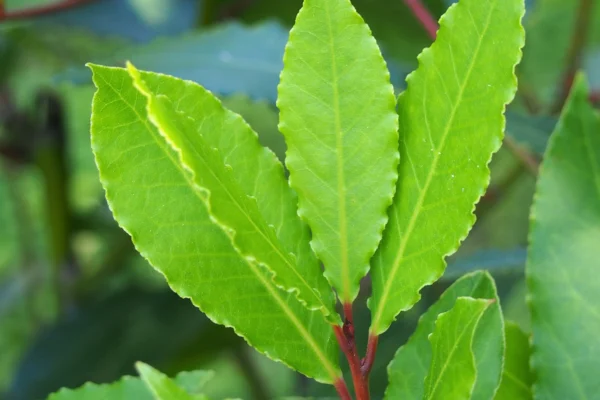
Willow leaved bay, Laurus nobilis f. angustifolia
A form with narrower, wavy edged aromatic leaves that can also be used in cooking. It can become a substantial shrub or small tree, so narrow leaves do not mean a permanently dwarf plant.
Illustrative Laurus nobilis leaves; this plant is not verified as f. angustifolia.
Photo: Agnieszka Kwiecień, Nova, CC BY-SA 4.0. Resized and optimised; cropped for display. Adapted image under the same licence.

Bay trained as a standard
A standard is Laurus nobilis trained with a clear stem and leafy crown, not a separate species. It gives height in a pot but needs shaping, a stable container and removal of unwanted lower shoots.
Illustrative Laurus nobilis tree; this is not a photograph of a clipped standard.
Photo: G.Hagedorn, CC BY-SA 3.0. Resized and optimised; cropped for display. Adapted image under the same licence.
Explore the BFFD map for nearby growers and suppliers. Ask for culinary Laurus nobilis, confirm the plant size and trained form, and check availability before making a journey.
Bay flowers offer food for visiting insects when the plant is allowed to bloom. Repeated tight clipping can remove flowering growth, so a looser shrub may have more seasonal interest than a closely maintained ball.
Its evergreen foliage also contributes cover in a mixed garden. Tolerating a little harmless leaf distortion avoids treating every insect as a problem and keeps routine care proportionate to the effect on the plant.
Published by Buy From Farmers Direct. Sources checked 4 October 2026. Growing references: RHS: Growing bay; RHS: Bay tree care; Garden Organic: Bay; Wisconsin Horticulture: Sweet bay; NC State Extension: Laurus nobilis; RHS: Golden bay Aurea; RHS: Willow leaved bay; RHS: Bay sucker; RHS: Potentially harmful garden plants; RHS: Growing herbs in containers. The seasonal timeline uses the shared BFFD Growers Calendar record; adjust timings to your variety and local conditions.
Check whether only a few old leaves are affected or the whole plant is changing. Cold, wet compost is a common cause in pots. Inspect drainage and roots before adding feed, and remember that ‘Aurea’ is naturally golden.
Shape a shrub in spring or summer and trim formal topiary in summer. Carry out substantial size reduction in late spring, preferably in stages. Wait until spring growth clarifies winter damage before cutting it away.
Many established plants do, particularly in sheltered well drained ground. Exposed pots are more vulnerable. Move them into shelter or protect the container during severe weather, while keeping the compost drained.
Yes, from a correctly identified culinary Laurus nobilis plant. Pick healthy leaves, wash as needed and remove whole leaves before serving because they remain tough. Fresh and dried leaves can differ in flavour strength.
Dry clean leaves in a warm airy room, then store fully dried leaves in a labelled airtight container away from strong light. Prepare small batches regularly.
Not necessarily. Several unrelated plants are called laurel, including potentially harmful species. Only use leaves from a positively identified culinary bay, Laurus nobilis; do not substitute leaves from an unknown hedge.
Use the BFFD calendar for seasonal checks and the directory to find local growers. Steady root care and pruning can keep a well placed bay productive for years.
Explore more growing guides: Basil, Blackberry, Beautyberry.
Want to get food independence, support your local grower, get better prices and shop more privately?
Local food isn’t just something you find. It’s something you protect. A free account helps keep local supply visible, supported, and resilient.

….it takes 30 seconds for food lovers and 5 minutes for suppliers
We built this for people who care where their food comes from. For people who want to remain food secure. For Farmers to get to the local people, who deserve a better income and to deliver a better price for you. For the environmentally conscious and the privacy-conscious. An account simply helps us make the map and supplier reach more useful to you, without changing how open it is. You’re always in control.


Find local food. Stay connected to it. Create a free account to support local producers and be part of a growing food network.


