Peanuts are an absorbing crop to try in a warm greenhouse or conservatory. The yellow flowers appear above ground, but the pods develop below it after slender pegs push into the soil. In the UK, treat Arachis hypogaea as an experimental annual rather than a dependable outdoor food crop: a long warm season, suitable planting stock and room for those pegs matter more than simply keeping a plant alive.
Tender annual legume
Best under glass
Pods form underground
Long warm season
Experimental UK crop
| Botanical name | Arachis hypogaea |
| Family | Fabaceae |
| Other common name | Groundnut |
| Life cycle | Annual crop |
| Plant habit | Bushy or spreading, depending on variety |
| Approximate height | Often 30 to 50cm; varies with conditions |
| Leaves | Four oval leaflets per leaf |
| Flowers | Small and yellow, resembling pea flowers |
| Pollination | Mainly self pollinating |
| Pod position | Below the soil surface |
| Pegging | The fertilised ovary is carried into the soil |
| Best UK setting | Warm bright greenhouse or conservatory |
| Light | Full sun |
| Growing medium | Light, loose and freely drained |
| Seed sowing | March and April indoors with warmth |
| Germination temperature | Around 20 to 25°C |
| Summer planting | May or June when sufficiently warm |
| Growing season | Allow around four to five warm months, sometimes longer |
| Possible UK harvest | September and October; maturity is not guaranteed |
| Frost tolerance | Not frost hardy |
| Plant name | Crop type | Spacing |
Sow indoors
Plant outdoors
Harvest
Polytunnel | |||||||||||
|---|---|---|---|---|---|---|---|---|---|---|---|---|---|---|
| Jan | Feb | Mar | Apr | May | Jun | Jul | Aug | Sep | Oct | Nov | Dec | |||
| Peanut | Legumes | Single one plant per broad pot, In row 30cm, Row gap 40cm for compact selections; allow more for spreading types | No activity recorded | No activity recorded | Sow indoors | Sow indoors | Plant outdoors, Polytunnel | Plant outdoors, Polytunnel | Polytunnel | Polytunnel | Harvest, Polytunnel | Harvest, Polytunnel | No activity recorded | No activity recorded |
Sow indoors: March, April. Plant outdoors: May, June. Harvest: September, October. Polytunnel: May, June, July, August, September, October.
March and April are indoor sowing months with reliable warmth and good light. May and June mean moving plants into their final container or a suitably warm protected bed; an outdoor trial must wait until frost risk has passed. September and October are a possible harvest window, not a guaranteed crop. The May to October polytunnel band requires warm conditions, with extra heat if needed at either end: an unheated structure does not prevent frost.
Grow a peanut for the pleasure of watching its unusual fruiting process, with a possible modest harvest as an extra reward. One plant in a broad container makes the pegs easy to observe without occupying a whole greenhouse bed.
A greenhouse, polytunnel or bright conservatory gives a better chance than an ordinary outdoor border. Outdoor experiments are most realistic in warm sheltered gardens with suitable early selections, but cool seasons can leave many pods immature.
Photo: Callmemimi430, CC BY 4.0. Resized and optimised; cropped for display.
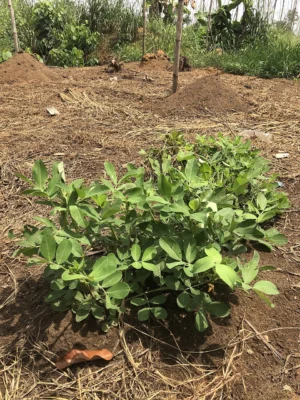
Choose the brightest warm position available, leaving room for low branches to spread. A peanut shaded behind tomatoes may remain leafy without receiving enough warmth and light for a useful crop.
Use a container with drainage holes and a broad surface of loose compost. At least 5 litres is a breeder’s minimum for selected compact plants; a larger pot, around 30cm across or more, gives pegs more usable ground.
Keep the compost surface accessible. Stones, thick bark, a tight plastic cover or stems hanging far beyond the rim can prevent pegs from reaching the growing medium.
For a protected bed, use light workable soil and allow roughly 30cm between compact plants with about 40cm between rows, increasing space for spreading varieties. Avoid heavy ground that remains wet or sets into a hard surface crust.
Photo: Forest and Kim Starr, CC BY 3.0 us. Resized and optimised; cropped for display. Forest & Kim Starr
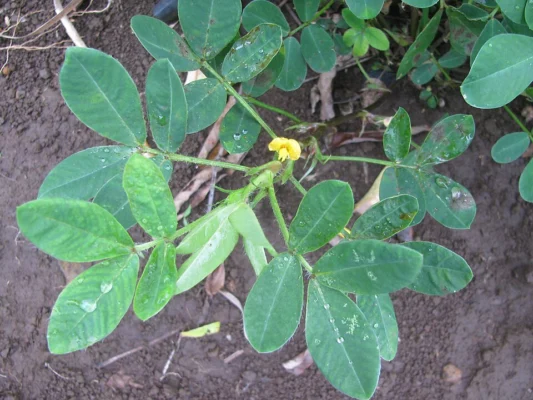
Buy labelled Arachis hypogaea seed intended for growing, or a healthy young culinary peanut plant. Ask for an early selection suited to a short season. Roasted or salted snack peanuts are unsuitable for sowing, and planting seed from a packet is not food.
1.
Arrange a warm growing space before sowing. Starting very early is only useful if you can keep emerging seedlings bright and warm throughout spring.
2.
In March or April, fill individual pots with fresh, freely drained seed compost. Individual sowing reduces the need to separate fragile young roots later.
3.
Follow the packet’s preparation instructions. Where seed is supplied in its hard shell, remove the shell carefully if directed, retaining the thin skin around the kernel.
4.
Sow around 3cm deep unless your supplier specifies otherwise. Moisten the compost and keep it near 20 to 25°C, checking regularly rather than repeatedly soaking the pot.
5.
Once shoots emerge, provide strong light and airflow. Protect pots from mice and allow them to drain after watering; germination does not mean the seedlings can tolerate cold wet conditions.
6.
Move each plant into a larger final container while its root ball is still manageable and before pegs develop. Keep the root ball intact and plant at its previous depth.
7.
If trying plants outdoors, harden them off gradually and wait for warm conditions after the last frost. Keep a protected space available if nights turn cold.
8.
Water in and leave loose open compost beneath the branches. Label the plant and its sowing date, then watch for yellow flowers followed by downward growing pegs.

Watering
Keep the root zone evenly moist during active growth, especially flowering, pegging and pod filling. Do not let a small pot repeatedly dry out, but never leave the roots standing in water.
Water gently around the plant without washing compost away from pegs. The upper growing medium needs to remain penetrable; avoid a hard dry crust or persistent saturation around developing pods.

Feeding
Fresh potting compost supplies some initial nutrients. As these run down, use a modest suitable balanced feed following its label and your supplier’s advice, avoiding heavy nitrogen applications that favour foliage.
Peanuts can form nitrogen fixing root nodules with suitable bacteria, but this is not guaranteed in every pot. Poor growth may reflect cold, drainage or nutrition; do not assume that being a legume removes every feeding need.

Pruning
Peanuts do not need routine pruning, pinching or support as a climbing bean would. Leave healthy low branches in place because their flowers may produce pegs that reach the soil.
Weed gently while plants are young. Once pegs enter the ground, stop hoeing around them and avoid turning, lifting or repotting the plant, which can break the developing connections to the pods.

Winter care
This is a seasonal annual crop, not a hardy shrub to keep outside. Assess the harvest before cold autumn conditions or frost end growth, and do not leave pods in cold wet compost in the hope that they will continue ripening.
After lifting the crop, compost healthy tops and clean the growing space. Start again from suitable seed or a young plant in spring rather than trying to overwinter an exhausted annual.
A culinary peanut plant has leaves divided into four oval leaflets and small yellow pea shaped flowers near the stems. After fertilisation, slender pegs grow downwards and carry developing ovaries into the soil.
The mature edible kernels are seeds enclosed in textured underground pods. They are legumes, not roots or tree nuts. Ornamental Arachis species, plants with similar flowers and other crops called groundnuts should not be substituted for labelled A. hypogaea.
Photo: Pollinator, CC BY-SA 3.0. Resized and optimised; cropped for display. Adapted image under the same licence.
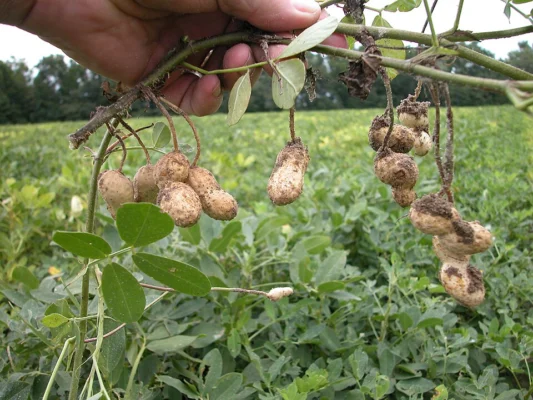
The main UK limitation is accumulated warmth through a long season. A plant can flower and form pegs yet still produce few fully developed kernels before autumn turns cold.
Protected growing is especially useful in northern, exposed or cooler gardens. Ventilate during sunny weather while retaining suitable warmth, and watch overnight temperatures rather than relying on a calendar date alone.
Breeders have selected peanuts for northern European trials, but trial yields are not a promise for a British patio. Local conditions, planting date and variety all affect whether September or October brings a useful crop.
Photo: Oby Ezeilo, CC BY-SA 4.0. Resized and optimised; cropped for display. Adapted image under the same licence.
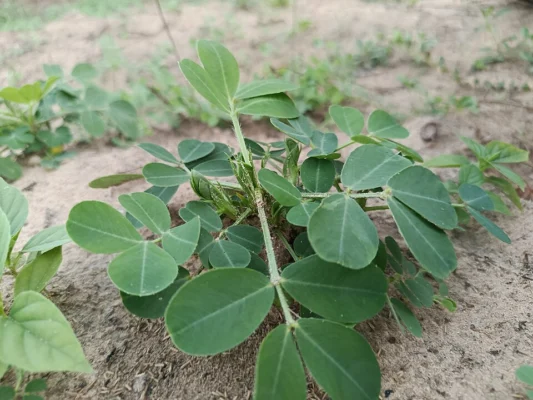
Cold or overly wet compost is a common obstacle. Use fresh seed, steady warmth and a drained medium, and keep it moist rather than saturated. Kew’s own growing trials also found mice and seedling losses could be significant.
Review light, warmth, planting date and feeding. A shaded or cool plant may grow slowly, while excessive nitrogen can favour leaves. There is no reliable late season shortcut to replace months of suitable conditions.
Check whether branches extend beyond the pot or the surface is covered or compacted. Provide loose uncovered growing medium beneath the plant; do not force brittle pegs into holes or snap them while adjusting the pot.
Young pods need further warm growing time after pegging. Cool conditions, drought during pod development or unsuitable nutrition can leave them poorly filled. Do not judge readiness by foliage colour alone.
Begin drying promptly with plenty of airflow and never pile damp pods into a sealed container. Discard mouldy, damaged or otherwise unhealthy nuts. A harvest that cannot be dried properly should not be stored for later eating.
Peanuts are normally raised from seed each year. Keep the thin seed coat intact when handling kernels and use labelled stock so the species and sowing instructions are known.
A few sound mature kernels can be reserved from a successful crop, dried carefully and stored cool and dry for a later sowing. Do not save roasted, salted, damaged or mouldy kernels, and expect a small home saved batch to vary in germination.
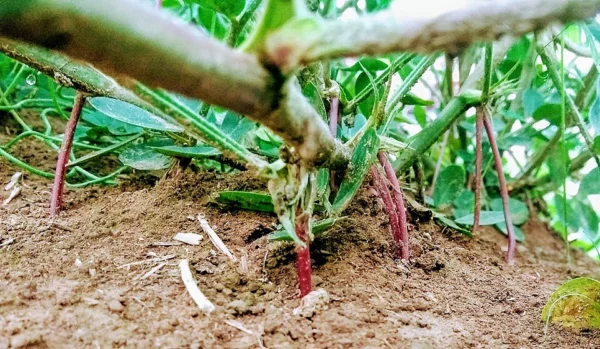
Justpink
A bushy selection in the Not Just Peanuts range, with pink to brown seed coats. The breeder selected it for northern European growing, but it still needs a long suitable season. Ask about current supply and local performance.
Illustrative peanut pegs entering soil; the variety is not confirmed as Justpink.
Photo: Idéalités, CC BY-SA 4.0. Resized and optimised; cropped for display. Adapted image under the same licence.
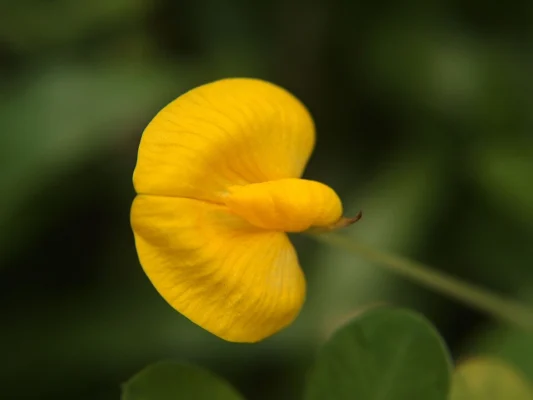
Justblack
Known for very dark red to almost black seed coats. The breeder reports useful tolerance of less favourable late season conditions relative to some selections; this does not make it frost hardy.
Illustrative Arachis hypogaea flower, not a confirmed Justblack plant.
Photo: Tu7uh, CC BY 3.0. Resized and optimised; cropped for display.
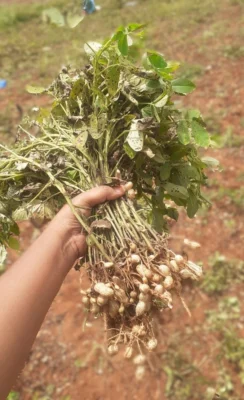
Justmore
A selection with larger pods and dark red coated kernels, often with more kernels in a pod. It is another option to discuss with a specialist supplier when choosing a protected growing experiment.
Illustrative harvested peanut plant; Justmore is not confirmed in this image.
Photo: Nithyashree Balasupramaniyan, CC0. Resized and optimised; cropped for display.
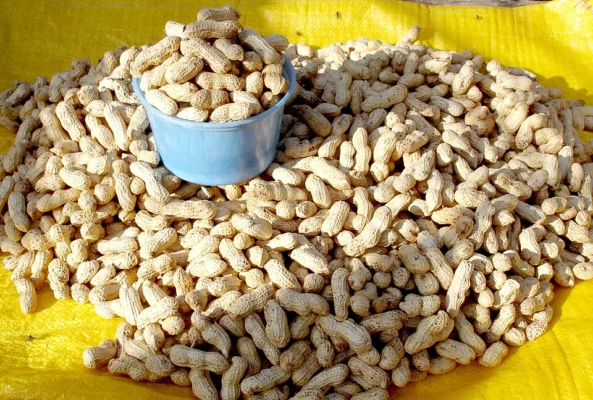
Justbehappy
Selected for striking red and white striped seed coats. It is a novelty choice rather than a guarantee of a large harvest, and the breeder describes lower production than some other selections in the range.
Illustrative dried peanut pods; these are not identified as Justbehappy.
Photo: David E Mead, CC0. Resized and optimised; cropped for display.
Check for Arachis hypogaea, an appropriate early selection and clear growing instructions. Choose a small trial that fits your warmest space, and plan both a broad growing container and a dry airy place for handling any harvest.
Peanuts mainly pollinate themselves, so a second plant or an insect pollinator is not essential for pod formation. The useful observation is the sequence from flower to peg to underground pod.
Mice and other animals may find seed and harvested pods attractive. Protect sowings and drying crops with suitable physical barriers, checking regularly, rather than leaving exposed seed or food scattered around the greenhouse.
Published by Buy From Farmers Direct. Growing guidance reviewed 6 October 2026. The seasonal timeline uses the shared BFFD Growers Calendar record; adjust timings to your variety and local conditions.
It is possible as a trial in a warm sheltered place with a suitable variety, but a useful crop is unreliable in much of the UK. A warm greenhouse or conservatory usually offers a better chance of maturing pods.
The flowers themselves are followed by growing pegs carrying the fertilised ovary. The peg enters the soil and the pod develops underground. Keep a loose accessible surface beneath the branches and avoid disturbing pegs once they enter it.
Start checking in September or October as mature plants begin to yellow. Carefully examine a few pods for developed kernels rather than relying only on leaf colour. Lift before frost or prolonged cold wet conditions; some pods may still be immature.
Loosen the root area and lift carefully so pods are not left behind. Shake off loose soil and dry in a warm, airy, sheltered place. Drying may take several weeks; inspect regularly and discard unhealthy nuts instead of sealing damp pods away.
No. Pods and kernels need thorough drying for storage, and fresh peanuts require different handling from a dry snack. Follow a reliable peanut preparation recipe, keep sound dry nuts cool, and discard any mouldy or spoiled material.
Only use sound kernels from a correctly labelled culinary peanut plant. Do not eat seed sold for sowing. Homegrown peanuts remain a peanut allergen, so clearly identify them when sharing a harvest and never serve them to someone with a peanut allergy.
A peanut plant rewards close observation even when the harvest is small. Give it a long warm season, room for pegs to reach loose soil and careful handling at harvest, while treating a mature UK crop as a possibility rather than a promise.
Explore more growing guides: Beans (Broad), Beans (French), Chilli Pepper.
Want to get food independence, support your local grower, get better prices and shop more privately?
Local food isn’t just something you find. It’s something you protect. A free account helps keep local supply visible, supported, and resilient.

….it takes 30 seconds for food lovers and 5 minutes for suppliers
We built this for people who care where their food comes from. For people who want to remain food secure. For Farmers to get to the local people, who deserve a better income and to deliver a better price for you. For the environmentally conscious and the privacy-conscious. An account simply helps us make the map and supplier reach more useful to you, without changing how open it is. You’re always in control.


Find local food. Stay connected to it. Create a free account to support local producers and be part of a growing food network.


