Broad beans are a useful early crop for UK gardens, filling a gap before summer beans begin. They are Vicia faba, a different species from French and runner beans, and suit cooler growing conditions. Choose a spring sowing for a straightforward start, or try a hardy autumn variety where winter drainage and shelter are good.
Cool season crop
Sunny position
Early harvest
Spring or autumn sowing
Upright growth
| Botanical name | Vicia faba |
| Family | Fabaceae |
| Plant type | Annual vegetable |
| Habit | Upright, not twining |
| Height | About 50cm to 1.2m, depending on variety |
| Position | Sunny and sheltered |
| Soil | Fertile, moist but well drained |
| Main sowing season | February to April |
| Autumn sowing | October or November, suitable varieties and sites |
| Indoor sowing | February onwards |
| Outdoor sowing | Usually March and April |
| Sowing depth | 5 to 7.5cm outdoors |
| Plant spacing | 15 to 23cm, according to variety |
| Single row gap | 45cm |
| Double row layout | Rows 23cm apart; 60cm between pairs |
| Support | Stakes and horizontal string for taller crops |
| Harvest | Usually May to August |
| Containers | Dwarf varieties; at least 40cm wide |
| Common pests | Blackfly, pea and bean weevil |
| Common disease | Chocolate spot |
| Plant name | Crop type | Spacing |
Sow indoors
Plant outdoors
Harvest
Polytunnel | |||||||||||
|---|---|---|---|---|---|---|---|---|---|---|---|---|---|---|
| Jan | Feb | Mar | Apr | May | Jun | Jul | Aug | Sep | Oct | Nov | Dec | |||
| Beans (Broad) | Legumes | Single 0.20m, In row 0.20m, Row gap 0.45m | No activity recorded | Sow indoors, Polytunnel | Sow indoors, Plant outdoors, Polytunnel | Sow indoors, Plant outdoors | Harvest | Harvest | Harvest | Harvest | No activity recorded | Sow indoors, Polytunnel | Sow indoors, Polytunnel | No activity recorded |
Sow indoors: February, March, April, October, November. Plant outdoors: March, April. Harvest: May, June, July, August. Polytunnel: February, March, October, November.
February to April is the main sowing window. October and November are optional for hardy varieties on suitable mild, well drained sites. March and April planting refers to young plants started under cover. Harvest from May to August varies with sowing and location. Polytunnel use means shelter, not guaranteed protection from hard frost. Calendar spacing is a single row example.
Broad beans suit gardeners who can give an early crop a modest stretch of ground. A short row produces a useful tasting harvest, while larger household portions need more plants. Think about how much shelled produce you want before choosing the bed length.
Dwarf cultivars work in large pots and more exposed gardens. Taller plants are productive but need support around the row. Autumn sowing is optional, so a wet winter garden does not prevent you growing broad beans successfully from spring seed.
Photo: Kolforn (Wikimedia), CC BY-SA 4.0. Resized and optimised; cropped for display. Adapted image under the same licence.
Choose a sunny place sheltered from strong wind. Unlike climbing beans, broad beans do not need a tall frame, but access down the row makes checking pods and supporting stems easier.
Work mature compost into the planting area, or plant through a settled compost mulch. Keep the soil structure open and avoid sowing into ground that smears heavily onto your boots.
On a wet site, start seed in pots under cover and transplant in spring. This keeps germination separate from the condition of the vegetable bed and gives you visible plants to space accurately.
For containers, choose a dwarf variety and a pot at least 40cm wide with good drainage. Arrange plants about 15cm apart and leave enough room to water without washing compost over the rim.
Photo: Kolforn (Wikimedia), CC BY-SA 4.0. Resized and optimised; cropped for display. Adapted image under the same licence.
Choose the sowing season to match your soil. Autumn seed needs a suitable hardy variety and dependable drainage; a protected February start or outdoor spring sowing is often more practical elsewhere.
1.
Select seed labelled for the intended season. Keep the variety name because height and winter suitability vary.
2.
Prepare a weed free bed with mature organic matter. Leave room for access between rows.
3.
For a protected start, sow one seed about 5cm deep in each deep module or small pot.
4.
Outdoors, sow 5 to 7.5cm deep, spacing plants 15 to 23cm apart according to the packet.
5.
Use single rows 45cm apart, or paired rows 23cm apart with 60cm between pairs.
6.
Raise a few spare seedlings separately so gaps can be filled without disrupting established plants.
7.
Acclimatise plants raised under cover before transplanting in spring. Keep each rootball intact and water in.
8.
Install supporting stakes and string while plants are small, then add higher strings as the stems grow.

Watering
Established plants in the ground may manage on rainfall during cool weather. Check moisture as flowering begins and when pods swell, especially on light soil. A thorough soak is more useful than briefly wetting the surface.
Pots dry faster, even during a breezy spring day. Check them frequently and let excess water drain away. Do not assume a shower has reached compost hidden beneath a full canopy.

Feeding
Prepare the bed before sowing rather than applying frequent rich feeds. If foliage becomes pale, assess waterlogging, root conditions and cold weather before adding fertiliser.
For container plants, a suitable liquid feed from flowering can help once the compost’s initial nutrients are used. Follow the product instructions and keep the compost adequately moist.

Pruning
Broad beans need support rather than training up canes. Horizontal string around the row holds taller stems upright without tying each leaf or pulling plants into a tight bundle.
Once the first pods set, you can remove soft shoot tips. This may concentrate growth on the crop, but it does not guarantee freedom from blackfly. Continue checking the whole plant rather than relying on pinching alone.

Winter care
For autumn sowings, inspect plants after strong wind and prolonged rain. Protect young growth during severe cold when appropriate and ventilate covers in milder weather. A cloche cannot correct waterlogged soil.
If autumn plants fail, resow in late winter or spring rather than repeatedly replacing them in poor conditions. After summer harvest, clear diseased material and prepare the space for the next planned crop.
Broad beans have upright, angular stems and broad leaflets, with pods attached along the stem. Most familiar varieties carry pale flowers with dark markings; Crimson Flowered has distinctive reddish flowers. Young pods may point upwards before becoming heavier.
Open a sample pod when you can see and feel the seeds filling it. For a tender shelling harvest, choose full but still young beans. Lower pods commonly mature first, so check beneath the foliage rather than judging only the top of the plant.
Photo: Kolforn (Wikimedia), CC BY-SA 4.0. Resized and optimised; cropped for display. Adapted image under the same licence.
A protected February sowing is useful on cold or wet plots. It does not require a heated summer environment; the aim is bright, sheltered establishment and roots that can be transplanted when the bed becomes suitable.
Autumn sowing is most useful in mild, sheltered gardens with soil that drains freely. Hardy Aquadulce types can also be sown in spring, so unused autumn seed need not be wasted.
Late sowing runs into hotter conditions and often gives a smaller return. Treat early spring as the main opportunity and use French or runner beans for the later summer slot. Local weather should decide the final planting day.
Photo: Rasbak, CC BY-SA 3.0. Resized and optimised; cropped for display. Adapted image under the same licence.
Inspect colonies for ladybirds and other predators. Wipe off small infestations or remove a heavily colonised tip. Check again over following days; removing the top is not a permanent solution.
Chocolate spot is favoured by damp, crowded conditions. Increase airflow, avoid saving seed from infected plants and clear affected remains after cropping. Rapidly expanding lesions deserve closer attention.
Pea and bean weevils can leave regular notches. Established plants often tolerate modest leaf damage. Check whether growth continues before assuming the whole crop needs treatment.
Mice may take seeds and saturated soil can spoil them. Starting a replacement batch in individual pots makes germination easier to observe and avoids repeating the same failed sowing conditions.
Wind and heavy pods can pull tall plants over. Add supporting string before stems bend, and repair loose stakes. Avoid wrenching a badly bent stem upright in one movement.
Broad beans are raised from seed. If saving your own, choose healthy plants and let selected pods mature until dark and dry. Finish drying indoors if necessary, then label the seed clearly.
Broad bean varieties can cross pollinate, so home saved seed may differ when several varieties flower nearby. For reliable varietal identity, use fresh named seed or follow a proper isolation method from a seed saving guide.
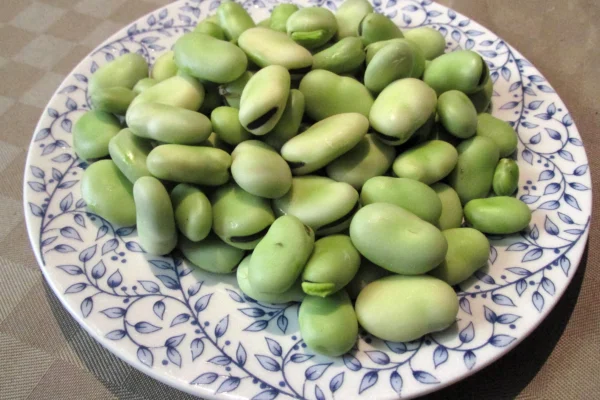
Aquadulce Claudia
A familiar hardy broad bean for autumn sowing in suitable conditions, also usable in spring. Choose it when an early harvest matters and the plot has enough drainage to carry plants through winter.
Illustrative broad beans; the photographed cultivar is unidentified.
Photo: Assianir, CC BY-SA 4.0. Resized and optimised; cropped for display. Adapted image under the same licence.
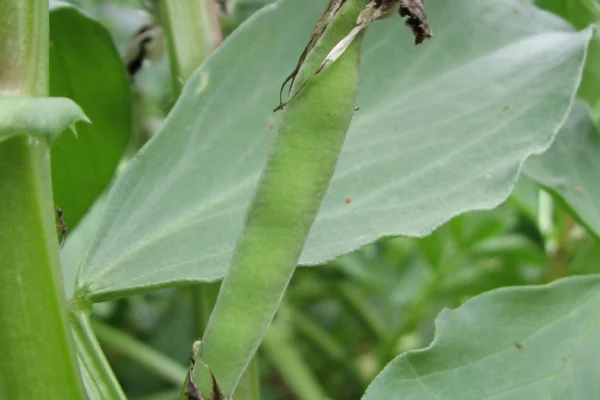
The Sutton
A compact broad bean suited to containers, small beds and positions where taller plants are awkward. Short stature reduces the support required, although a heavy crop can still benefit from twiggy props.
Illustrative Vicia faba pods; the photographed cultivar is unidentified.
Photo: Daniel Feliciano, Public domain. Resized and optimised; cropped for display.
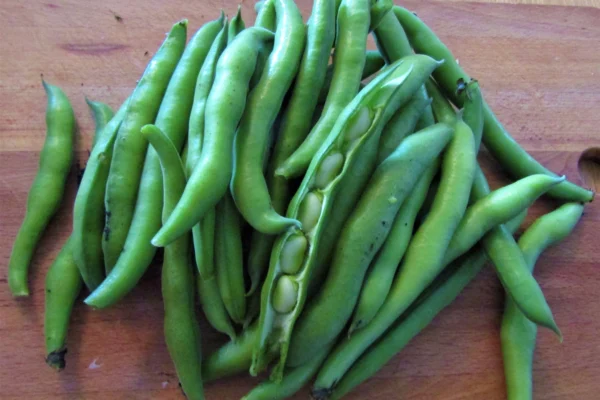
Witkiem Manita
An established spring sowing choice. It gives a useful comparison with an autumn crop when you want to assess whether overwintering is worthwhile in your own garden.
Illustrative harvested broad beans; the photographed cultivar is unidentified.
Photo: Kolforn (Wikimedia), CC BY-SA 4.0. Resized and optimised; cropped for display. Adapted image under the same licence.
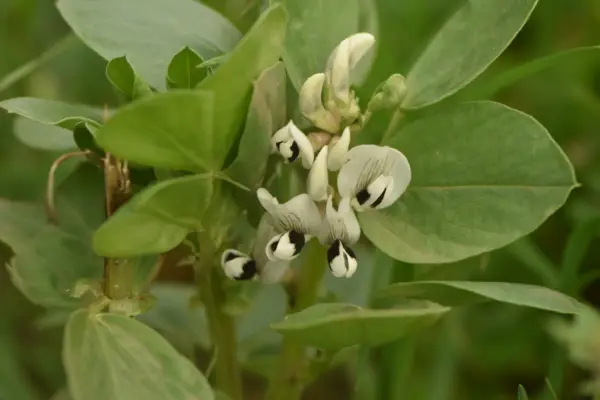
Crimson Flowered
A broad bean chosen partly for its reddish flowers, adding interest to an edible border. Keep its label if saving seed, since cross pollination can alter the next generation.
Species illustration of Vicia faba; this is not a verified photograph of Crimson Flowered.
Photo: Lies Van Rompaey, CC BY-SA 4.0. Resized and optimised; cropped for display. Adapted image under the same licence.
Use the BFFD map to find nearby growers and ask about the current broad bean season. Check directly for fresh pods, plants or seed, as availability varies between producers.
Broad bean flowers are visited by bees. A row can contribute flowers early in the vegetable season, particularly alongside other spring flowering plants. Keep pollinator access in mind when using crop covers.
Look beneath leaves before removing insects. Ladybirds, hoverflies and other natural predators may already be working through aphid colonies. A mixed garden with flowers and undisturbed corners supports more than the crop alone.
Published by Buy From Farmers Direct. Sources checked 4 October 2026. Growing references: RHS: Grow broad beans; RHS: Autumn or spring sowing; Garden Organic: Broad bean; RHS: Chocolate spot; RHS: Aquadulce Claudia; RHS: Witkiem Manita; RHS: Crimson Flowered; Garden Organic: Pollination and isolation. The seasonal timeline uses the shared BFFD Growers Calendar record; adjust timings to your variety and local conditions.
The main window is February to April, using pots under cover for an early start. Hardy varieties can also be sown in October or November on mild, sheltered sites with good drainage.
Usually 15 to 23cm apart, with single rows 45cm apart. For double rows, allow 23cm within the pair and 60cm between pairs. Follow the named variety’s instructions.
Usually from May into summer, depending on sowing. Open a lower pod when the seeds feel plump and pick while the beans are still young and tender.
Yes. Choose a dwarf variety such as The Sutton, a container at least 40cm wide, and good drainage. Check watering more often than for plants growing in the ground.
They do not climb. Taller plants benefit from stakes around the row with horizontal strings supporting the stems. Dwarf plants often need only light support.
You can remove tender tips after the first pods set. This does not reliably prevent blackfly, so keep inspecting plants and deal with developing colonies according to what you actually find.
Plan broad beans in the BFFD growers calendar and compare local harvest availability through the map. Record sowing dates to improve next year’s timing.
Explore more growing guides: Beans (Borlotti), Beans (French), Beans (Runner).