A plum fan spreads its branches across a wall or fence, bringing blossom and fruit into a sunny, accessible plane. It is a practical way to use vertical garden space, provided the support is strong and the tree is trained regularly. Choose a suitable rootstock, leave room for the whole framework and give summer pruning a permanent place in the diary.
Trained stone fruit
Sunny wall or fence
Permanent support
Summer pruning
Accessible harvest
| Botanical name | Prunus domestica |
| Plant type | Deciduous European plum |
| Training form | Fan of branches from a short trunk |
| Suitable site | Sunny sheltered wall or fence |
| Space needed | Several metres; confirm the nursery's dimensions |
| Rootstock | Match vigour to the available framework |
| Compact options | Pixy or VVA1, with suitable cultivar |
| Larger option | St Julien A where space permits |
| Support | Permanent wires with training canes |
| Wall planting distance | About 25 to 35cm from the base |
| Soil | Fertile, moist but well drained |
| Planting | Preferably November to March |
| Blossom | White flowers in spring |
| Pollination | Depends on cultivar |
| Harvest | July to October across different cultivars |
| Fruiting wood | Previous season’s shoots and older wood |
| Main pruning season | Spring and summer |
| Late crop exception | Defer autumn replacement cuts until spring |
| Watering | Monitor the wall's rain shadow |
| Training commitment | Regular tying and selective pruning |
| Plant name | Crop type | Spacing |
Sow indoors
Plant outdoors
Harvest
Polytunnel | |||||||||||
|---|---|---|---|---|---|---|---|---|---|---|---|---|---|---|
| Jan | Feb | Mar | Apr | May | Jun | Jul | Aug | Sep | Oct | Nov | Dec | |||
| Plum (Fan) | Orchard fruit | Reserve several metres of support; confirm cultivar and rootstock dimensions with the nursery | Plant outdoors | Plant outdoors | Plant outdoors | No activity recorded | No activity recorded | No activity recorded | Harvest | Harvest | Harvest | Harvest | Plant outdoors | Plant outdoors |
Sow indoors: no months recorded. Plant outdoors: January, February, March, November, December. Harvest: July, August, September, October. Polytunnel: no months recorded.
Plant during dormancy where possible, but train and prune plums during suitable spring and summer growth. Harvest dates vary by cultivar. A late crop is not a reason to make replacement cuts in cold autumn weather.
A good choice for someone who wants fruit along a boundary and enjoys maintaining a trained tree. Keeping branches accessible helps with checking pests, thinning fruit and gathering the crop.
Less suitable for a narrow wall already crowded with climbers or for a garden where annual training is unlikely. A fan still needs substantial width and reliable access to its branches.
Photo: APictche, CC BY-SA 4.0. Resized and optimised; cropped for display. Adapted image under the same licence.
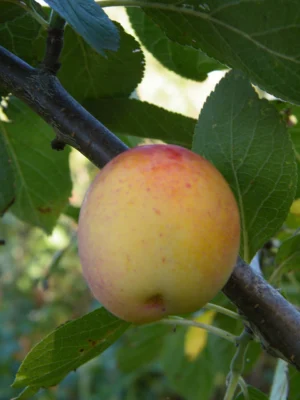
Use a warm sunny wall or a well supported fence, sheltered from strong wind. In cooler districts, a favourable orientation can help the fruit ripen more reliably than an exposed open position.
Check the soil at the wall base. It may be dry, full of rubble or compacted by construction, so establish whether roots have useful growing space before buying a tree.
Leave enough clear ground in front to reach every part of the framework. A permanent seat, deep border or awkward slope can turn routine tying and harvesting into difficult jobs.
Choose support and rootstock together. A very vigorous tree needs more room and greater effort to manage; a small young specimen does not reveal how much wall it will eventually occupy.
Photo: Gerda Arendt, CC0. Resized and optimised; cropped for display.
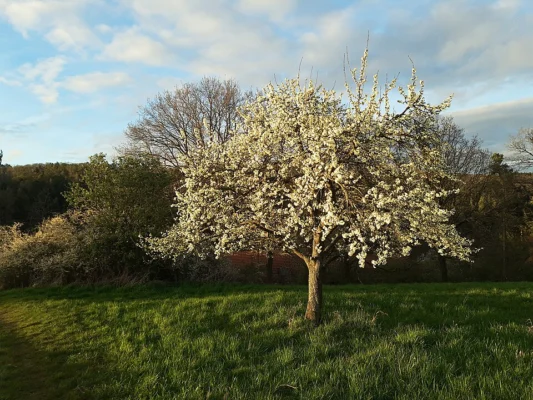
A partly trained fan can save several seasons of formative work, but it still needs maintenance. Inspect its branch arrangement and ask how the existing framework should be extended after planting.
1.
Confirm the cultivar's pollination needs and the rootstock's likely vigour. Choose a tree intended for fan training rather than assuming a bush can immediately be flattened against a wall.
2.
Install sound horizontal support wires before planting. Add training canes as required so individual branches can be guided without being pulled directly against rough masonry.
3.
Check the nursery's recommended final dimensions and mark the full area. Reserve room for both sides of the fan instead of letting another climber occupy half the space.
4.
Prepare a planting hole about 25 to 35cm away from the wall base. Make it broad enough for the roots and improve poor ground sensibly rather than filling a tiny hole with rich compost.
5.
Water the nursery pot or briefly soak exposed roots before planting. Keep roots moist while positioning the tree and avoid forcing them into tight bends.
6.
Plant at its previous depth, with the graft union above soil level. Backfill, firm gently and water thoroughly so soil settles around the roots.
7.
Attach the existing framework with soft ties and check that branches are not rubbing. Do not force stiff growth into a sharp angle simply to create an instant symmetrical fan.
8.
Mulch while keeping the trunk clear, and begin the appropriate spring training plan. Keep the first crop light enough that young branches can establish their position without sagging.

Watering
Check moisture at the root area rather than judging by rainfall elsewhere in the garden. A wall or roof overhang can leave the tree in a rain shadow through an apparently wet spell.
Water deeply when needed, particularly during establishment and fruit swelling. Mulch helps limit evaporation, but it does not replace checking whether the soil beneath is actually moist.

Feeding
Renew an organic mulch in spring and assess the tree's growth before adding fertiliser. A well established plum in fertile soil may require little additional feeding.
Excessively vigorous extension growth makes a fan harder to keep balanced. Investigate pruning, rootstock and growing conditions before using more feed to correct a poor crop.

Pruning
In June, tie useful shoots into gaps and remove badly positioned growth. Pinch remaining new side shoots to about six leaves. In August, after summer fruiting, shorten these to three leaves to develop compact fruiting wood.
Retain a mixture of young and older productive wood, renewing selected older sections gradually. Work in dry spring or summer weather and finish routine stone fruit cuts by late August. If harvest is in autumn, leave replacement pruning until spring rather than applying an after harvest rule blindly.

Winter care
Inspect supports, ties and the outline while leaves are absent, but keep structural cutting for the appropriate active season. Replace frayed ties and loosen any that are beginning to constrict wood.
Clear rotten hanging fruit and prepare protection for reachable blossom when spring frost threatens. Keep covers supported away from flowers and remove them when conditions allow pollinating insects access.
A true fan has branches radiating across the support from a low framework. It differs from an espalier's regular horizontal tiers and suits the way stone fruit is grown and renewed.
Plums flower white in spring and carry smooth fruit with a single stone. Learn which growth is forming the framework and which is a fruiting side shoot before pruning; their roles are different even when both look vigorous.
Photo: APictche, CC BY-SA 4.0. Resized and optimised; cropped for display. Adapted image under the same licence.
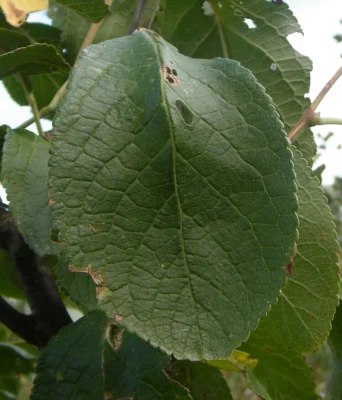
A warm boundary helps in a cooler district, but spring frost can still damage blossom. Select a cultivar with appropriate flowering and ripening times rather than assuming wall training removes every climatic limitation.
Check fruit set during early summer and thin an excessive crop. Roughly one plum every 5 to 8cm, or a pair every 15cm, reduces crowding and strain; young branches may need an even lighter load.
Gather ripe fruit gently over several visits. Colour varies by cultivar, so use slight softness and easy release as additional clues. Eat, cook or preserve promptly, separating damaged fruit from any intended for short storage.
Photo: PROPOLI87, CC BY-SA 4.0. Resized and optimised; cropped for display. Adapted image under the same licence.
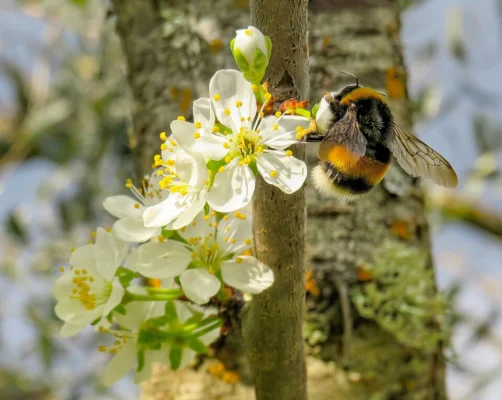
Review the training routine and rootstock vigour. Keep useful replacement growth in the lower framework and renovate gradually; severe cutting across the whole fan encourages a rush of new shoots.
Check ties before fruit becomes heavy and reduce an excessive crop. Add support where needed without fastening a branch so tightly that the tie cuts into the bark.
Confirm cultivar compatibility, spring weather and insect access. A wall can improve shelter, but it cannot replace required pollen or restore flowers killed by frost.
Inspect moisture and crop crowding, and remove affected fruit promptly. A tree in a dry wall position may need more attention than nearby garden plants.
Gumming can follow injury or disease and should be assessed in context. Avoid immediate indiscriminate cutting, especially in winter; obtain a diagnosis for spreading dieback or serious damage.
Fan training describes the shape created by the grower, not a separate kind of plum. Start with a named grafted tree whose cultivar and rootstock suit the available space.
A seedling from a plum stone will not reliably copy the parent and may become too vigorous for the intended framework. A nursery trained fan offers a more predictable starting point for a limited wall.
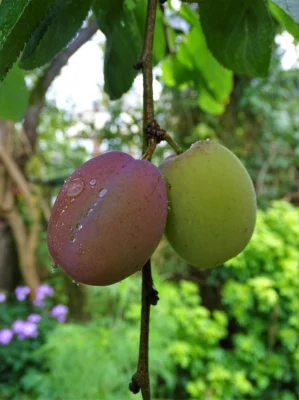
Victoria
This self fertile choice offers fruit for eating and cooking, but can set a heavy crop. A fan makes thinning and checking the load easier. The photograph identifies Victoria fruit without implying that the original tree was fan trained.
Photo: Neil Theasby, CC BY-SA 2.0. Resized and optimised; cropped for display. Victoria plums in a Sheffield suburban garden by Neil Theasby
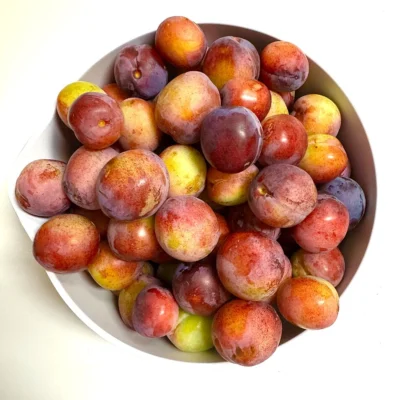
Opal
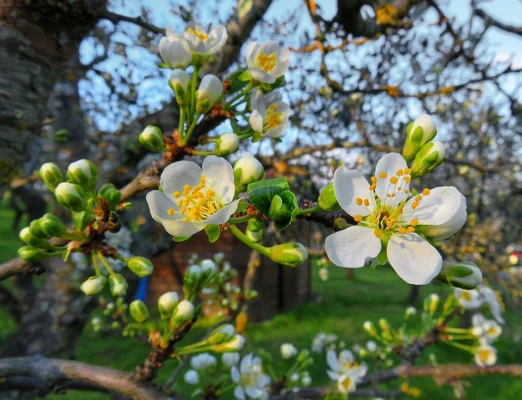
Blue Tit
Its relatively compact habit and later flowering make it worth discussing with a nursery for a smaller supported framework. The accompanying European plum blossom is illustrative and is not confirmed as Blue Tit.
Photo: PROPOLI87, CC BY-SA 4.0. Resized and optimised; cropped for display. Adapted image under the same licence.
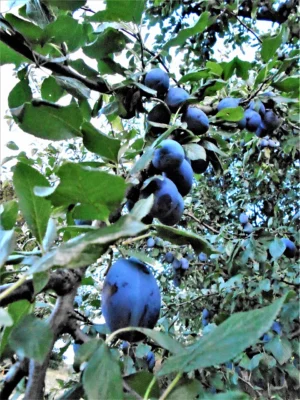
Plan around the harvest season
Later cultivars can extend the plum season but need their pruning calendar considered carefully. The pictured blue fruit is labelled Stanley; confirm the offered cultivar’s picking period and leave autumn replacement pruning until suitable spring growth.
Photo: Silverije, CC BY-SA 4.0. Resized and optimised; cropped for display. Adapted image under the same licence.
Give the nursery your wall dimensions, orientation and soil conditions. Ask about rootstock, compatible pollen and the next stage of training for the actual tree offered.
Allow visiting insects to reach blossom whenever the weather permits. Nearby flowers through the growing season make the garden useful beyond the brief plum flowering period.
If birds take fruit, fit protection securely and inspect it often. Keep netting taut and away from loose pockets that can trap wildlife around the framework.
No. A fan has radiating branches, while an espalier has regular horizontal tiers. Fan training is the appropriate common wall form for plums.
Allow several metres and confirm the exact nursery recommendation for cultivar and rootstock. A small partly trained tree may still need substantial space to complete its framework.
Yes, with a suitable rootstock and a planned formative routine. A partly trained fan is easier to start with, but still needs regular tying and selective pruning.
Avoid pushing stone fruit pruning into autumn. For late cultivars, defer replacement pruning until spring and plan summer maintenance around the safe growing season.
That depends on cultivar. Many are self fertile, while others require a compatible partner flowering at the same time. Training the tree as a fan does not change that requirement.
Walls, fences and overhangs can intercept rain. Check moisture in the tree's root area and water when needed, especially during establishment and fruit swelling.
A productive plum fan combines sound support with regular small adjustments. Preserve useful fruiting wood, keep roots supplied and work with the tree's seasonal growth rather than trying to force its shape in one session.
Want to get food independence, support your local grower, get better prices and shop more privately?
Local food isn’t just something you find. It’s something you protect. A free account helps keep local supply visible, supported, and resilient.

….it takes 30 seconds for food lovers and 5 minutes for suppliers
We built this for people who care where their food comes from. For people who want to remain food secure. For Farmers to get to the local people, who deserve a better income and to deliver a better price for you. For the environmentally conscious and the privacy-conscious. An account simply helps us make the map and supplier reach more useful to you, without changing how open it is. You’re always in control.


Find local food. Stay connected to it. Create a free account to support local producers and be part of a growing food network.


