Early potatoes give you small, tender tubers for summer meals and release their ground sooner than maincrop varieties. Choose first earlies for the earliest outdoor harvest, or second earlies for a slightly later crop. Start with certified seed potatoes, protect new shoots from frost and keep developing tubers covered from light.
First and second earlies
Plant seed tubers
Good for large containers
Frost tender shoots
Summer new potatoes
| Botanical name | Solanum tuberosum |
| Family | Solanaceae |
| Crop group | First early and second early potatoes |
| Edible part | Underground tubers, cooked before eating |
| Growing habit | Leafy annual crop grown from tubers |
| Position | Open and sunny |
| Soil | Fertile, moisture retentive and well drained |
| Planting material | Certified seed potatoes |
| Chitting season | Late January to early March, according to planting date |
| Chitting period | Usually four to six weeks |
| First early planting | Around late March, later in colder areas |
| Second early planting | Usually early to mid April |
| Planting depth | About 15cm in prepared ground |
| Plant spacing | About 30cm |
| Row spacing | About 60cm |
| First early harvest | Usually June to July outdoors |
| Second early harvest | Usually July to August outdoors |
| Time to first checks | From about 12 weeks, depending on variety and conditions |
| Containers | Use a large draining pot or purpose made potato bag |
| Food caution | Discard green or bitter tubers; berries and foliage are not food |
| Plant name | Crop type | Spacing |
Sow indoors
Plant outdoors
Harvest
Polytunnel | |||||||||||
|---|---|---|---|---|---|---|---|---|---|---|---|---|---|---|
| Jan | Feb | Mar | Apr | May | Jun | Jul | Aug | Sep | Oct | Nov | Dec | |||
| Potatoes (Early) | Root vegetables | Single 30cm, In row 30cm, Row gap 60cm; follow variety guidance for containers | No activity recorded | No activity recorded | Plant outdoors, Polytunnel | Plant outdoors, Polytunnel | No activity recorded | Harvest | Harvest | Harvest | No activity recorded | No activity recorded | No activity recorded | No activity recorded |
Sow indoors: no months recorded. Plant outdoors: March, April. Harvest: June, July, August. Polytunnel: March, April.
The calendar shows normal spring planting and summer harvesting for first and second earlies together. First earlies usually go out in late March and second earlies in April; colder sites need later planting. The sowing band is empty because seed potatoes are tubers. The March to April protected band is optional container growing with reliable frost protection, not ordinary chitting or a promise that an unheated tunnel stays frost free.
Earlies are useful for a first vegetable plot, a modest raised bed or a large container near the kitchen. Their relatively short season lets you follow them with another suitable crop once the ground is clear.
Expect fresh eating quality rather than the largest possible weight of potatoes for winter storage. A small number of well watered plants usually gives a better result than crowding too many seed tubers into one bag.
Charlotte potatoes, identified in the original photograph by INRA.
Photo: Jean Weber / INRA, CC BY 2.0. Resized and optimised; cropped for display.
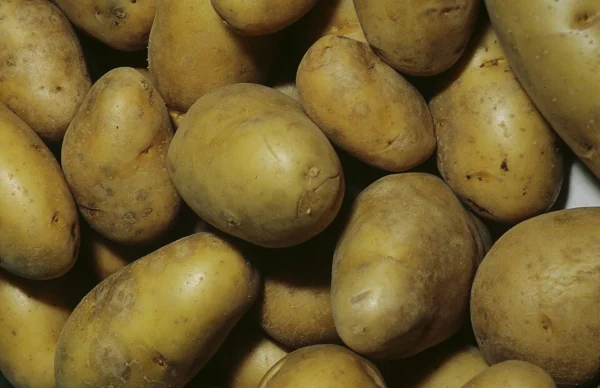
Choose a sunny bed with workable soil and access to water. Avoid a frost pocket if possible: underground tubers may be sheltered while the first green shoots remain vulnerable.
Improve the soil with mature compost or well rotted organic matter before planting. Do not lime the bed immediately before potatoes, because alkaline conditions can encourage common scab.
Keep potatoes in a crop rotation and remove volunteer plants from previous crops. Certified seed and clean growing space help reduce the chance of carrying disease forward.
For containers, use a large pot or bag with drainage holes and enough depth to cover new tubers as stems grow. Place it where it receives light and can be watered throughout the crop.
Photo: Geo Lightspeed7, CC BY-SA 4.0. Resized and optimised; cropped for display. Adapted image under the same licence.
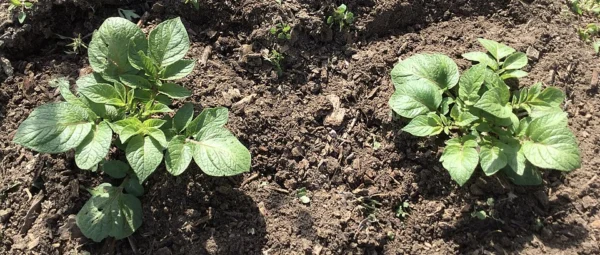
Seed potatoes are small tubers selected for planting. Chitting gives early varieties a head start, but a lack of sprouts is not a reason to miss a suitable planting window.
1.
Buy certified seed potatoes labelled first early or second early. Record the variety and expected season so you do not manage a maincrop potato as an early by mistake.
2.
About four to six weeks before planting, stand tubers in trays or egg boxes with the end bearing most buds upwards. Use a cool, bright, frost free place.
3.
Let short, sturdy shoots develop. Avoid a warm dark cupboard, where sprouts become long and fragile, and handle chitted tubers carefully to preserve their shoots.
4.
Wait until soil is workable and planting suits the local frost risk. Late March is a usual first early starting point, with second earlies following in April.
5.
Make a trench or individual holes about 15cm deep. Set tubers with shoots upwards, about 30cm apart and with roughly 60cm between rows.
6.
Cover carefully and label the row. In a container, plant into a layer of compost and leave room to add more around stems later; follow the tuber count recommended for its volume.
7.
As foliage grows, draw soil around the stems or top up container compost in stages. Keep developing tubers covered without crushing shoots or burying the whole mature canopy.
8.
Protect emerging shoots when frost is forecast, using soil or suitable horticultural fleece. Check moisture regularly as growth accelerates and remove protection when conditions allow.

Watering
Water during dry weather, especially as tubers begin forming and swelling. For earlies, keeping the root zone evenly moist at this stage also helps reduce common scab.
Check containers frequently: dense foliage can hide dry compost and divert rain away from the pot. Water enough to wet the root zone, allowing excess to drain rather than leaving the bag standing in water.

Feeding
Well prepared garden soil supplies much of the crop’s needs. Where fertility is poor, use a suitable general fertiliser at its label rate before planting rather than repeatedly adding rich feed later.
Container plants exhaust a limited volume of compost. Use an appropriate fertiliser programme for potatoes or vegetables according to the product and compost instructions, and keep watering consistent alongside feeding.

Pruning
Healthy potato foliage feeds the developing tubers, so do not trim it routinely to make a neat clump. Earthing up is the usual management task around the stems.
Flowers do not need to be removed for an ordinary crop. Small tomato like berries may follow, but they are poisonous and must not be eaten; remove them where they might tempt children.

Winter care
Normal spring planted earlies are cleared during summer. Lift missed tubers where possible, remove unwanted regrowth and plan the next potato crop in a different bed.
Order fresh certified seed for the next season. Autumn or Christmas potatoes require a separate plan using suitable cold stored tubers and frost protection; they are not the standard calendar shown here.
Potato plants have branching leafy stems and divided green leaves. Flowers may be white, pink or purple with prominent yellow anthers, depending on variety; some early plants flower little or not at all.
The harvested potato is a swollen underground stem with buds known as eyes. Round green berries above ground are a different plant part and are inedible. Skin colour or plant height alone cannot reliably identify an early variety.
Photo: Ikmo-ned, CC BY-SA 4.0. Resized and optimised; cropped for display. Adapted image under the same licence.
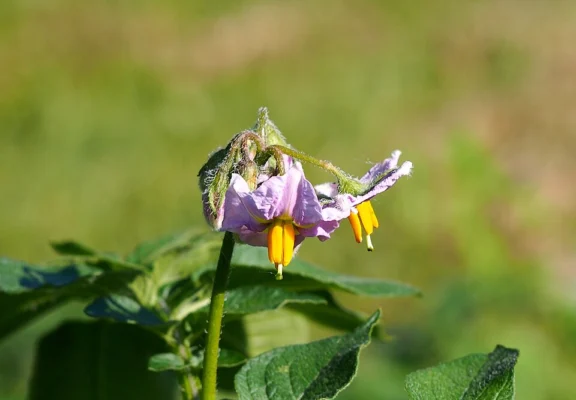
In mild districts, chitting can start in late January, while a colder garden may wait until late February or early March. Match preparation to when you can safely plant, rather than copying a neighbour’s earliest date.
For an extra early crop, large containers can be planted in early March in a bright, genuinely frost free greenhouse. This needs active frost management; a polytunnel alone may not protect shoots on a cold night.
Start checking first earlies from about 12 weeks, allowing for weather and the variety. Carefully feel beside a plant for usable tubers before lifting the whole row. Flowers are a useful clue on some varieties, not a required signal for every crop.
Image from the BFFD media library.
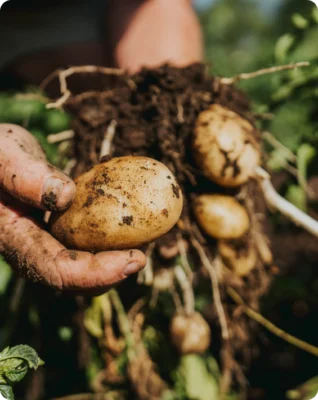
Frost damages exposed growth. Protect emerging stems when freezing weather is forecast. A plant may produce replacement shoots, but the setback can delay the early harvest.
Light exposure causes greening. Add soil or compost before developing tubers become exposed, and keep the harvested crop away from light. Discard green or bitter potatoes rather than cooking them to make them safe.
Common scab is often worse when soil dries as tubers form. Keep moisture steadier, avoid liming immediately before potatoes and choose a variety with useful resistance if the problem recurs.
Blight is a possibility, especially in warm, humid weather. Check current RHS symptoms and action guidance promptly. Earlies may be lifted before severe late season pressure, but they are not immune and damaged crops should not be ignored.
Dry containers, overcrowding, poor light or checking too soon can all disappoint. Holes in tubers can indicate slugs or wireworms. Inspect the crop, use sound tubers promptly and address the observed cause next season.
Planting certified seed tubers reproduces a named variety. Do not confuse this with sowing true potato seed from berries, which gives variable offspring and is not the usual route to an early crop.
Saving small eating potatoes or using sprouting supermarket potatoes can carry disease and gives less assurance about variety or health. Start each planned crop with appropriate certified planting stock; certification reduces risk but does not protect plants from every later infection.
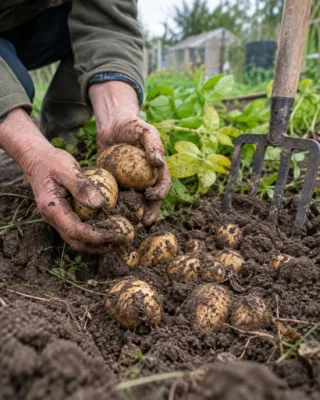
Charlotte — second early
A popular salad potato with yellow skinned tubers and flesh that holds together well when cooked. Useful for boiling and eating warm or cold; lift young for the texture associated with new potatoes.
Illustrative potato harvest; the cultivar is not identified and is not confirmed as Charlotte.
Image from the BFFD media library.
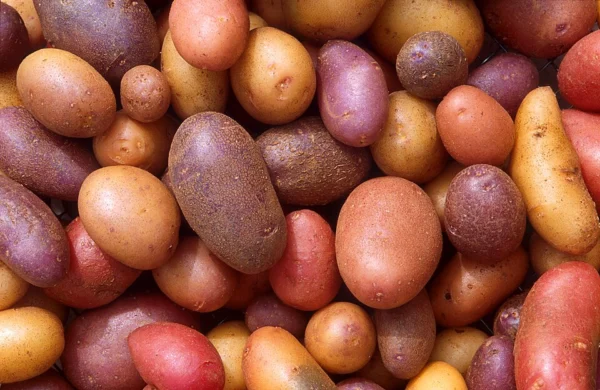
Arran Pilot — first early
A traditional early with pale skin and creamy white flesh, suited to new potato meals straight after lifting. It has useful scab resistance, though steady moisture and suitable soil still matter.
Illustrative mixed potato varieties; this is not a confirmed Arran Pilot sample.
Photo: Scott Bauer, USDA ARS, Public domain. Resized and optimised; cropped for display.
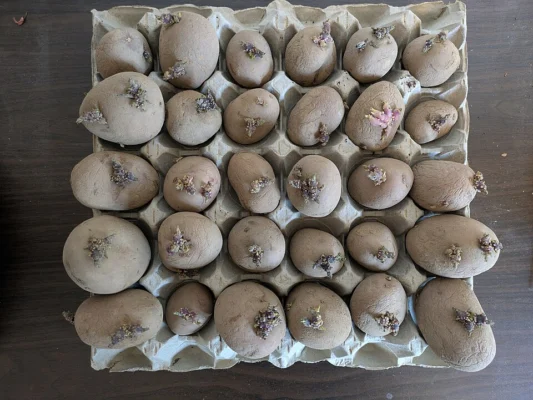
Rocket — first early
A fast maturing first early with a firm, waxy texture, useful where the priority is a prompt new potato crop. It can suit containers, provided the plants have enough compost, water and light.
Illustrative chitted seed potatoes; the source does not identify Rocket.
Photo: Kangarooth, CC BY-SA 4.0. Resized and optimised; cropped for display. Adapted image under the same licence.
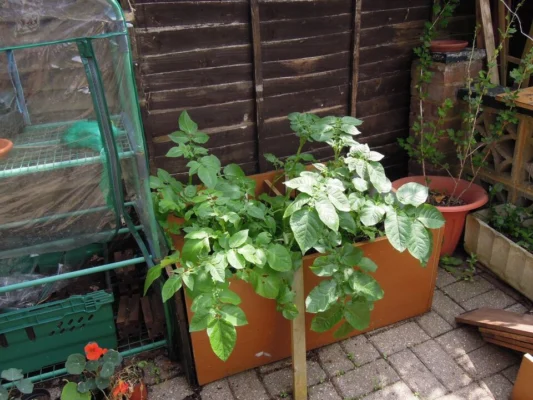
Maris Peer — second early
Produces relatively small, pale skinned potatoes with firm flesh, useful for boiling, steaming or roasting whole. Do not confuse it with Maris Piper, a separate maincrop variety.
Illustrative growing potato plants; not confirmed as Maris Peer.
Photo: Claire Pearcy, CC BY-SA 4.0. Resized and optimised; cropped for display. Adapted image under the same licence.
Check first or second early on the label, then compare cooking qualities and disease resistance. A small trial of two named varieties gives you a useful comparison without filling the entire plot with one unfamiliar potato.
Potatoes do not require flower pollination to produce the underground tubers you eat. Let healthy foliage do its work and keep other flowering plants nearby for garden visitors.
Use slug controls in response to observed damage, and protect beneficial garden wildlife. Lift early crops once they reach the size you want rather than leaving them unnecessarily exposed to pests in the soil.
Published by Buy From Farmers Direct. Growing guidance reviewed 6 October 2026. The seasonal timeline uses the shared BFFD Growers Calendar record; adjust timings to your variety and local conditions.
Both mature sooner than maincrop potatoes. First earlies usually provide the earliest outdoor harvest in June or July; second earlies follow in July or August, depending on planting and weather.
No, but it is useful for an earlier start. Allow four to six weeks somewhere cool, bright and frost free. Unchitted healthy seed tubers can still be planted and will usually crop later.
Yes. Use a large draining bag or container, allow room to add compost around stems and avoid overcrowding. Check water frequently because a dry bag can reduce the crop substantially.
No. Some varieties flower sparsely or not at all. Use the planting date and variety as a guide, then carefully check tuber size beside a plant before lifting more.
Young new potatoes have delicate skins and are best used fresh. Lift small amounts as needed while the crop remains healthy, and keep harvested tubers cool and dark for short term use. Choose suitable mature maincrops for long storage.
No. They are potato berries, not tomatoes, and are poisonous. Eat only sound potato tubers after cooking; discard green or bitter tubers and keep berries away from children.
Healthy seed, timely frost protection and steady moisture make early potatoes rewarding to grow. Check the first tubers gently, lift only what you need and enjoy them while their skins are tender and their flavour fresh.
Want to get food independence, support your local grower, get better prices and shop more privately?
Local food isn’t just something you find. It’s something you protect. A free account helps keep local supply visible, supported, and resilient.

….it takes 30 seconds for food lovers and 5 minutes for suppliers
We built this for people who care where their food comes from. For people who want to remain food secure. For Farmers to get to the local people, who deserve a better income and to deliver a better price for you. For the environmentally conscious and the privacy-conscious. An account simply helps us make the map and supplier reach more useful to you, without changing how open it is. You’re always in control.


Find local food. Stay connected to it. Create a free account to support local producers and be part of a growing food network.


