Small salad radishes can grow in neat groups, with several seedlings sharing a planting station. Start them in modules when that helps you manage space or early conditions, then plant young clumps without separating their roots. Keep growth steady and harvest promptly: tender, useful roots matter more than squeezing in the highest number of plants.
Small salad radishes
Plant young clumps
Cool conditions suit
Regular small sowings
Harvest promptly
| Botanical name | Raphanus sativus |
| Family | Brassicaceae |
| Crop covered | Small salad radishes in groups |
| Starting method | Seed in modules or small stations |
| Seeds per module | About 4 to 5 |
| Final group | Around 3 to 4 healthy plants |
| Sowing depth | About 1cm |
| Main seasons | Spring and late summer |
| Optional early sowing | February with suitable protection |
| Clump spacing | About 15cm each way |
| Planting stage | Young, before roots become crowded |
| Position | Sun; some summer afternoon shade |
| Soil | Fertile, fine and well drained |
| Moisture | Keep evenly moist |
| Typical speed | Often 4 to 6 weeks in good conditions |
| Cold season growth | Slower than warm season estimates |
| Picking | Lift useful roots before they turn pithy |
| Storage | Best used fresh |
| Winter radishes | Need a separate sowing plan |
| Daikon | Larger roots need more space |
| Plant name | Crop type | Spacing |
Sow indoors
Plant outdoors
Harvest
Polytunnel | |||||||||||
|---|---|---|---|---|---|---|---|---|---|---|---|---|---|---|
| Jan | Feb | Mar | Apr | May | Jun | Jul | Aug | Sep | Oct | Nov | Dec | |||
| Radish (Multi sown) | Root vegetables | About 15cm between small clumps | No activity recorded | Sow indoors, Polytunnel | Sow indoors, Plant outdoors, Polytunnel | Sow indoors, Plant outdoors, Harvest | Sow indoors, Plant outdoors, Harvest | Sow indoors, Plant outdoors, Harvest | Sow indoors, Plant outdoors, Harvest | Sow indoors, Plant outdoors, Harvest | Sow indoors, Plant outdoors, Harvest, Polytunnel | Harvest, Polytunnel | No activity recorded | No activity recorded |
Sow indoors: February, March, April, May, June, July, August, September. Plant outdoors: March, April, May, June, July, August, September. Harvest: April, May, June, July, August, September, October. Polytunnel: February, March, September, October.
This calendar follows small salad varieties, with February reserved for a protected early start. Spring and late summer are generally easiest. Summer sowings depend on variety and avoiding excessive heat. Young modules are planted promptly, not held for months. Late sowings grow more slowly. Winter radish and daikon schedules are separate.
Clumps are useful where a few modules can be raised while an earlier crop finishes. They also make individual sowings easy to label and count. Transplanting is optional: direct sowing remains a straightforward choice when the bed is ready.
This method suits small salad roots rather than large winter radishes. Start modestly and sow again as the first batch develops. A large planting that becomes pithy before you can eat it is less useful than a succession of small harvests.
Photo: Acabashi, CC BY-SA 4.0. Resized and optimised; cropped for display. Adapted image under the same licence.
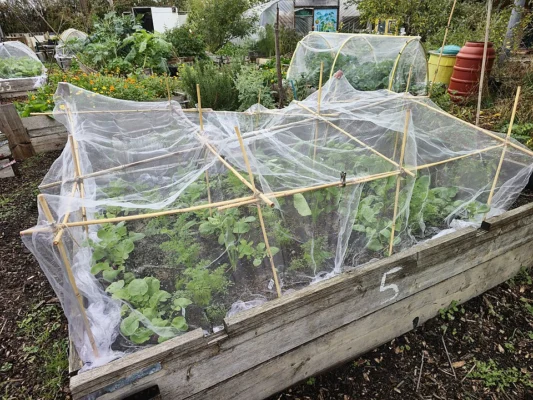
Choose a fine, weed free patch with good light. Radishes can fill temporary gaps, but they still need room before neighbouring crops spread over them.
In spring and autumn, use an open sunny position. During hot weather, some afternoon shade can help, but deep shade encourages weak growth and is not a substitute for suitable sowing conditions.
Allow roughly 15cm between small clump centres as a starting point. Leave more room for stronger varieties or additional seedlings. Do not use ordinary single radish spacing for a whole group.
A broad drained container offers a manageable trial near the kitchen. Fill it with suitable peat free compost and check moisture often. A shallow pot that dries rapidly makes consistent growth difficult.
Photo: Oledd, CC BY-SA 3.0. Resized and optimised; cropped for display. Adapted image under the same licence.
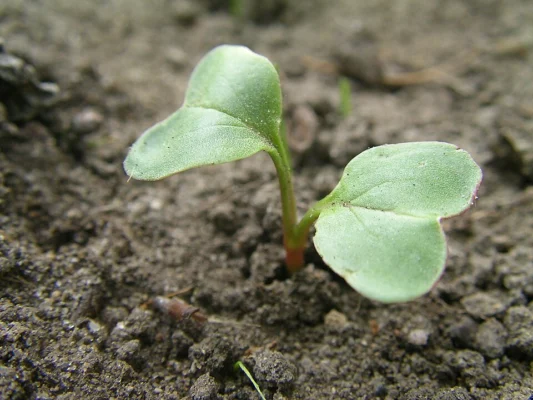
The important moment is transplanting while the group is still young. Radishes develop quickly, so have their final space ready before filling a large tray.
1.
Choose a small salad radish suited to the season. Read the packet carefully: winter radishes and long daikon are not interchangeable with quick spring salad types.
2.
Fill clean modules with moist peat free seed compost. Firm lightly and sow about four or five seeds in each cell, roughly 1cm deep or as directed.
3.
Label the sowing and provide suitable light and temperature. Remove a propagator cover after emergence rather than keeping seedlings in a warm, humid enclosure.
4.
Aim for around three or four plants per small clump. Remove obvious excess while young, without pulling established neighbours loose. Do not compensate for poor germination by cramming new seedlings into older groups.
5.
Prepare the growing site promptly. Water dry soil before planting and remove weeds. Acclimatise plants raised under shelter to outdoor conditions without leaving them waiting in crowded modules.
6.
Plant the complete rootball about 15cm from the next group, close to its nursery depth. Keep roots intact and firm gently. Do not separate seedlings or trim developing radish roots.
7.
Water in and protect vulnerable seedlings where needed. Keep the soil evenly moist and inspect young leaves for grazing or small pest holes.
8.
Check roots as soon as their shoulders swell. Lift a useful outside radish while supporting its neighbours, or harvest the whole group if all are ready. Start the next small sowing in time.

Watering
Maintain even moisture from emergence through harvest. Check modules daily in drying conditions because several seedlings share a small reserve of water. Do not leave them standing in a water filled tray.
After planting, water the root zone when needed rather than repeatedly wetting only the surface. Dryness followed by heavy watering can encourage split roots, while slow stressed growth reduces eating quality.

Feeding
A reasonably fertile bed usually supports a quick radish crop without repeated feeding. Prepare before planting and concentrate on light, moisture and space while the plants grow.
If reusing a container for several batches, refresh exhausted compost or follow its feeding guidance. Extra nitrogen is not a dependable remedy for plenty of leaves and small roots.

Pruning
Leave healthy leaves attached until harvesting the root. They support growth; repeated leaf picking is a different aim. Remove weeds carefully before they become tangled with the crop.
If a flower stem develops, the tender salad root stage is usually passing. Cutting it off will not reliably restore the root. Replace the crop with a fresh sowing suited to current conditions.

Winter care
Small salad radishes are usually eaten fresh rather than stored for winter. Late crops grow slowly as light falls. Protection may extend the season but does not guarantee quick harvests in cold weather.
For substantial winter roots, choose a winter variety and follow its summer sowing and wider spacing instructions. Those roots are a separate crop, not simply salad radishes left in their clumps for longer.
Seedlings begin with paired rounded seed leaves, then rougher true leaves. The coloured shoulder often appears above ground as the edible root swells. Shape and skin colour depend on variety.
In a healthy clump, several separate roots expand beside one another. They may differ in size and readiness. The photographs illustrate radish types and stages, including larger types shown for comparison rather than this small clump method.
Photo: Rivervictorlauramarie, CC0. Resized and optimised; cropped for display.
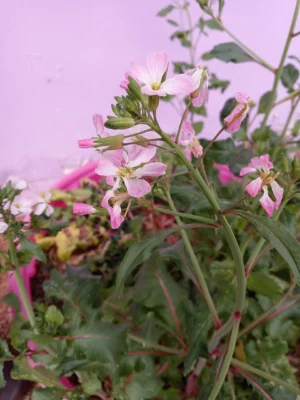
Cool spring and late summer weather usually makes an easier crop than hot, dry midsummer. Adjust sowings to local conditions instead of repeatedly planting through weather that is producing poor roots.
Early protected crops take longer in cold districts. Ventilate covers on bright days, maintain moisture and plant out only when conditions are suitable. Avoid assuming every sowing will match the fastest packet estimate.
Pick a sample and taste it when roots approach a useful size. If it is crisp and pleasant, begin harvesting. Several short picking visits can clear a mixed maturity clump before its oldest roots turn woody.
Image from the BFFD media library.
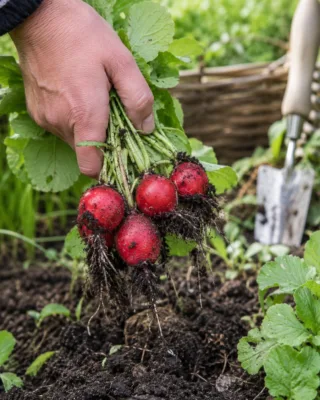
Check overcrowding, shade and excessive feeding. Give clumps sufficient space and keep their seedling count modest. Planting older congested modules may also disappoint.
Uneven watering and delayed harvest are common contributors. Keep the next crop growing steadily and pick smaller, younger roots rather than waiting for every plant to match the largest.
Flea beetles can damage young brassicas. A few holes may be tolerable, but protect struggling seedlings with suitable fine mesh and maintain growth. Avoid overheated conditions beneath covers.
Heat, dryness or the wrong seasonal variety can trigger bolting. Clear spent plants and resow when conditions improve. Do not treat winter radish seed as a spring salad substitute.
Inspect for root feeding pests such as cabbage root fly. Protect subsequent crops with appropriate mesh from the start and avoid covering a site where pests may emerge beneath it.
Use fresh seed for successive crops. Modules let you count groups easily, but direct station sowing is also possible. In either case, control the final number instead of leaving every seedling to compete.
Seed saving needs selected plants to flower and mature pods, with attention to crossing between radishes. Keep this separate from the tender root crop and do not select only the earliest bolters.
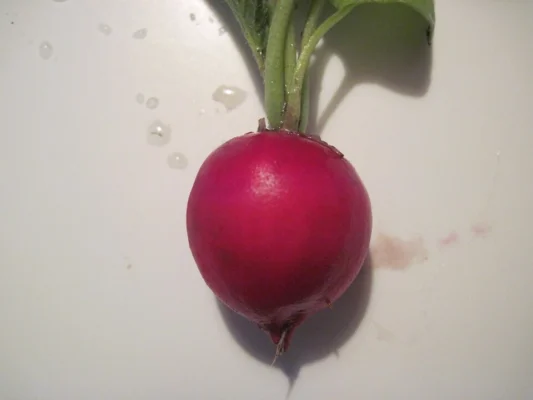
Raxe salad radish
The pictured Raxe root represents the small salad type suited to a modest clump. Follow the packet's season and harvest guidance. The original source identifies this photograph as Raxe.
Photo: Rob Duval, CC BY-SA 3.0. Resized and optimised; cropped for display. Adapted image under the same licence.
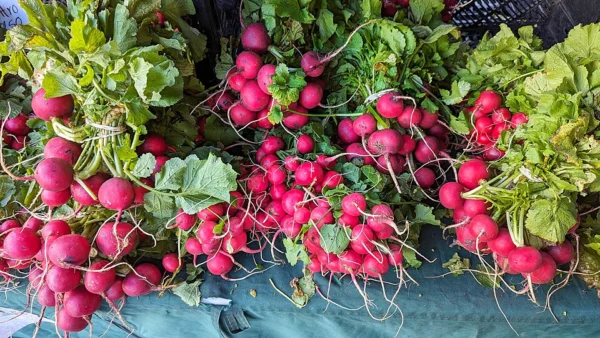
Round salad radishes
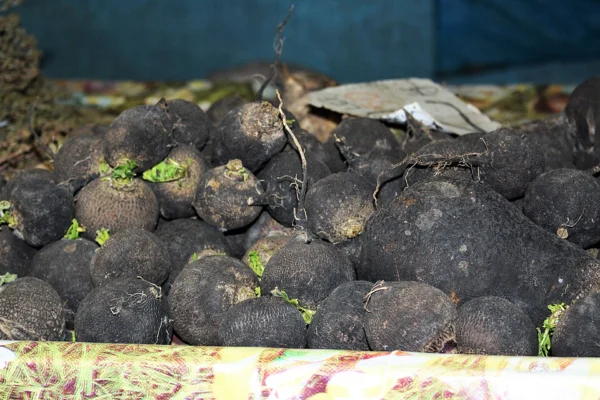
Winter radishes are different
Black skinned winter radishes are larger crops with a different sowing window and more space between plants. This comparison image is not an instruction to crowd them into small salad clumps.
Photo: Emőke Dénes, CC BY-SA 4.0. Resized and optimised; cropped for display. Adapted image under the same licence.
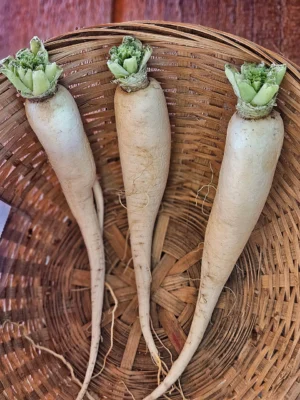
Long daikon needs room
The pictured Minowase daikon illustrates another radish type. Long roots need appropriate soil depth, timing and spacing. Follow their own instructions rather than this guide's small root layout.
Photo: Eric Polk, CC BY-SA 4.0. Resized and optimised; cropped for display. Adapted image under the same licence.
Choose a manageable number of clumps and repeat the sowing as conditions allow. Frequent small harvests are easier to enjoy at their best than one oversized batch.
Radish flowers can attract visiting insects when a few plants are deliberately retained. Give these room away from the main salad crop, which should be harvested while its roots are tender.
Inspect damage before intervening. Mesh should be securely fitted without trapping wildlife, and covers need regular checks for heat, dryness and slugs beneath them.
Yes, if transplanted young with the rootball intact. Prepare their final space early. Direct sowing is simpler when conditions are already suitable and avoids the transplanting stage.
About three or four small salad radishes are a manageable starting point. Adjust for variety, soil and desired size. More seedlings need more space and can produce smaller roots.
No. For this method, keep each young group together and minimise root disturbance. Remove excess seedlings early rather than pulling mature roots apart.
Yes, if it loosens without disturbing neighbouring plants. Support the others and gently lift the chosen root. Harvest the complete clump when several roots are ready together.
They may be old, slow grown or stressed by heat and dryness. Pick promptly and keep the next sowing evenly moist. Larger roots are not necessarily better salad roots.
No. Large daikon and winter radishes need their own variety specific sowing window, root depth and wider spacing. This guide focuses on small salad varieties.
Keep radish groups small, transplant them young and pick with appetite rather than ambition. A steady sequence of fresh clumps can turn spare garden space into regular crisp harvests.
Want to get food independence, support your local grower, get better prices and shop more privately?
Local food isn’t just something you find. It’s something you protect. A free account helps keep local supply visible, supported, and resilient.

….it takes 30 seconds for food lovers and 5 minutes for suppliers
We built this for people who care where their food comes from. For people who want to remain food secure. For Farmers to get to the local people, who deserve a better income and to deliver a better price for you. For the environmentally conscious and the privacy-conscious. An account simply helps us make the map and supplier reach more useful to you, without changing how open it is. You’re always in control.


Find local food. Stay connected to it. Create a free account to support local producers and be part of a growing food network.


