A small bunch of spring onions is often exactly what a meal needs. Multisowing lets you raise that bunch as one rooted group, then plant it with minimal handling. Choose a salad or bunching variety, keep the young plants growing steadily and sow modest batches for fresh use rather than a single oversized crop.
Grow small bunches
Seed in modules
Keep groups intact
Fresh harvests
Repeat small sowings
| Botanical groups | Allium cepa and Allium fistulosum |
| Family | Amaryllidaceae |
| Crop | Young leaves and slender bases |
| Starting material | Salad or bunching onion seed |
| Main sowing | March to August |
| Autumn sowing | Hardy varieties only |
| Seeds per module | About 8 to 10 |
| Final plants per clump | Around 6 to 8 |
| Sowing depth | About 1cm |
| Transplanting | Once roots hold the plug together |
| Clump spacing | About 15 to 20cm each way |
| Position | Sunny and open |
| Soil | Fertile, well drained and moisture retentive |
| Containers | A broad pot at least 30cm wide |
| Watering | Steady moisture through growth |
| Main harvest | Late spring through autumn |
| Overwintered harvest | Following spring |
| Harvest form | One bunch or selected outer plants |
| Storage | Fresh use; no bulb curing |
| Winter hardiness | Depends on variety and conditions |
| Plant name | Crop type | Spacing |
Sow indoors
Plant outdoors
Harvest
Polytunnel | |||||||||||
|---|---|---|---|---|---|---|---|---|---|---|---|---|---|---|
| Jan | Feb | Mar | Apr | May | Jun | Jul | Aug | Sep | Oct | Nov | Dec | |||
| Spring Onion (Multi sown) | Alliums | 15 to 20cm between clumps | Polytunnel | Polytunnel | Sow indoors, Harvest, Polytunnel | Sow indoors, Plant outdoors, Harvest, Polytunnel | Sow indoors, Plant outdoors, Harvest | Sow indoors, Plant outdoors, Harvest | Sow indoors, Plant outdoors, Harvest | Sow indoors, Plant outdoors, Harvest | Sow indoors, Plant outdoors, Harvest, Polytunnel | Plant outdoors, Harvest, Polytunnel | Harvest, Polytunnel | Polytunnel |
Sow indoors: March, April, May, June, July, August, September. Plant outdoors: April, May, June, July, August, September, October. Harvest: March, April, May, June, July, August, September, October, November. Polytunnel: January, February, March, April, September, October, November, December.
March to August covers successive main season sowings. September is only for a hardy variety intended to overwinter. Plant rooted clumps from April to October as conditions allow, with late planting reserved for those autumn batches. March and April harvests refer to the previous autumn’s crop. The protected band allows optional propagation or winter shelter, not rapid winter growth.
This is useful when you want a few ready made bunches close to the kitchen. A tray takes little space and makes it easy to record each sowing. It also reduces the need to tease apart many fine roots at planting.
Do not confuse these groups with clumps intended to make large storage onion bulbs. Spring onions are harvested while slender and fresh. More plants can therefore share each group, provided you leave room between clumps and pick them at a useful stage.
Photo: Salicyna, CC BY-SA 4.0. Resized and optimised; cropped for display. Adapted image under the same licence.
Choose an open sunny bed and keep neighbouring foliage from covering the crop. Small spring onions can disappear beneath much larger vegetables before you notice that their growth has slowed.
Prepare a fine surface with mature compost where needed and remove perennial weeds. Moisture retentive soil is helpful, but standing water around the roots is not.
Allow about 15 to 20cm between clump centres, adjusting for the number of seedlings and how thick you want the onions. A group needs more space than a single direct sown plant.
A drained pot at least 30cm wide makes a useful first trial. Use peat free compost and avoid overcrowding it with too many groups. Position it where watering and picking are easy.
Photo: Apelsinskal, CC BY-SA 4.0. Resized and optimised; cropped for display. Adapted image under the same licence.
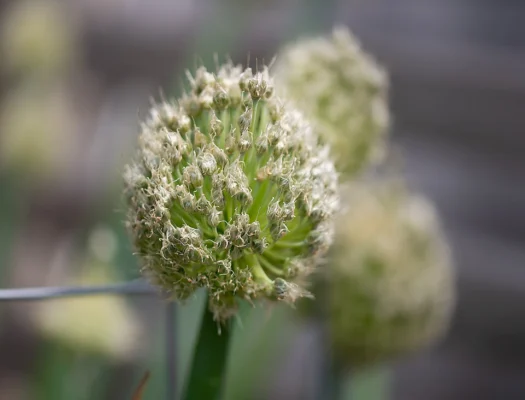
Raise a bunch from seed, then move the complete plug into its final position. Keep batches separate by date so younger plants are not lost among older, larger clumps.
1.
Choose seed labelled for salad or bunching onions. For an autumn sowing, select a variety explicitly suitable for overwintering rather than assuming all spring onions are equally hardy.
2.
Fill clean modules with moist peat free seed compost. Level gently, leaving space to water without washing seed between cells.
3.
Sow approximately eight to ten seeds per cell, around 1cm deep or according to the packet. Aim for six to eight established plants, adjusting the seed count if germination is particularly good.
4.
Provide suitable warmth for germination, then grow seedlings in good light with ventilation. Keep compost moist without leaving water standing under the tray.
5.
Inspect the groups as they develop. Remove obvious excess or weak seedlings early if necessary. Keep the remaining roots together and do not repeatedly transplant them between tiny cells.
6.
Harden off sheltered plants once they are growing strongly. Plant while rootballs hold together and before prolonged crowding stalls their growth.
7.
Set whole plugs about 15 to 20cm apart at roughly the depth they grew in the tray. Firm around them gently and water in so roots can grow into the surrounding soil.
8.
Weed carefully and repeat another small sowing when appropriate. Check the oldest clumps regularly, lifting them while the stems are tender and useful rather than waiting for mature bulbs.

Watering
Keep moisture steady while seedlings establish and clumps fill out. Several roots share each small plug, so a tray can dry quickly even before the leaves look wilted.
Water at soil level during dry spells and check pots frequently. Unlike a storage onion crop, these plants are harvested fresh; do not deliberately dry them off to cure their bases.

Feeding
Reasonably fertile soil normally supports this modest crop. Add mature compost during bed preparation where needed and keep competition low.
A container carrying repeated sowings may need refreshed compost or an appropriate feed. Follow its product guidance and avoid treating every yellow leaf as proof that more fertiliser is needed.

Pruning
No routine pruning is required for a bunch harvest. Leave healthy leaves to grow and remove weeds with care so you do not pull out fine onion roots.
For an occasional garnish you can take a few healthy outer leaves, but repeated cutting changes the crop's purpose. For predictable whole spring onions, lift individual plants or a complete clump when ready.

Winter care
Use a hardy variety for overwintering and establish it before cold, dark conditions slow growth. Keep winter soil drained and remove fallen debris that smothers the small plants.
A greenhouse or tunnel may shelter a crop, but ventilate it and avoid saturated compost. Growth remains limited by light and temperature. Judge spring readiness from the actual plants rather than the date alone.
Spring onions have hollow leaves and slender pale bases harvested before a large storage bulb is wanted. Some are young Allium cepa; others are bunching Allium fistulosum, which behaves differently as it matures.
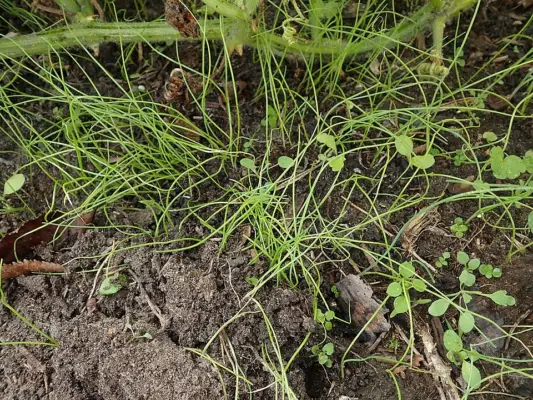
Several photographs show Allium fistulosum seedlings and flowers. They illustrate one suitable crop group, not a guarantee that every named spring onion belongs to that species. A flowering head marks a different stage from the tender young bunch harvest.
Photo: Salicyna, CC BY-SA 4.0. Resized and optimised; cropped for display. Adapted image under the same licence.
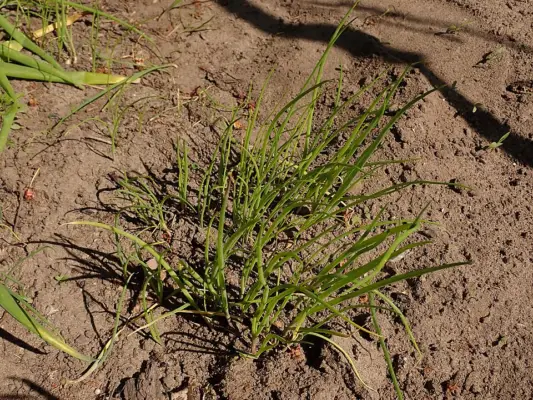
A sheltered March sowing can help where spring ground is wet or slow to warm. In mild conditions, direct sowing is also straightforward. Modules are a choice for managing the crop, not an essential extra step.
During hot dry periods, check small clumps carefully and reduce the size of each sowing if growth becomes unreliable. In autumn, allow enough time for a hardy crop to establish before the days shorten markedly.
Harvest the whole group for a bunch, loosening roots first if the soil is firm. Alternatively take an outer plant while supporting the rest. Wash away soil caught between the bases and use promptly for the best texture.
Photo: Dalgial, CC BY-SA 3.0. Resized and optimised; cropped for display. Adapted image under the same licence.
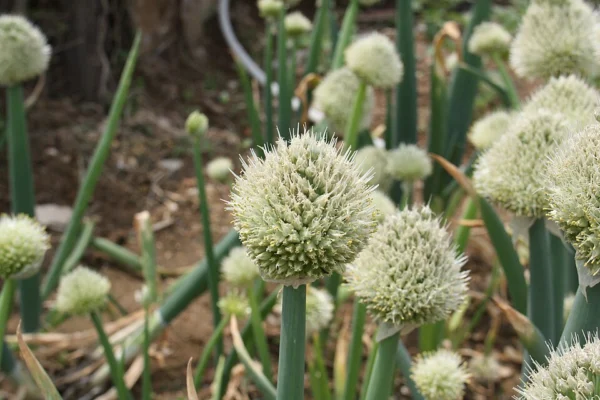
Count the plants and review spacing. Too many seedlings in a small area compete for resources. Use a smaller final group next time, or begin picking outer plants earlier.
Check drainage, light and root condition. Saturated compost and weak growth can cause losses. Remove decaying plants and avoid leaving trays continually standing in water.
Downy mildew favours damp, crowded conditions. Improve airflow and remove affected plants. Do not keep diseased clumps as an overwintering bridge to the next crop.
Inspect for allium leaf miner or other onion pests. Protect future crops with suitable mesh where needed and avoid trapping pests emerging from previously affected ground beneath it.
Age, season and stress can bring flowering. Use the remaining tender parts promptly if sound, then start a fresh batch. A flower stalk is not a signal to continue waiting for a better spring onion.
Fresh seed is the usual route for planned bunch harvests. Buying identified seed also keeps the species, sowing season and expected growth clear.
Established Allium fistulosum can form divisions, but that is a separate way of maintaining perennial bunching onions. It should not be confused with the small seedling groups described here or assumed for every salad onion variety.
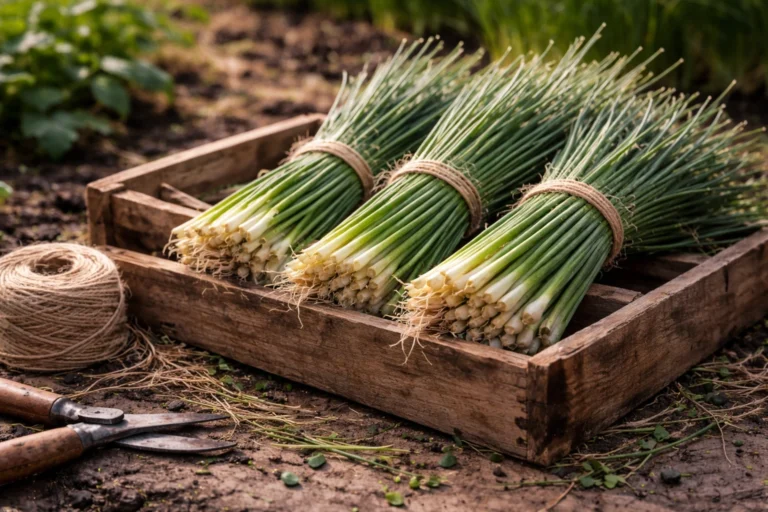
Choose a tender bunch harvest
The bundled spring onions shown illustrate the desired fresh product. Select a salad variety suited to your season. The photograph does not establish a named cultivar.
Image from the BFFD media library.
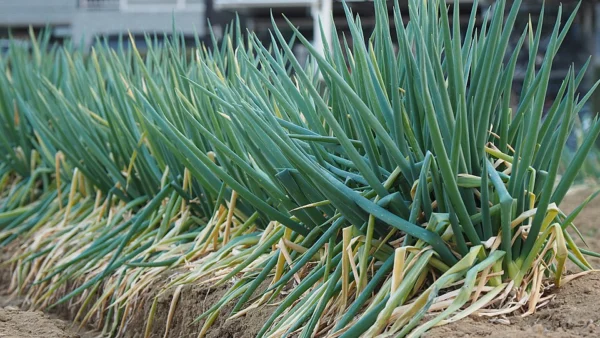
Bunching onion types
The field photograph shows Japanese bunching onions. Allium fistulosum is one useful group for slender stems, but read the packet for hardiness, timing and intended harvest.
Photo: Ka23 13, CC BY-SA 4.0. Resized and optimised; cropped for display. Adapted image under the same licence.
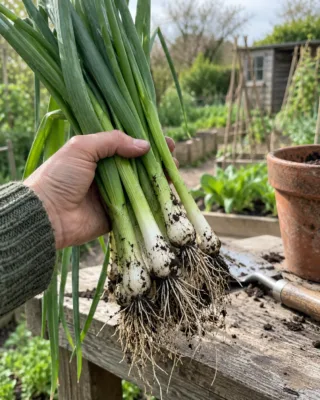
Pick before the crop outgrows its purpose
Freshly lifted spring onions show the leaves, pale bases and roots taken together. Harvest size is a kitchen choice; you do not need to wait for a large bulb.
Image from the BFFD media library.
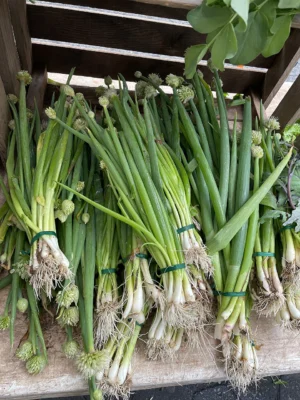
Plan a practical batch size
Market bunches illustrate how a few stems make a useful portion. Grow what you can pick fresh and repeat sowings. No named cultivar is claimed for this photograph.
Photo: Deans Charbal, CC BY-SA 4.0. Resized and optimised; cropped for display. Adapted image under the same licence.
Match each sowing to the meals you prepare. Keep a note of how many clumps you use and how long they take, then adjust the next tray accordingly.
A spring onion crop is normally harvested before flowering, so its edible stems do not depend on pollination. Mesh can remain during a vulnerable stage if it is supported and regularly checked.
Bunching onions retained to flower can attract visiting insects. Give those plants separate space and do not expect them to remain the same tender, compact crop as newly raised spring onions.
About eight to ten is a useful starting point, aiming for roughly six to eight healthy plants. Adjust for germination and the stem size you want rather than keeping an overcrowded tuft.
No. Transplant the complete rooted group. Keep the plug intact and firm the surrounding soil gently. Separate individual growing methods use different spacing.
Try about 15 to 20cm between centres. Larger groups or thicker finished stems need more room. Individual seedling spacing is too close for a whole bunch.
Yes. Loosen an outer onion and support its neighbours as you lift. Harvest the whole clump when you need a full bunch or when individual removal would cause damage.
Hardy varieties can overwinter, but growth slows sharply. Establish them in good time and avoid waterlogged soil. The main harvest from autumn sowing is usually the following spring.
No. These are harvested fresh for tender leaves and bases. Keep them clean and cool after lifting and use promptly. Deliberate curing belongs to mature storage bulb crops.
Keep each bunch manageable, give its roots room and pick while the stems are fresh. A few well timed sowings can provide more useful spring onions than one large crowded tray.
Want to get food independence, support your local grower, get better prices and shop more privately?
Local food isn’t just something you find. It’s something you protect. A free account helps keep local supply visible, supported, and resilient.

….it takes 30 seconds for food lovers and 5 minutes for suppliers
We built this for people who care where their food comes from. For people who want to remain food secure. For Farmers to get to the local people, who deserve a better income and to deliver a better price for you. For the environmentally conscious and the privacy-conscious. An account simply helps us make the map and supplier reach more useful to you, without changing how open it is. You’re always in control.


Find local food. Stay connected to it. Create a free account to support local producers and be part of a growing food network.


