Small turnips are at their best when lifted young, while their flesh is tender and their leaves still look fresh. Sowing a few seeds together produces a compact group you can plant as one plug. Give each clump room, maintain moisture and pick useful roots as they develop rather than waiting for every plant to become large.
Small tender roots
Keep clumps intact
Steady moisture
Harvest young
Succession sowing
| Botanical name | Brassica rapa, Rapifera Group |
| Family | Brassicaceae |
| Crop | Young swollen roots and usable leaves |
| Method | Small seedling clumps |
| Seeds per module | Usually 3 to 4 |
| Plants per clump | Retain up to 3 or 4 |
| Sowing depth | About 1 to 2cm; follow the packet |
| Main sowing | March to mid August, by variety |
| Protected early start | February with an early variety |
| Transplant stage | Young, before substantial root swelling |
| Clump spacing | About 20 to 25cm each way |
| Position | Sunny, with cool growing conditions |
| Soil | Fertile and moisture retentive, with drainage |
| Watering | Avoid repeated drying out |
| Early harvest | Often around 6 to 8 weeks in good conditions |
| Later crops | Take longer as weather cools |
| Root size | Small roots for tender eating |
| Leaves | Healthy young leaves are usable |
| Rotation group | Brassicas |
| Not the same crop | Swede has a different growing schedule |
| Plant name | Crop type | Spacing |
Sow indoors
Plant outdoors
Harvest
Polytunnel | |||||||||||
|---|---|---|---|---|---|---|---|---|---|---|---|---|---|---|
| Jan | Feb | Mar | Apr | May | Jun | Jul | Aug | Sep | Oct | Nov | Dec | |||
| Turnip (Multi sown) | Root vegetables | 20 to 25cm between small clumps | No activity recorded | Sow indoors, Polytunnel | Sow indoors, Plant outdoors, Polytunnel | Sow indoors, Plant outdoors, Harvest | Sow indoors, Plant outdoors, Harvest | Sow indoors, Plant outdoors, Harvest | Sow indoors, Plant outdoors, Harvest | Sow indoors, Plant outdoors, Harvest | Plant outdoors, Harvest | Harvest | Harvest | Harvest |
Sow indoors: February, March, April, May, June, July, August. Plant outdoors: March, April, May, June, July, August, September. Harvest: April, May, June, July, August, September, October, November, December. Polytunnel: February, March.
February is an optional protected start with a suitable early variety. March to June sowings supply earlier crops; July to mid August suits autumn harvests with appropriate varieties. Plant modules promptly while young. Later harvests depend on weather and variety, with shelter or timely lifting where frost threatens. The protected band shows early propagation, not a requirement for the whole crop.
Multisowing suits a grower who enjoys small turnips and wants to plant several seedlings with one movement. It also helps organise successive batches while earlier crops occupy the final bed. A small tray is enough to begin.
Choose fewer plants per group or single plants if large roots are the priority. Clumps share their immediate growing space. A modest root harvested tender can be more useful than a larger one left until its texture becomes coarse.
Photo: Jhulis, CC BY-SA 4.0. Resized and optimised; cropped for display. Adapted image under the same licence.
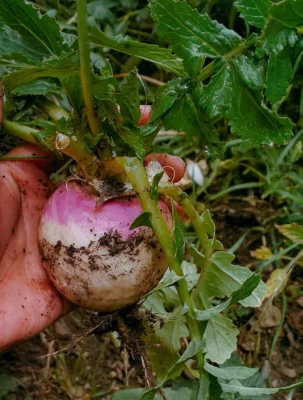
Choose a sunny patch that will remain open while the turnips grow. They can follow a harvested early crop, but avoid placing them in a gap that nearby leaves will soon cover.
Prepare fertile soil with mature compost and remove weeds before planting. Turnips need moisture without stagnant conditions. A fine surface helps the small plugs make good contact with the soil.
Leave roughly 20 to 25cm between clump centres in both directions. Use the wider end for four plants or larger roots. Do not crowd whole groups at spacing intended for individual baby turnips.
A container at least 40cm wide offers room for a small trial. Use suitable peat free compost and drainage holes, and keep the number of clumps modest so water supply stays manageable.
Photo: Touam (Hervé Agnoux), CC BY-SA 4.0. Resized and optimised; cropped for display. Adapted image under the same licence.
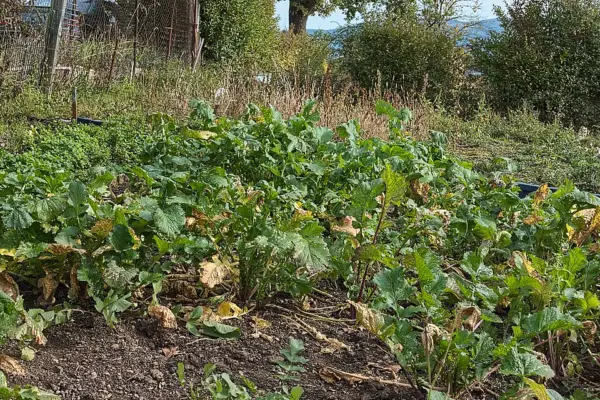
Turnips can be sown directly, but modules work when seedlings move while young and their roots remain intact. Plan the planting space before sowing so the tray does not become a holding area for oversized roots.
1.
Select an early or maincrop turnip for the intended sowing month. Read the packet for seasonal limits. A tender salad type is a useful choice for small, prompt harvests.
2.
Fill clean modules with moist peat free seed compost and firm gently. Leave a little watering space at the top of each cell.
3.
Sow three or four seeds per cell, covering around 1 to 2cm deep according to the packet. Label the variety and date rather than relying on memory between batches.
4.
Keep seedlings bright and evenly moist. Avoid excessive heat under a closed cover. Thin obvious surplus plants while small, leaving a deliberate group rather than a congested tuft.
5.
Prepare the bed and acclimatise sheltered seedlings. Transplant while the roots are still small and before they become confined or noticeably swollen in the cells.
6.
Place complete rootballs about 20 to 25cm apart, close to their original depth. Do not split the seedlings or trim their roots. Firm the soil around each plug gently.
7.
Water in and protect vulnerable leaves with suitable mesh where needed. Inspect beneath covers for slugs and ensure warm weather does not overheat the crop.
8.
As shoulders enlarge, inspect the biggest roots. Gently twist or loosen an outside turnip while supporting its neighbours. Harvest the whole clump if several are ready or individual removal would disturb them.

Watering
Maintain consistent soil moisture while the crop grows. Young clumps have several plants drawing from one small plug, so check frequently after transplanting and during drying winds.
Water before severe wilting rather than repeatedly rescuing dry plants. Irregular moisture can contribute to splitting and poor texture. Pots need closer attention than deep garden soil.

Feeding
Prepare the bed sensibly before planting. A short crop in fertile ground normally needs more attention to water, weeds and harvest timing than repeated fertiliser applications.
If using a container for successive batches, refresh depleted compost or follow its feeding guidance. Excess leaf growth and small roots are not automatically a reason to add more nitrogen.

Pruning
Keep enough healthy foliage to support root growth. Take leaves with harvested plants rather than repeatedly stripping every clump if roots are the main objective.
No routine pruning is needed. Remove weeds by hand close to the roots. A flower stalk marks bolting; cutting it off does not reliably return that plant to a tender root crop.

Winter care
Later sowings can provide autumn roots, but growth slows as light and temperature fall. Lift tender small turnips before conditions spoil their quality rather than assuming all varieties will stand through winter.
Suitable later roots may remain briefly in drained ground with protection when needed. For storage, lift sound roots carefully, remove the tops and keep them cool, checking for decay. Small salad turnips are best enjoyed fresh.
Turnip seedlings form a rosette of green leaves above a swelling root whose shoulder often sits above soil level. Skin may be white, purple topped or yellow, depending on variety.
Several roots develop beside each other in a multisown clump. These are separate plants. This guide covers turnips, not the larger swede crop sometimes also called turnip or neep in parts of the UK.
Photo: Paul Fenwick, CC BY-SA 3.0. Resized and optimised; cropped for display. Adapted image under the same licence.
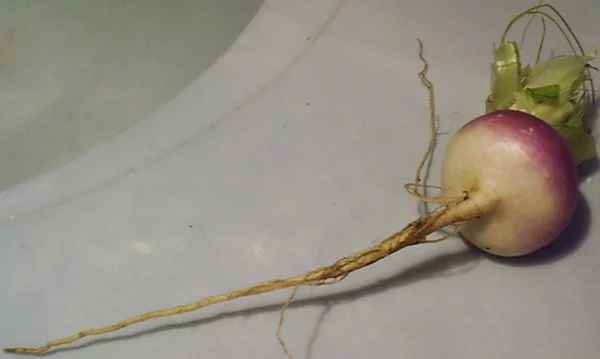
Spring and late summer often offer the cooler conditions that suit turnips. In hot districts, plan batches around the weather and avoid letting a small container bake dry during a heatwave.
In colder areas, an early protected sowing needs suitable varieties, light and ventilation. Allow longer than the fastest advertised harvest time. Do not leave seedlings crowded indoors while waiting for an unrealistic planting date.
Use later sowing dates carefully where autumn arrives early. A crop needs time to establish before growth slows. Harvest by size and texture, and lift the largest outside roots first when they separate without damage.
Photo: thebittenword.com, CC BY 2.0. Resized and optimised; cropped for display.
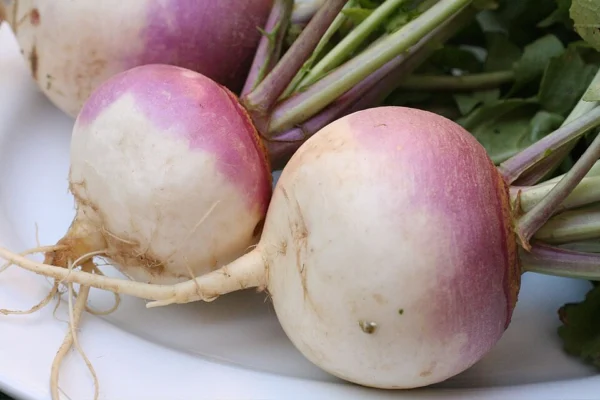
Flea beetles commonly graze brassicas. Keep seedlings growing steadily and use suitable fine insect mesh where losses are significant. Light damage on a vigorous plant does not necessarily ruin the crop.
Cabbage root fly larvae can damage turnips. Protect future crops with appropriate mesh from the start and avoid sites where pests may emerge beneath the cover. Discard badly spoiled roots.
Check moisture consistency and harvest timing. Repeated drying, slow growth and leaving roots too long can reduce quality. A younger, smaller harvest is often better than waiting for maximum size.
Inspect roots. Swollen, distorted roots can indicate clubroot, which affects brassicas. Avoid moving contaminated soil, seek a confirmed diagnosis and plan future crops around the affected ground.
Check for slugs, especially beneath covers and around damp container rims. Inspect at vulnerable stages and reduce nearby hiding places without allowing the crop itself to dry out.
Fresh seed is the normal route. Small groups can also be sown directly into prepared stations, avoiding transplanting when the bed is already available. Control the number of seedlings before crowding becomes severe.
Saving seed requires selected plants to flower, with appropriate isolation from compatible Brassica rapa crops. It is a separate project from harvesting young roots. Purchased named seed is the simpler option for predictable small batches.
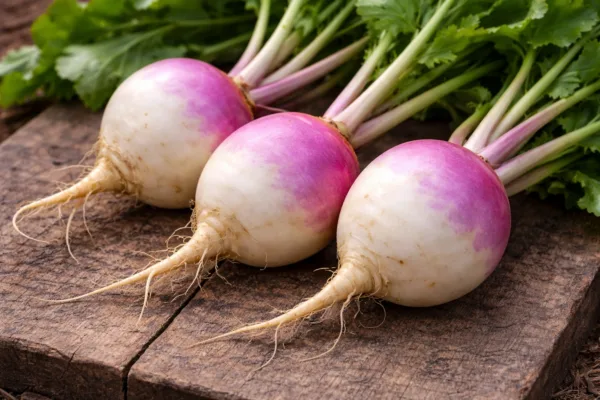
Purple topped turnips
Purple shoulders are familiar on many turnips, but colour alone does not identify a cultivar. The pictured roots illustrate this type. Check the seed packet for the correct season.
Image from the BFFD media library.
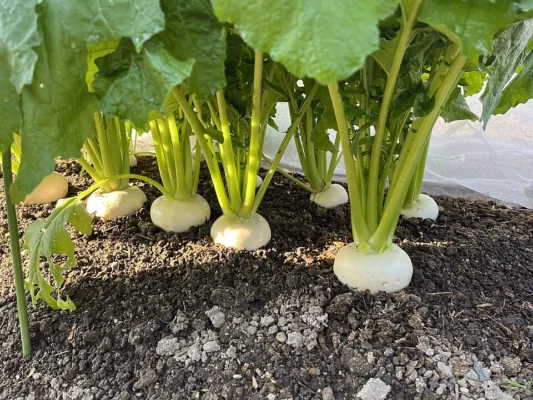
White salad types
White roots can be useful for tender young harvests. The photograph shows turnips swelling above soil level, without a confirmed cultivar. Pick according to texture and size rather than skin colour alone.
Photo: Miya, CC BY-SA 4.0. Resized and optimised; cropped for display. Adapted image under the same licence.
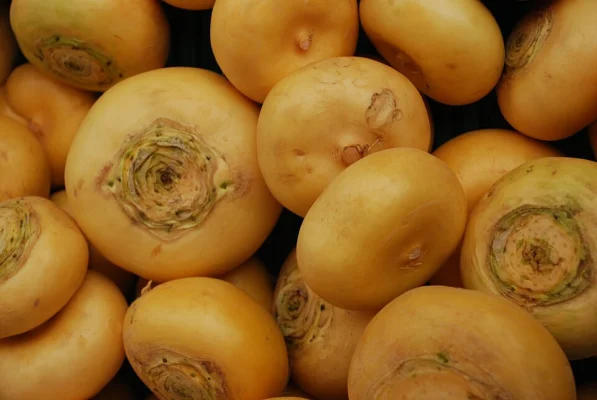
Yellow rooted choices
Some turnip varieties have yellow roots. They remain turnips, not automatically swedes. This photograph illustrates the colour; follow the chosen variety's own sowing and harvest guidance.
Photo: Osopolar, CC BY-SA 3.0. Resized and optimised; cropped for display. Adapted image under the same licence.
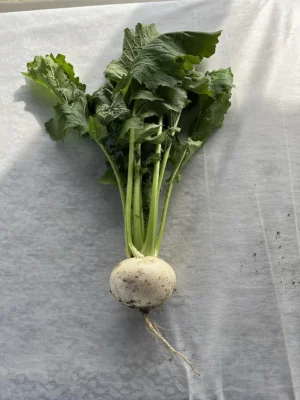
Small roots with fresh leaves
The whole white turnip illustrates a combined root and leaf harvest. Use sound young foliage and avoid stripping growing plants repeatedly if you want their roots to develop.
Photo: Miya, CC BY-SA 4.0. Resized and optimised; cropped for display. Adapted image under the same licence.
Choose how many young roots you will use, sow a manageable batch and record when it reaches good eating size. Let that guide the next sowing.
A few turnips retained to flower can attract visiting insects, but their roots will no longer be the tender crop described here. Keep flowering plants separate from regular harvest batches.
Check beneath protective mesh and secure edges without loose traps for wildlife. Identify damage before acting, and remember that a few marks on leaves need not make a sound root unusable.
Yes. Sow about three or four seeds for a small clump and plant it while young. Give the group enough room and harvest tender roots rather than aiming for very large specimens.
No. Keep the rootball together and minimise disturbance. Turnips should not wait until their roots are large and crowded before transplanting.
About 20 to 25cm between centres is a practical starting point for small groups. Use more space or fewer plants if larger roots are wanted.
Usually, if you loosen it gently while supporting the other plants. Take the whole clump when several roots are ready or individual removal would damage neighbours.
Healthy young turnip leaves can be eaten after washing. Take them with harvested roots or grow a separate leaf crop rather than repeatedly stripping plants intended for roots.
This method mainly suits young roots for fresh use. Storage depends on variety, maturity and condition. Small salad types are best eaten promptly; follow separate guidance for a later storage crop.
Keep turnip clumps modest, move them while young and never let harvest become an afterthought. Tender roots lifted regularly are the reward for a small, well managed planting.
Want to get food independence, support your local grower, get better prices and shop more privately?
Local food isn’t just something you find. It’s something you protect. A free account helps keep local supply visible, supported, and resilient.

….it takes 30 seconds for food lovers and 5 minutes for suppliers
We built this for people who care where their food comes from. For people who want to remain food secure. For Farmers to get to the local people, who deserve a better income and to deliver a better price for you. For the environmentally conscious and the privacy-conscious. An account simply helps us make the map and supplier reach more useful to you, without changing how open it is. You’re always in control.


Find local food. Stay connected to it. Create a free account to support local producers and be part of a growing food network.


