Winter jasmine puts small yellow flowers where they are especially welcome: along bare green shoots during the colder part of the year. Give it a wall, a bank or enough room to arch naturally, and it can brighten an otherwise quiet corner. Its flowers are unscented. Choose Jasminum nudiflorum for this job, because the fragrant climbing and indoor jasmines have different habits and winter needs.
Winter flowers
Hardy shrub
Sun or partial shade
Train or let it arch
Prune after flowering
| Botanical name | Jasminum nudiflorum |
| Plant type | Deciduous woody shrub |
| Life cycle | Perennial |
| Flower season | Winter into early spring, weather dependent |
| Flower colour | Yellow |
| Scent | Unscented |
| Light | Sun or partial shade |
| Soil | Fertile soil with effective drainage |
| Soil pH | Acid, neutral or alkaline |
| Height | Can reach about 3m with support |
| Spread | Allow roughly 2 to 3m for a mature planting |
| Growth habit | Long arching green stems |
| Climbing method | Does not attach itself to a support |
| Main planting season | Autumn and winter in workable ground |
| Watering | Establishment watering; dry spells thereafter |
| Feeding | Ground plants usually need no routine feed |
| Pruning | After the flowers finish |
| Propagation | Layering or suitable cuttings |
| Container use | Possible with space and ongoing watering |
| Garden role | Wall shrub, bank cover or informal hedge |
| Plant name | Crop type | Spacing |
Sow indoors
Plant outdoors
Harvest
Polytunnel | |||||||||||
|---|---|---|---|---|---|---|---|---|---|---|---|---|---|---|
| Jan | Feb | Mar | Apr | May | Jun | Jul | Aug | Sep | Oct | Nov | Dec | |||
| Winter Jasmine | Not recorded | Allow about 200 to 300cm per mature shrub, according to training and site | Plant outdoors | Plant outdoors | No activity recorded | No activity recorded | No activity recorded | No activity recorded | No activity recorded | No activity recorded | No activity recorded | Plant outdoors | Plant outdoors | Plant outdoors |
Sow indoors: no months recorded. Plant outdoors: January, February, October, November, December. Harvest: no months recorded. Polytunnel: no months recorded.
October to February marks the main autumn and winter planting opportunity, provided the ground is neither frozen nor saturated. Container plants can also be planted in other suitable conditions with careful aftercare. There is no routine seed, harvest or polytunnel band. The important pruning cue is the end of flowering in spring, which moves with the season; cutting in autumn can remove the coming winter display.
Choose winter jasmine when you want winter colour without relying on a heated growing space. It works particularly well where bare stems can be seen against a plain background. Before buying, decide whether you want an upright trained display or a broad arching shrub; that choice determines how much support and floor space to provide.
A narrow strip beside a frequently used path can become awkward if long shoots spill across it. Reserve enough room for the finished plant, or plan regular tying and pruning. If scent is your main aim, compare a different winter flowering shrub rather than expecting fragrance from these yellow blooms.
Photo: Jean-Jacques MILAN, CC BY-SA 3.0. Resized and optimised; cropped for display. Adapted image under the same licence.
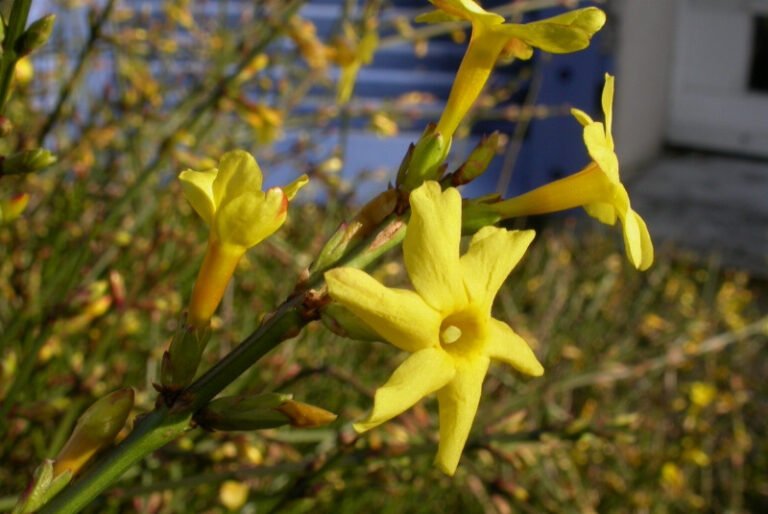
A wall with wires or trellis lets you arrange the green stems where the flowers can be seen. Keep some space between the branches and the wall so stems can be tied, inspected and renewed without pulling the entire framework away.
A low retaining wall or bank suits its natural arching growth. Think about where trailing shoots will land and whether you can reach them for pruning. Avoid allowing the display to cover steps or spill into a neighbour’s access route.
An open shrub border can accommodate a free standing plant, provided nearby perennials are not buried beneath its spread. Let the jasmine occupy a deliberate area rather than repeatedly clipping every shoot to fit a much smaller gap.
A large stable pot is an option where border space is unavailable. Match the eventual canopy to a secure support and leave access to water the compost. A wall can shelter a pot from useful rainfall even when the rest of the garden is wet.
Photo: Michael Wittwer, CC BY-SA 4.0. Resized and optimised; cropped for display. Adapted image under the same licence.
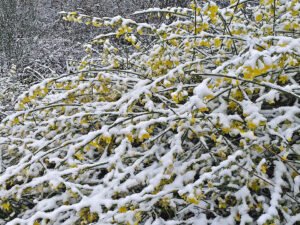
Prepare supports before unpotting a healthy labelled nursery plant, and decide which stems will form the future framework.
1.
Confirm the label says Jasminum nudiflorum. Check that the main shoots are healthy and that the rootball is moist, without a sour smell or prolonged standing water in the pot.
2.
Mark the space the mature shrub will occupy. For a wall display, position the rootball clear of the wall base and its driest ground, with room to direct stems back towards the support.
3.
Remove established weeds across the planting area. Deal with persistent roots now, while the ground is accessible, rather than trying to excavate beneath an established tangle of jasmine later.
4.
Dig a hole wide enough to spread the roots comfortably, keeping the base firm. Check the plant’s previous soil level against the surrounding ground before deciding the final depth.
5.
Water the nursery pot, ease out the rootball and loosen tightly circling outer roots carefully. Keep the roots shaded and moist while arranging the plant in its hole.
6.
Backfill with the excavated soil and firm gently around the rootball. Water slowly so moisture reaches the original compost as well as the surrounding ground, then check the plant remains at the intended level.
7.
Tie selected stems loosely to the support, spreading them to leave room for new growth. Use soft ties that can be adjusted as the branches thicken; winter jasmine will not cling to the wall unaided.
8.
Apply an organic mulch over the surrounding soil while leaving the stem bases clear. Label the plant and revisit its watering, ties and stability during establishment, particularly after drying winds or heavy rain.

Watering
Give a new planting regular attention through its first growing season. Check the original rootball as well as the nearby soil, especially beside masonry, where rain may fail to reach the roots. Water deeply enough to wet that area rather than sprinkling only the surface.
Established border plants mainly need help during dry spells. A container remains dependent on you: check beneath the compost surface and water when required, allowing excess to escape. A decorative outer pot must not become a reservoir around the roots.

Feeding
For a shrub growing steadily in ordinary garden soil, annual mulching is usually sufficient. Weak growth is a reason to inspect moisture, drainage and the amount of light before adding fertiliser. A plant struggling beneath another shrub will not gain more space from feeding.
Container plants have a limited supply of nutrients. Use a suitable fertiliser at the labelled rate during active growth, taking account of any feed already in fresh compost. Keep feeding proportionate to the plant and pot rather than applying several products together.

Pruning
After flowering, shorten spent shoots to a strong lower side branch and remove damaged or crowded growth. Work along one section at a time so the remaining stems still form an attractive framework. Tie in useful new shoots rather than leaving them to hang across paths.
An old overgrown plant may respond to harder renewal, but a substantial cut can reduce flowering while the framework regrows. Plan that work after assessing the whole shrub. Check for active bird nests before cutting, and postpone work around an occupied nest.

Winter care
Established winter jasmine belongs outdoors. Its normal winter appearance includes bare stems and scattered flowers; a lack of leaves at this stage is not, by itself, evidence that the shrub is dying. Keep the planting area drained and watch for wind damage to supporting ties.
Avoid tidying away all the long shoots in autumn simply because the summer leaves have gone. Those stems carry the coming flower display. If snow or wind bends a supported branch, inspect it carefully and remove genuinely broken wood without stripping the entire plant.
Look for slender green, often angular stems that arch away from the base. The small yellow flowers open on largely leafless growth, giving a very different outline from a summer jasmine covered in foliage. During the growing season, the leaves are divided into three small leaflets.
Forsythia also has yellow flowers on bare wood, so colour alone is insufficient for identification. Winter jasmine’s trailing green stems and small divided leaves are useful clues. Keep the nursery label, particularly when several yellow flowering shrubs are planted in the same garden.
Photo: Wilhelm Zimmerling PAR, CC BY-SA 4.0. Resized and optimised; cropped for display. Adapted image under the same licence.
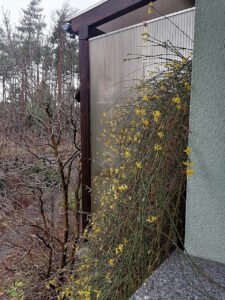
Flowering arrives in separate spells as the weather permits, so a mild southern garden and a colder inland site need not look identical in the same month. Treat the flowers and new growth as the cue for pruning, rather than completing every task on one national date.
In exposed gardens, give the trained framework dependable fixings and inspect them after storms. A plant grown as bank cover has a different maintenance need: check where stems have rooted and whether growth is advancing beyond the intended area.
Take a photograph after flowering to record which parts of the display are becoming sparse. That makes it easier to choose renewal shoots during summer, while leaving a balanced structure for the next winter. Small, deliberate adjustments are easier than dealing with years of congested growth.
Photo: Krzysztof Ziarnek, Kenraiz, CC BY-SA 4.0. Resized and optimised; cropped for display. Adapted image under the same licence.
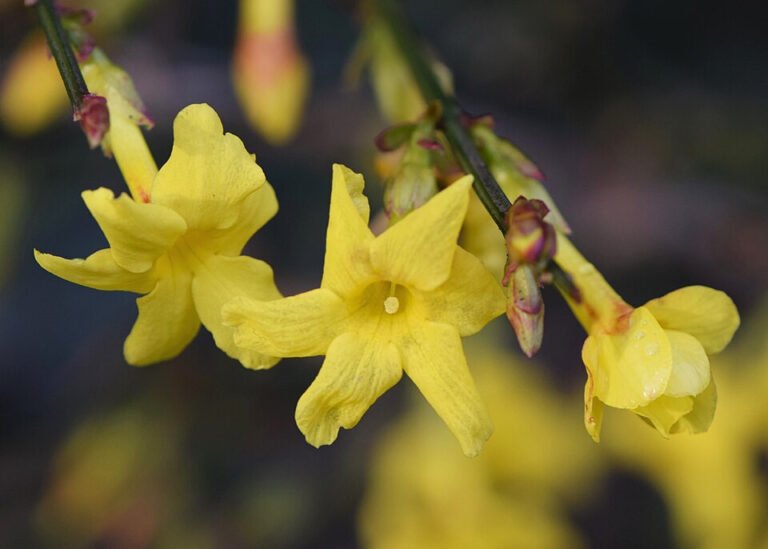
Review pruning dates first: cutting back in autumn or winter can remove flowering wood. Also consider deep shade and whether a recently renovated shrub needs time to rebuild mature shoots.
An ageing framework can carry most growth at its outer edges. After flowering, remove selected congested stems and retain well positioned younger shoots, spreading renewal across the plant.
Trailing stems can form roots where they rest on soil. Lift or redirect unwanted shoots while accessible, and remove surplus rooted sections without dragging up the parent’s main roots.
Inspect moisture inside the original rootball, especially beside walls. Correct a dry root zone or drainage problem before assuming the plant needs more feed.
Inspect the shoots and the insects present. A small population need not spoil the shrub; avoid routine spraying and allow naturally occurring predators time to respond.
Layering is a useful way to make another plant from a healthy low shoot. Secure a suitable section against prepared soil while it remains attached to the parent, then maintain moisture around that point. Separate it only when it has developed a workable root system.
Cuttings offer another route, with hardwood material a practical option for outdoor jasmine. Use healthy labelled stock and a suitable rooting medium. Seed is not the usual way to reproduce a selected garden plant, which is why this guide gives no routine sowing season.
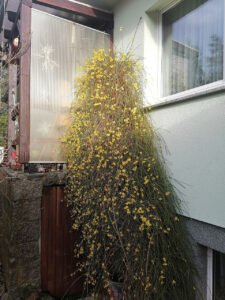
Trained wall shrub
Spread selected stems across wires or trellis for a clear winter display. This is the same species trained upright, not a self-clinging climber.
Winter jasmine growing against a building illustrates support by a wall.
Photo: Wilhelm Zimmerling PAR, CC BY-SA 4.0. Resized and optimised; cropped for display. Adapted image under the same licence.

Bank or wall cover
Allow stems to arch naturally where their eventual spread can be accommodated. Check rooted trailing growth so the planting stays within its intended area.
Winter jasmine spreading over a rocky bank.
Photo: Roman Eisele, CC BY-SA 4.0. Resized and optimised; cropped for display. Adapted image under the same licence.
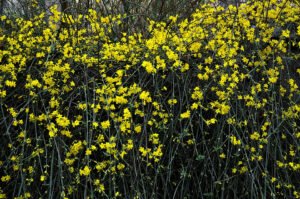
Informal low hedge
Use its loose habit where a formal clipped finish is unnecessary. Plan pruning around flowering instead of giving it an autumn hedge trim.
Free growing winter jasmine illustrates its natural shrub habit; this is not a formally clipped hedge.
Photo: NoJin, CC BY-SA 4.0. Resized and optimised; cropped for display. Adapted image under the same licence.
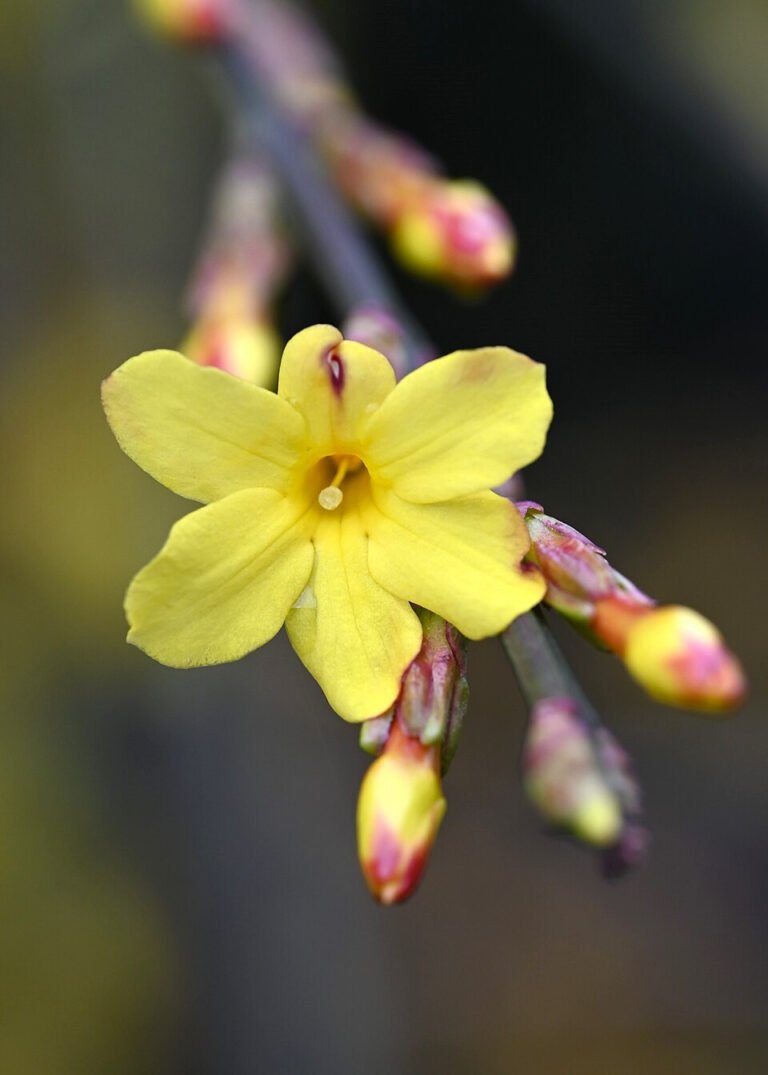
Container specimen
A substantial drained pot can bring flowers close to a doorway. Allow room for the canopy and choose a support that remains stable when the plant is fully grown.
Winter jasmine flower shown for identification; this photograph does not demonstrate a container specimen.
Photo: Krzysztof Ziarnek, Kenraiz, CC BY-SA 4.0. Resized and optimised; cropped for display. Adapted image under the same licence.
Choose a correctly named healthy plant, then plan its support, mature space and access before planting.
A developed wall shrub provides small sheltered spaces among its branches. Keep the framework varied rather than shearing it into a solid outer skin, and inspect carefully before pruning because birds may use the cover during the nesting season.
Include other flowering plants across spring, summer and autumn so one winter shrub is part of a longer seasonal display. Manage occasional pests by inspection rather than a fixed spray routine, particularly where insects are using neighbouring plants.
Published by Buy From Farmers Direct. Growing guidance reviewed 11 October 2026. The seasonal timeline uses the shared BFFD Growers Calendar record; adjust timings to your variety and local conditions.
No. Jasminum nudiflorum is valued for its yellow winter flowers, which are unscented.
No. Tie the stems to wires or trellis if an upright display is wanted. Without support they arch or trail.
Prune after flowering in spring. Avoid cutting away the next display with an autumn tidy.
Established winter jasmine is hardy and normally stays outdoors. Do not confuse it with tender indoor jasmines.
It tolerates partial shade. Choose a brighter position if the plant is very sparse or flowering poorly in deep shade.
This shrub can layer naturally where trailing stems touch soil. Remove or reposition unwanted rooted growth and retain a suitable section if another plant is wanted.
Give winter jasmine enough space, provide appropriate support and prune after flowering. Establishment watering and occasional renewal keep the display manageable.
Explore more growing guides: Iris, Lilac, Marguerite Daisy.
Want to get food independence, support your local grower, get better prices and shop more privately?
Local food isn’t just something you find. It’s something you protect. A free account helps keep local supply visible, supported, and resilient.

….it takes 30 seconds for food lovers and 5 minutes for suppliers
We built this for people who care where their food comes from. For people who want to remain food secure. For Farmers to get to the local people, who deserve a better income and to deliver a better price for you. For the environmentally conscious and the privacy-conscious. An account simply helps us make the map and supplier reach more useful to you, without changing how open it is. You’re always in control.


Find local food. Stay connected to it. Create a free account to support local producers and be part of a growing food network.


