Winter flowering witch hazels, especially Hamamelis mollis and H. × intermedia, offer fine winter petals and colourful autumn leaves. It is a shrub to position carefully and allow to develop. Choose the flower colour and eventual spread you want, then give the roots dependable moisture without waterlogging. A small nursery plant can become a broad specimen, so plan the mature shape before filling the space around it.
Winter interest
Deciduous shrub
Acid to neutral soil
Room to spread
Minimal pruning
| Botanical group | Hamamelis |
| Common garden forms | H. mollis and H. × intermedia cultivars |
| Plant type | Deciduous shrub |
| Life cycle | Long lived perennial |
| Main flower season | Winter into early spring, cultivar dependent |
| Flower colours | Yellow, orange, copper or red |
| Scent | Varies with cultivar and weather |
| Autumn interest | Leaf colour before leaf fall |
| Light | Sun or partial shade |
| Soil | Moisture retentive with good drainage |
| Soil reaction | Acid to neutral preferred |
| Unsuitable site | Shallow chalk or persistently waterlogged ground |
| Typical mature scale | Many cultivars reach roughly 2.5 to 4m |
| Main planting season | October to April in workable ground |
| Root moisture | Important during establishment and drought |
| Routine pruning | Usually unnecessary |
| Graft care | Keep the graft above soil and inspect suckers |
| Container use | A long term watering and space commitment |
| Propagation | Named plants usually grafted by specialist nurseries |
| Garden use | Winter border or open woodland edge |
| Plant name | Crop type | Spacing |
Sow indoors
Plant outdoors
Harvest
Polytunnel | |||||||||||
|---|---|---|---|---|---|---|---|---|---|---|---|---|---|---|
| Jan | Feb | Mar | Apr | May | Jun | Jul | Aug | Sep | Oct | Nov | Dec | |||
| Witch Hazel | Not recorded | Allow roughly 250 to 400cm or the named cultivar’s mature spread | Plant outdoors | Plant outdoors | Plant outdoors | Plant outdoors | No activity recorded | No activity recorded | No activity recorded | No activity recorded | No activity recorded | Plant outdoors | Plant outdoors | Plant outdoors |
Sow indoors: no months recorded. Plant outdoors: January, February, March, April, October, November, December. Harvest: no months recorded. Polytunnel: no months recorded.
October to April is the main planting band, avoiding frozen or saturated soil. Summer planting of container stock is possible with dependable watering. Seed is omitted because named cultivars are normally bought as nursery plants and do not reproduce reliably from seed. There is no routine harvest or polytunnel season. Any necessary shaping is best planned after flowering; a healthy shrub does not need an annual hard cut.
A witch hazel suits a garden where a slow developing specimen can keep its allotted space for years. Put it somewhere you pass in winter, with enough clearance to enjoy the flowers without brushing through the branches. Its outline matters as much as the individual blooms.
Consider the soil before selecting a flower colour. A shallow chalky site or a constantly wet hollow is a poor foundation for this planting. If the conditions are doubtful, investigate them first rather than buying an expensive shrub and trying to solve every problem afterwards with fertiliser.
Photo: Si Griffiths, CC BY-SA 3.0. Resized and optimised; cropped for display. Adapted image under the same licence.
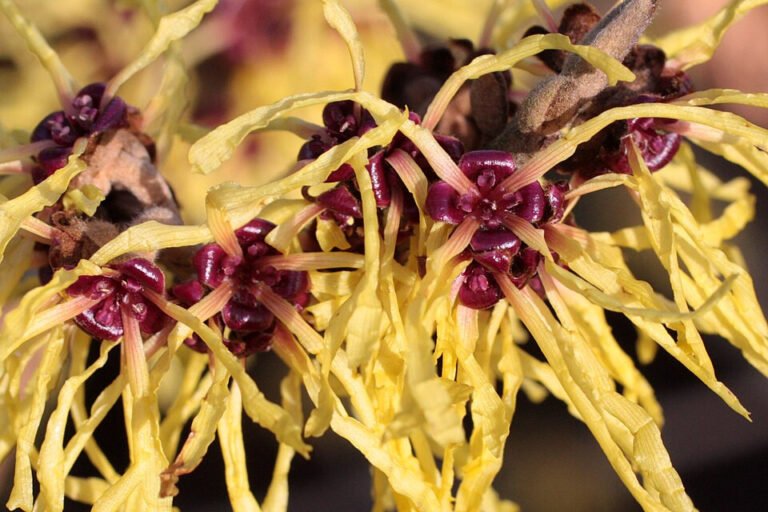
An open sunny border usually gives a better shaped, more generous display than a deeply shaded corner. Picture the bare winter branches against the background: pale flowers can be easier to see against an evergreen screen that is far enough away to avoid crowding.
An open woodland edge can work where there is useful light and the roots are not competing with a dense mat of mature tree roots. Check moisture through summer, because a sheltered-looking position can still be extremely dry below ground.
Leave the shrub enough width to develop its natural branches. Short lived or easily moved companion plants are more practical beside a young witch hazel than another permanent shrub planted against its future canopy.
A substantial container allows closer control of compost but requires regular care. Use an appropriate peat free growing medium, secure drainage and a stable pot. Make a realistic plan for watering, repotting and eventual size before treating container culture as a permanent solution.
Photo: Silyba, CC BY-SA 4.0. Resized and optimised; cropped for display. Adapted image under the same licence.
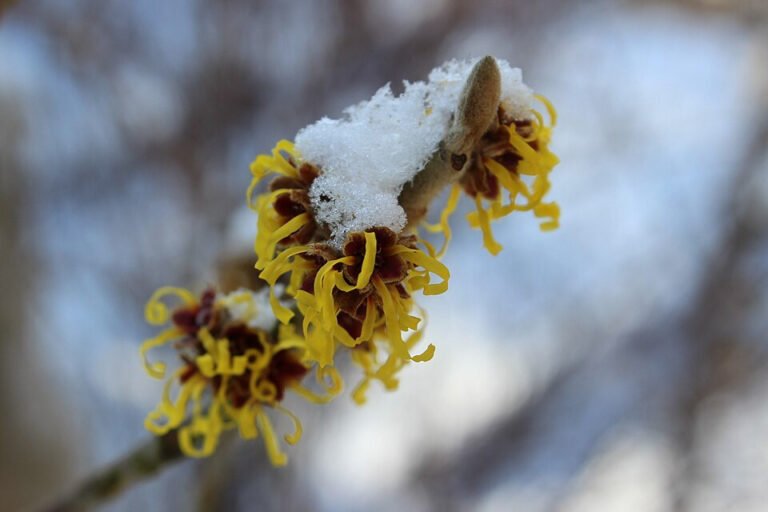
Plant when the soil can be worked without smearing or crumbling into dry dust. A well arranged young shrub is a good starting point. Check the graft and planting depth carefully, because burying the lower stem creates avoidable problems later.
1.
Choose a labelled plant with a balanced spread of healthy branches. Compare the final dimensions of the cultivar with the available space; the size of the nursery pot is not a guide to its mature footprint.
2.
Check the soil’s drainage and reaction in the chosen area. Identify persistent wetness, buried rubble or severe competition before digging a planting hole that merely conceals those problems.
3.
Clear weeds across the future root area. Prepare the surrounding ground so roots can expand, while keeping heavy machinery and repeated foot traffic away from the open planting space.
4.
Water the rootball before removing the container. Locate the upper roots and the graft union, if present, and plan to retain the previous sensible soil level with the graft above ground.
5.
Dig a broad hole with a firm base, then test the depth with the rootball in position. Stand back to check the branch arrangement from the main viewing point before backfilling.
6.
Ease out tightly circling outer roots where necessary and refill around the plant with excavated soil. Firm gently to close large air gaps without compacting the ground into a hard basin.
7.
Water slowly across the rootball and surrounding soil. Add an organic mulch over the rooting area while leaving a clear gap around the lower stem and graft.
8.
Record the cultivar and planting date, then check root moisture through the following growing seasons. Inspect for shoots arising below the graft and maintain enough open ground to spot them while small.

Watering
Young witch hazels need reliable moisture as the roots establish, which can take several seasons. In dry weather, check beneath the mulch rather than assuming it has kept the soil wet. Water across the root area and allow it to soak in slowly.
Continue to help established plants during significant dry spells. Container roots have a much smaller reserve and need closer attention. Yellowing or wilting can also result from excess water, so check the compost and drainage before automatically adding another can.

Feeding
A healthy shrub in suitable soil does not need repeated feeding. A modest spring application of an appropriate balanced fertiliser can support young growth where needed, but follow the product label and take account of other fertilisers already applied nearby.
Use organic mulch to maintain the surface condition and conserve moisture. Keep it away from the graft and stem. If growth is poor, assess water, drainage and soil suitability before treating the symptom as a simple shortage of nutrients.

Pruning
Allow the plant to develop its natural framework. Remove dead, damaged or badly crossing branches where necessary, working after flowering when shaping is required. Avoid turning routine care into an annual reduction of every branch simply to keep the shrub at its nursery size.
Trace shoots below the graft back to their origin and remove them cleanly. They belong to the rootstock and may eventually compete with the chosen cultivar. If a mature shrub needs substantial reduction, seek a staged plan rather than cutting the whole structure hard at once.

Winter care
The bare framework is part of the winter display. Keep the roots from drying excessively during a prolonged dry period and maintain drainage through wet spells. A hardy shrub in an appropriate border does not need to be wrapped routinely in a warm enclosure.
Observe when your cultivar opens its flowers and how long they remain attractive. The pattern changes with weather, exposure and variety. Do not cut apparently idle branches away before checking whether they hold rounded flower buds for the coming display.
The winter flowers have narrow, twisted petals clustered close to the bare wood. Leaves develop later and are broad, with a rounded or oval outline, before taking on autumn colour. Different cultivars can have a noticeably different branch shape and flower tone.
Keep the plant label and look at where any unusual shoot begins. A strong stem from below a graft may be rootstock rather than a new branch of the named plant. A photograph of a flower can suggest a colour group, but cannot reliably identify every cultivar.
Photo: Katja Schulz from Washington, D. C., USA, CC BY 2.0. Resized and optimised; cropped for display.
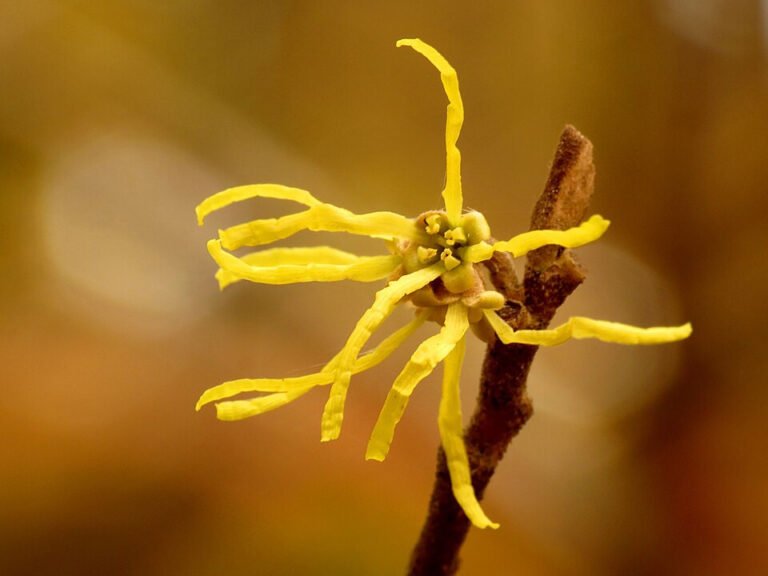
In a cold district, choose the position with exposure and summer moisture in mind rather than judging suitability only by one winter minimum. Avoid a drying wind corridor and plan access for watering while the young plant becomes established.
On heavier soils, drainage needs attention across the planting area. A pot-sized pocket of lighter material does not turn a wet site into a suitable one. Assess where water goes after rain before choosing any raised planting or wider drainage improvement.
Visit flowering plants locally if you can. Colour, scent and shape are easier to compare in person, and a nearby established specimen gives a useful indication of how much room a witch hazel will eventually occupy in your conditions.
Photo: cultivar413, CC BY 2.0. Resized and optimised; cropped for display.
Check whether they arise below the graft. Rootstock suckers should be removed at their origin, rather than repeatedly clipped at soil level and allowed to regrow.
Deep shade, competition and unsuitable root conditions can all contribute. Review the position and the plant’s recent growth before reaching for a stronger feed.
Check moisture, including during an unusually dry autumn or winter. Keep the roots adequately supplied without leaving them saturated.
Persistent wetness and root disease need investigation. Examine drainage and seek a diagnosis for unexplained decline rather than repeatedly pruning and feeding without finding the cause.
Inspect the plant and rootball for the actual cause, including vine weevil where symptoms fit. Container problems are easier to address while roots remain healthy and the damage is limited.
Specialist nurseries usually reproduce named witch hazels by grafting. Buying a correctly labelled plant is the straightforward route when a particular flower colour or form matters. Seedlings are variable and can take years to reveal their flowering character.
Layering is possible but slow, while cuttings need more controlled conditions than many familiar shrubs. Treat propagation as a separate project rather than assuming that a handful of cut stems will quickly replace a mature named specimen.
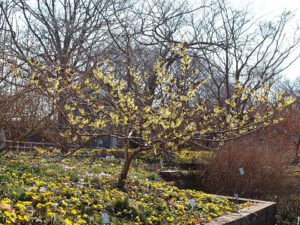
Pallida
A yellow flowering winter border choice that can reach roughly 2.5 to 4m in height and spread. Its mature footprint needs to be planned even when the supplied plant looks small.
Source identified Pallida witch hazel in a botanical garden.
Photo: Orjen, CC BY-SA 3.0. Resized and optimised; cropped for display. Adapted image under the same licence.
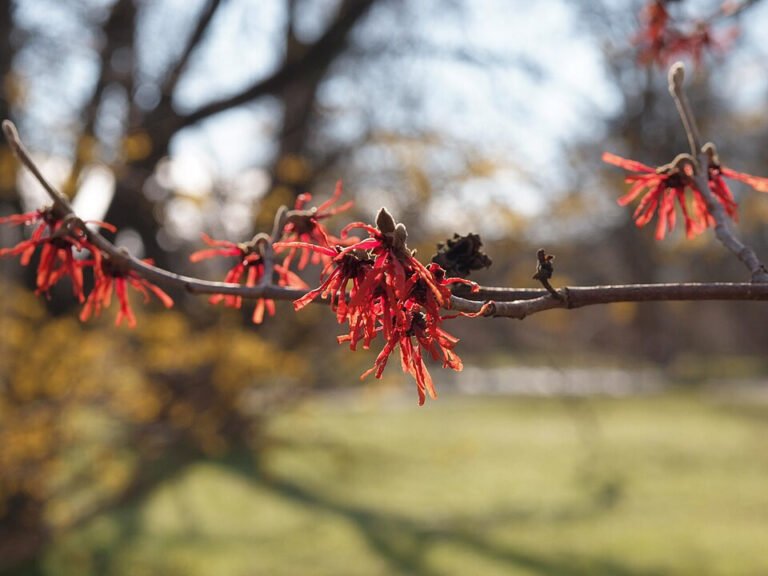
Diane
A hybrid with copper red flowers and autumn leaves that can show red, yellow and orange. The darker blooms reward a close viewing position against a suitable background.
Source identified Hamamelis × intermedia Diane.
Photo: Orjen, CC BY-SA 3.0. Resized and optimised; cropped for display. Adapted image under the same licence.
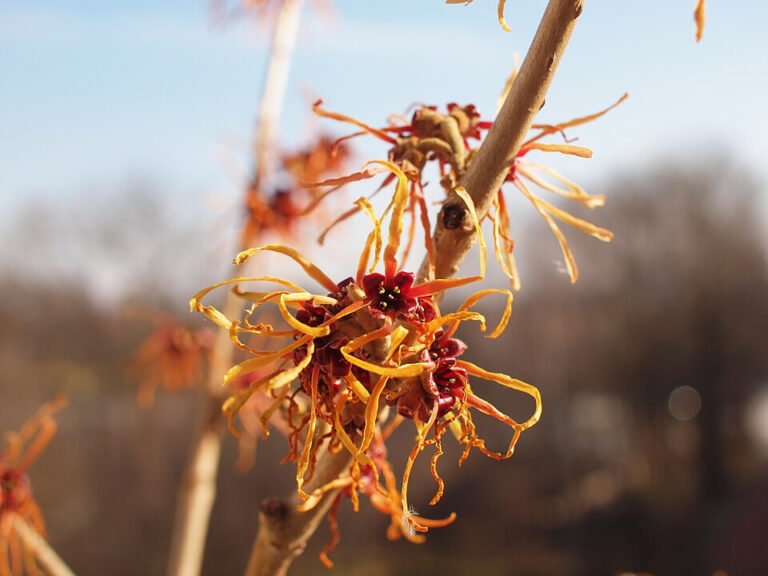
Jelena
Coppery orange flowers with fragrance distinguish this winter choice from plain yellow selections. Allow its broad framework to develop rather than planning frequent hard clipping.
Source identified Hamamelis × intermedia Jelena.
Photo: Orjen, CC BY-SA 3.0. Resized and optimised; cropped for display. Adapted image under the same licence.

Arnold Promise
A fragrant bright yellow hybrid that flowers relatively late in winter. Its open habit and eventual 2.5 to 4m height and spread make it a substantial specimen.
Source identified Hamamelis × intermedia Arnold Promise.
Photo: Plant Image Library from Boston, USA, CC BY-SA 2.0. Resized and optimised; cropped for display. Adapted image under the same licence.
Compare the labelled mature size, flower colour and growth habit before buying. Prepare a suitable permanent position with room for the shrub to develop, and make establishment watering part of the planting plan.
An established shrub adds branching cover to a mixed planting. Pair it with suitable flowers and ground cover that provide interest at other times of year, while keeping enough space for inspection and root care around the young witch hazel.
Check for active nests before pruning a developed framework. A restrained approach to cutting and pest treatment helps retain useful habitat while allowing you to remove genuinely damaged wood and control rootstock growth.
Published by Buy From Farmers Direct. Growing guidance reviewed 11 October 2026. The seasonal timeline uses the shared BFFD Growers Calendar record; adjust timings to your variety and local conditions.
It prefers acid to neutral conditions and is unsuitable for shallow chalky soil. Deep soil over chalk is a different situation, so assess the actual rooting layer rather than the district’s general geology alone.
No. Let it develop naturally and remove only growth that needs attention. Carry out necessary shaping after flowering.
It may be a sucker from the rootstock. Trace its origin relative to the graft before deciding what to remove.
Repeated hard reduction is a poor substitute for adequate space. Choose an appropriate cultivar and allow its natural dimensions.
Species can be raised from seed, but seedlings do not reliably reproduce a named cultivar and are a long term project.
A pot gives control over the growing medium but brings regular watering, feeding, repotting and stability requirements. It is not a maintenance free alternative.
Give witch hazel a suitable root environment and enough room to mature. Careful planting and steady establishment are more useful than frequent corrective pruning, leaving you free to enjoy its winter flowers and autumn leaves.
Explore more growing guides: Lilac, Iris, Marguerite Daisy.
Want to get food independence, support your local grower, get better prices and shop more privately?
Local food isn’t just something you find. It’s something you protect. A free account helps keep local supply visible, supported, and resilient.

….it takes 30 seconds for food lovers and 5 minutes for suppliers
We built this for people who care where their food comes from. For people who want to remain food secure. For Farmers to get to the local people, who deserve a better income and to deliver a better price for you. For the environmentally conscious and the privacy-conscious. An account simply helps us make the map and supplier reach more useful to you, without changing how open it is. You’re always in control.


Find local food. Stay connected to it. Create a free account to support local producers and be part of a growing food network.


