Anemones can bring flowers to a British garden from early spring into autumn, but they are not one interchangeable crop. Woodland anemones suit leafy shade, poppy anemones need a sunny position with excellent drainage, and Japanese anemones make much larger border plants. Choose the type first, then match its planting date, spacing and care to the place where it will grow.
Flowers, not food
Spring or autumn colour
Choose the species first
Borders and containers
Perennial plants
| Botanical name | Anemone species and hybrids |
| Family | Ranunculaceae |
| Plant type | Herbaceous perennial |
| Garden use | Borders, woodland and cut flowers |
| Flowering | Spring to autumn, depending on type |
| Edible crop | No |
| Sun | Sun or partial shade, by species |
| Soil | Drained soil suited to the species |
| Woodland type | Anemone nemorosa |
| Sunny cutting type | Anemone coronaria |
| Low spring type | Anemone blanda |
| Autumn type | Japanese anemones |
| Height | About 10 cm to over 1 m, by type |
| Spacing | About 15 cm to 60 cm or more |
| Containers | Especially useful for smaller types |
| Water | While establishing and in dry growth periods |
| Dormancy | Spring types can disappear in summer |
| Propagation | Division, tubers, rhizomes or seed |
| Native option | Anemone nemorosa |
| Handling | Wear gloves; do not eat |
| Plant name | Crop type | Spacing |
Sow indoors
Plant outdoors
Harvest
Polytunnel | |||||||||||
|---|---|---|---|---|---|---|---|---|---|---|---|---|---|---|
| Jan | Feb | Mar | Apr | May | Jun | Jul | Aug | Sep | Oct | Nov | Dec | |||
| Anemone | Unusual & exotic | Single 0.20m, In row 0.20m, Row gap 0.20m | No activity recorded | No activity recorded | Plant outdoors, Harvest, Polytunnel | Plant outdoors, Harvest, Polytunnel | Harvest | Harvest | Harvest | Harvest | Plant outdoors, Harvest | Plant outdoors, Harvest | No activity recorded | No activity recorded |
Sow indoors: no months recorded. Plant outdoors: March, April, September, October. Harvest: March, April, May, June, July, August, September, October. Polytunnel: March, April.
This calendar combines several anemone groups. March and April planting suits pot grown plants and spring planted Anemone coronaria; September and October suit dormant woodland tubers or rhizomes. The flowering band spans March to October across different species, not for a single plant. The calendar label Harvest means flowers for display or cutting, never an edible harvest. The 20 cm spacing is a starting point for A. coronaria; allow around 15 cm for small woodland types and 60 cm or more for large Japanese anemones. March and April polytunnel entries refer to protected establishment only. An unheated tunnel is not frost free.
Anemones work best when you have a definite role in mind. For flowers under deciduous trees, start with wood anemones. For a sunny pot or stems to cut, look at A. coronaria. For height late in the year, consider Japanese anemones and reserve enough room for their eventual spread.
A mixed packet labelled simply anemone can hide important differences. Keep the botanical name with your planting notes and photograph the label. This makes a later problem easier to solve and stops normal summer dormancy being mistaken for a dead plant.
Photo: Jim Evans, CC BY-SA 4.0. Resized and optimised; cropped for display. Adapted image under the same licence.
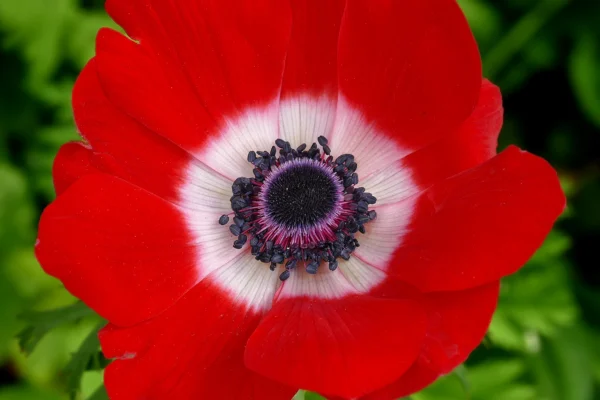
Place A. coronaria in sun, with shelter from strong winds and soil that sheds surplus water. A container is useful where the garden stays wet through winter because it lets you control the compost and move the plant after flowering.
Give A. nemorosa a woodland setting with soil improved by well rotted leaf mould or garden compost. The light beneath deciduous branches in spring, followed by summer shade, matches its short season above ground.
A. blanda can sit near the front of a border or beneath shrubs. Avoid putting it in a bed that receives heavy irrigation throughout its dormant summer period. Mark the area so that later planting does not slice through its tubers.
Japanese anemones suit a border with soil that retains some moisture without becoming waterlogged. Leave a generous space among neighbouring plants. Their spreading habit can be useful in a broad border and inconvenient beside delicate, slow growing specimens.
Photo: Salicyna, CC BY-SA 4.0. Resized and optimised; cropped for display. Adapted image under the same licence.
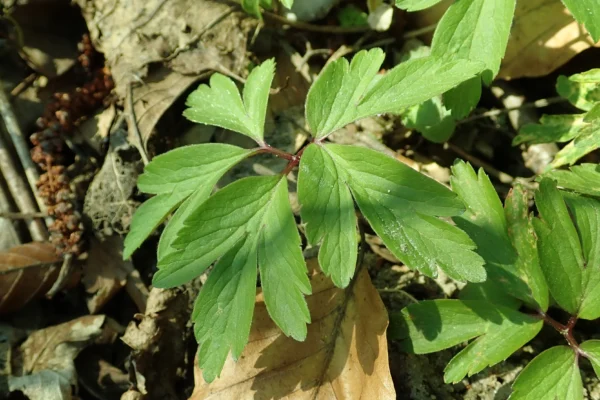
Buy healthy tubers, rhizomes or potted plants with a clear name. The following sequence helps you make the right decisions without applying one planting depth or watering routine to every anemone.
1.
Identify the species and check whether the material is a dry tuber, a creeping rhizome or an actively growing potted plant.
2.
Choose the planting window for that type. Autumn is usual for dormant woodland material; spring is a useful option for A. coronaria and potted Japanese anemones.
3.
Prepare the whole planting area, removing perennial weeds and addressing persistent drainage problems before planting.
4.
Follow the supplier's depth for dry material. Woodland rhizomes and poppy anemone tubers are different structures and need appropriate handling.
5.
If soaking dry tubers is advised on the packet, follow its duration and plant promptly. Do not leave them sitting in water for days.
6.
Set potted plants at the same soil level as in their pots, gently firm the surrounding soil and water them in.
7.
Label each group and leave the recommended mature spacing, especially around Japanese anemones.
8.
Check moisture during establishment and protect emerging shoots from slugs. Record the flowering date to refine next year's calendar.

Watering
Water newly planted anemones when rainfall does not keep the root area moist. Check below the surface before watering again, particularly in pots: damp compost at depth can sit beneath a dry looking surface.
Change the routine when spring flowering types become dormant. Do not keep watering bare ground or empty looking pots as though they were still growing. Japanese anemones remain active much later and may need water during a dry summer.

Feeding
Improve poor soil before planting rather than relying on repeated liquid feeds. Established plants in a suitable border usually need modest attention; a light seasonal mulch can improve the soil without encouraging a soft, crowded mass of growth.
For containers, follow the compost and fertiliser instructions for plants in active growth. Do not feed a dormant tuber or try to correct drainage problems with fertiliser. Pale leaves deserve a moisture and root check first.

Pruning
Allow spring anemone leaves to yellow naturally. Removing healthy leaves as soon as the flowers finish takes away the plant's opportunity to replenish its underground reserves.
Cut out old Japanese anemone stems and dead foliage in early spring before new growth is well advanced. When cutting A. coronaria for a vase, use clean tools and leave healthy foliage in place.

Winter care
Winter treatment depends on both species and drainage. A hardy rating describes cold tolerance under suitable conditions; it is not a guarantee of survival in a pot full of standing water.
Shelter containers from prolonged soaking and check that their drainage holes remain clear. In cold districts, follow the supplier's advice for A. coronaria. Woodland anemones and established Japanese types usually remain in the garden through winter.
Anemones belong to the buttercup family. Their showy flower parts surround a central group of stamens, and the leaves are typically divided or lobed. The flower size, root system and season are more useful for choosing garden care than the common name windflower alone.
A. blanda has many narrow flower segments and a low spring habit. A. nemorosa makes a woodland carpet with usually white flowers. A. coronaria has large, poppy like flowers with a dark centre. Japanese anemones lift flowers above taller leafy clumps in late summer and autumn.
Photo: Jim Evans, CC BY-SA 4.0. Resized and optimised; cropped for display. Adapted image under the same licence.
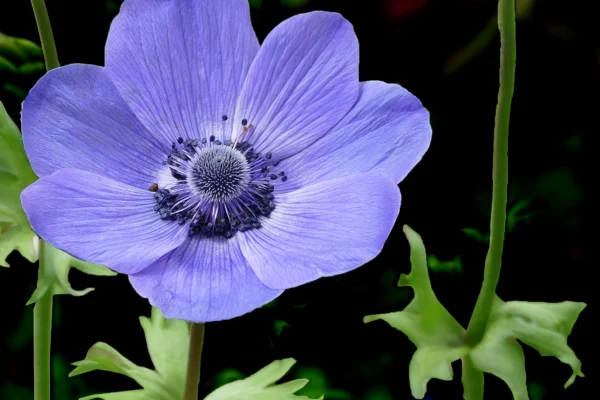
For a cold or exposed British garden, begin with the site rather than a generic month. Spring arrives later at altitude and in frost pockets, while a sheltered urban bed can warm much earlier. Plant into workable soil, not frozen or saturated ground.
On heavy clay, a sunny site does not automatically provide the drainage A. coronaria needs. A container or an improved raised planting area can offer more control. Woodland species have different requirements, so avoid treating every anemone as a Mediterranean plant.
Use the calendar as a reminder to inspect conditions. A planted group may flower outside the broad guide after an unusually mild winter or cool spring. Keeping a simple record of type, date and position gives the following season's decisions a local foundation.
Photo: David J. Stang, CC BY-SA 4.0. Resized and optimised; cropped for display. Adapted image under the same licence.
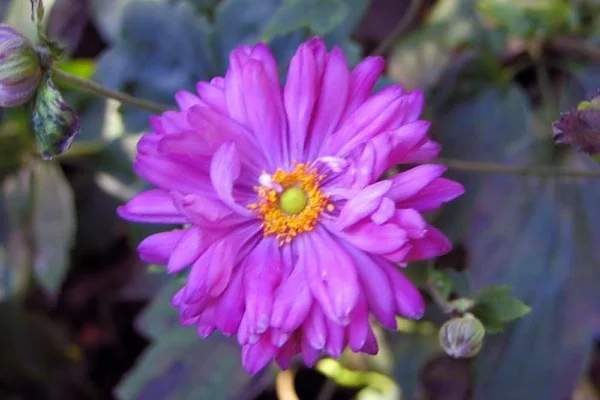
Check the planting season and species before disturbing the ground. Persistent wetness can rot dormant material. If inspection reveals soft, decayed tubers, remove them and correct the drainage before replacing them.
Summer dormancy is normal for several spring anemones. Mark their position and leave the ground undisturbed. A sudden collapse while flowers and leaves are still actively developing needs a separate moisture and pest check.
Slugs and caterpillars can damage tender shoots. Look underneath leaves and inspect the area in the evening. Protect new plants and use an appropriate targeted response only after identifying the culprit.
Powdery mildew can affect anemones. Improve airflow, reduce severe crowding and keep actively growing plants from becoming stressed by drought. Remove badly affected material and avoid spreading it around the garden.
Their roots can produce new shoots outside the original clump. Remove unwanted sections carefully and keep monitoring the boundary. Choose their position with future spread in mind rather than expecting a narrow permanent footprint.
Divide established plants using the method suited to their root system. Small woodland rhizomes can be separated after foliage dies back, while dormant tuberous types need pieces with viable growth points. Replant promptly and label divisions.
Japanese anemones can be divided or propagated by root cuttings. Seed is another option for species, but named cultivars may not reproduce faithfully and germination requirements vary. Buy labelled material when a particular colour, height or flowering form matters.
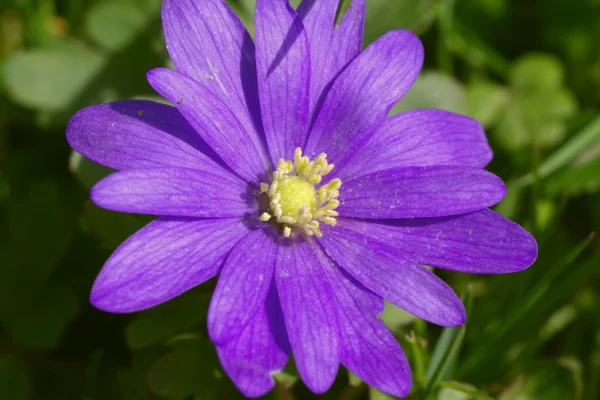
Anemone blanda
A low spring anemone with daisy like flowers in blue, white or pink forms. Useful at border edges and beneath shrubs, with drainage and a quieter summer dormancy period.
Photo: Berthold Werner, Public domain. Resized and optimised; cropped for display.

Anemone nemorosa
The native wood anemone produces usually white spring flowers above divided leaves. Choose it for a leafy, partially shaded setting where a slowly developing carpet can remain undisturbed.
Photo: Hans Hillewaert, CC BY-SA 3.0. Resized and optimised; cropped for display. Adapted image under the same licence.
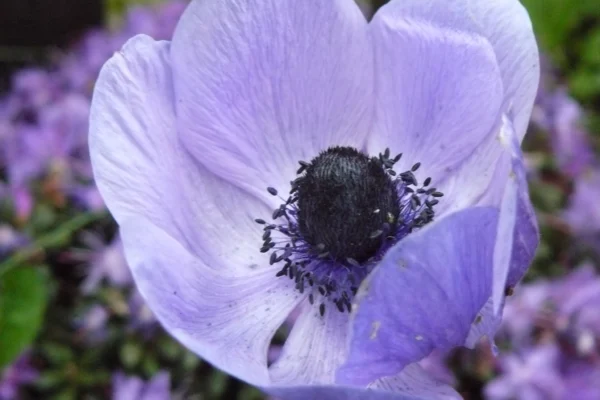
Anemone coronaria
The poppy anemone offers vivid flowers for sunny pots and cutting beds. Its planting date affects flowering, and dry conditions during dormancy matter more than a woodland watering routine.
Photo: ARBAY, CC BY-SA 3.0. Resized and optimised; cropped for display. Adapted image under the same licence.
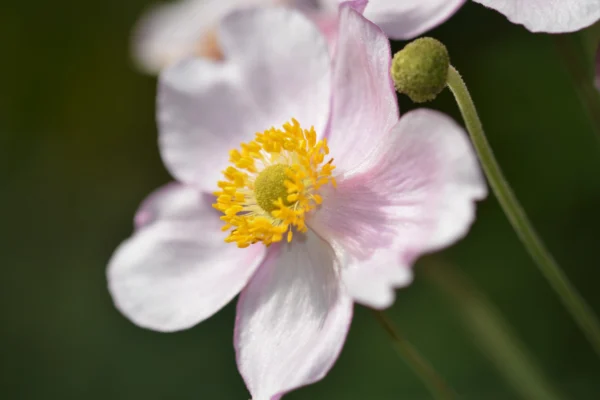
Anemone hupehensis
A Japanese anemone type for taller displays in late summer and autumn. Give it room in a border and distinguish its growing season from the spring flowering tuberous anemones.
Photo: Buendia22, CC BY-SA 4.0. Resized and optimised; cropped for display. Adapted image under the same licence.
Use the BFFD map to explore local growers and plant suppliers, then ask which anemone species they offer. Confirm plant size, growing conditions and current availability before travelling.
Single, accessible flowers can provide pollen for visiting insects. A sequence of suitable species can also extend the garden's flowering season, but the flowers are ornamental and should not be treated as food for people or livestock.
Where practical, leave some old stems and nearby plant cover through winter, then tidy before spring growth. Buy nursery propagated wood anemones rather than removing plants or rhizomes from wild woodland.
Published by Buy From Farmers Direct. Sources checked 4 October 2026. Growing references: RHS: spring flowering anemones; RHS: Japanese anemones; RHS: Anemone blanda; RHS: Anemone nemorosa; RHS: Anemone coronaria; Bloms Bulbs: how to grow anemones. The seasonal timeline uses the shared BFFD Growers Calendar record; adjust timings to your variety and local conditions.
It depends on the type. Dormant woodland anemones are usually planted in autumn. A. coronaria can be planted in spring for later flowers, while autumn planting needs suitable protection and drainage. Potted Japanese anemones are commonly planted in spring. Check the botanical name first.
Anemones are often sold in the bulb section, but their underground structures vary. A. coronaria and A. blanda have tuberous structures, while A. nemorosa spreads by rhizomes. Retail descriptions may use bulbs or corms loosely, so follow instructions for the named species.
Yes. Smaller types, particularly A. coronaria, are useful in containers with drainage holes and suitable compost. Match watering and summer dormancy care to the species. Large Japanese anemones require much more root space and often suit borders better.
They are perennial plants, but return depends on the type, drainage and establishment. A. coronaria can be less dependable in unsuitable wet conditions. Do not dig up a spring species simply because its leaves disappear in summer.
Let healthy leaves on spring types finish their season naturally. For Japanese anemones, remove old stems and dead foliage in early spring. Removing faded flower stems is different from cutting away the plant's working leaves.
No. Grow them for ornamental flowers, not food. Some can cause stomach upset if swallowed and skin irritation when handled. Wear gloves and keep their cut flowers and planting material separate from edible harvests.
Choose the anemone that fits your garden, keep its name with your notes and use the Growers Calendar to plan the next suitable planting window. Explore the BFFD directory when you are ready to ask local growers about availability.
Explore more growing guides: Allium (Ornamental), Alstroemeria, Aster (China).
Want to get food independence, support your local grower, get better prices and shop more privately?
Local food isn’t just something you find. It’s something you protect. A free account helps keep local supply visible, supported, and resilient.

….it takes 30 seconds for food lovers and 5 minutes for suppliers
We built this for people who care where their food comes from. For people who want to remain food secure. For Farmers to get to the local people, who deserve a better income and to deliver a better price for you. For the environmentally conscious and the privacy-conscious. An account simply helps us make the map and supplier reach more useful to you, without changing how open it is. You’re always in control.


Find local food. Stay connected to it. Create a free account to support local producers and be part of a growing food network.


