A large apple tree is a lasting part of a garden or orchard. Its crown creates shade, its blossom feeds insects and its crop may be more than one household can use fresh. Give the tree the space its rootstock and cultivar demand, then manage it through measured winter pruning rather than repeated hard cutting.
Large garden or orchard
Vigorous rootstocks
Allow mature spread
Winter pruning
Wildlife value
| Botanical name | Malus domestica |
| Family | Rosaceae |
| Plant type | Deciduous fruit tree |
| Growing form | Large bush, half standard or standard |
| Rootstock | Often MM111 or M25 |
| Typical height | About 4m upwards; rootstock and cultivar dependent |
| Space required | Mature crowns can spread 4.5 to 6m or more |
| Plant spacing | About 4.5m for MM111; 6m or more for M25 |
| Sunlight | Sunny, sheltered position |
| Soil | Fertile soil with good drainage |
| Planting season | November to March while dormant |
| Blossom | Usually April or May |
| Harvest | August to October, by cultivar |
| Pollination | Compatible apple with overlapping blossom |
| Pruning | Selective winter pruning |
| Container suitability | Unsuitable as a permanent container tree |
| First crops | Often four to six years or longer |
| Propagation | Grafting or budding named varieties |
| Winter care | Check ties, guards and trunk condition |
| Main watch points | Scab, canker, codling moth and drought |
| Plant name | Crop type | Spacing |
Sow indoors
Plant outdoors
Harvest
Polytunnel | |||||||||||
|---|---|---|---|---|---|---|---|---|---|---|---|---|---|---|
| Jan | Feb | Mar | Apr | May | Jun | Jul | Aug | Sep | Oct | Nov | Dec | |||
| Apple (Large) | Orchard fruit | Single 6.00m, In row 6.00m, Row gap 6.00m; M25 starting guide, allow wider spacing where required | Plant outdoors | Plant outdoors | Plant outdoors | No activity recorded | No activity recorded | No activity recorded | No activity recorded | Harvest | Harvest | Harvest | Plant outdoors | Plant outdoors |
Sow indoors: no months recorded. Plant outdoors: January, February, March, November, December. Harvest: August, September, October. Polytunnel: no months recorded.
Plant dormant bare root trees chiefly from November to March, avoiding frozen or saturated soil. Picking commonly falls between August and October by variety; winter storage is not a continuing harvest. No seed sowing or tunnel period is appropriate for a named outdoor orchard tree.
A standard has a clear trunk supporting a substantial crown. A half standard branches lower, while a large bush has a shorter trunk. These names describe the framework; rootstock and cultivar together influence eventual size.
Choose a large tree only when the mature canopy, access for maintenance and future crop all fit the site. If regular reach from the ground is essential, compare a dwarf bush before committing to a vigorous tree.
Photo: Ingo Wölbern, Public domain. Resized and optimised; cropped for display.

Walk the site with the full canopy in mind. Check buildings, boundaries, overhead obstructions, nearby trees and the route needed to bring in maintenance equipment. The young tree’s modest size is a poor guide to future space.
MM111 can suit a substantial half standard or standard, while M25 produces a particularly vigorous orchard tree. Nursery advice should account for local soil and cultivar strength, not just a generic height on a sales label.
As a starting guide, MM111 trees may need about 4.5m between trees with generous row access; M25 commonly needs at least 6m. Traditional orchard layouts may be wider still to accommodate mature crowns and management.
Choose ground with drainage and reasonable air movement, avoiding an obvious frost hollow where possible. If replacing an old apple, assess the previous tree’s cause of decline and consider a fresh planting position.
Photo: R J Higginson, CC BY-SA 3.0. Resized and optimised; cropped for display. Adapted image under the same licence.
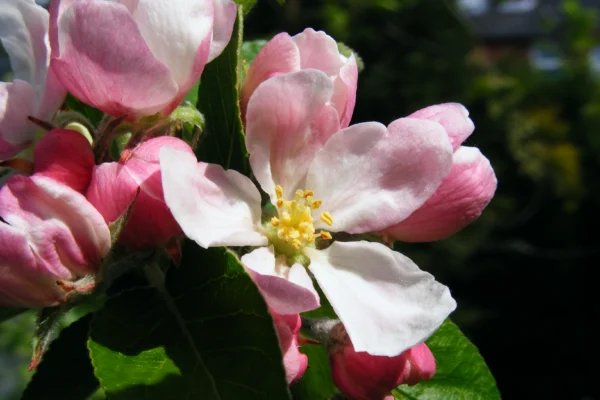
Plan the orchard or garden layout before buying. Include compatible blossom periods, a useful spread of harvest dates and a realistic destination for the fruit. One productive mature tree can generate a sizeable annual handling job.
1.
Mark tree centres using the expected mature spread and the access needed between rows.
2.
Confirm the cultivar, rootstock and intended trunk form with the nursery.
3.
Clear competing vegetation around each position and investigate any persistent drainage problem.
4.
Install an appropriate stake where the age and exposure of the supplied tree require one.
5.
Plant at the original depth with roots spread comfortably and the graft clear of the soil.
6.
Backfill, firm gently and water thoroughly to settle soil around the roots.
7.
Fit an adjustable tie and a suitable guard if animals or mowing equipment threaten the trunk.
8.
Mulch clear of the bark and write down the tree’s identity, planting date and intended formative plan.

Watering
Water a newly planted large apple through dry spells while its roots establish. Vigorous rootstock does not make a recently planted tree immediately independent of care. Check the soil rather than following a fixed weekly quantity.
Keep a clear area around the young trunk so grass does not compete for the same moisture. Established trees are usually more resilient, but prolonged drought during fruit development can still affect the crop.

Feeding
Maintain soil structure with sensible mulching and observe the tree’s growth. In a grassed orchard, feed decisions should reflect competition and soil condition rather than the size of the canopy alone.
If a mature tree is already producing abundant strong shoots, avoid adding unnecessary nitrogen. Poor cropping calls for a review of pollination, pruning and tree health before assuming that more fertiliser is the answer.

Pruning
Prune conventional bush and standard apples during winter dormancy. Begin with damage, disease and badly placed rubbing branches, then thin selectively to admit light. Retain a balanced crown rather than giving the top a uniform haircut.
Renovate an overgrown tree gradually. Hard cutting can trigger dense upright regrowth and sacrifice productive wood. Large limbs, structural weakness or work beyond safe reach justify assessment by an experienced fruit tree specialist or arborist.

Winter care
Review ties, guards and the condition of the trunk while foliage is absent. Keep machinery away from bark and check whether guards need enlarging as the tree grows.
Remove diseased fruit left hanging in the crown. Useful habitat in an older tree need not automatically be removed, but stability and public access must be considered where branches overhang paths or seating.
A large canopy alone cannot identify a rootstock. Keep planting records and original labels. Two apples of the same cultivar may grow very differently when grafted onto different roots.
Learn the distinction between the permanent framework and younger fruiting wood. The goal is a tree that renews useful growth over time, not a crown that becomes either a dense thicket or a collection of bare large limbs.
Photo: Andy / Andrew Fogg, CC BY 2.0. Resized and optimised; cropped for display.
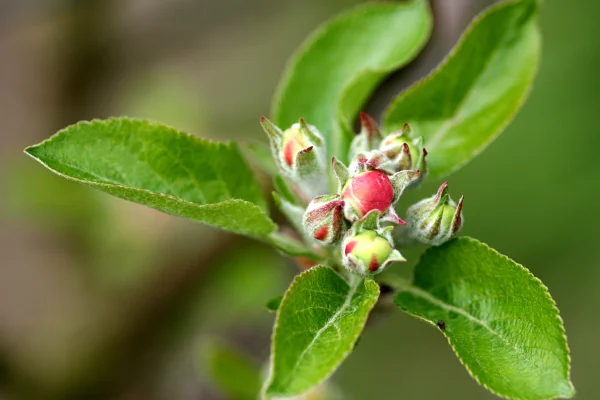
Choose a local growing record over a promise of universal performance. An orchard in a sheltered southern valley and a windy northern plot need different judgements about ripening, shelter and cultivar reliability.
Plan harvest use before the crop arrives. Eating, cooking, storage, sharing and pressing require different varieties and handling arrangements. Sort damaged fruit promptly rather than filling storage boxes indiscriminately.
Record where each tree stands and its flowering and picking dates. A simple orchard plan becomes particularly valuable when trees outlast labels or pass into another gardener’s care.
Photo: National Fruit Collection, Brogdale, Open Government Licence v2.0. Resized and optimised; cropped for display.
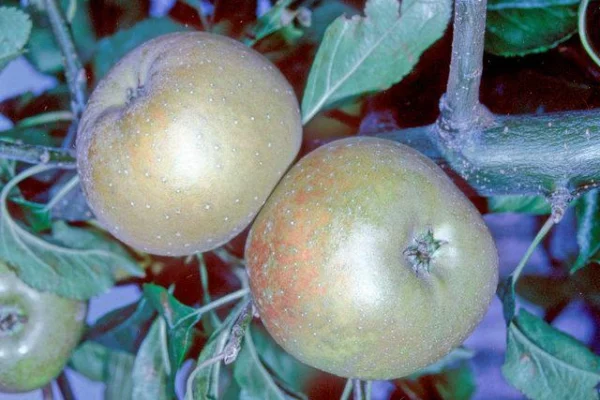
Strong regrowth often follows severe cutting. Reconsider the pruning intensity and restore the crown gradually. Repeating the same hard reduction each winter can perpetuate the cycle.
Biennial bearing can follow excessive crop loads and varies by cultivar. Review fruit thinning, growth and pruning. Do not expect one heavy winter prune to restore even cropping.
Older trees can retain wildlife value despite cavities, but structural condition cannot be judged from the cavity alone. Seek professional assessment where failure could affect people or property.
Sort affected fruit out at picking and remove old infected apples from the tree. Identify brown rot or codling moth before deciding on further measures; sound and damaged fruit should not share a storage box.
Canker can kill individual shoots and sometimes affect the trunk. Remove infected small branches where practical. Major lesions on the permanent framework need careful assessment rather than casual cutting.
Traditional orchard varieties are preserved by grafting or budding. Pips produce genetically variable seedlings and do not reliably preserve the fruit or the planned tree size.
If an old tree has valued but unknown fruit, seek identification before replacing it. A specialist may help assess whether healthy material can be propagated, preserving a useful local variety without assuming its identity.
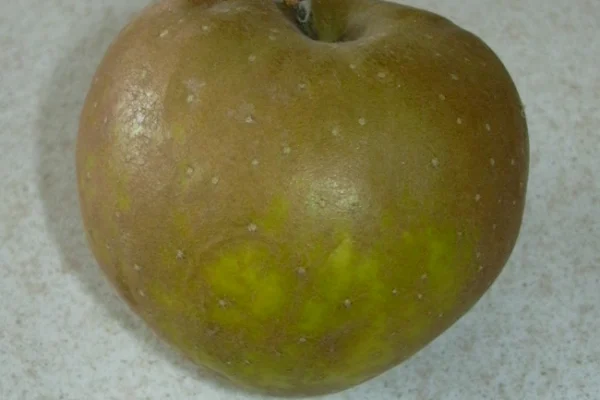
Malus domestica ‘Egremont Russet’
A russet dessert apple with a firm texture and nutty flavour. Its spur bearing habit suits trained forms. Flowering group 2; choose the rootstock separately from the fruit variety.
Photo: AJR, CC BY-SA 3.0. Resized and optimised; cropped for display. Adapted image under the same licence.
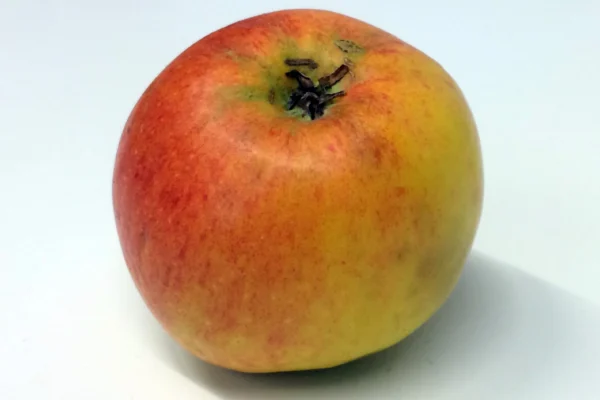
Malus domestica ‘James Grieve’
A juicy Scottish apple useful for cooking before full ripeness and eating later. Flowering group 3. Its spur bearing habit offers a useful option for either a supported trained tree or a conventional bush.
Photo: Aron Ambrosiani, CC BY-SA 4.0. Resized and optimised; cropped for display. Adapted image under the same licence.
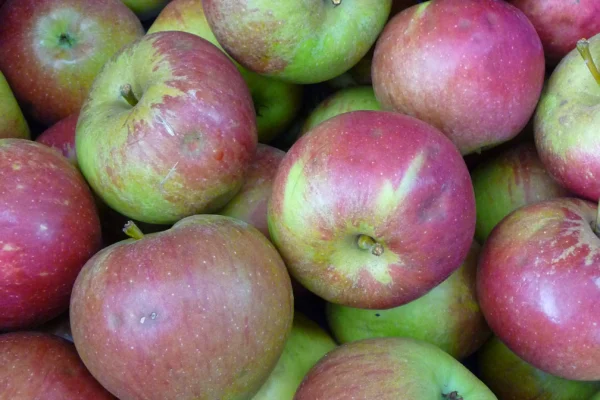
Malus domestica ‘Fiesta’
Also sold as Red Pippin, this Cox style apple gives an autumn crop with storage potential. A spur bearer in flowering group 3. A support framework helps organise its naturally rather untidy growth.
Photo: 4028mdk09, CC BY-SA 3.0. Resized and optimised; cropped for display. Adapted image under the same licence.
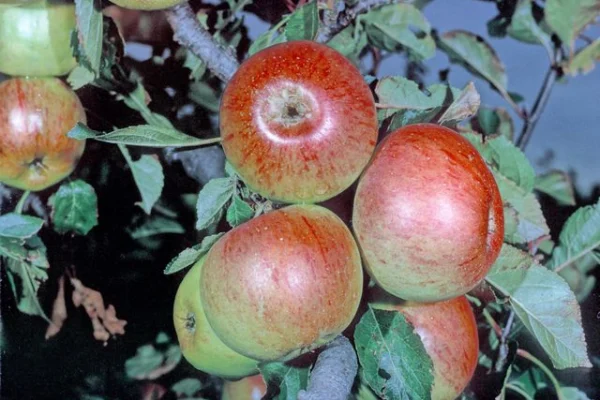
Malus domestica ‘Sunset’
A compact, aromatic dessert apple in flowering group 3. Its spur bearing habit is useful for small trained trees. Thin heavy crops thoughtfully because crowded fruit can remain small.
Photo: National Fruit Collection, Brogdale, Open Government Licence v2.0. Resized and optimised; cropped for display.
Explore the BFFD map for growers and producers near you. Check each listing and contact the business about seasonal apples or planting stock before travelling; availability and tree forms vary.
A mature apple can offer blossom, fruit and an increasingly varied structure. Traditional orchards are especially valuable where trees of different ages stand within grassland and other habitats.
Retain suitable safe dead wood and avoid unnecessary broad treatments. Keep young tree establishment areas clear, then manage the wider ground in a way that allows some flowering and refuge for insects.
Published by Buy From Farmers Direct. Sources checked 4 October 2026. Growing references: RHS: Rootstocks for fruit; PTES: Planting fruit trees; RHS: Pruning made easy; RHS: Winter pruning apples and pears; RHS: Apple tree problems; RHS: Apple canker; RHS: Codling moth; RHS: Brown rot; PTES: Orchard biodiversity tips; Orange Pippin: Egremont Russet; Orange Pippin: James Grieve; Orange Pippin: Fiesta; Orange Pippin: Sunset. The seasonal timeline uses the shared BFFD Growers Calendar record; adjust timings to your variety and local conditions.
Rootstock and cultivar decide the layout. Allow about 4.5m or more for an MM111 tree and at least 6m for M25 as a starting point. Orchard access and particularly vigorous cultivars may require wider spacing.
A standard describes a tree with a taller clear trunk and substantial crown. A dwarf tree uses a growth restricting rootstock and is usually trained lower. Always check both rootstock and supplied form.
Repeated hard pruning is a poor substitute for choosing the right rootstock. It can provoke strong new growth and remove fruiting wood. Select a smaller tree from the outset if space is limited.
Prune a conventional bush, half standard or standard in winter dormancy. This differs from the principal summer maintenance used for cordons and espaliers. Renovate neglected trees over several seasons.
Vigorous rootstocks generally take longer than dwarfing ones. A first useful crop may take around four to six years or longer, depending on rootstock, age when supplied, cultivar and establishment.
Yes, size does not remove that requirement. Most varieties benefit from another compatible apple flowering nearby. Triploid varieties also need special planning because they are poor pollen partners for other trees.
Use the Growers Calendar to keep seasonal jobs in view, then explore the BFFD map to discover local food producers. A planting plan becomes more useful when it reflects your soil, available space and the apples you enjoy eating.
Explore more growing guides: Apple (Cordon), Apple (Dwarf), Apple (Espalier).
Want to get food independence, support your local grower, get better prices and shop more privately?
Local food isn’t just something you find. It’s something you protect. A free account helps keep local supply visible, supported, and resilient.

….it takes 30 seconds for food lovers and 5 minutes for suppliers
We built this for people who care where their food comes from. For people who want to remain food secure. For Farmers to get to the local people, who deserve a better income and to deliver a better price for you. For the environmentally conscious and the privacy-conscious. An account simply helps us make the map and supplier reach more useful to you, without changing how open it is. You’re always in control.


Find local food. Stay connected to it. Create a free account to support local producers and be part of a growing food network.


