Globe artichokes turn a permanent corner of the vegetable garden into a bold display of silver leaves and substantial flower buds. Those unopened buds are the crop. Leave some to develop and they become purple flowers. Give the plants sunshine, generous space and good drainage, then allow young crowns to establish before asking them to produce a full harvest.
Perennial vegetable
Full sun
Edible flower buds
Allow generous space
Flowers attract pollinators
| Botanical name | Cynara cardunculus Scolymus Group |
| Also known as | Cynara scolymus |
| Family | Asteraceae |
| Plant type | Herbaceous perennial vegetable |
| Height | Usually 1 to 1.5m, sometimes taller |
| Spread | About 1m |
| Spacing | 75 to 90cm between plants |
| Sunlight | Full sun |
| Soil | Fertile, moisture retaining and well drained |
| Sowing indoors | February to March |
| Sowing outdoors | April to May where soil is warm |
| Planting out | Late spring after hardening off |
| Harvest | Usually June to September |
| First crop | Normally the second growing season |
| Edible part | Fleshy bases of bud scales and heart |
| Flower colour | Purple |
| Watering | During establishment and prolonged drought |
| Winter care | Protect crowns in cold or wet sites |
| Propagation | Seed, rooted offsets or division |
| Not the same as | Jerusalem artichoke, a tuber crop |
| Plant name | Crop type | Spacing |
Sow indoors
Plant outdoors
Harvest
Polytunnel | |||||||||||
|---|---|---|---|---|---|---|---|---|---|---|---|---|---|---|
| Jan | Feb | Mar | Apr | May | Jun | Jul | Aug | Sep | Oct | Nov | Dec | |||
| Artichoke (Globe) | Unusual & exotic | Single 0.90m, In row 0.90m, Row gap 0.90m | No activity recorded | Sow indoors, Polytunnel | Sow indoors, Polytunnel | Sow indoors, Plant outdoors, Polytunnel | Sow indoors, Plant outdoors | Plant outdoors, Harvest | Harvest | Harvest | Harvest | No activity recorded | No activity recorded | No activity recorded |
Sow indoors: February, March, April, May. Plant outdoors: April, May, June. Harvest: June, July, August, September. Polytunnel: February, March, April.
Harvest refers to unopened flower buds, generally from June into September depending on cultivar and plant age. February and March sowing is indoors; April and May sowing is outdoors in suitable conditions. The under cover band is for raising young plants, not a promise of first year cropping. Remove first season buds from ordinary perennial plantings to build a strong crown.
Choose globe artichokes if you have a permanent sunny area and enjoy a crop that also looks impressive in a border. Several plants need a surprising amount of space once their leaves expand, so measure the mature footprint rather than judging the size of a plug.
They suit gardens where the crown can avoid prolonged winter wet. In a very cold or poorly drained plot, grow in an improved raised bed or choose a cultivar and annual growing method specifically suited to those conditions. Do not assume every Mediterranean selection is equally hardy.
Photo: Cillas, CC BY-SA 4.0. Resized and optimised; cropped for display. Adapted image under the same licence.
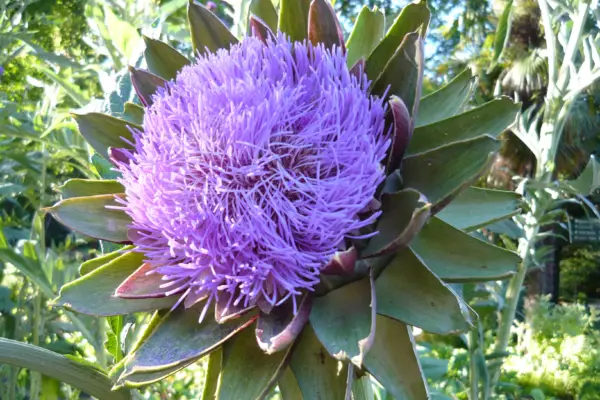
Plant in full sun with shelter from the strongest winds. A position where you can walk around the plant makes harvesting simpler and avoids trampling surrounding roots.
Prepare soil with mature organic matter to improve structure and moisture retention. Drainage remains essential, especially through winter. Rich compost cannot compensate for water trapped around the crown.
Give each plant around 90cm of space. A row beside a main path can become obstructive when leaves spread, so set the crowns back from the edge. Keep a permanent route for picking.
Containers are possible but less forgiving than open ground. Use a pot at least 45cm wide and deep, with drainage holes, and expect frequent watering checks. A large crown can rapidly exhaust a small volume of compost.
Photo: Magnus Manske, CC BY-SA 3.0. Resized and optimised; cropped for display. Adapted image under the same licence.
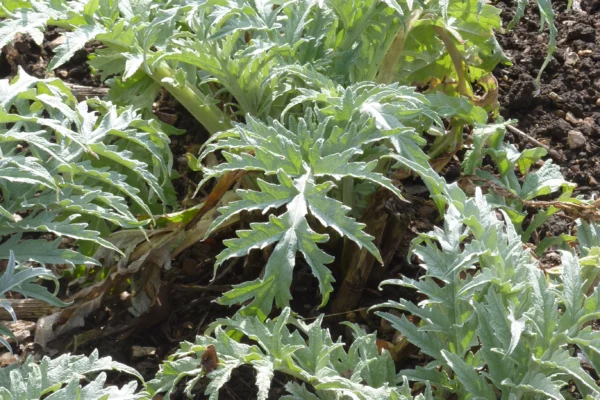
Start from seed for an economical planting, or buy young plants and rooted offsets for a more predictable cultivar. Seedlings can vary, which matters if uniform buds are your main objective.
1.
Choose a named cultivar with a growing method suitable for your climate and available space.
2.
Sow indoors in late winter or early spring using seed compost, or obtain healthy young plants.
3.
Grow seedlings in good light and pot them on before their roots become congested.
4.
Clear perennial weeds and prepare a fertile sunny bed with effective drainage.
5.
Harden off indoor plants gradually before planting after the risk of significant frost.
6.
Set plants at their previous growing depth, approximately 75 to 90cm apart.
7.
Water thoroughly and mulch the surrounding soil without burying the crown.
8.
Remove young flower stems during the first establishment season and keep the planting labelled.

Watering
Water new plants during dry weather until their roots spread into the surrounding soil. Established crowns also benefit during prolonged drought, especially while buds develop. Check beneath the mulch before deciding whether water is needed.
Aim for steady moisture rather than repeated drying and soaking. Container plants need closer observation. If water remains around the base for long periods, correct the site problem before increasing irrigation.

Feeding
Maintain fertility with mature compost or well rotted organic matter. Where soil is poor, use a suitable vegetable fertiliser according to its label. Productive perennial planting depends on sustained soil care rather than a single heavy feed.
Assess the plant before applying more nutrients. A small young crown, cold spring or damaged roots can all explain limited growth. Keep feed away from direct contact with the crown and water it in as instructed.

Pruning
Cut buds while their scales remain closed and before purple flowers appear. Take a short piece of stalk with each head. The central bud usually develops before the smaller side buds, so inspect plants regularly.
After cropping or flowering, remove spent stems and untidy dead foliage without damaging new basal growth. Retain a few sound flowerheads if you want their ornamental and wildlife value, accepting that these heads are no longer the tender edible crop.

Winter care
Protect vulnerable crowns with a loose insulating covering in colder gardens, while avoiding a sodden mass pressed tightly against the plant. Wind and wet can make a nominally mild site difficult.
Check protected plants during mild weather and remove or loosen protection when growth resumes. An old crown that repeatedly struggles may need replacement or a better site, rather than another season of the same treatment.
Globe artichokes form a bold rosette of deeply divided grey green leaves and sturdy stems carrying large, overlapping scaled buds. An unharvested bud opens into a purple thistle like flowerhead.
The crop is botanically different from Jerusalem artichoke. Globe artichoke is grown for unopened buds; Jerusalem artichoke is a tall sunflower relative harvested for underground tubers. Cardoon is a close relative, but is generally grown for its leaf stalks and is not an interchangeable purchase.
Photo: Jebulon, CC0 1.0. Resized and optimised; cropped for display.
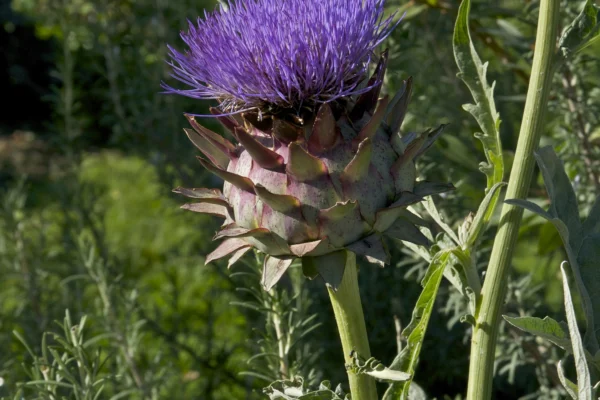
In a sheltered British garden, a well established planting can crop over several seasons. The key is keeping the crown healthy between harvests, particularly through cold wet winters.
Harvest dates depend on cultivar, plant age and spring weather. Walk past the plants frequently once buds swell: a head that looks ready can open quickly in warm conditions. Judge the tightness of the bud, not size alone.
Record which plants produce the best buds and survive reliably. Healthy rooted offsets from a good plant can renew the patch. This is more useful than keeping an exhausted crown simply because it has occupied the bed for years.
Photo: Magnus Manske, CC BY-SA 3.0. Resized and optimised; cropped for display. Adapted image under the same licence.
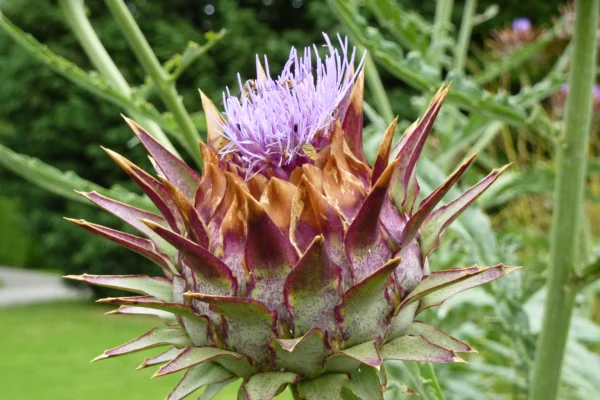
Harvest earlier, while the overlapping scales remain tight. Once purple flowers appear, leave the head for wildlife or display and check the remaining side buds more often.
Cold combined with poor drainage can damage crowns. Inspect for rot, improve the site and replace failed plants. Avoid packing wet protective material against the centre.
Slugs and snails can damage soft growth. Check at dusk and protect vulnerable young plants while keeping the base free of unnecessary hiding places.
Inspect young growth and flower stems. Encourage natural predators and remove small colonies by hand or with water where practical, taking care not to damage developing buds.
First check plant age, crowding and moisture. Newly established crowns should build roots, while old or weak crowns may need renewal. Choose vigorous material when propagating replacements.
Sow seed in pots and grow on in good light, but expect some variation unless the seed line is particularly uniform. Named plants raised vegetatively offer a more dependable match to the parent.
Take healthy rooted offsets in spring from productive established plants. Give each enough root to establish, plant promptly and water carefully. Do not propagate from a crown showing unexplained rot or severe decline.
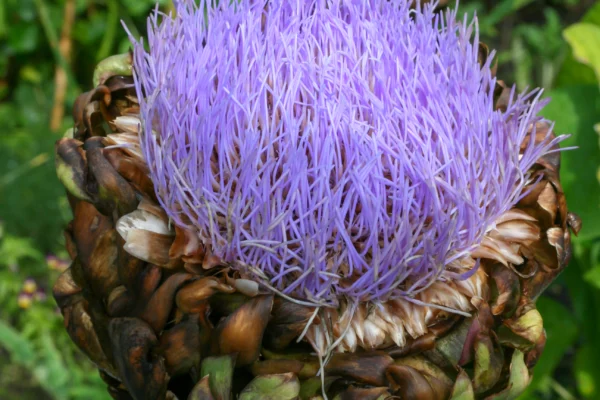
Green Globe
A familiar green budded artichoke suited to a permanent planting. Allow its large leaves enough room and select healthy productive plants for future offsets.
Green Globe artichoke photographed at the Eden Project
Photo: Mike Peel (www.mikepeel.net), CC BY-SA 4.0. Resized and optimised; cropped for display. Adapted image under the same licence.
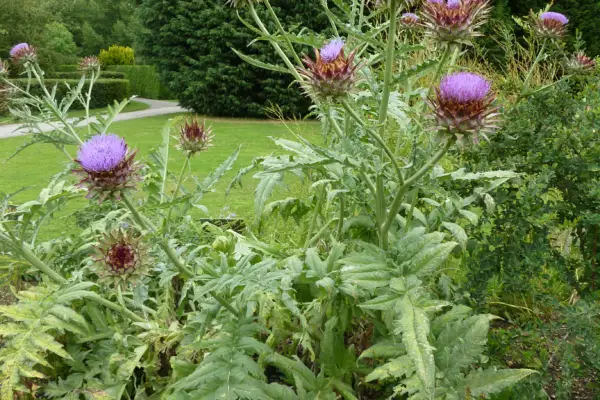
Violet de Provence
A purple budded cultivar that brings additional colour to the edible border. Give it a warm sheltered site and check local winter suitability with the supplier.
Illustrative globe artichoke species photograph; cultivar not identified.
Photo: Magnus Manske, CC BY-SA 3.0. Resized and optimised; cropped for display. Adapted image under the same licence.
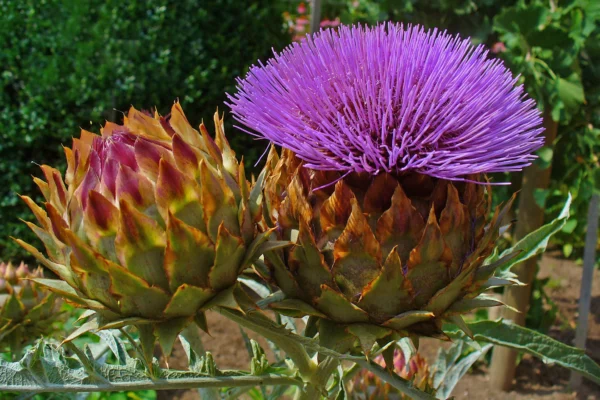
Imperial Star
A cultivar developed for annual production. Follow its specific sowing and growing instructions if attempting a crop in the first season, rather than applying the usual perennial establishment schedule blindly.
Globe artichoke bud and flower. Illustrative globe artichoke species photograph; cultivar not identified.
Photo: H. Zell, CC BY-SA 3.0. Resized and optimised; cropped for display. Adapted image under the same licence.
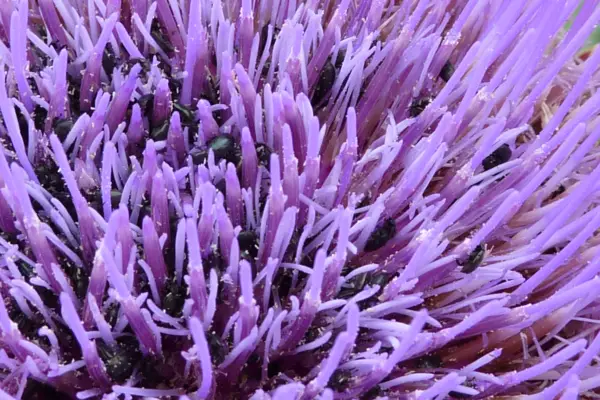
Gros Vert de Laon
A traditional green globe artichoke listed among RHS growing options. Compare hardiness and bud characteristics when choosing plants for a permanent UK bed.
Globe artichoke at Cambridge University Botanic Garden. Illustrative globe artichoke species photograph; cultivar not identified.
Photo: Magnus Manske, CC BY-SA 3.0. Resized and optimised; cropped for display. Adapted image under the same licence.
Use the BFFD map to discover nearby growers and ask about seasonal globe artichokes. If buying plants, confirm that they are globe artichokes and check cultivar, plant age and likely first harvest.
Unpicked buds develop into purple flowers visited by pollinating insects. Leaving a few heads creates a useful balance between food production and a flowering border.
Inspect aphid colonies before intervening, since predators may already be active. Keep enough space around mature plants to observe growth and wildlife without damaging leaves or neighbouring crops.
Published by Buy From Farmers Direct. Sources checked 4 October 2026. Growing references: RHS: How to grow globe artichokes; Garden Organic: Globe artichoke; Utah State University: Artichoke in the garden; RHS: Globe artichoke facts; RHS: Green Globe; RHS: Violet de Provence. The seasonal timeline uses the shared BFFD Growers Calendar record; adjust timings to your variety and local conditions.
Plant healthy young plants in late spring after hardening them off. Established divisions and rooted offsets are usually planted in spring when the soil is workable.
Yes. Sow indoors in late winter or early spring and grow seedlings on before planting out. Seed raised plants may vary; rooted offsets preserve the character of a good parent.
Cut the buds while their overlapping scales are still tightly closed, before purple flowers emerge. In established UK plantings this is generally a summer crop.
For ordinary perennial plantings, remove first season buds to help the crown establish. Cultivars bred for annual production follow a different schedule, which should come from the seed supplier.
They are perennials and can return for several years in suitable conditions. Winter wet, severe cold and ageing crowns can shorten their productive life.
No. Globe artichokes provide edible flower buds. Jerusalem artichokes are sunflower relatives grown for underground tubers, with different planting and harvest routines.
Use the Growers Calendar to plan a permanent artichoke bed and its summer picking window. The BFFD map can help you find local growers to contact while your own young crowns establish.
Explore more growing guides: Artichoke (Jerusalem), Asparagus, Amaranth (Grain).
Want to get food independence, support your local grower, get better prices and shop more privately?
Local food isn’t just something you find. It’s something you protect. A free account helps keep local supply visible, supported, and resilient.

….it takes 30 seconds for food lovers and 5 minutes for suppliers
We built this for people who care where their food comes from. For people who want to remain food secure. For Farmers to get to the local people, who deserve a better income and to deliver a better price for you. For the environmentally conscious and the privacy-conscious. An account simply helps us make the map and supplier reach more useful to you, without changing how open it is. You’re always in control.


Find local food. Stay connected to it. Create a free account to support local producers and be part of a growing food network.


