China asters, Callistephus chinensis, are annual flowers grown from seed for colourful beds, containers and cut stems. Their flowers range from open daisies to densely packed forms in white, pink, purple and red. They are different from the perennial asters that return from established clumps. A sunny position, clean propagation and sensible spacing help them develop into a useful late summer display.
Annual flower
Callistephus chinensis
Summer to autumn colour
Useful cut flowers
Sunny position
| Botanical name | Callistephus chinensis |
| Family | Asteraceae |
| Common names | China aster, Chinese aster |
| Plant type | Annual |
| Origin | China and nearby East Asia |
| Garden use | Beds, containers and cutting |
| Position | Full sun |
| Exposure | Sheltered |
| Soil | Fertile and drained, with available moisture |
| Soil reaction | Neutral to alkaline preferred |
| Sowing | Spring |
| Planting out | After frost risk has passed |
| Flowering | Summer and early autumn |
| Typical height | About 20 to 90 cm, by cultivar |
| Typical spacing | About 25 to 30 cm, by cultivar |
| Support | Useful for tall cutting varieties |
| Deadheading | Encourages a longer display |
| Propagation | Seed |
| Returns next year | Usually resown as an annual |
| Harvest use | Ornamental cut flowers |
| Plant name | Crop type | Spacing |
Sow indoors
Plant outdoors
Harvest
Polytunnel | |||||||||||
|---|---|---|---|---|---|---|---|---|---|---|---|---|---|---|
| Jan | Feb | Mar | Apr | May | Jun | Jul | Aug | Sep | Oct | Nov | Dec | |||
| Aster (China) | Unusual & exotic | Single 0.30m, In row 0.30m, Row gap 0.30m | No activity recorded | No activity recorded | Sow indoors, Polytunnel | Sow indoors, Polytunnel | Plant outdoors, Polytunnel | Plant outdoors | Harvest | Harvest | Harvest | Harvest | No activity recorded | No activity recorded |
Sow indoors: March, April. Plant outdoors: May, June. Harvest: July, August, September, October. Polytunnel: March, April, May.
March and April are guide months for sowing under protection. Plant hardened young plants out in May or June after local frost risk has passed; later planting is sensible in colder districts. July to October is the potential flowering and cutting period, dependent on cultivar, sowing date and frost. The calendar label Harvest means ornamental flowers, not food. March to May polytunnel entries refer to raising young plants; an unheated tunnel can still become cold enough to damage tender growth. The 30 cm spacing is a garden guide, not a commercial cutting density.
Choose China asters when you want a display planned afresh each year or flowers for small arrangements. Compact varieties fit the front of a bed and containers, while taller cultivars belong in a sheltered border or cutting patch.
They reward a little advance planning. Allow room to raise seedlings, keep their growing conditions clean and reserve a different suitable planting area if the previous crop showed wilt. For a small garden, a few well grown plants are more useful than an overcrowded tray that cannot be planted properly.
Photo: Alivari (Snegireva I.S.), CC BY 4.0. Resized and optimised; cropped for display.
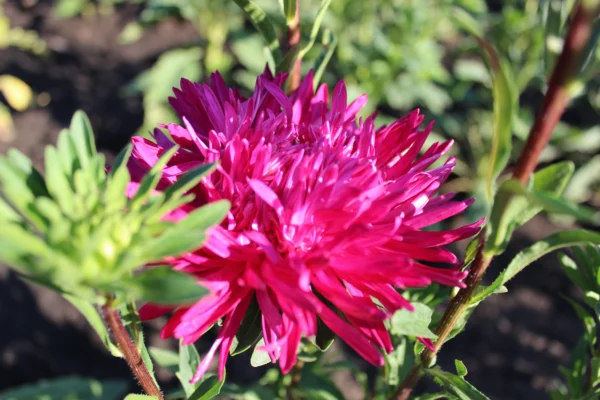
Select a sunny position with shelter from strong wind. Taller stems carrying heavy flowers benefit from support, especially when grown for cutting. Put supports in early so you do not have to push them through an established root system.
Aim for fertile soil that holds enough moisture during growth but drains after rain. Prepare the wider bed rather than adding rich material only to individual holes. Remove perennial weeds before the young plants go in.
Compact cultivars can grow in pots with drainage holes and compost without peat. Choose the variety for its eventual height, not simply for the colour pictured on the packet. A tall cutting variety can become awkward in a small exposed container.
Avoid returning China asters repeatedly to a patch where they have suffered disease. Keep plant labels and a simple bed record so next year's decision is based on what happened in that ground, rather than memory alone.
Photo: Andrey Korzun (Kor!An), CC BY-SA 3.0. Resized and optimised; cropped for display. Adapted image under the same licence.
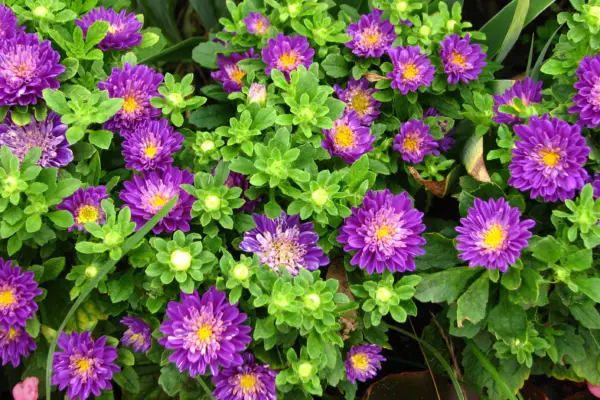
Start with fresh seed from a reliable supplier or healthy young plants. Follow the cultivar's sowing guidance, then keep seedlings growing steadily until they can be hardened and planted outside.
1.
Choose the flower form and height you want, distinguishing dwarf bedding varieties from taller cutting selections.
2.
Fill clean pots or modules with fresh seed compost and sow at the depth given on the packet.
3.
Keep the compost moist but aerated, with suitable warmth for germination and ventilation once seedlings appear.
4.
Provide bright light so seedlings remain compact, and handle them gently when potting on.
5.
Prepare a sunny bed with good drainage or a suitable container, leaving space for the mature plants.
6.
Harden plants gradually during settled weather, protecting them from cold nights and strong winds.
7.
After frost risk has passed, plant at the original rootball level, commonly around 30 cm apart in a garden display.
8.
Water in and label the variety. Fit supports for tall plants while their stems are still short and easy to guide.

Watering
Check young plants regularly while they establish. Water the soil around the root area rather than repeatedly splashing the leaves, and allow water to soak in rather than giving a brief surface sprinkle.
Containers may dry much faster than a border. Check beneath the compost surface before watering and do not leave pots standing in water. If a plant wilts while its root area remains wet, investigate the cause instead of adding more.

Feeding
Start with reasonably fertile soil and keep feeding measured. Container plants may need a suitable liquid feed once the compost's initial nutrients are used, following the product's instructions.
A plant making abundant soft leaves but few useful stems does not automatically need more fertiliser. Review light, spacing and variety as well as feeding. Different series have different natural flower size and growth habit.

Pruning
Remove faded flowers from plants grown for a continuing garden display. Use clean scissors or secateurs and avoid leaving damaged stems or decaying flowers lodged among the leaves.
For a vase, cut healthy stems when flowers are well developed, preferably in the cooler part of the day. Place them promptly into clean water and remove foliage that would sit below the water line. Leave enough healthy growth if further flowers are expected.

Winter care
China asters normally complete their useful garden cycle in one season. Once frost or natural decline ends the display, clear the spent plants and plan fresh seed for the following spring.
Compost healthy material where appropriate, but keep seriously diseased plants out of ordinary home compost. Clean pots and supports before reuse. The winter task is preparation for the next crop rather than protecting a permanent perennial clump.
China asters carry toothed leaves along branching stems and individual daisy like flower heads. Cultivars vary greatly: some show a yellow centre, while others have tightly packed, curled or slender flower parts that conceal it.
The calendar name Aster (China) refers to Callistephus chinensis. New York asters and other perennial asters belong to different groups and need their own advice. Dividing an established perennial clump is not the normal way to produce next year's China aster display.
Photo: Römert, CC BY-SA 3.0. Resized and optimised; cropped for display. Adapted image under the same licence.
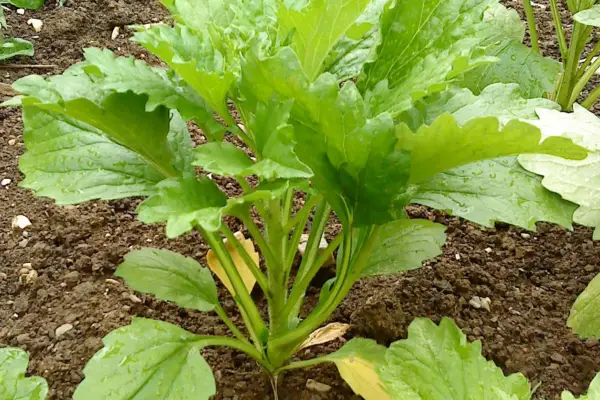
Spring sowing gives plants time to develop before the later part of a British summer. Very early sowing is only worthwhile if you can provide enough light and appropriate protection. A later, sturdy plant can be easier to establish than one kept struggling on a dim windowsill.
Use your local frost pattern to decide when to plant outside. Gardens at altitude and in exposed northern districts may need a later start than sheltered southern sites. Good airflow still matters in a sheltered bed: protection should not mean a permanently damp enclosure.
The longest stems and exact flowering date depend on cultivar and growing conditions. Commercial growers sometimes manage day length to control a crop; a home gardener should follow the seed supplier's garden guidance rather than copying a specialist production timetable.
Photo: Harshitha Kay, CC BY-SA 4.0. Resized and optimised; cropped for display. Adapted image under the same licence.
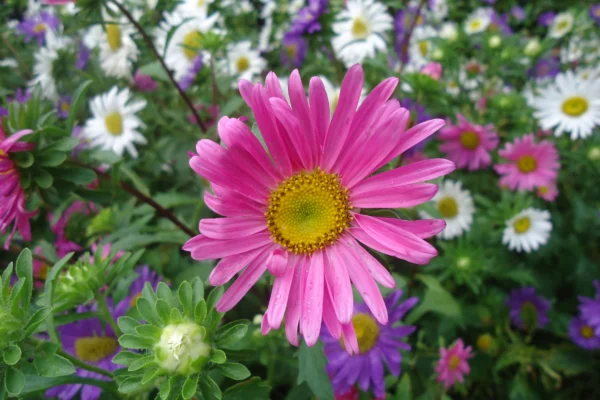
Damping off can kill young plants in unsuitable propagation conditions. Use clean containers and fresh compost, sow with room between seedlings and avoid excessive moisture. Remove affected seedlings and improve ventilation.
China asters can suffer Fusarium wilt and other root or stem diseases. Check for decay or discolouration and remove seriously affected plants. Rotate future plantings and seek a diagnosis if losses recur. Tolerant varieties are not a substitute for hygiene.
Powdery mildew can appear on stressed or crowded plants. Improve air movement and avoid allowing active plants to repeatedly dry out. Remove badly affected growth where practical and keep the area free of old diseased debris.
Inspect growing tips and flower buds. Small infestations can often be removed by hand or with a gentle water jet. Encourage natural predators and avoid indiscriminate treatments that also affect beneficial insects.
Wind, crowding and unsupported heavy flower heads can contribute. Add appropriate supports early, use a sheltered position and check ties as stems grow. Select compact varieties for small exposed pots.
China asters are normally raised from seed each spring. Keep each variety labelled and check germination instructions on the packet. Staggering a small second sowing may broaden the display where the cultivar and available growing season allow it.
You can experiment with seed saved from healthy plants, but offspring may differ from a named parent, especially where flowers have crossed or the original was a hybrid. Purchased, correctly labelled seed is the more predictable choice for a planned colour scheme.
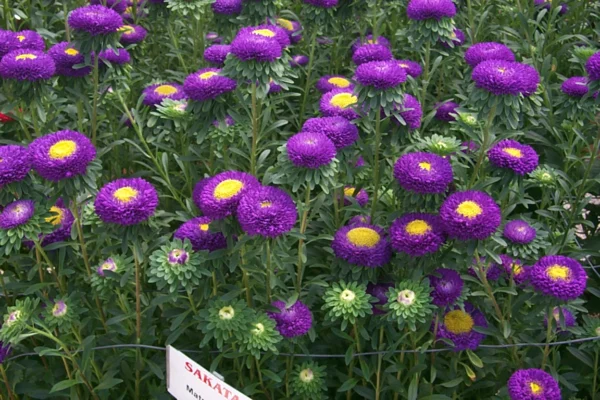
Callistephus chinensis ‘Matsumoto Blue’
A taller cutting selection with blue purple flowers and visible yellow centres. The Matsumoto series is bred for strong stems and Fusarium tolerance, but clean growing conditions remain essential.
Photo: Satin66Flower, CC BY-SA 4.0. Resized and optimised; cropped for display. Adapted image under the same licence.
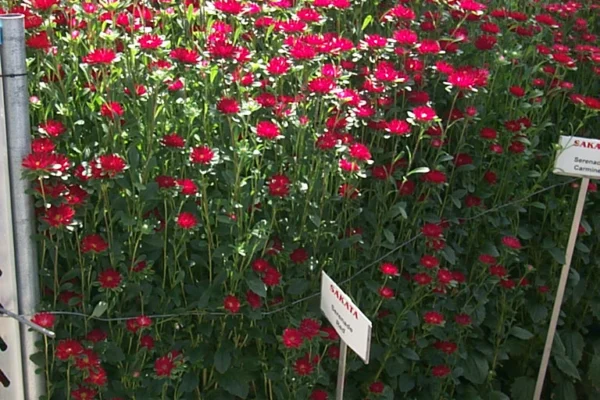
Callistephus chinensis ‘Serenade Red’
A spray type with several smaller flowers carried on branching stems. Useful when you want an airy arrangement rather than one large flower per stem. The photographed cultivar is a red selection.
Photo: Satin66Flower, CC BY-SA 4.0. Resized and optimised; cropped for display. Adapted image under the same licence.
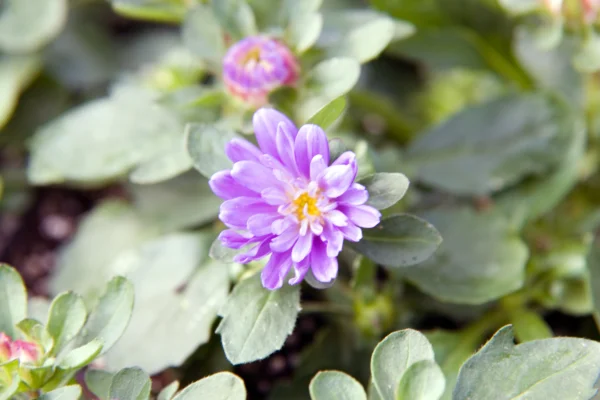
Callistephus chinensis ‘Pot ’n Patio Blue’
A blue flowered selection associated with pot and patio displays. Confirm the supplier's final height and spacing before planting, particularly if you want a low front edge rather than cutting stems.
Photo: David J. Stang, CC BY-SA 4.0. Resized and optimised; cropped for display. Adapted image under the same licence.
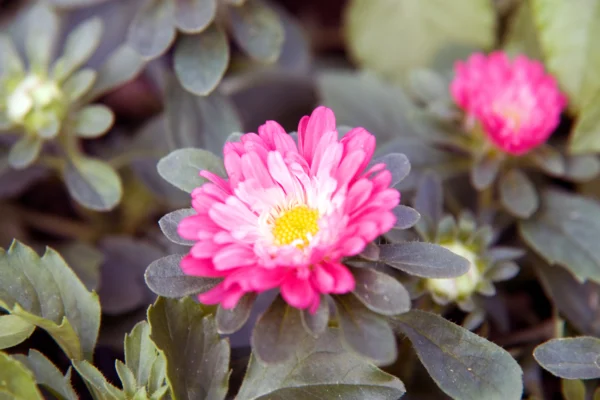
Callistephus chinensis ‘Pot ’n Patio Scarlet’
A scarlet selection in the Pot ’n Patio range, offering a warmer colour option. Use named seed or labelled plants when the exact colour matters, and check local availability before planning quantities.
Photo: David J. Stang, CC BY-SA 4.0. Resized and optimised; cropped for display. Adapted image under the same licence.
Use the BFFD map to explore local growers and plant suppliers. Ask for Callistephus chinensis, specifying whether you want compact bedding plants or taller flowers for cutting, and check current availability before visiting.
China asters with visible, accessible centres can offer visiting insects easier access than densely doubled flower forms. If wildlife value is a priority, include a range of suitable flowers rather than choosing entirely for large, tightly packed heads.
Leave some healthy flowers to complete their cycle where that fits your plans, and inspect plants before treating pests. A mixed planting with different flowering periods is more useful than relying on one annual to provide every seasonal resource.
Published by Buy From Farmers Direct. Sources checked 4 October 2026. Growing references: RHS: Callistephus chinensis; RHS: growing asters, including annual China asters; Sakata: Matsumoto; Sakata: Serenade; RHS Plants: China aster Light Blue; RHS: damping off; RHS: sowing seeds indoors. The seasonal timeline uses the shared BFFD Growers Calendar record; adjust timings to your variety and local conditions.
China asters are generally grown as annuals, sown in spring and replaced after their seasonal display. They are Callistephus chinensis, distinct from perennial asters that return from established roots.
March and April under protection are useful starting points. Follow the packet for temperature and depth, provide good light after germination and plant outside only after hardening off and local frost risk has passed.
Yes. Choose a compact variety, use a pot with drainage holes and give it a sunny position. Check moisture regularly and allow enough root space. Tall cutting varieties usually need larger containers and support.
Yes, removing faded flowers can extend the garden display. Cut carefully with clean tools and remove decaying flower heads. Leave selected healthy heads only if you specifically want to try saving seed.
Check the root area before watering. Dryness is one possibility, but wilting in damp soil can indicate root or stem disease, including Fusarium. Remove severely affected plants, review drainage and avoid repeating the crop in a problem patch.
Yes, particularly series bred for strong cutting stems such as Matsumoto and branching sprays such as Serenade. Choose the variety to suit the arrangement, support taller plants and place cut stems promptly into clean water.
Plan China asters as a fresh seasonal crop, choosing height and flower form before colour alone. Use the Growers Calendar to organise sowing and planting, then explore the BFFD directory for local growers who may be able to help.
Explore more growing guides: Anemone, Alyssum, Amaranthus.
Want to get food independence, support your local grower, get better prices and shop more privately?
Local food isn’t just something you find. It’s something you protect. A free account helps keep local supply visible, supported, and resilient.

….it takes 30 seconds for food lovers and 5 minutes for suppliers
We built this for people who care where their food comes from. For people who want to remain food secure. For Farmers to get to the local people, who deserve a better income and to deliver a better price for you. For the environmentally conscious and the privacy-conscious. An account simply helps us make the map and supplier reach more useful to you, without changing how open it is. You’re always in control.


Find local food. Stay connected to it. Create a free account to support local producers and be part of a growing food network.


