Sweet alyssum makes a low cushion of small, fragrant flowers along path edges, beneath taller annuals and around the rim of a container. This guide covers Lobularia maritima and garden selections sold as sweet alyssum. It does not cover every plant carrying the name alyssum: yellow perennial Alyssum and Aurinia need their own growing advice. For an affordable summer display, seed raised sweet alyssum is a useful place to begin.
Sweet alyssum
Scented flowers
Low growing
Sun loving
Useful to insects
| Botanical name | Lobularia maritima and garden selections |
| Family | Brassicaceae |
| Common name | Sweet alyssum |
| Plant type | Usually grown as a seasonal annual |
| Origin | Mediterranean region |
| Typical height | About 10cm to 25cm; check cultivar |
| Typical spread | About 20cm to 30cm; vigorous forms wider |
| Flower colour | White, pink, rose or purple |
| Flower scent | Sweet, honey like fragrance |
| Light | Full sun |
| Soil | Light soil with good drainage |
| Fertility | Moderate |
| Border use | Edging and seasonal ground cover |
| Container use | Pot rims and mixed containers |
| Main sowing window | Spring |
| Outdoor planting | After plants are hardened and severe frost risk passes |
| Flowering | Late spring to autumn, conditions permitting |
| Suggested spacing | 20cm for compact seed strains |
| Propagation | Seed; some named hybrids grown from cuttings |
| Wildlife | Flowers attract bees and hoverflies |
| Plant name | Crop type | Spacing |
Sow indoors
Plant outdoors
Harvest
Polytunnel | |||||||||||
|---|---|---|---|---|---|---|---|---|---|---|---|---|---|---|
| Jan | Feb | Mar | Apr | May | Jun | Jul | Aug | Sep | Oct | Nov | Dec | |||
| Alyssum | Unusual & exotic | Single 0.20m, In row 0.20m, Row gap 0.20m | No activity recorded | No activity recorded | Sow indoors, Polytunnel | Sow indoors, Plant outdoors, Polytunnel | Sow indoors, Plant outdoors, Harvest | Plant outdoors, Harvest | Harvest | Harvest | Harvest | Harvest | No activity recorded | No activity recorded |
Sow indoors: March, April, May. Plant outdoors: April, May, June. Harvest: May, June, July, August, September, October. Polytunnel: March, April.
Harvest in the calendar means the flowering period, not a food harvest. Sow under protection in March or April, or directly outside once the spring seedbed is suitable. Flowering dates depend on sowing time, strain and weather. Polytunnel months refer to raising young plants; protection does not make an unheated tunnel frost free. Vigorous hybrids may require more space than the compact seed strains used for the calendar spacing.
Sweet alyssum suits gardeners looking for a small flowering plant that is easy to fit between larger summer displays. It can soften a formal bed edge without hiding the plants behind it. Its modest scale also makes it useful for a shallow visual layer beside a path or seating area.
It is less suited to permanently wet ground, deep shade or a position where a large neighbour will cover it completely. Decide whether you want inexpensive seed raised plants or a vigorous named container selection: these are not necessarily interchangeable in spacing, growth or seed production.
Photo: David J. Stang, CC BY-SA 4.0. Resized and optimised; cropped for display. Adapted image under the same licence.
Choose an open, sunny position with reasonably light soil. A little shelter can help young plants establish, but avoid tucking them so close to a wall that they receive no rain and become difficult to water. Check the ground rather than judging moisture by the surrounding paving.
Along a border, leave a clear strip where the plants can spread without being stepped on. A spacing of about 20cm works as a starting point for compact strains. Use the supplier’s wider spacing for particularly vigorous selections and resist filling every visible gap on planting day.
In containers, combine alyssum with plants that share its drainage needs. Keep taller companions far enough away to let light reach the alyssum. Position plants near the rim where their shape can be seen, while leaving space to water into the compost.
Beside vegetables, small patches can provide flowers without occupying an entire bed. Leave access for weeding and harvesting, and prevent the alyssum from shading tiny crop seedlings. Flowers can support beneficial insects, but they do not guarantee that neighbouring crops will be free of pests.
Photo: Krzysztof Ziarnek, Kenraiz, CC BY-SA 4.0. Resized and optimised; cropped for display. Adapted image under the same licence.
Choose either an early protected sowing or a direct spring sowing. Tiny seeds and crowded seedlings need careful handling, so preparing the growing space first makes the job easier.
1.
Select a named seed strain or plant with a clear mature size.
2.
For trays, use fresh, fine seed compost and a clean container.
3.
Scatter seed thinly and follow the packet instructions on covering and germination.
4.
Keep the surface evenly moist without leaving the tray standing in water.
5.
Move emerged seedlings into good light and improve ventilation.
6.
Separate or thin seedlings before they form a dense, tangled mat.
7.
Harden protected plants gradually before planting outside in settled conditions.
8.
Plant at the existing compost level, water gently and check establishment regularly.

Watering
New seedlings need dependable moisture near the surface while their roots establish. Use a fine rose or gentle flow so small plants are not washed out of position. Once planted out, check the actual root zone before adding more water.
Containers can dry rapidly in wind or sunshine. Water the compost thoroughly when needed and let excess drain. If flowers decline during a hot spell, check dryness before making changes; a plant cannot recover its display while the rootball remains parched.

Feeding
Sweet alyssum does not need the heavily enriched conditions used for a hungry vegetable crop. In borders, moderate fertility is usually sufficient. Avoid assuming that a weak display calls for repeated nitrogen feed, especially if the stems are already long and leafy.
In a mixed container, follow the feeding requirements of the planting and the compost used. Apply any liquid fertiliser at the label rate. Record applications if several people care for the same pots, so an apparently helpful extra feed does not become excessive.

Pruning
A light trim after the main flush can tidy leggy plants and encourage fresh growth. Remove exhausted stems without cutting into a completely bare base. Water afterwards if the compost is dry, then watch for new shoots before expecting another full display.
Individual flowers are too small for practical daily deadheading. Trim the planting in sections if you want to keep some flowers available for insects throughout. Remove unwanted seedlings where plants have scattered seed into paths or other beds.

Winter care
Treat ordinary bedding sweet alyssum as a seasonal plant in most UK gardens. Some plants survive mild winters, but survival is not reliable enough to plan a whole border around. Healthy seedlings next spring may be new plants rather than the original clump returning.
Remove collapsed, decaying growth when the display has finished. If saving seed, use a known seed producing strain and keep only dry material. Named hybrids may be sterile or fail to reproduce the parent’s characteristics from seed.
Sweet alyssum forms a low, branching plant with small narrow leaves and many tiny flowers in clusters. Each flower has four petals. White forms are familiar, but pink and purple strains share the same overall habit and characteristic sweet scent.
Check the botanical name when shopping. Lobularia maritima is the sweet alyssum covered here. Plants sold as perennial yellow alyssum or basket of gold may belong to Alyssum or Aurinia, and should not automatically receive this seasonal bedding calendar.
Photo: Stefan.lefnaer, CC BY-SA 4.0. Resized and optimised; cropped for display. Adapted image under the same licence.
Spring progress varies with location. An early protected sowing can be useful, but there is little value in producing large numbers of stretched seedlings before conditions outside are ready. Match sowing to the space and light you can actually provide.
In cooler areas, planting slightly later into improving conditions can be more successful than rushing tender nursery plants outdoors. Harden them gradually and retain a few spare plants where practical, so a small loss does not leave a permanent gap along the border.
During a hot, dry summer, flowering may slow. Check water and consider a modest trim once conditions ease. In mild coastal gardens, the season may extend longer, but winter survival should remain a welcome bonus rather than a guarantee.
Photo: Christian Ferrer, CC BY-SA 4.0. Resized and optimised; cropped for display. Adapted image under the same licence.
Crowding, insufficient light or unsuitable warmth can produce weak growth. Thin early, improve light and avoid leaving emerged seedlings crowded beneath a propagation cover.
Roots may be struggling in saturated conditions. Check drainage holes and the growing medium. Do not keep watering simply because the leaves look wilted.
Inspect the rootball for dryness and keep watering consistent. A light trim can help untidy plants produce fresh growth once conditions improve.
Trim encroaching stems and reconsider spacing next season. Compact seed strains are easier to contain than vigorous container selections planted into narrow edges.
Damping off is a possibility in crowded, persistently damp trays. Remove affected seedlings, improve ventilation and use clean pots and fresh compost for another sowing.
Seed is the straightforward route for ordinary sweet alyssum bedding strains. Sow thinly and keep each packet label with the tray. Direct sowing avoids transplanting, but the bed needs a fine surface and consistent moisture until seedlings are established.
Some selected Lobularia plants are raised from cuttings rather than seed, and saved seed may not retain a named colour or growth habit. Buy the correct cultivar again when those details matter. Do not promise that a self sown seedling will match the previous display.
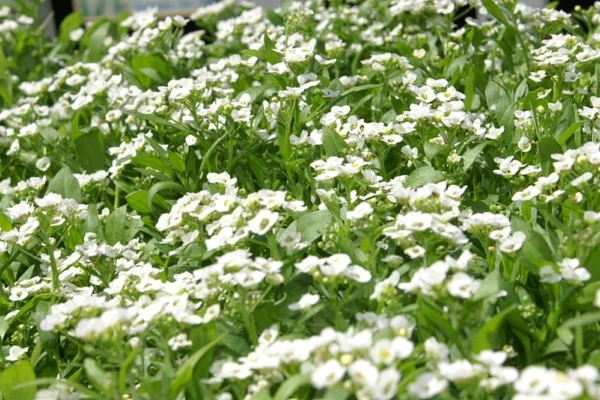
Lobularia maritima 'Snow Crystals'
A white flowered sweet alyssum selection useful for a bright edge or container combination. Choose it where a pale foreground will sit comfortably beside stronger flower colours.
Photo: David J. Stang, CC BY-SA 4.0. Resized and optimised; cropped for display. Adapted image under the same licence.
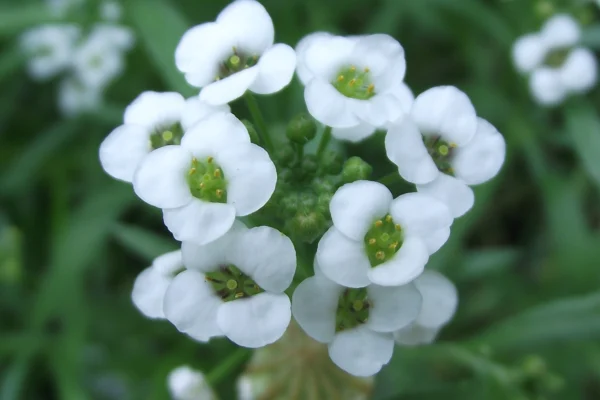
Lobularia Snow Princess ('Inlbusnopr')
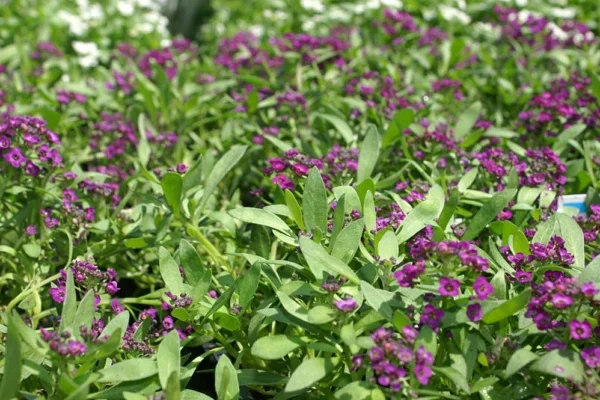
Lobularia maritima 'Easter Bonnet Violet'
A violet flowered member of the compact Easter Bonnet group. It brings a darker edge to containers and small beds while retaining the characteristic clusters of scented flowers.
Photo: David J. Stang, CC BY-SA 4.0. Resized and optimised; cropped for display. Adapted image under the same licence.
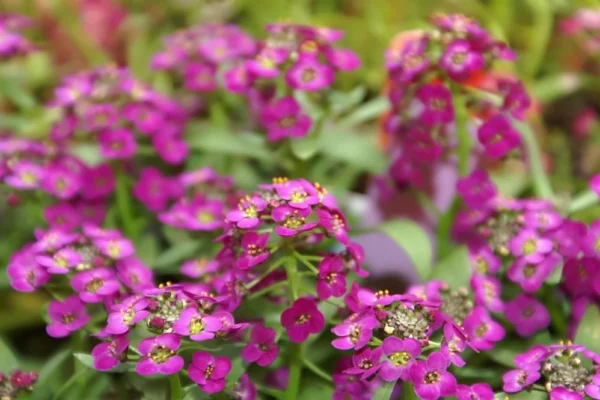
Lobularia maritima 'Easter Bonnet Deep Rose'
A rose coloured Easter Bonnet selection for a warmer toned planting. Keep the exact seed or plant label where colour consistency matters, since mixed packets produce varied shades.
Photo: David J. Stang, CC BY-SA 4.0. Resized and optimised; cropped for display. Adapted image under the same licence.
Use the BFFD map to explore local plant growers and sellers. Ask whether they have sweet alyssum seed, plugs or named plants, and confirm availability and collection details directly.
The small open flowers are accessible to a range of insects, including hoverflies. Adult hoverflies visit flowers for food, while the larvae of some species feed on aphids. This makes alyssum a useful part of a varied insect friendly planting.
Keep some flowers available when trimming and avoid spraying visiting insects. Combine alyssum with plants offering flowers in other seasons. A small patch is most useful as part of a garden that also provides shelter and tolerates some harmless insect activity.
Published by Buy From Farmers Direct. Sources checked 4 October 2026. Growing references: RHS: Lobularia maritima; Wisconsin Horticulture: Sweet Alyssum; Wisconsin Horticulture: Hover flies; RHS: Easter Bonnet Series; RHS: Snow Crystals; Kew: Lobularia maritima; Proven Winners: Snow Princess. The seasonal timeline uses the shared BFFD Growers Calendar record; adjust timings to your variety and local conditions.
Sow sweet alyssum thinly in spring, either in prepared outdoor soil or in trays under protection. Follow the packet covering instructions, keep moisture steady and thin crowded seedlings before they become weak.
Sweet alyssum is usually grown as an annual, although it may survive mild winters. Some other plants called alyssum are perennial. Check for the botanical name Lobularia maritima before using this advice.
An open sunny position is the best starting point for a strong display. Avoid dense shade beneath taller plants, and make sure soil or potting compost drains freely.
Yes. It works well near the edge of mixed containers. Match the cultivar’s vigour to the pot size and check moisture regularly, especially in exposed or warm positions.
A light trim can refresh a tired, leggy display. Keep some healthy growth, water if needed and allow time for recovery. Removing every tiny flower individually is unnecessary.
Seed producing strains can leave volunteer seedlings. Their colour and habit may vary. Some named hybrids do not produce useful seed, so check the selection before relying on this method.
Use the Growers Calendar to plan sweet alyssum alongside your vegetables and summer flowers. Explore the BFFD directory for local growing businesses and ask directly about current plant availability.
Explore more growing guides: Annual vinca, Aster (China), Amaranthus.