This guide covers the true butter or lima bean, Phaseolus lunatus, grown for its shelled seeds. Some white runner beans are also sold as butter beans, but they are Phaseolus coccineus. True limas need sustained warmth, so treat them as a small UK trial rather than a guaranteed outdoor staple.
True lima bean
Needs summer warmth
Shelling crop
Bush or climbing
Frost tender
| Botanical name | Phaseolus lunatus |
| Family | Fabaceae |
| Other common name | Lima bean |
| Crop used | Shelled seeds, cooked before eating |
| UK treatment | Tender annual crop |
| Growth habits | Bush and climbing varieties |
| Bush height | Often about 45 to 60cm |
| Climbing height | Can exceed 2m, variety dependent |
| Position | Full sun and shelter |
| Soil | Warm, freely drained and moisture retentive |
| Seed choice | An early variety with a clear botanical label |
| Protected sowing | Usually May for a UK trial |
| Planting out | June only in reliably warm conditions |
| Germination soil | About 18°C or warmer |
| Sowing depth | About 2.5cm, follow the seed packet |
| Bush spacing | About 10 to 15cm, adjusted to variety |
| Row spacing | About 45 to 75cm for bush types |
| Climbing support | Strong trellis installed before planting |
| Possible harvest | Late summer into early autumn |
| Winter survival | Not an outdoor overwintering crop in the UK |
| Plant name | Crop type | Spacing |
Sow indoors
Plant outdoors
Harvest
Polytunnel | |||||||||||
|---|---|---|---|---|---|---|---|---|---|---|---|---|---|---|
| Jan | Feb | Mar | Apr | May | Jun | Jul | Aug | Sep | Oct | Nov | Dec | |||
| Butter Bean | Legumes | Single 0.15m, In row 0.15m, Row gap 0.60m | No activity recorded | No activity recorded | No activity recorded | No activity recorded | Sow indoors, Polytunnel | Plant outdoors, Polytunnel | Polytunnel | Harvest, Polytunnel | Harvest, Polytunnel | Harvest | No activity recorded | No activity recorded |
Sow indoors: May. Plant outdoors: June. Harvest: August, September, October. Polytunnel: May, June, July, August, September.
This is a cautious UK trial window for early true limas: sow under warm protection in May, plant in June only after frost into warm soil, and aim for August to October harvesting if conditions allow. A polytunnel is not frost free. White runner beans sold as butter beans follow runner bean guidance.
Choose this crop if you can spare your warmest growing space. A few labelled plants make a useful first experiment. Record sowing, first flowers and the first filled pods.
An early bush type is a sensible starting point where the season is limited. Tall pole limas generally need longer to mature. If an exposed plot regularly struggles with French beans, improve the growing conditions or choose another shelling bean before committing valuable space to limas.
Photo: Filo gèn', CC BY-SA 4.0. Resized and optimised; cropped for display. Adapted image under the same licence.
Use a bright, sheltered position with plenty of direct sun. Avoid the dry strip beneath an overhanging roof and check whether neighbouring crops will cast increasing summer shade.
Prepare ground that drains readily while holding useful moisture. Limas dislike cold, wet roots. Where rainwater regularly stands, choose another bed.
A greenhouse or polytunnel can improve the chance of sustained warmth. Plan ventilation, watering access and support before the plants grow. Measure conditions near plant height rather than assuming a closed structure always provides a suitable climate.
A large container can hold a bush trial if it has unobstructed drainage and enough root space. A climbing plant and its frame also need a stable position.
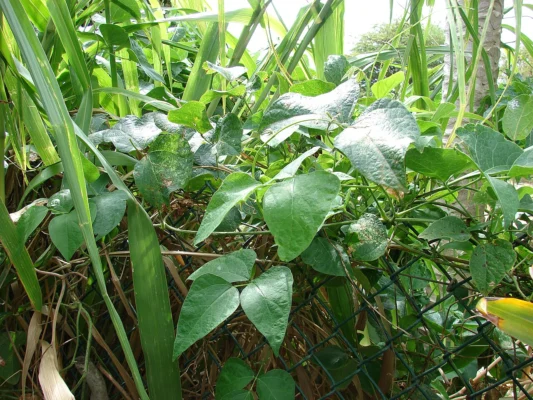
Photo: Forest & Kim Starr, CC BY 3.0. Resized and optimised; cropped for display.
Buy labelled seed sold for sowing. Food cupboard beans may have uncertain age and identity. Avoid starting too early and keeping tender plants cramped indoors.
1.
Check that the packet says Phaseolus lunatus and note whether the variety is bush or climbing.
2.
Prepare a weed free bed or generous container, leaving the soil structure open and well drained.
3.
For a protected start, fill individual modules or pots with suitable seed compost and moisten it.
4.
Sow around 2.5cm deep unless the packet specifies otherwise, and label each variety clearly.
5.
Keep the compost warm and lightly moist. Avoid repeated soaking while waiting for emergence.
6.
Install any climbing support before planting so its poles do not damage established roots.
7.
Move young plants out gradually into suitable warmth. Plant without breaking apart the rootball.
8.
Space bush plants roughly 10 to 15cm apart with 45 to 75cm between rows, or follow the wider spacing required by the selected climbing variety.

Watering
Check moisture below the surface before watering. Young plants and pots dry differently from established plants, so use the root zone rather than an automatic daily routine.
Water consistently while flowers and seeds develop. Direct water towards the soil and keep paths usable for checking pods. Both prolonged drought and saturated compost make an already demanding crop less dependable.

Feeding
Prepare reasonable fertility and use a soil test where poor growth recurs. Nitrogen fixing partnerships do not remove the need for healthy roots and other nutrients.
Avoid repeatedly adding strong nitrogen feed to a leafy plant that has few pods. More foliage is not necessarily progress towards harvest. Container feeding should follow the compost and fertiliser instructions rather than a fixed recipe intended for a field crop.

Pruning
Bush limas need no routine pruning. Guide young climbing stems towards their supports and keep them out of neighbouring crops. A reachable frame makes inspection and harvesting much easier than an uncontrolled tangle.
Harvest shelling beans when the seeds have filled but are still tender, opening a sample pod to judge the stage. For dried beans, wait for mature dry pods and hard seeds. The two harvests require different amounts of time on the plant.

Winter care
Plan to finish this crop before cold weather ends growth. Collect suitable mature pods while they remain sound, and clear failed or diseased material. Leaving green pods outdoors through frost will not turn them into a reliable dried crop.
Dry fully mature seed before storing it in a cool, dry place. Never seal damp beans in a jar. Discard mouldy material and label seed separately from kitchen beans.
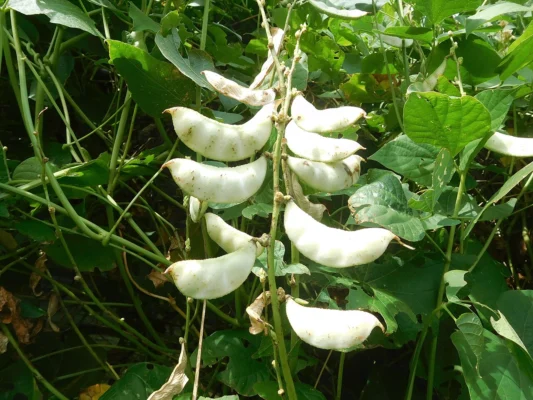
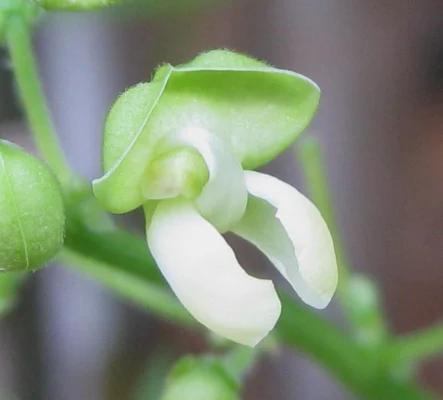
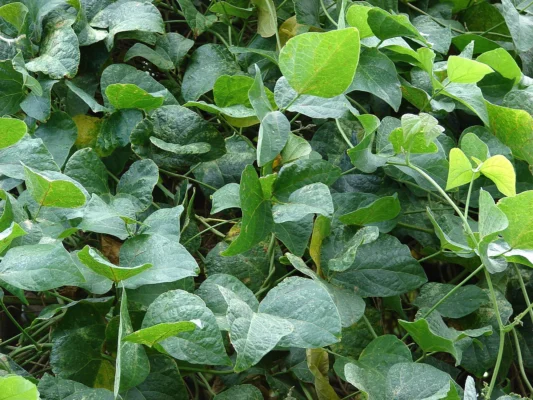
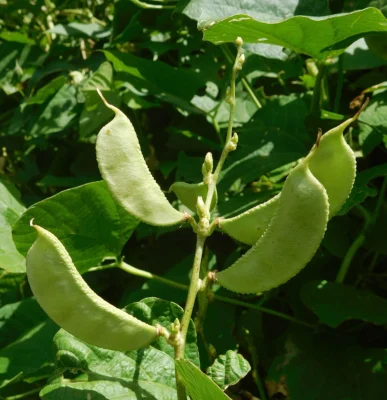
Lima bean leaves have three leaflets, followed by small flowers and relatively broad pods containing flattened seeds. Seed size and colour vary widely, so a white bean alone does not establish either species or cultivar.
Keep the original packet and plant label. A white seeded runner bean can be useful in the kitchen, but it is not botanically the same crop. This page is about cultivated, correctly identified seed and is not a guide to identifying unknown edible beans.
Photo: Ton Rulkens, CC BY-SA 2.0. Resized and optimised; cropped for display. Adapted image under the same licence.
The main UK constraint is a sufficiently long warm period. American maturity figures describe performance under different growing conditions and should not be treated as a promise of a British harvest on the same date.
In a cooler or northern garden, a protected bush trial is a more cautious choice than a late climbing variety outdoors. Even in southern England, one warm afternoon is not evidence that the soil and nights are ready.
Compare usable harvest, not just plant height. Keep the best variety name and dates for next year, even when a cool summer limits the result.
Photo: Forest & Kim Starr, CC BY 3.0. Resized and optimised; cropped for display.
Cold, wet compost can allow large seeds to decay. Check warmth and drainage before resowing. Repeating the same sowing into unchanged conditions is unlikely to help.
Cold spells, excessive heat and dry roots can reduce setting. Check actual growing conditions and ventilation. A flush of flowers does not guarantee a crop.
Excess nitrogen can encourage foliage at the expense of pod development. Review feeding and whether the variety has enough warm growing time remaining.
Inspect leaf undersides for pests such as spider mites, particularly during hot, dry weather. Identify the cause before treating and avoid letting a problem spread unnoticed through the canopy.
Remove affected material, improve access and airflow, and avoid handling wet plants unnecessarily. Do not save visibly unhealthy beans for next year.
Limas are normally raised from seed. Save only mature, sound seed from healthy plants and expect seed saving to need a longer season than harvesting tender shelled beans. In a marginal summer, buying fresh labelled seed may be more practical.
Keep separate variety records. Seek specific isolation guidance when several varieties flower together before relying on saved seed to remain true.
Henderson Bush
An early bush lima with relatively small white seeds. Its compact habit and shorter season make it a useful variety to investigate for a first protected UK trial. Early is relative, not a guarantee of cropping.
Illustrative Phaseolus lunatus photograph. The photographed cultivar is not identified as Henderson Bush.
Photo: Ton Rulkens, CC BY-SA 2.0. Resized and optimised; cropped for display. Adapted image under the same licence.
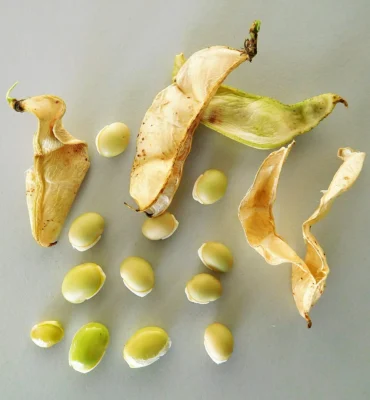
Fordhook 242
A bush selection with large, thick seeds, widely described by American extension services. Compare its expected maturity and available growing space with smaller seeded bush types before choosing it.
Illustrative Phaseolus lunatus photograph. The photographed cultivar is not identified as Fordhook 242.
Photo: Filo gèn', CC BY-SA 4.0. Resized and optimised; cropped for display. Adapted image under the same licence.
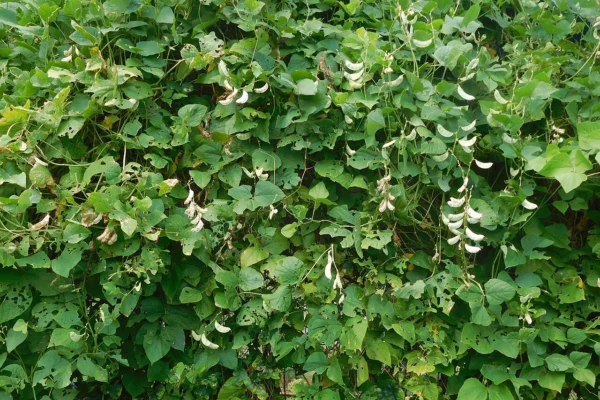
King of the Garden
A vigorous climbing lima that needs strong support and a longer season. It suits an experimental warm growing space better than a short, exposed outdoor summer. Allow access to the full frame.
Illustrative Phaseolus lunatus photograph. The photographed cultivar is not identified as King of the Garden.
Photo: Filo gèn', CC BY-SA 4.0. Resized and optimised; cropped for display. Adapted image under the same licence.
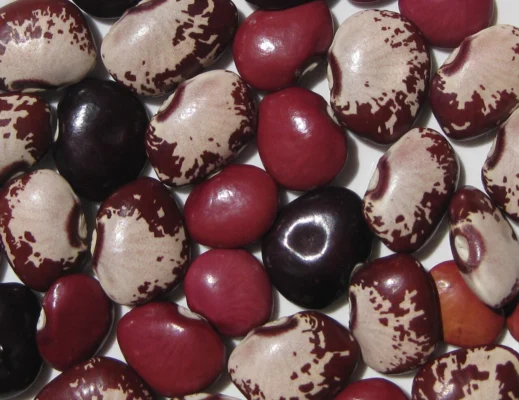
Jackson Wonder
A recognised lima variety associated with speckled seeds rather than the familiar plain white appearance. It illustrates why butter bean identity cannot be settled by colour alone. Check the supplier’s cultivation details.
Illustrative Phaseolus lunatus photograph. The photographed cultivar is not identified as Jackson Wonder.
Photo: Filo gèn', CC BY-SA 4.0. Resized and optimised; cropped for display. Adapted image under the same licence.
Use the BFFD map to find local growers and nurseries, then ask about availability. Request the botanical name, growth habit and expected season before buying a plant or packet labelled butter bean.
Inspect the crop without treating every visiting insect as a pest. Nearby flowering plants can provide a more varied garden habitat.
If mesh or other barriers are used against damage, keep them secure and check underneath. Leave room to inspect leaves, flowers and pods, especially where a dense canopy hides early signs of trouble.
Published by Buy From Farmers Direct. Sources checked 4 October 2026. Growing references: RHS: Phaseolus lunatus; University of Minnesota: Growing beans in home gardens; University of Maryland: Growing beans in a home garden; University of Delaware: Lima beans; Iowa State: Lima beans producing few pods; USDA National Agricultural Library: Lima beans; Utah State University: Home vegetable garden variety recommendations; Franchi Seeds of Italy: Lost Flavours catalogue, Spagna Bianco classified as Phaseolus coccineus. The seasonal timeline uses the shared BFFD Growers Calendar record; adjust timings to your variety and local conditions.
True lima beans can be tried in a warm, sheltered or protected site, but a cool summer may prevent a worthwhile harvest. Early bush varieties are a more cautious starting point than long season climbers.
The name butter bean commonly means Phaseolus lunatus, or lima bean. It is also used for some white runner beans. Check the botanical name because Phaseolus coccineus follows a different growing plan.
For a UK trial, May under warm protection is a practical starting point. Outdoor planting must wait for frost to pass and soil to stay warm, often June. Follow the variety’s requirements.
Climbing lima varieties need a strong trellis. Bush varieties are compact and usually stand without a tall frame. Read the growth habit on the packet before planning the bed.
For fresh shelling, look for filled seeds inside pods and open a sample. For dry storage, pods and seeds must reach full dry maturity. UK weather may allow one stage but not the other.
No. Lima beans should be properly cooked before eating. Use reliable preparation guidance for fresh or dried beans, and never taste raw seed to check whether it is ready.
Use the BFFD growers calendar to plan the warm season and the map to explore nearby growing businesses. Record the actual species, variety and results.
Explore more growing guides: Beans (Borlotti), Beans (French), Beans (Runner).
Want to get food independence, support your local grower, get better prices and shop more privately?
Local food isn’t just something you find. It’s something you protect. A free account helps keep local supply visible, supported, and resilient.

….it takes 30 seconds for food lovers and 5 minutes for suppliers
We built this for people who care where their food comes from. For people who want to remain food secure. For Farmers to get to the local people, who deserve a better income and to deliver a better price for you. For the environmentally conscious and the privacy-conscious. An account simply helps us make the map and supplier reach more useful to you, without changing how open it is. You’re always in control.


Find local food. Stay connected to it. Create a free account to support local producers and be part of a growing food network.


