Spring cabbage starts long before spring. Sow suitable varieties in summer, establish them before winter and harvest tender greens or firm hearts the following year. The crop is particularly useful when winter vegetables are finishing and newly sown crops are still small. This guide covers green spring cabbage, with a clear distinction between picking loose greens and waiting for a complete head.
Overwintering crop
Summer sowing
Spring greens
Full sun
Edible hearts
| Botanical name | Brassica oleracea Capitata Group |
| Family | Brassicaceae |
| Crop type | Green spring cabbage |
| Growing cycle | Summer start, following spring harvest |
| Typical sowing | July and August |
| Transplanting | September and October |
| Main harvest | March to May |
| Later hearts | Some varieties extend into June |
| Position | Sunny and open |
| Soil | Fertile and well drained |
| Soil reaction | Near neutral preferred |
| Height | Usually about 20 to 50cm |
| Final spacing | About 30cm for compact hearts |
| Row gap | About 40cm; follow variety |
| Greens spacing | Can start closer and thin |
| Edible parts | Loose leaves and firm hearts |
| Watering | Keep establishing roots moist |
| Winter protection | Secure cover against pigeons |
| Container option | Compact types with careful watering |
| Propagation | Seed or healthy young plants |
| Plant name | Crop type | Spacing |
Sow indoors
Plant outdoors
Harvest
Polytunnel | |||||||||||
|---|---|---|---|---|---|---|---|---|---|---|---|---|---|---|
| Jan | Feb | Mar | Apr | May | Jun | Jul | Aug | Sep | Oct | Nov | Dec | |||
| Cabbage (Spring) | Brassicas | Single 0.30m, In row 0.30m, Row gap 0.40m | No activity recorded | No activity recorded | Harvest | Harvest | Harvest | Harvest | Sow indoors | Sow indoors | Plant outdoors | Plant outdoors | No activity recorded | No activity recorded |
Sow indoors: July, August. Plant outdoors: September, October. Harvest: March, April, May, June. Polytunnel: no months recorded.
Sow in July and August for the following spring, then transplant in September and October. The calendar label Sow indoors includes module sowing and the outdoor seedbed option described here. March to June covers greens and later hearts across varieties; not every planting crops throughout that period. Some named varieties have different packet windows. Polytunnel dates are omitted because this is primarily an outdoor overwintering crop.
Spring cabbage rewards planning rather than speed. It occupies ground through winter, but a small row provides fresh leaves when the vegetable patch might otherwise be quiet. Choose a quantity that can be harvested before the plants begin flowering.
It suits beds that drain well and remain accessible in wet weather. If your plot is regularly flooded, use a better drained area or a substantial container.
Photo: Nina Gerlach, CC BY-SA 3.0. Resized and optimised; cropped for display. Adapted image under the same licence.
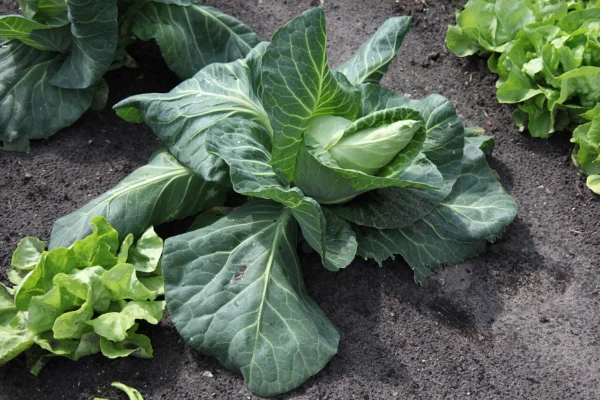
Reserve a sunny position before summer crops finish. You can raise plants separately while their final bed is occupied, provided they have enough root space and are not left crowded for weeks.
Work mature compost into the planting area and allow disturbed soil to settle. When planting, firm carefully around each rootball so autumn winds cannot rock it loose.
Keep cabbage within a planned brassica rotation. A bed recently used for broccoli or kale has also carried brassicas, so it is not automatically a fresh location for disease management.
Make the protected bed easy to reach from a path so you can check leaves and fastenings without walking on wet cultivated soil.
Photo: © Salix / Wikimedia Commons, CC BY-SA 3.0. Resized and optimised; cropped for display. Adapted image under the same licence.
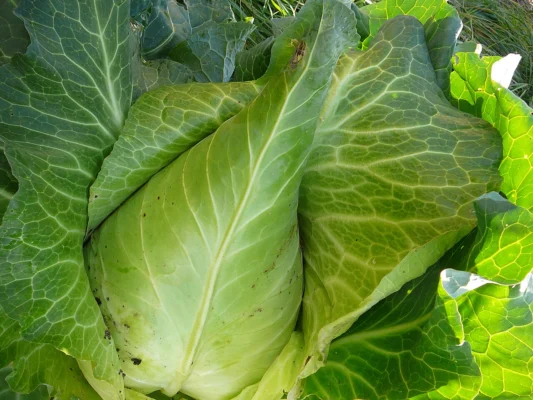
Choose a named spring variety first. A summer heading cabbage planted at the same time is not necessarily a substitute, because crop season and ability to stand through winter vary.
1.
Sow a small batch in July or August, following any different timing on the chosen variety packet.
2.
Use clean modules of seed compost or prepare a fine outdoor nursery seedbed.
3.
Sow shallowly, about 0.5 to 1cm deep, water gently and label the variety and date.
4.
Keep seedlings moist and protected from slugs and insects while thinning crowded plants.
5.
Prepare the final bed in good time, removing weeds and allowing room for the protective cover.
6.
Move sturdy plants in September or October, hardening those raised under protection beforehand.
7.
For compact heads allow about 30cm between plants and 40cm between rows, adjusting to the variety.
8.
Water in thoroughly, firm gently and secure a supported cover, leaving space for growing leaves.

Watering
Water during establishment if autumn remains dry. Leaves may look wet after light rain while the rootball below is still dry, so check the soil beside the plant.
Winter rain often supplies enough moisture outdoors. Pots and covered plants still need checking. Resume closer attention when growth accelerates in spring, particularly during a dry spell.

Feeding
Build fertility before planting, using mature organic matter and any fertiliser appropriate to your soil. Avoid repeated generous applications simply because growth slows naturally in winter.
When plants restart in spring, assess their condition and follow any feeding directions for the crop and growing medium. Persistent weakness calls for a root and pest check as well as a nutrition check.

Pruning
Remove decaying leaves when they become a problem, but retain healthy foliage. For spring greens, harvest selected plants or usable leaves without stripping every plant intended to form a heart.
Cut firm heads when they reach a useful size. A healthy remaining stump can produce smaller shoots, although these should be treated as a possible extra rather than a guaranteed second crop.

Winter care
After strong winds, check for loosened stems and gently refirm them when the soil is workable. Keep protective covers secured and clear accumulated snow from supports before their weight damages plants.
Hardiness varies with variety, establishment and exposure. A ventilated cloche can advance spring growth, but enclosed plants still need water and air. Do not leave a sealed cover overheating in sunshine.
Most familiar spring cabbages make pointed green hearts, surrounded by larger outer leaves. The young crop begins as an open rosette, so an autumn plant should not be judged against a mature harvest photograph.
Spring greens are the loose, tender leafy crop, not a separate botanical species. Some spring selections, including Spring Hero, make round heads. Shape alone therefore cannot confirm the harvest season of an unlabelled cabbage.
Photo: Kolforn (Wikimedia), CC BY-SA 4.0. Resized and optimised; cropped for display. Adapted image under the same licence.
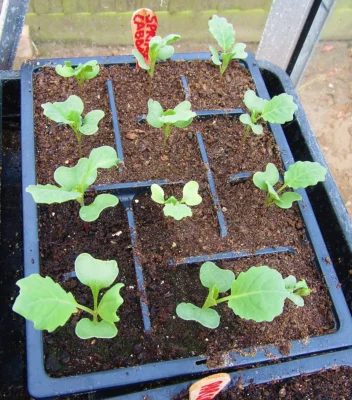
In much of the UK, July and August sowing gives plants time to establish before winter. Follow local experience and the variety packet, especially at exposed sites where late transplants may struggle.
A mild southern garden may begin cutting earlier than a cooler northern or upland plot. Judge individual plants and take usable greens when ready rather than waiting for every cabbage to match a calendar date.
In a small garden, removing alternate plants as greens can give the remainder more space for hearts. Plan this from the outset and keep enough access to harvest without damaging neighbours.
Photo: Tony Atkin, CC BY-SA 2.0. Resized and optimised; cropped for display. Adapted image under the same licence.
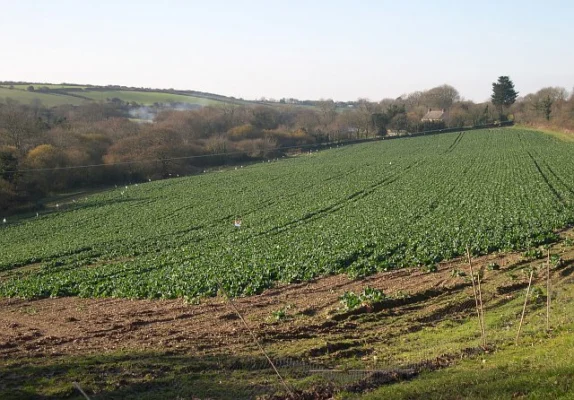
Pigeons can strip unprotected plants. Inspect and repair the cover, securing it on a frame so birds cannot easily press it onto the crop.
Slugs can damage seedlings rapidly. Check at dusk and beneath nearby hiding places. Protect new transplants and keep an eye on plants under covers as well.
Autumn caterpillars may remain hidden among leaves. Inspect before enclosing the crop, remove eggs or caterpillars and maintain a barrier above the foliage.
Swollen distorted roots suggest club root. Prevent movement of contaminated soil and avoid assuming that extra fertiliser or ordinary rotation alone will remove established infection.
The plant is moving towards flowering. Unsuitable timing, variety or growing conditions can contribute. Harvest usable leaves promptly and choose an appropriate spring selection for the next attempt.
Seed gives the widest choice and helps match the crop to your space. Keep a few spare seedlings for early losses, giving them room to remain healthy.
Bought plants are useful if you miss the sowing window. Check the variety and intended season, inspect for pests and choose a reputable supplier. Home saved seed needs isolation from compatible brassicas and is not a simple way to reproduce an F1.
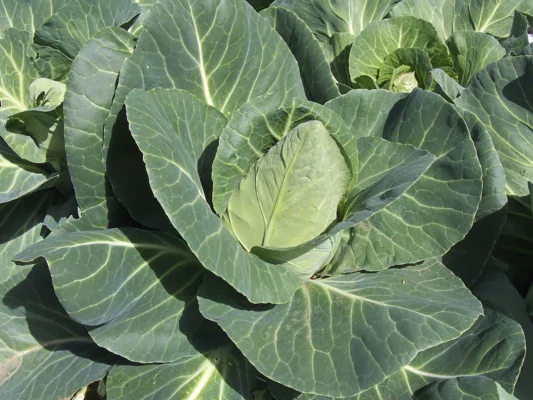
April
A spring cabbage sold for both early greens and mature hearts. Kings Seeds gives late July to August sowing. It is a practical option where you want to harvest some plants young and leave others to develop.
Illustrative pointed cabbage. The pictured cultivar is not identified as April.
Photo: Rasbak, CC BY-SA 3.0. Resized and optimised; cropped for display. Adapted image under the same licence.
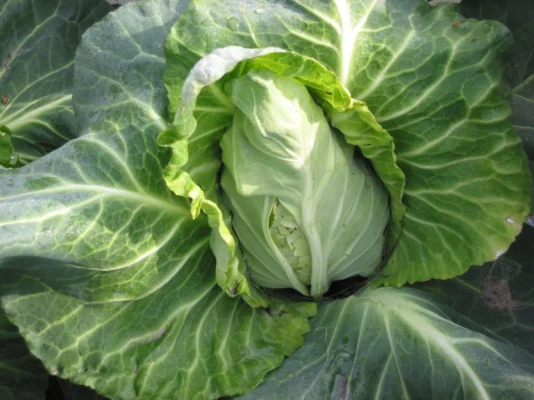
Durham Early
A familiar compact selection with pointed heads. Close planting can supply greens, while more space allows the remaining plants to heart. Use its seasonal packet guidance instead of assuming the word Early means spring sowing.
Illustrative pointed cabbage. The pictured cultivar is not identified as Durham Early.
Photo: Rasbak, CC BY-SA 3.0. Resized and optimised; cropped for display. Adapted image under the same licence.
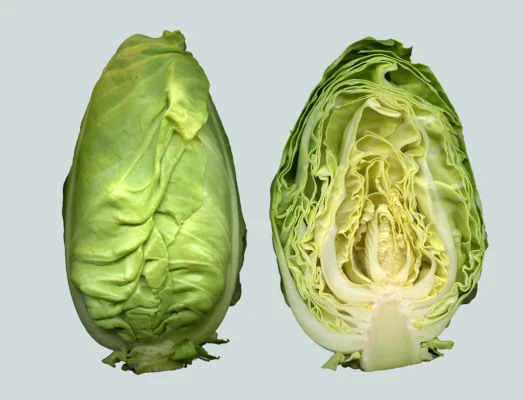
Duncan
An upright, compact cabbage recognised by the RHS for spring greens from March and fuller hearts later, potentially into June. It offers a useful choice for limited space, including a carefully managed large container.
Illustrative whole and halved pointed cabbage. The pictured cultivar is not identified as Duncan.
Photo: Rainer Zenz (attributed by Commons), CC BY-SA 3.0. Resized and optimised; cropped for display. Adapted image under the same licence.
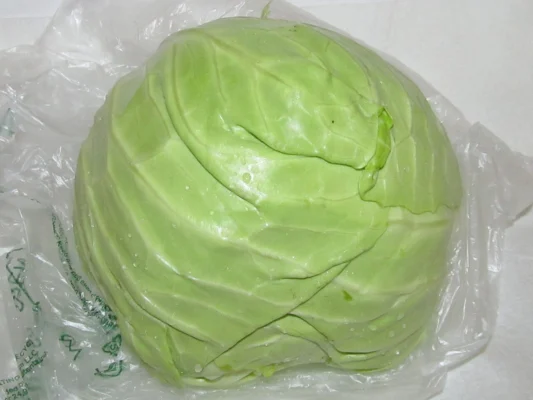
Spring Hero
A round headed spring cabbage with a pale crisp heart. The RHS describes March to April harvesting and gives its own later sowing guidance. Check the supplied packet because its schedule can differ from traditional pointed selections.
Illustrative round green cabbage. The pictured cultivar is not identified as Spring Hero.
Photo: Willis Lam, CC BY-SA 2.0. Resized and optimised; cropped for display. Adapted image under the same licence.
Explore the BFFD map and directory for local growers and garden suppliers. Ask for a spring harvesting variety and check the sowing or transplanting window and current availability before visiting.
Brassica leaves support caterpillars and other wildlife, so crop protection is useful even on a quiet plot. A barrier protects food plants while flowers and other habitats nearby can remain available to insects.
Check netting frequently and keep it taut, supported and securely fixed. Inspect what is beneath it before replacing the cover after harvesting. Avoid leaving loose sections where wildlife can become entangled.
Published by Buy From Farmers Direct. Sources checked 4 October 2026. Growing references: RHS: How to grow cabbages; Garden Organic: Spring cabbage; RHS: Vegetables for spring; Kings Seeds: April cabbage; RHS: Durham Early; RHS: Duncan; RHS: Spring Hero; RHS: Cabbage caterpillars; RHS: Club root; University of Minnesota Extension: Growing cabbage. The seasonal timeline uses the shared BFFD Growers Calendar record; adjust timings to your variety and local conditions.
July and August are the usual UK window for a crop the following spring. Check the chosen variety because some have a later schedule. Spring sowing generally produces a later crop, rather than an immediate spring harvest.
Usually September or October, when young plants are sturdy and the bed is workable. Water them in and firm around the roots so they establish before winter weather.
They can come from the same crop. Spring greens are harvested while leaves remain loose, whereas a hearted cabbage is allowed to form a more tightly packed centre.
Around 30cm between compact heading plants and 40cm between rows is a useful guide. Closer initial planting can work for greens if you deliberately thin plants out before the remaining heads need their space.
Suitable varieties are grown that way when well established in drained soil. Protect against pigeons and inspect after storms. Waterlogged ground and poor establishment still create problems despite the crop being hardy.
A healthy stump may form smaller edible shoots after the head is cut. Keep it watered if retaining it, then clear it when finished. Do not rely on regrowth to replace the main harvest.
Set a summer sowing reminder in your own calendar and use the BFFD growers calendar to plan the dates. Compare local seed and plant options in the directory, then choose greens, hearts or a little of each.
Explore more growing guides: Cabbage (Spring Red), Cabbage (Autumn), Broccoli (Purple).
Want to get food independence, support your local grower, get better prices and shop more privately?
Local food isn’t just something you find. It’s something you protect. A free account helps keep local supply visible, supported, and resilient.

….it takes 30 seconds for food lovers and 5 minutes for suppliers
We built this for people who care where their food comes from. For people who want to remain food secure. For Farmers to get to the local people, who deserve a better income and to deliver a better price for you. For the environmentally conscious and the privacy-conscious. An account simply helps us make the map and supplier reach more useful to you, without changing how open it is. You’re always in control.


Find local food. Stay connected to it. Create a free account to support local producers and be part of a growing food network.


