Carrots reward careful sowing. Give their roots an unobstructed growing space, keep the seed row damp during germination and protect the crop from carrot fly. A few short rows or a deep container can provide useful harvests.
Root vegetable
Direct sow
Full sun
Container friendly
Successional harvests
| Botanical name | Daucus carota subsp. sativus |
| Family | Apiaceae |
| Plant type | Biennial grown for roots in its first year |
| Position | Open, sunny ground |
| Soil | Well drained and free of large stones |
| Soil pH | Around 6 to 7 is suitable |
| Main sowing | April to early July |
| Early sowing | February or March with suitable protection |
| Sowing depth | About 1cm |
| Final spacing | 5 to 7.5cm between plants |
| Row spacing | 15 to 30cm |
| Germination | Allow up to three weeks |
| Typical maturity | About 12 to 16 weeks |
| Main harvest | June to November, depending on sowing |
| Height | Usually about 30cm before flowering |
| Container choice | Match depth to the mature root length |
| Transplanting | Avoid disturbing the developing taproot |
| Main pest | Carrot fly |
| Seed saving | Flowers in the second year; isolation needed |
| Harvested part | Swollen taproot |
| Plant name | Crop type | Spacing |
Sow indoors
Plant outdoors
Harvest
Polytunnel | |||||||||||
|---|---|---|---|---|---|---|---|---|---|---|---|---|---|---|
| Jan | Feb | Mar | Apr | May | Jun | Jul | Aug | Sep | Oct | Nov | Dec | |||
| Carrot | Root vegetables | Single 0.075m, In row 0.075m, Row gap 0.30m | No activity recorded | Polytunnel | Polytunnel | Sow indoors | Sow indoors | Sow indoors, Harvest | Sow indoors, Harvest | Harvest | Harvest | Harvest | Harvest | No activity recorded |
Sow indoors: April, May, June, July. Plant outdoors: no months recorded. Harvest: June, July, August, September, October, November. Polytunnel: February, March.
The red band is labelled Sow indoors, but these dates mean direct sowing outdoors into the final bed or container. Do not transplant carrots. April to July is the main season; February and March polytunnel dates indicate optional protected sowing of early cultivars. Unheated tunnels can freeze. June to November is a typical harvest window, with winter lifting possible in suitable conditions.
Choose carrots when you can give a seed row regular attention during its first few weeks. The emerging plants are small and easily overtaken by weeds. Established crops need checks on their cover, moisture and readiness for lifting.
Growing carrots in containers is useful where garden soil is shallow or stony. Select a short or round root for a modest pot, or a deeper container for longer varieties. Avoid crowding seedlings.
Photo: BazzaDaRambler, CC BY 2.0. Resized and optimised; cropped for display. Resized for display; any crop is indicated by the page layout.
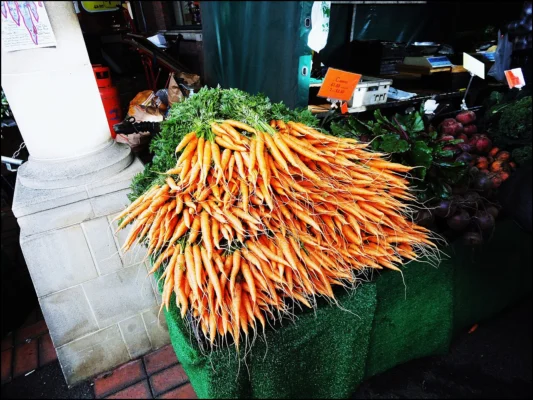
Use an open site where neighbouring crops will not shade the row. Leave access for removing mesh and reaching weeds without stepping on the soil. Plan how the cover’s edges will be secured.
Remove hard lumps and large stones from the rooting zone. On heavy soil, choose shorter roots and improve the structure over time. Long exhibition carrots need much greater depth than a shallow layer above compacted ground.
Fill pots with peat free multipurpose compost and check drainage holes. Allow watering space at the rim when measuring usable depth. Sow into the final container and avoid saucers that stay full of rainwater.
Rotate away from recent carrots and related susceptible crops. Mesh over an infested site can trap emerging flies with the new crop. Keep bed locations in your own notes to plan next year’s rotation.
Photo: Roenashy, CC BY-SA 4.0. Resized and optimised; cropped for display. Resized for display; any crop is indicated by the page layout.
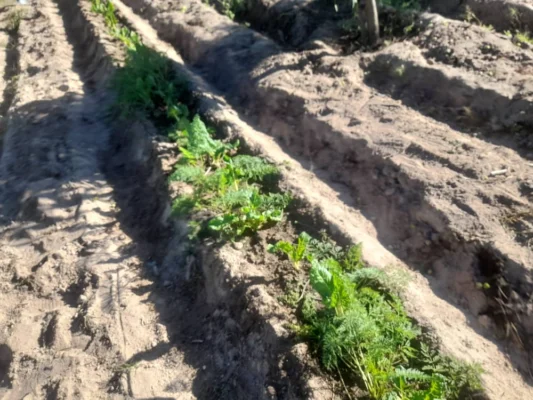
Choose an early, maincrop or container cultivar for your conditions. Prepare only as much ground as you can sow and protect properly.
1.
Choose a cultivar suited to your sowing date, soil depth and intended harvest. Keep its packet for the expected root shape and maturity guidance.
2.
Remove weeds and stones, loosen compacted ground and rake the surface into fine crumbs. Avoid sowing into wet soil that smears under the rake.
3.
Mark rows 15 to 30cm apart. Make a shallow drill about 1cm deep, with enough room alongside for careful hand weeding.
4.
Water the bottom of the drill before sowing. Let it soak in so the seed rests on moist ground without being washed into puddles.
5.
Sow thinly along the row. Pelleted seed or seed tape can make spacing easier if handling the small loose seeds is difficult.
6.
Cover lightly, firm gently and label the cultivar and date. Water with a fine rose whenever the surface needs moisture during germination.
7.
Fit insect mesh across the entire crop, securing its perimeter. Allow enough slack or supporting hoops for the leaves to grow underneath.
8.
Thin established seedlings to about 5 to 7.5cm apart. Remove thinnings promptly, replace the mesh and sow another short batch in a few weeks if needed.

Watering
Check the seed row frequently rather than assuming a damp bed means its surface is damp. A hard crust can prevent small seedlings emerging. Use a gentle spray to soften it without washing away seed or flattening new growth.
After establishment, water during prolonged dry spells. Pots need more frequent checks than open soil. Test below the surface and avoid letting compost dry completely between heavy soakings.

Feeding
Use a bed with reasonable existing fertility. Add bulky organic matter as part of preparation for the preceding crop or during the previous autumn, rather than burying fresh manure immediately before sowing carrots.
Feeding cannot correct overcrowding, shallow compost or damaged roots. Check those conditions first. Follow the compost supplier’s feeding guidance for a long container crop and avoid repeated strong nitrogen feeds.

Pruning
Carrots need no pruning. Keep healthy foliage to support root growth and hand weed near the shoulders. If roots push above the surface, draw a little loose soil around them to reduce greening.
Lift a sample when the roots look usable. Insert a fork beside the row and loosen the soil before pulling gently, especially in heavier ground. Avoid spearing neighbouring roots that will remain for later picking.

Winter care
On freely draining ground, suitable maincrop carrots can remain for winter lifting beneath straw. Mark the row and lift before severe weather makes access difficult. Check for damage rather than assuming every root will store outdoors.
Lift remaining roots if the bed becomes waterlogged. Remove tops and keep sound roots cool; use small fridge harvests promptly. Separate damaged or split roots from those intended for storage and inspect regularly.
Carrot seedlings first show two very narrow seed leaves. Later foliage becomes finely divided and feathery. A labelled straight row helps distinguish these slow starters from weeds before their characteristic leaves develop.
Cultivated carrots have round or tapered roots in orange, yellow, white and purple. Colour cannot identify a cultivar. This guide covers labelled crops, not wild plant identification.
Photo: Dziana Hasanbekava, Pexels License. Resized and optimised; cropped for display. Resized for display; any crop is indicated by the page layout.
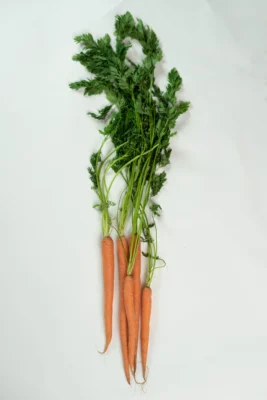
On mild sheltered sites, an early protected sowing can be worthwhile. Elsewhere, wait for workable, warming soil. A later row that establishes evenly can outperform an earlier one with large gaps.
Sow short batches three to four weeks apart within the cultivar’s season. Adjust the next sowing to household demand. Record successful lifting dates alongside sowing dates in your own notes.
A tunnel extends protected sowing options but requires watering because rain cannot reach the bed. Ventilate in warm weather and allow time to harvest before planned summer crops need the space.
Photo: Annija U, Pexels License. Resized and optimised; cropped for display. Resized for display; any crop is indicated by the page layout.
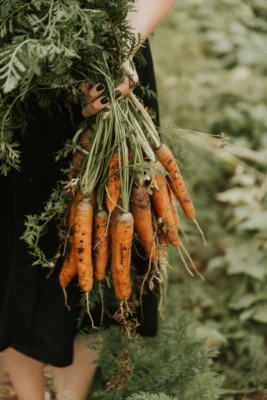
A drying surface, crusted soil or old seed can produce uneven emergence. Check moisture and allow enough time before resowing. Mark a replacement sowing separately so its younger seedlings receive appropriate care.
Stones, compacted ground and transplant damage can divert the taproot. Prepare the rooting zone and sow directly. Shorter varieties are a sensible choice where deep preparation is impractical; misshapen sound roots can still be useful.
Carrot fly larvae feed inside the roots. Remove badly affected crops and review rotation and gaps in the mesh. A complete cover offers better protection than relying on a low vertical barrier or nearby companion plants.
Large swings between drought and heavy watering can split roots. Maintain more even moisture and harvest at a useful size. Use sound split roots promptly after thorough cleaning; discard softened or rotting material.
Check spacing before assuming the crop needs feeding. Closely packed seedlings compete for room and resources. Thin carefully while plants are small and improve sowing accuracy next time rather than leaving every seedling to mature.
Carrots normally grow from seed. Keep spare packets cool and dry. A cut carrot top may regrow leaves, but it cannot produce another full carrot root.
Seed saving needs a second season, when retained roots flower. These can cross with cultivated or wild carrots, so follow an established method with isolation. F1 seed will not reliably reproduce its parent.
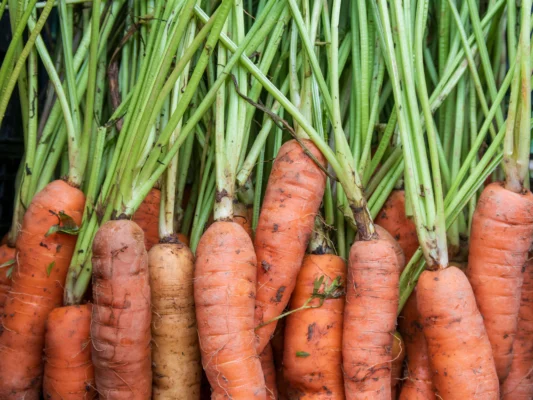
'Maestro'
A Nantes type with sweet roots and useful disease and carrot fly resistance. It suits later harvests, including winter where conditions allow. Resistance is helpful but still needs sensible crop protection.
Illustrative carrot photograph; the exact cultivar is unidentified.
Photo: Javier Balseiro, Pexels License. Resized and optimised; cropped for display. Resized for display; any crop is indicated by the page layout.
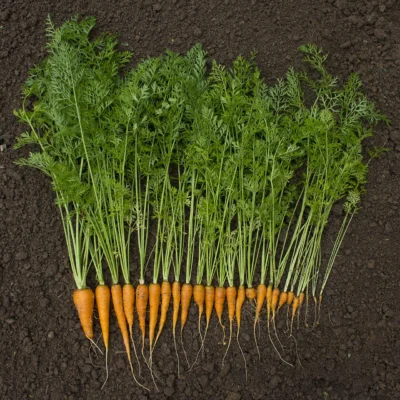
'Adelaide'
An early F1 carrot with small finger shaped roots, suitable for baby harvests. It is an option for protected early sowing and containers where a modest root is the aim.
Illustrative harvested carrot photograph; the exact cultivar is unidentified.
Photo: woodleywonderworks, CC BY 2.0. Resized and optimised; cropped for display. Resized for display; any crop is indicated by the page layout.
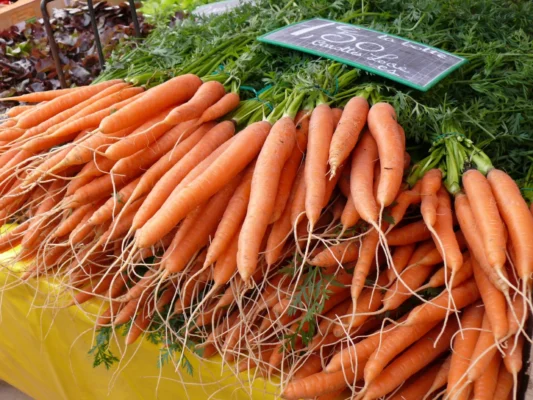
'Flyaway'
Produces smooth orange roots with blunt ends, reaching about 15cm. Its reduced susceptibility to carrot fly is useful on affected plots, although it is not immune and should still be covered.
Illustrative orange carrot photograph; the exact cultivar is unidentified.
Photo: havankevin, CC BY 2.0. Resized and optimised; cropped for display. Resized for display; any crop is indicated by the page layout.
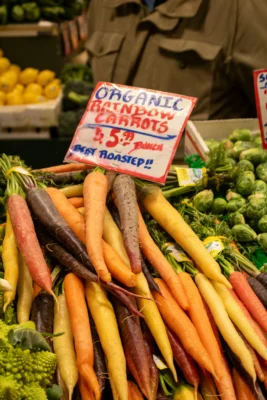
'Purple Haze'
An F1 choice with purple skin and an orange core. Choose it for colour alongside your usual orange crop, while giving it the same attention to soil depth, spacing and moisture.
Illustrative photograph of multicoloured carrots; the exact cultivars are unidentified.
Photo: Zoshua Colah, Unsplash License. Resized and optimised; cropped for display. Resized for display; any crop is indicated by the page layout.
Use the BFFD directory and map to find local growers and garden suppliers. Ask about availability and check each packet’s sowing season and mature root length.
Root crops are usually lifted before flowering. Carrots retained into their second year can offer flowers for insects, provided they fit your rotation and seed saving plans.
Use a well secured mesh cover as a physical crop barrier. Keep neighbouring flowers available to pollinators outside it, and inspect covers for trapped animals whenever you weed or harvest.
Published by Buy From Farmers Direct. Sources checked 5 October 2026. Growing references: RHS: How to grow carrots; Garden Organic: Carrot; University of Minnesota Extension: Growing carrots and parsnips; RHS: How to sow seeds outdoors; RHS: Carrot fly; RHS: Root vegetables splitting; RHS: Successional sowing; RHS: Carrot 'Maestro'; RHS: Carrot 'Adelaide'; RHS: Carrot 'Flyaway'; RHS School Gardening: Carrot crop sheet, Purple Haze cultivar. The seasonal timeline uses the shared BFFD Growers Calendar record; adjust timings to your variety and local conditions.
April to early July is the main outdoor season. Suitable early cultivars can be sown in February or March under protection. Follow the packet and wait for workable soil.
Sow into the final bed or pot because the taproot develops early and dislikes disturbance. The calendar’s generic Sow indoors label does not mean carrots should be transplanted.
Provide drainage, sufficient compost depth and careful spacing. Sow directly and check moisture frequently. Short or round varieties reduce the depth required; baby roots can be lifted earlier.
Many crops reach a useful size in about 12 to 16 weeks, with baby carrots earlier. Lift one to judge the rest; maximum size is unnecessary.
Do not depend on scent masking. Rotate the crop and cover it completely with insect mesh. Resistant cultivars offer additional help but cannot guarantee an undamaged crop.
Stones, compaction or transplant damage can divert the root. Prepare the bed, sow directly and choose shorter roots where depth is limited.
Use the BFFD growers calendar to plan successive carrot sowings. Keep results in your own notes and explore local suppliers through the directory.
Explore more growing guides: Beetroot, Beetroot (Multi sown), Celeriac.
Want to get food independence, support your local grower, get better prices and shop more privately?
Local food isn’t just something you find. It’s something you protect. A free account helps keep local supply visible, supported, and resilient.

….it takes 30 seconds for food lovers and 5 minutes for suppliers
We built this for people who care where their food comes from. For people who want to remain food secure. For Farmers to get to the local people, who deserve a better income and to deliver a better price for you. For the environmentally conscious and the privacy-conscious. An account simply helps us make the map and supplier reach more useful to you, without changing how open it is. You’re always in control.


Find local food. Stay connected to it. Create a free account to support local producers and be part of a growing food network.


