A dwarf cherry’s size depends on rootstock, growing conditions and pruning. The variety name describes the fruit, not a guaranteed small tree. Choose both together, allowing room for the mature canopy and providing steady moisture and successful pollination.
Check the rootstock
Sweet or sour fruit
Large pot option
Summer pruning
Spring blossom
| Botanical group | Prunus avium and Prunus cerasus cultivars |
| Family | Rosaceae |
| Plant type | Deciduous fruit tree |
| Dwarfing method | Usually grafting onto a smaller rootstock |
| Common rootstock | Gisela 5, semi dwarfing |
| Open ground height | Often about 3 to 4m on Gisela 5 |
| Size variation | Cultivar, soil and pruning also matter |
| Sweet cherry position | Sunny and sheltered |
| Sour cherry position | Sun or suitable partial shade |
| Soil | Fertile, moist and well drained |
| Dormant planting | November to March |
| Container size | At least 45 to 50cm wide and deep |
| Main harvest here | July to September across selections |
| Blossom | Spring, vulnerable to frost |
| Pollination | Choose self fertile for a single tree |
| Routine pruning | Summer after harvest |
| Formative pruning | Some young tree work in spring |
| Support | Stake according to rootstock advice |
| Propagation | Named trees grafted or budded |
| Edible crop | Ripe fruit flesh; discard stones |
| Plant name | Crop type | Spacing |
Sow indoors
Plant outdoors
Harvest
Polytunnel | |||||||||||
|---|---|---|---|---|---|---|---|---|---|---|---|---|---|---|
| Jan | Feb | Mar | Apr | May | Jun | Jul | Aug | Sep | Oct | Nov | Dec | |||
| Cherry (Dwarf) | Orchard fruit | Single 3.00m, In row 3.00m, Row gap 4.00m | Plant outdoors | Plant outdoors | Plant outdoors | No activity recorded | No activity recorded | No activity recorded | Harvest | Harvest | Harvest | No activity recorded | Plant outdoors | Plant outdoors |
Sow indoors: no months recorded. Plant outdoors: January, February, March, November, December. Harvest: July, August, September. Polytunnel: no months recorded.
November to March is the preferred planting window; avoid frozen or waterlogged soil. Potted trees can be planted at other suitable times. July to September combines different varieties, including late Sweetheart. Seedlings do not preserve the variety or dwarf rootstock. These outdoor trees need no polytunnel dates.
A smaller tree makes picking, inspecting leaves and protecting fruit easier. It still needs space: Gisela 5 is described by the RHS as semi dwarfing, with open ground trees commonly reaching around 3 to 4m. Treat the label as a growing specification, not a miniature guarantee.
A large pot can restrict growth further, but makes you responsible for water and nutrition. Choose this route because it fits the site and your care routine, rather than assuming a container tree can look after itself through a hot summer.
Photo: Peggy Greb, USDA ARS, Public domain. Resized and optimised; cropped for display.

For sweet cherries, choose a sunny sheltered position away from a frost pocket. Allow about 3m between Gisela 5 trees, adjusting to the nursery specification, and about 4m between rows for access.
Morello tolerates some shade and suits cooking. Match the type to your available light and preferred fruit.
Give roots fertile soil that drains after rain. Keep competing grass and weeds away from a young tree, and use a surface mulch with a clear gap around the trunk.
For a container, use a stable pot with drainage holes and good quality peat free, loam based compost. Allow at least 45 to 50cm in both width and depth, with room to water and maintain the tree.
Photo: 阿橋 HQ, CC BY-SA 2.0. Resized and optimised; cropped for display. Adapted image under the same licence.
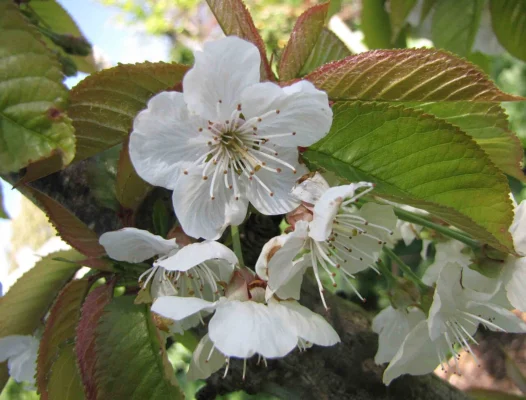
Before ordering, confirm the fruit variety, rootstock, intended form and expected dimensions. Nursery estimates vary, so discuss your actual soil and available space.
1.
Select a named edible cherry on an appropriate rootstock, checking whether it is self fertile.
2.
Choose the permanent position and measure the space available for branches, access and any protective netting.
3.
Plant during dormancy where possible, postponing work if the soil is frozen or saturated.
4.
Water a container tree thoroughly, or briefly soak bare roots so they do not dry during planting.
5.
Prepare a broad planting hole, keeping the root collar at its previous level and the graft union above soil.
6.
Fit a suitable stake and flexible tie if needed, positioning them without damaging the main roots.
7.
Backfill carefully, firm gently, water in and mulch the surrounding soil without burying the trunk.
8.
Label the variety and rootstock, then check moisture and ties regularly through the first growing seasons.

Watering
Water new trees during dry periods while roots establish. Check the soil rather than judging by leaves alone, especially in drying winds.
Container trees need frequent attention in warm weather and while fruit develops. Water thoroughly and allow drainage. Avoid repeated drying followed by heavy soaking, which stresses the tree and can contribute to damaged fruit.

Feeding
A tree in fertile, regularly mulched ground may not need extra fertiliser. Investigate weak growth or poor cropping first: inadequate pollination and frost damage are not nutrient shortages.
A container has a limited nutrient reserve. Use a suitable fruit feed or controlled release fertiliser according to its label, renewing surface compost when appropriate. Avoid combining several feeds without checking their instructions.

Pruning
Carry out routine pruning in dry summer weather after harvest, commonly July or August. This reduces exposure to silver leaf and bacterial canker compared with winter pruning. Young tree formation can include spring work. For very late crops, follow nursery advice rather than delaying routine pruning into autumn or winter solely to finish harvesting.
Keep a balanced framework and remove congestion selectively. Sweet cherries retain productive older spurs; sour cherries need renewal of shoots that fruited. Avoid repeatedly cutting every branch tip simply to force the tree below an arbitrary height.

Winter care
Check stakes, ties and drainage during dormancy. Protect container roots from severe freezing where needed, while keeping drainage clear. Hardy cherries belong outdoors rather than in a heated room.
Blossom is more vulnerable than dormant wood. Have frost protection ready for spring on a small tree, removing it during suitable daytime conditions so pollinating insects can reach the flowers.
A grafted cherry usually has a visible union between the rootstock and the fruiting variety. Shoots arising below it belong to the rootstock and should not be allowed to replace the intended canopy.
Sweet and sour cherries both have spring blossom and fruits containing a stone. Neither a fruit photograph nor a small nursery tree establishes its eventual size. Keep the original plant label and distinguish edible fruit cultivars from ornamental flowering cherries.
Photo: Dontworry, CC BY-SA 3.0. Resized and optimised; cropped for display. Adapted image under the same licence.
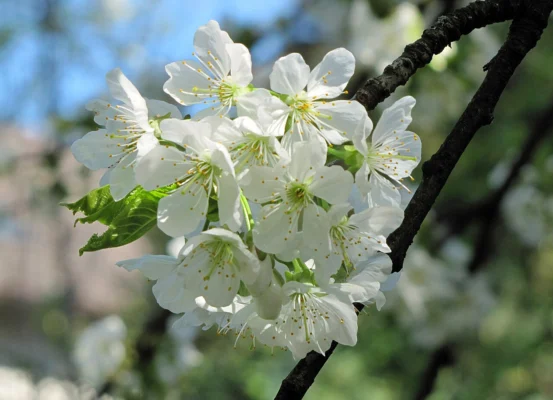
In cool or exposed gardens, local nursery advice is especially useful for variety choice and ripening season. A sheltered site helps insects work the flowers, while a late frost can still reduce a promising crop.
Self fertile varieties can crop without another cherry, but they still need pollen transfer and suitable weather. For a variety needing a partner, check both overlapping flowering and genetic compatibility with a reliable nursery.
Pick cherries fully ripe because they do not improve by ripening after harvest. Taste a few when the expected season arrives, handle them gently by the stalk and harvest in manageable batches.
Photo: Penny Mayes, CC BY-SA 2.0. Resized and optimised; cropped for display. Adapted image under the same licence.
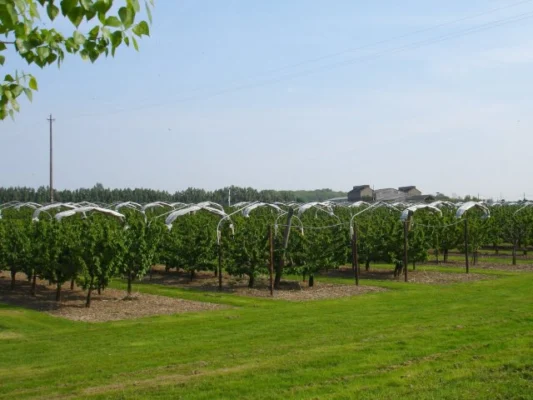
Frost, poor insect activity or incompatible pollination can reduce fruit set. Check the variety label and flowering conditions before buying another tree or applying more feed.
Cherry blackfly commonly causes tightly curled tips. Inspect new growth and encourage natural predators. Established trees often tolerate the damage without losing their crop.
Rain near maturity and uneven water supply can split the skin. Maintain steady root moisture and pick fully ripe fruit promptly when weather allows.
Silver leaf is one possible cause, although stress can imitate it. Seek a diagnosis, disinfect cutting tools when dealing with affected wood and keep routine pruning to the appropriate season.
Recheck the rootstock and nursery specification. Excessive vigour cannot be solved indefinitely by severe pruning. Review the training plan and seek advice before removing major limbs.
Buy a healthy grafted or budded tree for a named fruit variety on a known rootstock. Record this combination in your own garden notes.
Seedlings have uncertain fruit, size and time to cropping. Specialist grafting preserves the chosen variety but requires suitable rootstock material and technique.
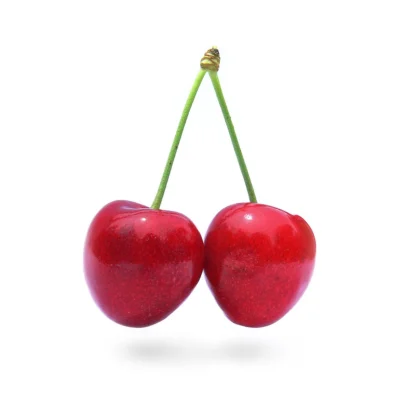
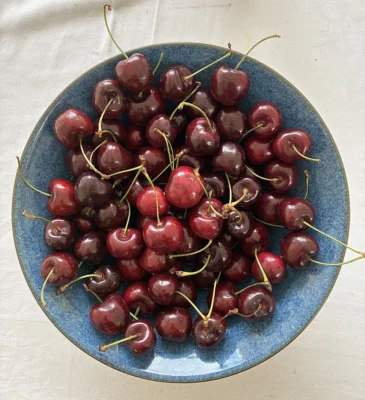
Stella
A self fertile sweet cherry with dark fruit. It is a straightforward option where there is room for only one cherry. For a smaller tree, order it on the specified rootstock rather than assuming every Stella is dwarf.
Stella fruit; rootstock not identified.
Photo: Benjamint444, edited by Fir0002, CC BY-SA 3.0. Resized and optimised; cropped for display. Adapted image under the same licence.
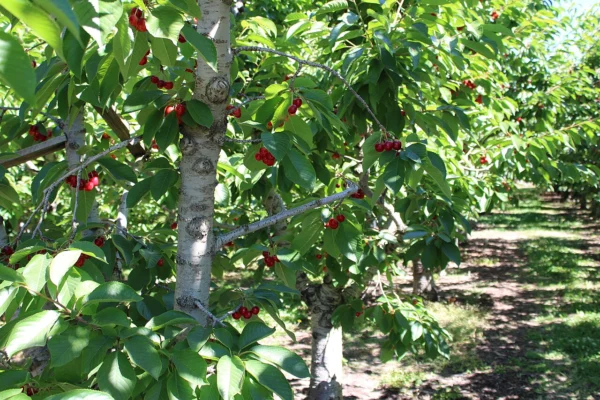
Lapins
A self fertile sweet cherry, also called Cherokee, with dark red fruit generally ready in July. The RHS includes it among container options. Match the rootstock and pot care to the space available.
Lapins fruit; rootstock not identified.
Photo: DrThneed, CC BY 4.0. Resized and optimised; cropped for display.
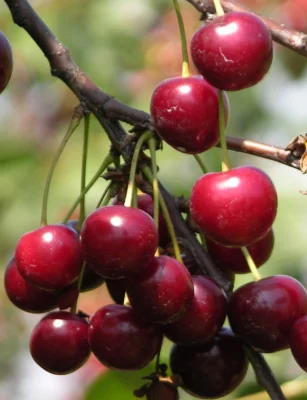
Sweetheart
A self fertile selection for the end of the cherry season. Confirm local ripening expectations and order a suitable smaller rootstock, particularly where cool conditions make late crops less dependable.
Sweetheart fruiting tree; rootstock not identified.
Photo: Chris Light, CC BY-SA 4.0. Resized and optimised; cropped for display. Adapted image under the same licence.
Morello
A self fertile sour cherry for cooking and preserving, often picked from late July into August. It tolerates more shade than sweet cherries. Rootstock, pruning and growing conditions still determine its final dimensions.
English Morello fruit; rootstock not identified.
Photo: Glysiak, CC BY-SA 4.0. Resized and optimised; cropped for display. Adapted image under the same licence.
Use the BFFD map and directory to find fruit nurseries and growing suppliers. Ask for the variety, rootstock, likely mature size and pollination requirements, and check availability before visiting.
Spring flowers provide food for pollinating insects. Leave them accessible during flowering and keep other flowering plants nearby to support a garden with a longer nectar season.
Birds enjoy ripe cherries too. If protecting the crop, use secure supported netting and inspect it regularly, keeping it taut and away from wildlife access routes. Remove protection when it is no longer needed.
Published by Buy From Farmers Direct. Sources checked 5 October 2026. Growing references: RHS: Growing cherries; RHS: Fruit in containers; Orange Pippin: Fruit tree rootstocks and sizes; Washington State University: Sweet cherry pollination; RHS: Stella cherry; RHS: Lapins cherry; RHS: Sweetheart cherry; RHS: Morello cherry; RHS: Silver leaf; RHS: Bacterial canker; RHS: Cherry blackfly. The seasonal timeline uses the shared BFFD Growers Calendar record; adjust timings to your variety and local conditions.
It depends on the rootstock, variety and care. Gisela 5 is semi dwarfing and the RHS gives roughly 3 to 4m in open ground. A pot or trained form may keep it smaller, but the nursery label should guide the plan.
Yes, with an appropriate grafted tree and a substantial container, generally at least 45 to 50cm wide and deep. Regular watering, feeding and long term root management are essential.
Dwarfing does not determine fertility. Self fertile varieties such as Stella and Lapins can crop alone. Other varieties need a compatible cherry flowering at the same time.
Do routine work after harvest in dry summer weather. Some initial training of young trees takes place in spring. Avoid treating it like an apple tree that is routinely pruned in winter.
A cramped pot may restrict growth but can also cause water stress and weak cropping. Choose an adequate container and suitable rootstock, then manage the canopy and roots sensibly.
A seedling will not reliably reproduce the fruit variety or dwarf habit. For a predictable garden tree, choose a grafted plant whose variety and rootstock are both known.
Use the BFFD growers calendar to plan planting and harvest, and the directory to find nurseries. Record the variety and rootstock in your own notes for future care.
Explore more growing guides: Cherry (Fan), Blackberry, Blueberry.
Want to get food independence, support your local grower, get better prices and shop more privately?
Local food isn’t just something you find. It’s something you protect. A free account helps keep local supply visible, supported, and resilient.

….it takes 30 seconds for food lovers and 5 minutes for suppliers
We built this for people who care where their food comes from. For people who want to remain food secure. For Farmers to get to the local people, who deserve a better income and to deliver a better price for you. For the environmentally conscious and the privacy-conscious. An account simply helps us make the map and supplier reach more useful to you, without changing how open it is. You’re always in control.


Find local food. Stay connected to it. Create a free account to support local producers and be part of a growing food network.


