A trained blackberry can provide a generous late summer harvest without becoming an impenetrable bramble patch. Start with a named fruiting variety, give it suitable supports and learn which canes carry the crop. Most garden blackberries fruit on the previous year’s growth, while primocane selections such as Reuben can fruit on new canes. That distinction determines what you prune and when, so keep the original plant label.
Perennial fruit plant
Sunny position
Train onto supports
Summer and autumn harvest
Prune by fruiting type
| Botanical group | Rubus blackberry cultivars |
| Family | Rosaceae |
| Plant type | Perennial crown with renewing canes |
| Fruit type | Aggregate of small drupelets |
| Position | Sun preferred; light shade possible |
| Soil | Fertile and well drained |
| Moisture | Avoid prolonged drying while fruit develops |
| Planting season | Autumn to early spring preferred |
| Container planting | Choose a genuinely compact variety |
| Typical spacing | About 2.5 to 3.5 m for moderate vigour |
| Support | Wires on posts, a wall or a fence |
| Flowers | White or pale pink, cultivar dependent |
| Harvest | July to October, depending on variety |
| Thorns | Thorny and thornless varieties available |
| Pollination | Most cultivated varieties are self fertile |
| Floricane crop | On previous season’s canes |
| Primocane crop | On current season’s canes |
| Propagation | Vegetative methods preserve cultivar |
| Seed sowing | Not the usual route to named fruit varieties |
| Routine care | Training, pruning, watering and picking |
| Plant name | Crop type | Spacing |
Sow indoors
Plant outdoors
Harvest
Polytunnel | |||||||||||
|---|---|---|---|---|---|---|---|---|---|---|---|---|---|---|
| Jan | Feb | Mar | Apr | May | Jun | Jul | Aug | Sep | Oct | Nov | Dec | |||
| Blackberry | Soft fruit | Single 3.00m, In row 3.00m, Row gap 3.00m | Plant outdoors | Plant outdoors | Plant outdoors | No activity recorded | No activity recorded | No activity recorded | Harvest | Harvest | Harvest | Plant outdoors, Harvest | Plant outdoors | Plant outdoors |
Sow indoors: no months recorded. Plant outdoors: January, February, March, October, November, December. Harvest: July, August, September, October. Polytunnel: no months recorded.
Plant from October to March when soil is workable, avoiding frozen or waterlogged ground. Potted plants can be planted outside this preferred window with suitable aftercare. Harvest spans July to October across early and late cultivars, not every variety throughout. No routine seed sowing or polytunnel period is specified for established outdoor blackberries. Spacing is a guide for moderate vigour; compact and very vigorous cultivars differ.
Blackberries suit a productive boundary where their canes can be trained and reached from a path. A thornless selection makes picking and annual pruning easier, although it still needs room and support. Choose flavour, cropping season and mature vigour together.
A small garden is better served by one suitable compact plant than by several vigorous varieties squeezed together.
Photo: Kolforn (Wikimedia), CC BY-SA 4.0. Resized and optimised; cropped for display. Adapted image under the same licence.
Choose sun for the most dependable ripening, especially in cooler districts. Light shade can work, but a late variety in a shaded corner is a less reliable choice for a short growing season.
Use ground with adequate fertility and drainage. Avoid low spots where winter rain stands for long periods.
Install posts and wires before planting. Leave room to separate young replacement canes from older fruiting ones.
For a container, select a variety specifically suited to restricted space. RHS recommends a pot at least 45 cm wide and deep for compact plants. Use good quality loam based compost and plan for regular watering and eventual repotting.
Photo: RSchulenburg, CC BY-SA 3.0. Resized and optimised; cropped for display. Adapted image under the same licence.
Buy healthy, correctly labelled nursery stock. Bare root plants are normally supplied while dormant; keep their roots moist and plant promptly when conditions allow.
1.
Check the variety’s vigour, thorn status and whether it fruits on floricanes or primocanes. Keep a permanent label.
2.
Mark the full area needed for the trained canes and install the support system before disturbing the roots.
3.
Clear weeds and prepare the planting area. Improve genuinely poor soil with well rotted organic matter.
4.
Water a potted plant before removing its container. Keep bare roots covered while preparing the hole.
5.
Plant a potted blackberry at its previous compost level. For bare root stock, follow the nursery guidance; RHS places the upper roots about 5 cm below the surface.
6.
Backfill, firm gently and water thoroughly. Keep any surface mulch away from direct contact with the crown.
7.
Follow the supplier’s initial cane pruning instructions. Establishment pruning may sacrifice a first season crop to encourage replacement growth.
8.
Tie developing canes loosely to their supports, and check moisture through the first growing season. Allow more space for very vigorous selections.

Watering
Young plants need water during dry spells while roots establish. Mature plants also benefit from attention when fruit is swelling, especially in a dry summer. Water the root area thoroughly rather than lightly wetting the leaves.
Containers require more frequent checks because roots cannot explore surrounding ground. Feel the compost before watering and ensure surplus drains away. Uneven watering can reduce fruit quality even when the foliage still looks acceptable.

Feeding
A regular spring mulch of well rotted organic matter is often enough in fertile garden soil. If growth or cropping remains poor, assess moisture, pruning and light before assuming that extra fertiliser is the answer.
Potted plants have a limited nutrient supply. Use a suitable fruit or general fertiliser according to the label and compost guidance.

Pruning
For ordinary floricane fruiting varieties, remove the canes that have finished cropping at their base after harvest. Retain healthy new canes made that season, then spread and tie them into the available wires for next year.
For a primocane variety such as Reuben grown for one late crop, cut all canes down in February so new growth carries the next harvest. A two crop system is possible for some primocane varieties but needs different pruning; do not mix the two methods accidentally.

Winter care
Check posts, wires and ties while the structure is visible. Remove clearly damaged wood, taking care to preserve the sound replacement canes of floricane varieties.
Keep container drainage open and avoid planting into frozen ground. Where winter exposure is severe, choose a sheltered position and a locally suitable cultivar. Late cropping plants also need enough growing season to ripen their fruit before autumn weather deteriorates.
Blackberry fruits consist of many small rounded sections joined together. When picked, the central core stays inside the fruit, unlike a raspberry, which comes away hollow. Flowers are usually white or pale pink and the leaves are compound.
Cultivated plants can have thorny or thornless canes. A ripe black colour alone does not identify a cultivar, so use the original label for pruning decisions. This guide is for known garden blackberries, not identification of unfamiliar wild berries.
Photo: vastateparksstaff, CC BY 2.0. Resized and optimised; cropped for display.
Early varieties are useful where summers are short or autumn rain arrives quickly. Later selections can extend the season in a warm, sunny garden.
Training is particularly valuable in a small UK garden. Keep the replacement growth separate as it appears, using a simple left and right or central bundle arrangement that you can still understand after leaf fall.
Pick ripe fruit every few days once the crop begins. Choose berries that release readily and taste fully ripe; they will not improve through further ripening after picking. Use shallow containers so the bottom layer is not crushed.
Photo: David R. Tribble (Loadmaster), CC BY-SA 3.0. Resized and optimised; cropped for display. Adapted image under the same licence.
On floricane varieties, removing all young canes removes the next crop. Identify the fruiting type and retain the previous season’s healthy growth. Rebuild a clear training pattern.
Check moisture during fruit development, especially in pots. Also assess root competition and excessive crop crowding. Consistent care is more useful than watering heavily only at picking time.
Remove affected berries promptly and keep picking ripe fruit regularly. Improve access and airflow through sensible training, and avoid leaving damaged fruit within the canopy.
Separate new growth throughout summer and remove spent fruiting canes after harvest. Cut out unwanted rooted tips rather than allowing the patch to spread across paths.
Use a well maintained fruit cage or securely fitted netting if protection is needed. Keep netting taut and clear of the berries, and check it regularly for trapped wildlife.
Blackberries can be propagated vegetatively, including by rooting a suitable cane tip where the variety’s growth habit allows. Keep rooted material labelled and take it only from healthy plants.
Seed is unsuitable for reliably reproducing a named fruit variety. For a new permanent planting, healthy nursery stock is often the clearest starting point. Avoid introducing weak or suspect plants simply because they are available free from an old patch.
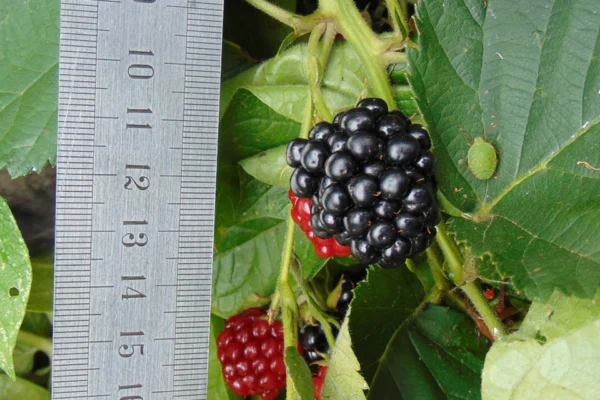
Chester
A thornless, relatively vigorous blackberry with a long late season. RHS describes cropping from August into October and a spread that may reach several metres.
Photo: Nadiatalent, CC BY-SA 4.0. Resized and optimised; cropped for display. Adapted image under the same licence.
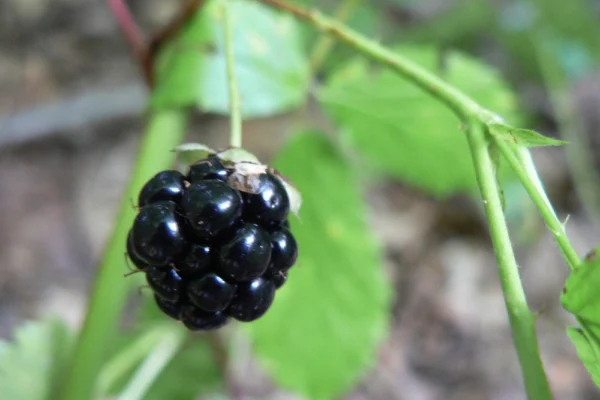
Loch Ness
A fairly compact, upright thornless selection with firm dark fruit. It is a useful garden choice when manageable growth matters, while still requiring proper training space.
Illustrative blackberry fruit. The cultivar in this photograph is not identified as Loch Ness.
Photo: Patty O'Hearn Kickham, CC BY 2.0. Resized and optimised; cropped for display.
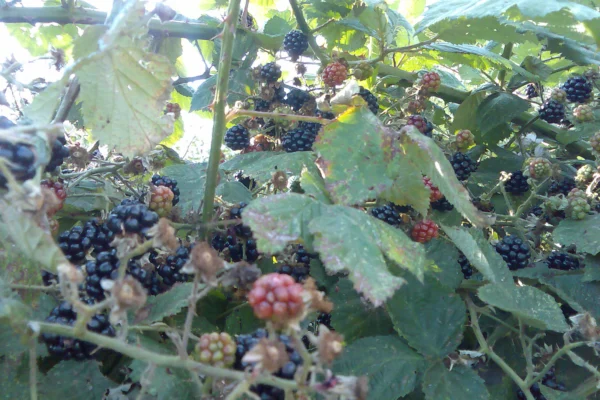
Loch Tay
A compact, semi upright thornless selection that crops relatively early. Consider it where an earlier harvest and reduced vigour fit the available garden space.
Illustrative blackberries photographed in London. Loch Tay is not identified in this image.
Photo: Mark Hillary, CC BY 2.0. Resized and optimised; cropped for display.
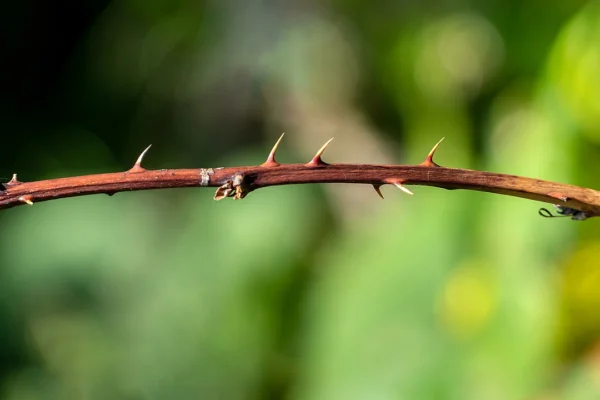
Reuben
A thorny primocane selection that can fruit on current season’s growth. For one late crop, use the February cutback system described above, and allow for local ripening conditions.
Illustrative thorny blackberry cane. The cultivar shown is not identified as Reuben.
Photo: W.carter, CC BY-SA 4.0. Resized and optimised; cropped for display. Adapted image under the same licence.
Use the BFFD map to find local growers and gardening businesses. Ask which blackberry varieties they supply, whether they suit your space and when plants will be available.
Blackberry flowers are useful to visiting pollinating insects, and ripe berries attract birds. A productive garden can share some fruit while protecting a chosen portion of the crop with properly maintained barriers.
Keep unwanted cane growth within your plot and use pruning to maintain access. Where a separate wild bramble area is retained for habitat, manage it deliberately rather than allowing a cultivated fruit row to become inaccessible.
Published by Buy From Farmers Direct. Sources checked 4 October 2026. Growing references: RHS: growing blackberries; RHS: blackberry pruning and training; Oregon State Extension: growing blackberries; University of Maryland: growing raspberries and blackberries; RHS: Chester; RHS: Loch Ness; RHS: Loch Tay; RHS: Reuben. The seasonal timeline uses the shared BFFD Growers Calendar record; adjust timings to your variety and local conditions.
Autumn to early spring is ideal when soil is workable. Avoid frozen or waterlogged ground. Container grown plants can be planted at other times, but need close attention to watering, especially during warm weather.
For floricane varieties, remove canes that have fruited after harvest and retain healthy new ones. For primocane Reuben grown for a single late crop, cut all canes down in February. Identify your type first.
Yes, with a genuinely compact variety and a large container. A pot at least 45 cm wide and deep is a useful minimum. Provide drainage, supports, regular water and suitable feeding.
Most cultivated blackberries are self fertile, so a single suitable plant can crop. More varieties are useful for different harvest dates and flavours, provided you have enough training space.
It may be establishing, or the canes needed for a floricane crop may have been removed. Check the variety and pruning history before cutting again. Light, weather and plant health also affect flowering.
Pick fully coloured berries that release easily and taste ripe. Check every few days during the season. Handle them in shallow containers and use or preserve them promptly; picked unripe berries do not continue to ripen.
Use the BFFD growers calendar to plan planting, picking and the right pruning window for your variety. A labelled plant and separated canes make next year’s harvest easier.
Explore more growing guides: Bay, Beautyberry, Beans (Runner).