A fan trained cherry spreads its branches across a wall or support. Fan describes the training, not a particular variety or rootstock. Choose a sweet cherry for fresh eating or a sour Morello for cooking, then match the tree to the wall. Their pruning differs because they carry fruit on different ages of wood.
Wall or wire support
Choose the rootstock
Sweet or sour fruit
Spring training
Summer pruning
| Botanical group | Prunus avium and Prunus cerasus cultivars |
| Family | Rosaceae |
| Plant type | Deciduous fruit tree |
| Fan means | Branches trained across a flat support |
| Sweet cherry aspect | Sunny south or south west wall |
| Morello aspect | Can also suit a north facing wall |
| Soil | Fertile, moist and well drained |
| Smaller sweet fan rootstock | Gisela 5 |
| Gisela 5 fan allowance | About 1.8m high and 3.6m wide |
| Larger sweet fan rootstock | Colt |
| Colt sweet fan allowance | About 2 to 2.4m high and 5 to 5.5m wide |
| Acid cherry on Colt | About 1.8 to 2m high and 3.6 to 5m wide |
| Planting season | Preferably November to March |
| Wall planting offset | At least 25 to 35cm |
| Main harvest here | July and August, depending on variety |
| Initial formation | Early to mid spring |
| Established pruning | During summer, complete by late August |
| Sweet cherry fruiting | Young shoots and older fruiting spurs |
| Sour cherry fruiting | Mainly shoots grown the previous year |
| Pollination | Variety dependent; check compatibility |
| Plant name | Crop type | Spacing |
Sow indoors
Plant outdoors
Harvest
Polytunnel | |||||||||||
|---|---|---|---|---|---|---|---|---|---|---|---|---|---|---|
| Jan | Feb | Mar | Apr | May | Jun | Jul | Aug | Sep | Oct | Nov | Dec | |||
| Cherry (Fan) | Orchard fruit | Single 3.60m, In row 3.60m, Row gap 2.00m | Plant outdoors | Plant outdoors | Plant outdoors | No activity recorded | No activity recorded | No activity recorded | Harvest | Harvest | No activity recorded | No activity recorded | Plant outdoors | Plant outdoors |
Sow indoors: no months recorded. Plant outdoors: January, February, March, November, December. Harvest: July, August. Polytunnel: no months recorded.
The planting band shows the preferred dormant season, avoiding frozen or saturated ground. Potted trees can be planted at other suitable times with careful watering. July and August cover the selections below, with weather and location shifting harvest. Sow indoors is blank because a named fan begins with a suitable grafted tree. Polytunnel dates are not needed for this outdoor training system.
A fan can make productive use of a garden boundary and bring blossom and fruit within easier reach. It also makes crop protection more manageable. The saving is in depth, however: a mature cherry still needs several metres of horizontal space.
A fan needs regular checks of ties and shoots. Buying a partly trained tree simplifies the start. If you prefer little pruning, consider whether an appropriately sized open tree would fit better.
Photo: Peggy Greb, USDA ARS, Public domain. Resized and optimised; cropped for display.
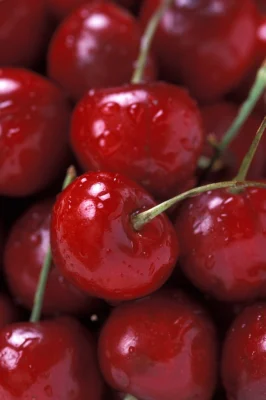
Give sweet cherries a sunny south or south west wall. Shelter helps ripening, but avoid frost pockets where cold air collects around spring blossom.
Morello suits a north facing wall and partial shade. Choose it for cooking cherries, without expecting sweet dessert fruit from a dark corner.
Measure the whole support before ordering. A Gisela 5 sweet fan needs roughly 3.6m width; a Colt sweet fan can need 5 to 5.5m. Allow the intended width between tree centres and keep an accessible working strip in front.
Improve poor wall border soil and ensure drainage. Fix wires securely, leaving air space behind branches. For freestanding supports, check strength and allow access to both sides.
Photo: 阿橋 HQ, CC BY-SA 2.0. Resized and optimised; cropped for display. Adapted image under the same licence.
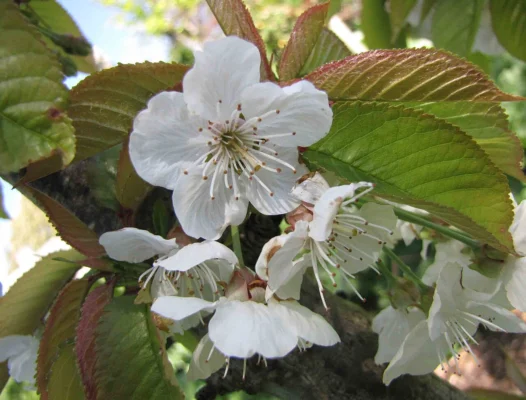
Start with a suitable one year maiden or a partly trained tree from a fruit nursery. A mature bush with stiff branches is difficult to convert neatly, so specify fan training when ordering.
1.
Choose the variety, confirm pollination requirements and agree a rootstock for the measured space.
2.
Install durable supports and horizontal wires. The RHS suggests wires 4 to 10cm clear of the wall, beginning about 40cm above ground.
3.
Prepare a broad planting area at least 25 to 35cm from the wall, avoiding foundations and buried services.
4.
Water before planting and keep bare roots moist. Work only when the soil is suitable.
5.
Keep the previous soil level and the graft union above ground. Spread roots without forcing them into a narrow hole.
6.
Backfill, water thoroughly and mulch the root area, leaving a clear gap around the trunk.
7.
Attach arms gently using flexible ties. Spread young growth gradually instead of bending rigid wood.
8.
Plan initial cuts for early to mid spring. Follow a maiden training guide or the nursery instructions for the actual stage of your tree.

Watering
Check soil moisture near walls, where rainfall may miss the roots. Water new trees during dry spells, soaking the root area rather than repeatedly wetting only the surface.
Maintain steady moisture while fruit swells. A wall tree can be dry after a shower. Replenish mulch and remove competing weeds.

Feeding
A well mulched tree in fertile soil may need little extra feed. Long shoots with few cherries can reflect pruning, shade or pollination rather than hunger.
Where growth and soil assessment indicate a shortage, apply suitable fruit fertiliser at the labelled rate. Avoid encouraging excessive growth in an already crowded framework.

Pruning
For an established sweet fan, tie useful extension shoots into gaps in June. Pinch other suitable new shoots to six leaves, then shorten those shoots to three leaves after fruiting in August. Retain productive older spurs and remove growth directed into the wall.
For Morello, keep well placed young shoots to replace wood that has fruited. After picking, cut spent sections back to a suitable new shoot and tie that replacement in. Do not shorten every new shoot into a sweet cherry spur. Work in dry weather and finish routine stone fruit pruning by late August.

Winter care
Use dormancy to inspect wires, fixings and ties, and plan the next season. Avoid routine winter cutting: cherry pruning wounds are more vulnerable to diseases such as silver leaf at that time.
Check that ties are not constricting branches. Have spring frost protection ready, removing temporary covers in suitable daytime weather so insects can reach blossom.
A fan has branches radiating from a low framework across one plane. It differs from the regular horizontal tiers of a classic espalier. Cherries are normally trained as fans rather than apple style espaliers.
Fruiting spurs are short shoots on older sweet cherry wood. Morello relies much more on the previous summer’s growth. Label the variety clearly, because choosing a pruning method from the tree’s shape alone can remove useful fruiting wood.
Photo: Dontworry, CC BY-SA 3.0. Resized and optimised; cropped for display. Adapted image under the same licence.
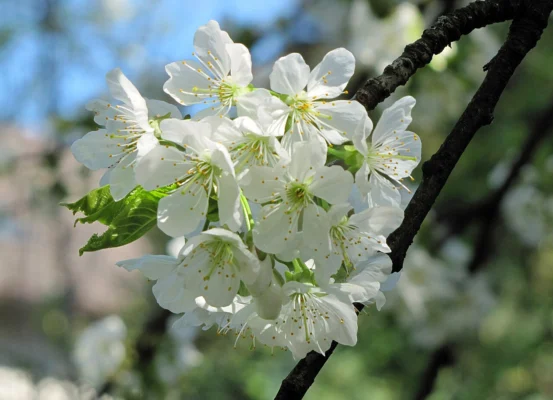
In exposed districts, discuss local experience with a nursery. Choose for your climate as well as your wall: warmth cannot prevent every blossom frost or wet flowering spell.
Self fertile cherries still need pollen transfer. Where another tree is required, flowering overlap and genetic compatibility both matter. Ask for a named suitable partner.
Taste fruit in its expected season and pick fully ripe; cherries do not ripen after picking. Handle by the stalk and separate damaged fruit from sound cherries.
Photo: Penny Mayes, CC BY-SA 2.0. Resized and optimised; cropped for display. Adapted image under the same licence.
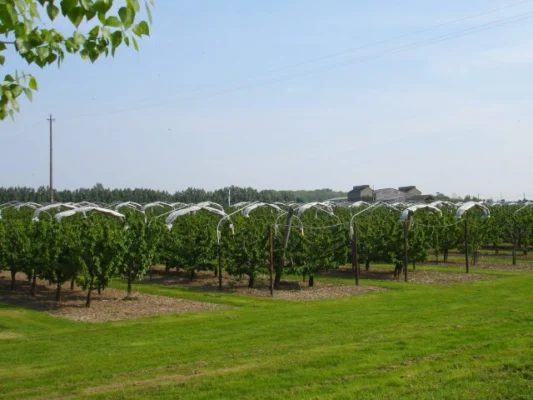
Too many shoots shade the framework. Retain branches that fill useful gaps and remove poorly placed growth in season, rather than keeping every vigorous upright shoot.
Check flowering weather and the variety’s fertility before changing feeding. Frost or poor pollination may explain low fruit set. A second random cherry is not a reliable solution.
Bacterial canker is one possibility, but gum alone is not a diagnosis. Look for associated dead or sunken bark and dieback, seek advice and avoid unnecessary pruning wounds in wet conditions.
Cherry blackfly can distort young growth in spring and early summer. Inspect the tips and support natural predators. Established trees often tolerate this damage, so do not assume every curled leaf requires spraying.
Recheck rootstock and intended width. Repeated severe cutting creates continuing work. Seek a staged training solution instead of abruptly removing both main arms.
Named cherries are normally grafted or budded onto selected rootstocks. For a fan, the starting tree also needs branches or buds in useful positions, so buy with the final form in mind.
Seedlings do not preserve the named variety and have uncertain vigour and fruit. They are unsuitable for a predictable tree on a measured wall.
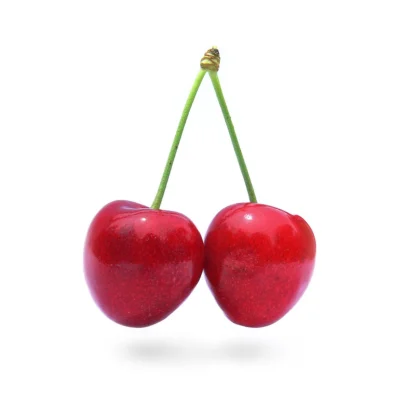
Stella
A self fertile sweet cherry for a sunny position. It simplifies pollination planning where only one tree fits. Select the rootstock separately and retain a framework of productive sweet cherry spurs as the fan matures.
Stella fruit; fan framework not pictured.
Photo: Benjamint444, edited by Fir0002, CC BY-SA 3.0. Resized and optimised; cropped for display. Adapted image under the same licence.
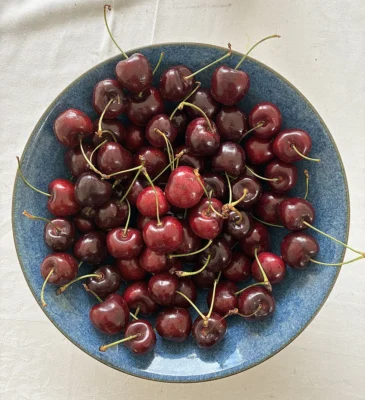
Lapins
Also known as Cherokee, this self fertile sweet cherry produces dark red fruit, generally in July. It offers another single tree option. Check nursery estimates for the chosen rootstock before allocating a wall bay.
Lapins fruit; fan framework not pictured.
Photo: DrThneed, CC BY 4.0. Resized and optimised; cropped for display.
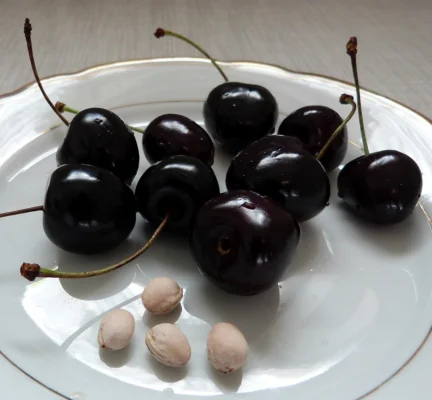
Kordia
A sweet cherry with large, firm dark fruit and some resistance to cracking. It is not self fertile. Choose it only with a confirmed compatible pollination plan, rather than assuming its wall position will ensure fruit set.
Kordia fruit; fan framework not pictured.
Photo: Don Manfredo, CC BY-SA 4.0. Resized and optimised; cropped for display. Adapted image under the same licence.
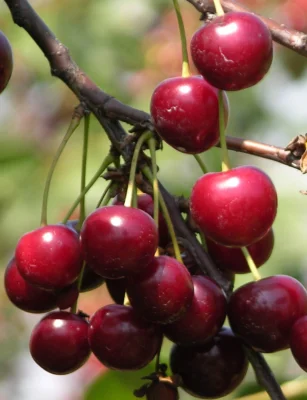
Morello
A self fertile sour cherry for cooking and preserves, usually ready from late July into August. It can use a cooler wall and needs replacement pruning to maintain young fruiting shoots. Its care differs from the three sweet cherries.
English Morello fruit; fan framework not pictured.
Photo: Glysiak, CC BY-SA 4.0. Resized and optimised; cropped for display. Adapted image under the same licence.
Find fruit nurseries through the BFFD map and directory. Share the wall dimensions and aspect, ask about variety, rootstock and pollination, and confirm availability and the tree’s training stage before visiting.
Open spring flowers attract pollinating insects. Keep blossom accessible and avoid treating flowers with insecticides. Nearby flowering plants can provide food beyond the cherry’s brief flowering season.
Bird protection is easier over a flat canopy. Use well supported taut netting after pollination and before fruit becomes attractive, inspect it for trapped wildlife, and remove it once picking is finished.
Published by Buy From Farmers Direct. Sources checked 5 October 2026. Growing references: RHS: Growing cherries; RHS: Initial fan training; RHS: Pruning established fans; Keepers Nursery: Fan trained fruit trees; Orange Pippin: Training fruit trees as fans and espaliers; Washington State University: Sweet cherry pollination; RHS: Stella cherry; RHS: Lapins cherry; RHS: Kordia cherry; RHS: Morello cherry; RHS: Bacterial canker; RHS: Cherry blackfly; RHS: Silver leaf. The seasonal timeline uses the shared BFFD Growers Calendar record; adjust timings to your variety and local conditions.
Morello tolerates more shade and can suit a north wall. Sweet cherries need sun for dependable ripening. A deeply shaded enclosed site is still unsuitable.
Allow roughly 3.6m width for a sweet fan on Gisela 5 and substantially more for Colt. Confirm dimensions for the cultivar and site before buying.
Form new fans in spring. Maintain established trees in summer, finishing routine cuts by late August. Sweet and sour cherries need different pruning methods.
Morello relies mainly on last summer’s shoots; Stella also crops on older spurs. Treating them identically can remove next year’s useful fruiting wood.
A fan is the usual choice. Its spreading framework suits cherries better than the regular horizontal tiers commonly used for apples and pears.
No. Stella, Lapins and Morello can crop alone because of their variety. Kordia needs a compatible cherry with overlapping blossom, whatever its shape.
Plan planting and picking with the BFFD growers calendar. Keep variety, rootstock and pruning dates in your own notes to guide care as the fan develops.
Explore more growing guides: Cherry (Dwarf), Blackcurrant, Blackberry.
Want to get food independence, support your local grower, get better prices and shop more privately?
Local food isn’t just something you find. It’s something you protect. A free account helps keep local supply visible, supported, and resilient.

….it takes 30 seconds for food lovers and 5 minutes for suppliers
We built this for people who care where their food comes from. For people who want to remain food secure. For Farmers to get to the local people, who deserve a better income and to deliver a better price for you. For the environmentally conscious and the privacy-conscious. An account simply helps us make the map and supplier reach more useful to you, without changing how open it is. You’re always in control.


Find local food. Stay connected to it. Create a free account to support local producers and be part of a growing food network.


