Sweet chestnut is a long term tree for a generous space. Its summer catkins and autumn nuts are appealing, but a useful crop begins with the right site and a suitable pollination partner. Decide whether you want an ornamental tree or a nut tree before choosing what to plant.
Large garden tree
Autumn nuts
Sunny sheltered site
Check pollination
Acid to neutral soil
| Botanical name | Castanea sativa and selected Castanea hybrids |
| Family | Fagaceae |
| Plant type | Deciduous tree |
| Position | Full sun |
| Preferred setting | Warm, sheltered, open ground |
| Soil | Freely draining acid to neutral soil |
| Avoid | Chalky and waterlogged ground |
| Typical mature size | Species trees can exceed 12m tall and 8m wide |
| Nut orchard spacing | 8 to 10m between trees as a planning guide |
| Calendar spacing used | 10m, subject to the cultivar and site |
| Usual planting window | November to March, weather permitting |
| Flowering season | Summer |
| Harvest window | September and October, depending on cultivar |
| Pollination | Ask for a compatible pollen producing partner |
| First crop | Varies greatly between seedlings and named grafted trees |
| Main propagation choices | Seed or grafting |
| Container suitability | A temporary nursery home, not the normal final site |
| Pruning approach | Minimal formative work for a nut tree |
| Lookalike to distinguish | Horse chestnut, Aesculus hippocastanum |
| Plant health concern | Sweet chestnut blight |
| Plant name | Crop type | Spacing |
Sow indoors
Plant outdoors
Harvest
Polytunnel | |||||||||||
|---|---|---|---|---|---|---|---|---|---|---|---|---|---|---|
| Jan | Feb | Mar | Apr | May | Jun | Jul | Aug | Sep | Oct | Nov | Dec | |||
| Chestnut (Sweet) | Orchard fruit | Single 10.00m, In row 10.00m, Row gap 10.00m | Plant outdoors | Plant outdoors | Plant outdoors | No activity recorded | No activity recorded | No activity recorded | No activity recorded | No activity recorded | Harvest | Harvest | Plant outdoors | Plant outdoors |
Sow indoors: no months recorded. Plant outdoors: January, February, March, November, December. Harvest: September, October. Polytunnel: no months recorded.
This calendar is for planting a purchased tree and collecting autumn nuts. The 10m spacing is a generous nut orchard planning example within Forest Research’s 8 to 10m guidance. Confirm the final dimensions with your nursery. The planting band covers the usual dormant season; postpone work on frozen or saturated ground. A sowing or polytunnel band is not required for this planting plan.
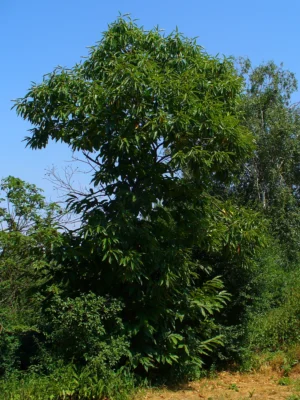
Start with a scale drawing of the mature crown. Include neighbouring trees, buildings, access and the place where fallen nuts will land. A young chestnut occupies very little room, which can make its eventual size surprisingly easy to underestimate.
A small patio or a narrow border is unlikely to provide a satisfactory permanent home. Even a cultivar described as compact remains a substantial tree. Ask whether the stated size is an estimate after ten years or the eventual size before committing to it.
Photo: Benjamin Gimmel (BenHur), CC BY-SA 3.0. Resized and optimised; cropped for display. Adapted image under the same licence.
Choose the warmest suitable open position, with enough light around the crown. A sheltered lowland garden generally offers a better prospect for nut production than a cold, exposed hillside. Winter survival and reliable nut ripening are separate questions.
Check the soil before ordering. Acid to neutral, freely draining ground is a better starting point than chalk or a wet hollow. If the site is fundamentally unsuitable, choose another tree rather than filling one small planting hole with imported compost.
For a nut planting, leave sufficient space for each crown and for collecting the crop beneath it. This guide uses 10m between trees. An orchard plan should also account for access routes and any equipment you intend to use.
Arrange pollination at the buying stage. Ask the nursery to name a compatible partner and confirm that its flowering overlaps locally. Two trees carrying the same cultivar name do not necessarily provide the diversity needed for dependable pollination.
Photo: H. Zell, CC BY-SA 3.0. Resized and optimised; cropped for display. Adapted image under the same licence.
Prepare the permanent site before the tree arrives. Keep its cultivar, graft and nursery details so that future advice relates to the tree you actually own.
1.
Mark the planting position and the space allowed for the eventual crown and any pollination partner.
2.
Clear weeds and competing grass, and check that water drains away from the wider area.
3.
Keep bare roots moist, or thoroughly water a container tree before removing its pot.
4.
Make a wide planting hole, ideally about three times the root spread, without digging deeper than the roots need.
5.
Spread the roots naturally and keep the root flare at ground level; leave a graft union above the soil.
6.
Fit suitable support where needed, return the excavated soil and firm it gently around the roots.
7.
Water well and mulch the surrounding soil, leaving a clear space around the trunk.
8.
Fit protection against browsing animals where necessary and check that ties and guards cannot rub or constrict the stem.

Watering
Give a newly planted tree attention during dry weather. Check moisture beneath the surface and water the rooting area thoroughly when required. A dry rootball can persist beneath apparently damp soil.
Keep a simple record of watering during establishment, especially if several people share the garden. Check the ground before adding more water so that routine care does not turn a poorly drained position into a wetter one.

Feeding
Do not use strong feeding as a substitute for a suitable site. Look first at soil moisture, competition and root establishment when growth disappoints. Adding fertiliser to the planting hole is not needed.
Maintain the surface mulch and reassess the tree as it establishes. If a nutrient problem is suspected, use a soil assessment or advice based on the symptoms before choosing a feed. Keep mulch away from the bark.

Pruning
For a nut tree, aim to establish a sound framework and then intervene sparingly. The coppicing used to produce chestnut poles is a different management system and should not be copied as routine crop care.
Review crossing or damaged young branches before they become large structural limbs. For mature tree work, use a qualified arborist. Suspected blight needs a plant health report before infected material is cut up or moved.

Winter care
Inspect ties, guards and the base of the tree while the leaves are absent. Check after storms for movement at the roots or support damage. Do not leave a tight tie in place simply because the tree appears stable.
Plan replacement trees and pollination partners during the dormant season. Keep drainage channels and access clear, and delay planting whenever the soil is frozen or saturated. The calendar is a planning aid rather than a deadline.
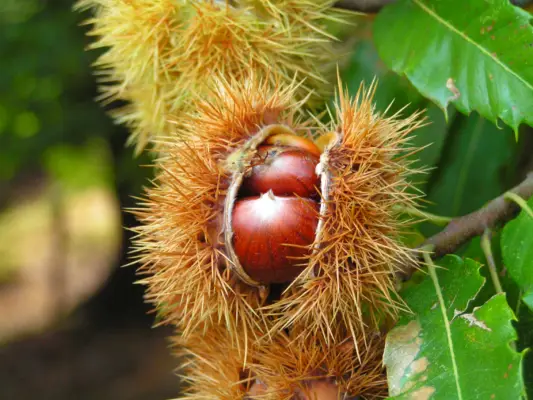
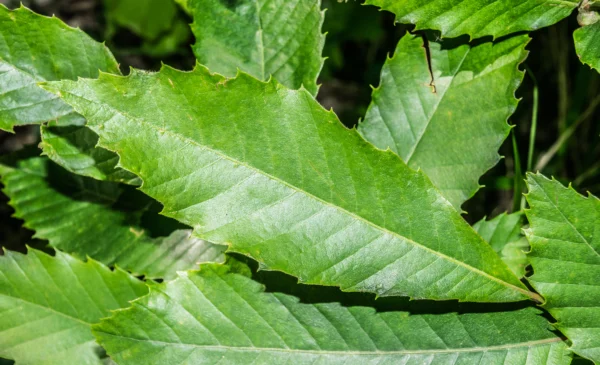
Sweet chestnut has individual elongated leaves with conspicuous pointed teeth. Its nuts develop inside burrs crowded with fine sharp spines. Older trunks often have strongly furrowed bark. Use several features together when checking a tree.
Horse chestnut has a very different leaf, divided into several spreading leaflets like fingers. Its conkers are not edible sweet chestnuts. Do not use a brown nut alone to identify a food crop; retain the label on a planted tree and obtain a reliable identification for an unfamiliar one.
Photo: Krzysztof Golik, CC BY-SA 4.0. Resized and optimised; cropped for display. Adapted image under the same licence.
Nut production is a more demanding goal than simply growing a healthy tree. Compare results from nearby growers in similar conditions before selecting a cultivar. A promising tree in a warm southern garden may perform differently at a cooler, wetter site.
Watch for ripening burrs from September into October according to the cultivar. Wear gloves when handling the spiny cases. Collect fallen sound nuts promptly, keep the harvest area accessible and discard damaged or mouldy nuts.
Record the flowering dates, the first ripe nuts and how well the kernels fill. Those observations help separate a late season, a pollination issue and an immature tree. Avoid promising a fixed first harvest date for an unselected seedling.
Photo: Sten Porse, CC BY-SA 3.0. Resized and optimised; cropped for display. Adapted image under the same licence.
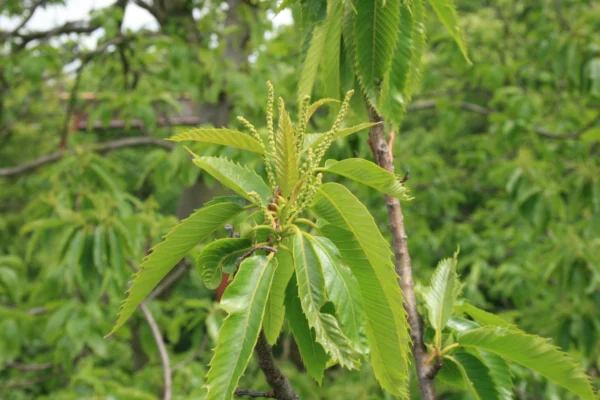
Check whether the tree has a suitable pollen partner and whether the season was warm enough for the chosen cultivar. A large number of burrs does not by itself demonstrate that pollination and kernel development went well.
Reassess the site rather than repeatedly feeding the tree. Sweet chestnut dislikes waterlogged and alkaline ground. Persistent drainage problems can also leave roots vulnerable to disease.
Sweet chestnut blight can cause cankers, orange fruiting bodies and brown foliage that remains attached. Report suspected cases promptly through TreeAlert in Great Britain or TreeCheck in Northern Ireland. Follow official advice before moving or destroying affected material.
Green, pink or red galls that later become woody can indicate oriental chestnut gall wasp. Photograph the symptoms on a confirmed sweet chestnut and report suspected sightings using the official plant health route. Do not take galled material to another garden.
Inspect for rubbing, constriction and animal browsing. Adjust the protection to the growing trunk. Keep grass cutting equipment away from the bark and investigate persistent wounds rather than hiding them beneath mulch.
Seed raising is useful when the aim is to learn about trees, but a seedling will not reliably reproduce a named cultivar’s crop or growth. Label the experiment clearly and be prepared for a long wait before judging its nuts.
For a planned nut harvest, buy a named grafted selection with specific pollination advice. Keep its original label and invoice with your garden records. Ask the supplier about the likely time to cropping for the age and form offered.
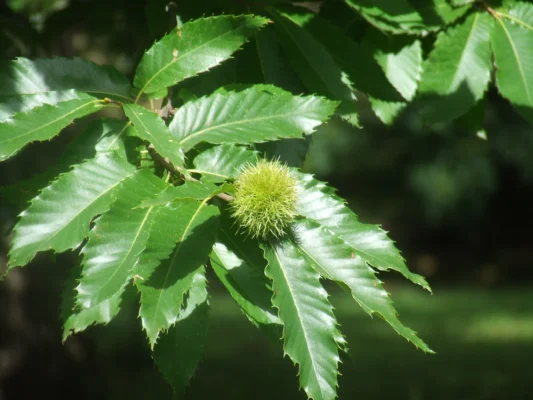
Marigoule
An early hybrid selection with large brown nuts. It is described as partially self fertile, but a suitable partner can improve the planting plan. Allow for vigorous growth rather than treating it as a patio tree.
Illustration: sweet chestnut leaves and young burrs. The pictured cultivar is unspecified.
Photo: Ekir, CC BY-SA 2.5. Resized and optimised; cropped for display. Adapted image under the same licence.
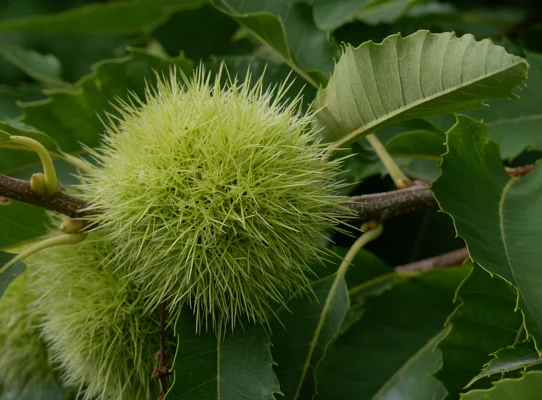
Belle Epine
A French selection valued as a pollen producer as well as for its nuts. Frank P Matthews lists it as a partner for Marigoule and Marron de Lyon. Confirm the arrangement for the trees and site you intend to use.
Illustration: sweet chestnut burrs on a branch, not a verified Belle Epine specimen.
Photo: Jamain, CC BY-SA 3.0. Resized and optimised; cropped for display. Adapted image under the same licence.
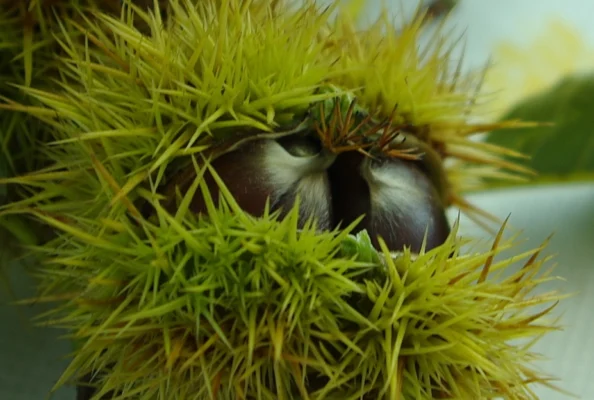
Regal
A relatively compact selection, described by its nursery as reaching about 5m after ten years. That is a time specific estimate, not a guarantee that growth stops there. Its nuts are associated with an October harvest.
Illustration: sweet chestnuts inside an open burr. Cultivar identity is not established by this photograph.
Photo: Zeynel Cebeci, CC BY-SA 3.0. Resized and optimised; cropped for display. Adapted image under the same licence.
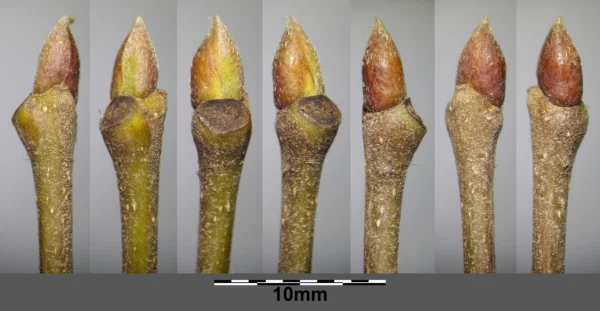
Marron de Lyon
A named nut selection described as entering production young and cropping in September. Discuss a compatible pollen partner and the eventual crown dimensions before choosing it for a garden.
Illustration: dormant sweet chestnut buds, not a verified Marron de Lyon specimen.
Photo: Stefan.lefnaer, CC BY-SA 4.0. Resized and optimised; cropped for display. Adapted image under the same licence.
Find local nurseries through the BFFD map. Take your soil details, available space and growing aim, then ask about cultivar size, pollination and local cropping experience.
Summer catkins provide resources for pollinating insects, and the nuts support wildlife. A large tree can become an enduring part of the garden, so allow space for both its crown and the habitat beneath it.
Keep a proportionate approach to sharing the crop. Gather sound fallen nuts regularly and avoid leaving loose protective material where animals can become caught. Tree health checks can be combined with these regular harvest visits.
Published by Buy From Farmers Direct. Sources checked 6 October 2026. Growing references: Forest Research: Sweet chestnut; Woodland Trust: Sweet chestnut; RHS: Marigoule; RHS: Planting trees and shrubs; Frank P Matthews: Regal; Frank P Matthews: Belle Epine; GOV.UK: Sweet chestnut blight; Forest Research: Oriental chestnut gall wasp. The seasonal timeline uses the shared BFFD Growers Calendar record; adjust timings to your variety and local conditions.
Usually it needs more room than a small garden can offer. Check the eventual crown size, not just the nursery pot or a ten year height estimate. Even comparatively compact selections become substantial trees.
Forest Research gives 8 to 10m for trees intended for nut production. This guide uses 10m as a planning example. Match the final layout to cultivar size, site conditions and access requirements.
Pollination requirements vary between selections. Some are partly self fertile, but reliable nut planting should be planned with a nursery that can identify a compatible pollen producing partner.
September and October cover the usual season of the named selections discussed here. Follow the ripeness of the nuts and burrs at your site rather than harvesting solely by the calendar.
No. Conkers come from horse chestnut, Aesculus hippocastanum, and are not an edible substitute. Check the whole tree and its leaves as well as the burrs before identifying any unfamiliar nuts.
Photograph the symptoms and seek a diagnosis. Suspected sweet chestnut blight should be reported promptly through TreeAlert in Great Britain or TreeCheck in Northern Ireland. Follow the current official instructions for affected material.
Use the calendar to organise planting and harvest visits, then keep local flowering and ripening notes alongside the cultivar label. A well chosen site and a clear pollination plan are the foundations of a useful chestnut planting.
Explore more growing guides: Cherry (Semi Dwarf), Cherry (Dwarf), Cherry (Fan).
Want to get food independence, support your local grower, get better prices and shop more privately?
Local food isn’t just something you find. It’s something you protect. A free account helps keep local supply visible, supported, and resilient.

….it takes 30 seconds for food lovers and 5 minutes for suppliers
We built this for people who care where their food comes from. For people who want to remain food secure. For Farmers to get to the local people, who deserve a better income and to deliver a better price for you. For the environmentally conscious and the privacy-conscious. An account simply helps us make the map and supplier reach more useful to you, without changing how open it is. You’re always in control.


Find local food. Stay connected to it. Create a free account to support local producers and be part of a growing food network.


