A semi dwarf cherry gives you a fruit tree with a manageable framework, provided its rootstock suits the space. This guide concentrates on trees grown in open ground: choosing the rootstock, allowing working room, establishing the roots and keeping the bearing branches accessible.
Open ground growing
Check mature spread
Named rootstock
Summer pruning
Spring pollination
| Botanical group | Prunus avium and Prunus cerasus cultivars |
| Family | Rosaceae |
| Plant type | Deciduous fruit tree |
| Size control | Grafted rootstock plus training |
| Typical smaller rootstock | Gisela 5 |
| Larger alternative | Gisela 6, subject to site and supplier advice |
| Gisela 5 height | RHS guidance: approximately 3 to 4m |
| Colt classification | Semi vigorous, requiring more room |
| Sweet cherry position | Sunny and sheltered |
| Soil | Deep, fertile and freely draining |
| Planting season | November to March while dormant |
| Planning distance | About 3m between suitable Gisela trees |
| Row access allowance | About 4m; adjust to the mature framework |
| Main harvest window | July to September across different cultivars |
| Pollination | Variety specific; rootstock does not decide fertility |
| Support | Permanent support is commonly advised for Gisela 5 |
| Routine pruning | Dry summer weather |
| Winter pruning | Avoid routine cutting in dormancy |
| Seed propagation | Does not preserve the named grafted combination |
| Harvested part | Ripe fruit flesh; discard stones |
| Plant name | Crop type | Spacing |
Sow indoors
Plant outdoors
Harvest
Polytunnel | |||||||||||
|---|---|---|---|---|---|---|---|---|---|---|---|---|---|---|
| Jan | Feb | Mar | Apr | May | Jun | Jul | Aug | Sep | Oct | Nov | Dec | |||
| Cherry (Semi Dwarf) | Orchard fruit | Single 3.00m, In row 3.00m, Row gap 4.00m | Plant outdoors | Plant outdoors | Plant outdoors | No activity recorded | No activity recorded | No activity recorded | Harvest | Harvest | Harvest | No activity recorded | Plant outdoors | Plant outdoors |
Sow indoors: no months recorded. Plant outdoors: January, February, March, November, December. Harvest: July, August, September. Polytunnel: no months recorded.
The planting band shows the usual dormant season, November to March. Delay planting when ground is frozen or waterlogged. July to September combines the seasons of different varieties and does not mean one tree crops for three months. Spacing is an example for a suitable Gisela rootstock, not a rule for Colt or a full size cherry. No sowing or polytunnel band is needed for a purchased grafted outdoor tree.
Choose a tree in open ground when you can give its roots a permanent site and retain access around the canopy. Measure the available width as well as height. Leave room to inspect branches and reach ripe fruit without depending on severe annual cutting.
The labels dwarf and semi dwarf overlap between suppliers. Gisela 5 appears in both descriptions, while Gisela 6 generally makes a larger tree. Ask the nursery for the likely dimensions of its particular variety and rootstock combination in your soil. Colt is semi vigorous and should not be treated as a compact substitute.
Photo: Peggy Greb, USDA ARS, Public domain. Resized and optimised; cropped for display.

Mark out the proposed canopy before digging. Around 3m between suitable Gisela trees is a useful nursery planning example, with about 4m between rows here for working access. Increase space where the supplier expects a broader tree.
Choose a sunny, sheltered position for sweet fruit. Keep away from places where cold air settles in spring. A tree can survive winter yet lose that year’s blossom to a later frost.
Inspect drainage after sustained rain. Avoid putting the roots into a wet hollow. Keep the surrounding ground accessible for watering, mulch and checks on the support rather than planting right against paving.
Plan the support when choosing the rootstock. Gisela 5 commonly needs lasting support; Gisela 6 may become self supporting in suitable conditions. Wind exposure and training form matter, so follow advice for the actual tree supplied.
Photo: 阿橋 HQ, CC BY-SA 2.0. Resized and optimised; cropped for display. Adapted image under the same licence.
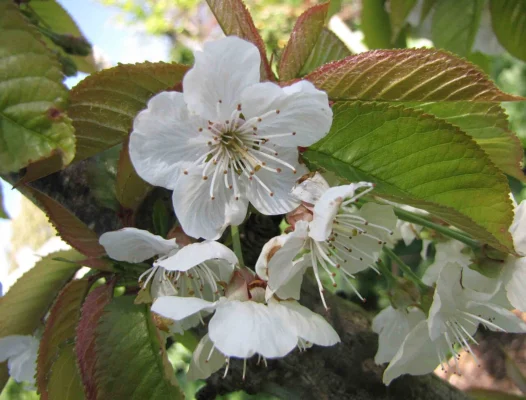
A good planting plan starts with four details on the nursery label: fruit variety, rootstock, pollination requirements and intended tree form. Keep a photograph of the label with your garden records.
1.
Confirm that the mature tree fits your measured site, including room for picking and any crop cover.
2.
Check pollination before ordering. If the chosen variety needs a partner, agree a compatible variety and position with the nursery.
3.
Clear competing grass and weeds from the planting area and inspect the soil while it is workable.
4.
Keep bare roots moist before planting. Water a container tree before removing it from the pot.
5.
Dig a broad hole that accommodates the roots without forcing them into a tight circle. Keep the original planting depth.
6.
Position the graft above the soil surface and install the specified support without driving it through major roots.
7.
Return soil around the roots, firm gently, water thoroughly and add a surface mulch while leaving the trunk clear.
8.
Attach a flexible tie, label the tree and make moisture and tie checks part of the first growing season’s routine.

Watering
During establishment, check the rooting area during dry spells and water thoroughly when needed. A little rain may wet the surface while leaving the rootball dry. Keep the mulch clear of the trunk so the planting depth remains visible.
Maintain reasonably steady soil moisture as the crop swells. Record persistent wet or dry patches around the tree; correcting irrigation or drainage is more useful than repeatedly treating leaf symptoms without checking the roots.

Feeding
Use growth and soil conditions to guide feeding. A tree with poor fruit set may have suffered frost or inadequate pollination even when its leaves look healthy. Extra fertiliser cannot replace a compatible pollen source.
Keep competing vegetation away while the tree establishes and replenish its surface mulch as required. If a feed is appropriate, follow the product label and avoid stacking several fertilisers. Strong leafy growth is not the same as a well balanced cropping framework.

Pruning
Build the intended framework gradually. Routine cutting belongs in dry summer weather, rather than the dormant pruning season used for many apples. Spring work may be appropriate when forming a young tree; confirm the training instructions supplied with it.
Retain useful fruiting wood and remove selected congestion instead of clipping every branch to the same outline. Sweet cherries and sour cherries renew their fruiting wood differently. For a late cropping variety, ask how to schedule pruning without pushing routine work into wet autumn weather.

Winter care
Check the support, loosen ties before they constrict the trunk and keep the root area draining freely. Dormancy is useful for inspecting the framework, but does not make it the normal pruning season for a cherry.
Prepare spring frost protection while the canopy is still accessible. Any temporary cover needs to allow pollinators access when conditions improve. A small tree is easier to protect, but no rootstock makes open blossom frost proof.
Look for the graft union above ground level and retain the original rootstock record. Growth from below that union comes from the supporting rootstock, so it should not be trained as a replacement for the named fruiting variety.
Rootstock size cannot be identified from a photograph of cherries or blossom. The photographs here illustrate named cultivars and cherry features; they do not certify a semi dwarf root system. Use the nursery specification to establish the growing form.
Photo: Dontworry, CC BY-SA 3.0. Resized and optimised; cropped for display. Adapted image under the same licence.
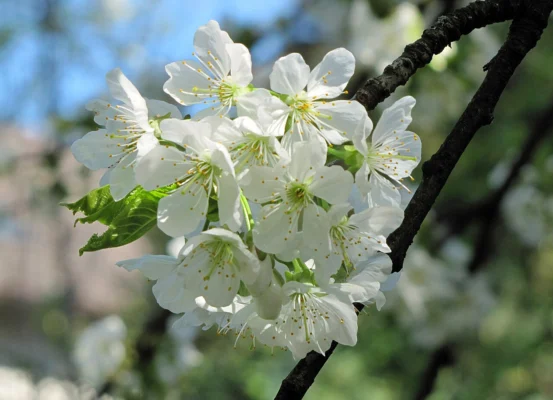
A sheltered site and a locally suitable ripening season matter more than chasing a universal height figure. In a cool garden, ask nearby fruit growers which cultivars finish ripening reliably and when their blossom is usually at risk.
For a small orchard, note flowering dates separately from picking dates. Two varieties harvested in the same month are not necessarily compatible pollination partners. Choose from a reliable compatibility list and allow space for both mature trees.
Check fruit frequently as its expected season approaches. Pick when ripe, handle by the stalk where practical and separate damaged fruit promptly. Record the harvest date and weather so next year’s plans reflect your own site.
Photo: Penny Mayes, CC BY-SA 2.0. Resized and optimised; cropped for display. Adapted image under the same licence.
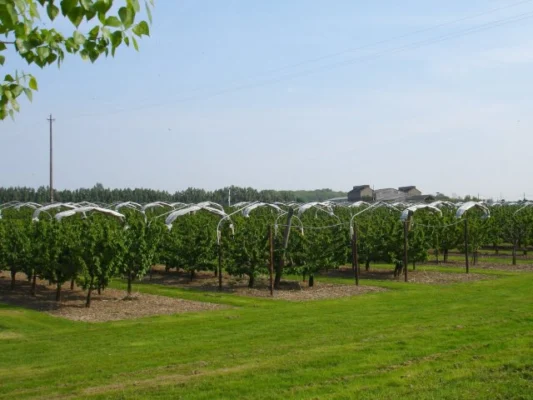
Check the rootstock label and original size estimate. A semi vigorous tree squeezed into a small gap will keep demanding corrective work. Seek advice on its framework before removing large branches simply to reach a target height.
Inspect ties after windy weather and as the trunk thickens. Adjust or replace worn ties and ensure the support remains sound. Keep the attachment secure without allowing wire or a narrow tie to cut into the bark.
Compare flowering weather and pollination requirements. Frost can damage flowers, while cold or wet days reduce insect activity. A second tree helps only when it provides compatible pollen at the right time.
Cherry blackfly can distort fresh leaves. Look for the insects before deciding on a response. Established trees often tolerate this damage; inspect young growth and encourage natural predators rather than assuming every curled leaf needs spraying.
These signs need diagnosis rather than a single automatic treatment. Bacterial canker and silver leaf are among possible causes. Keep routine pruning in the appropriate growing season and ask for help where a main limb or trunk is affected.
For a predictable fruit tree, obtain a named cultivar already grafted or budded onto a named rootstock. Buying the combination together also gives you a source for its support and training requirements.
A cherry grown from a stone is an experiment, not a reliable way to reproduce semi dwarf size or the parent fruit. Retain graft and cultivar details when replacing a tree or planning a second planting.
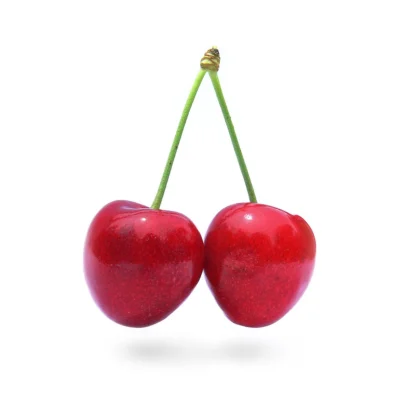
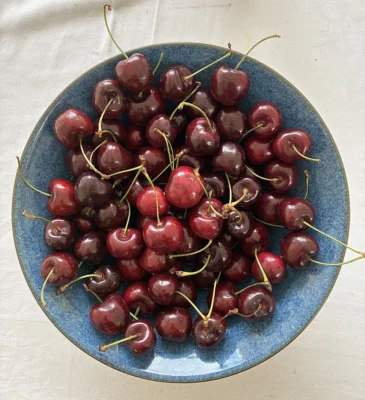
Stella
Stella is self fertile, so it can be considered where space permits only one fruiting cherry. Specify the rootstock separately. A Stella on a stronger rootstock can need much more garden space than the same fruit variety on Gisela 5.
Stella fruit; rootstock not identified.
Photo: Benjamint444, edited by Fir0002, CC BY-SA 3.0. Resized and optimised; cropped for display. Adapted image under the same licence.
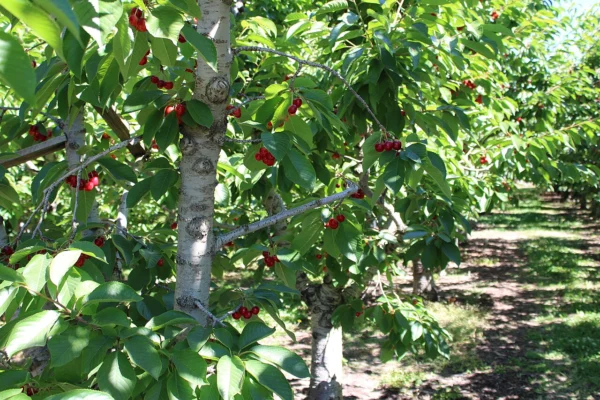
Lapins
Lapins is another self fertile sweet cherry with dark red fruit. Choose the nursery’s rootstock and training form to match the site. Keep its flowering and picking notes separate when comparing it with other trees.
Lapins fruit; rootstock not identified.
Photo: DrThneed, CC BY 4.0. Resized and optimised; cropped for display.
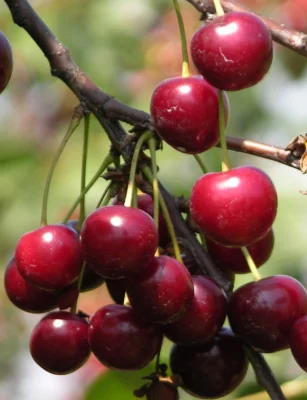
Sweetheart
Sweetheart provides a later sweet cherry option. Check how reliably that later season finishes in your area and plan pruning with the nursery if fruit remains on the tree near the end of summer.
Sweetheart fruiting tree; rootstock not identified.
Photo: Chris Light, CC BY-SA 4.0. Resized and optimised; cropped for display. Adapted image under the same licence.
Morello
Morello is a sour cherry for cooking, with different fruiting and pruning habits from sweet cherries. It can suit a position with some shade. Its rootstock still matters, even though sour cherries are naturally less vigorous.
English Morello fruit; rootstock not identified.
Photo: Glysiak, CC BY-SA 4.0. Resized and optimised; cropped for display. Adapted image under the same licence.
Find local fruit nurseries through the BFFD map. Take your available dimensions, soil description and pollination plan, then ask which named rootstock and cultivar combination suits them.
Cherry blossom brings pollinating insects into the garden. Keep other flowering plants available across the season and leave the blossom accessible during suitable weather.
If birds are taking the crop, use properly supported protection and inspect it frequently for trapped wildlife. Allow enough room between the cover and branches, and remove it when harvesting is over.
Published by Buy From Farmers Direct. Sources checked 6 October 2026. Growing references: RHS: Growing cherries; RHS: Fruit in containers; Orange Pippin: Cherry rootstocks; Orange Pippin: Fruit tree rootstocks and sizes; Washington State University: Sweet cherry pollination; RHS: Stella cherry; RHS: Lapins cherry; RHS: Sweetheart cherry; RHS: Morello cherry; RHS: Silver leaf; RHS: Bacterial canker; RHS: Cherry blackfly. The seasonal timeline uses the shared BFFD Growers Calendar record; adjust timings to your variety and local conditions.
It describes reduced vigour, usually from a grafted rootstock, rather than one fixed size. Supplier terminology varies. Check the rootstock name and expected mature dimensions before buying.
Both terms are used in retail descriptions. The RHS calls it semi dwarfing and gives approximately 3 to 4m for an open ground tree. Site, cultivar and training influence the result.
Gisela 6 generally produces a larger tree and can suit conditions where Gisela 5 is more demanding. Discuss soil, support and mature spread with the supplier rather than choosing solely by the size label.
That is not a suitable general spacing for ordinary garden trees. This guide uses about 3m between appropriate Gisela trees as a planning example, with extra row access. Special intensive training systems need their own design.
That depends on the fruit variety, not the rootstock. Self fertile varieties can crop alone. Other sweet cherries need compatible pollen from a tree flowering at the same time.
Colt is a semi vigorous rootstock. Repeated hard pruning is a poor substitute for choosing an appropriate tree. Allow the space specified by the nursery or choose a smaller rootstock from the start.
Use the growers calendar for planting and harvest planning, then keep the nursery’s rootstock and training instructions alongside your own observations. Compare the separate BFFD guides for dwarf cherries and fan trained cherries if you are choosing between growing forms.
Explore more growing guides: Cherry (Dwarf), Cherry (Fan), Blackberry.
Want to get food independence, support your local grower, get better prices and shop more privately?
Local food isn’t just something you find. It’s something you protect. A free account helps keep local supply visible, supported, and resilient.

….it takes 30 seconds for food lovers and 5 minutes for suppliers
We built this for people who care where their food comes from. For people who want to remain food secure. For Farmers to get to the local people, who deserve a better income and to deliver a better price for you. For the environmentally conscious and the privacy-conscious. An account simply helps us make the map and supplier reach more useful to you, without changing how open it is. You’re always in control.


Find local food. Stay connected to it. Create a free account to support local producers and be part of a growing food network.


