A healthy courgette plant can turn a small patch into a steady summer supply, provided you give it room, water and frequent attention at picking time. The best results usually come from a few well spaced plants rather than a crowded row. Sow in spring, wait for frost to pass before planting out, and harvest while the fruits are still young and tender.
Tender summer vegetable
Full sun
Suitable for large pots
Pick young and often
Green, yellow and round forms
| Botanical name | Cucurbita pepo |
| Family | Cucurbitaceae |
| Alternative name | Zucchini |
| Growing cycle | Annual summer crop |
| Position | Sunny and sheltered |
| Soil | Fertile, moisture retentive and well drained |
| Indoor sowing | April and May |
| Outdoor sowing | Late May or June after soil warms |
| Indoor sowing depth | About 1 to 1.5cm, following the packet |
| Germination temperature | Around 18 to 21°C |
| Planting out | Late May or June after the last frost |
| Spacing | At least 90cm each way for ordinary bush plants |
| Container size | At least 45cm wide for one suitable compact plant |
| Main harvest window | July to October, weather permitting |
| Picking size | Often around 10 to 12cm for long varieties |
| Pollination | Usually insects visiting male and female flowers |
| Main seasonal tasks | Water, inspect and pick regularly |
| Winter habit | Plants die with frost |
| Plant name | Crop type | Spacing |
Sow indoors
Plant outdoors
Harvest
Polytunnel | |||||||||||
|---|---|---|---|---|---|---|---|---|---|---|---|---|---|---|
| Jan | Feb | Mar | Apr | May | Jun | Jul | Aug | Sep | Oct | Nov | Dec | |||
| Courgette | Cucurbits | Single 90cm, In row 90cm, Row gap 90cm | No activity recorded | No activity recorded | No activity recorded | Sow indoors, Polytunnel | Sow indoors, Plant outdoors, Polytunnel | Sow indoors, Plant outdoors, Polytunnel | Harvest, Polytunnel | Harvest, Polytunnel | Harvest, Polytunnel | Harvest, Polytunnel | No activity recorded | No activity recorded |
Sow indoors: April, May, June. Plant outdoors: May, June. Harvest: July, August, September, October. Polytunnel: April, May, June, July, August, September, October.
April and May sowing refers mainly to an indoor start; June includes direct sowing into warm ground. Planting dates depend on the last frost in your own garden. July to October is a useful harvest window, with earlier crops possible under favourable conditions and an earlier finish in cold districts. Optional tunnel use needs ventilation and access for pollinating insects.
Courgettes suit a grower who can visit the crop regularly. Fruit can expand quickly in warm weather, so a plant checked only occasionally is more likely to produce oversized marrows than a sequence of small courgettes.
For a small household, begin with one or two plants and assess demand before filling a whole bed. Leave enough room to reach the centre of each plant without snapping leaves or stepping on neighbouring crops.
Photo: nociveglia from Appennino Emiliano, Italy, CC BY 2.0. Resized and optimised; cropped for display.
Choose a sunny, sheltered position with soil that holds useful moisture without remaining saturated. Work mature garden compost into the planting area, or maintain a suitable surface mulch in an established no dig bed.
Allow at least 90cm between ordinary bush plants in both directions, and more for a variety whose packet specifies it. Crowded leaves make watering, harvesting and disease inspection harder.
In containers, choose a compact variety and give one plant a pot at least 45cm across with drainage holes. A tiny patio pot dries too rapidly to support a large leaf canopy and repeated fruit production.
Keep the water supply and harvest route practical. A plant at the far end of an awkward bed is easily missed, and a hidden fruit can become much larger than intended before the next visit.
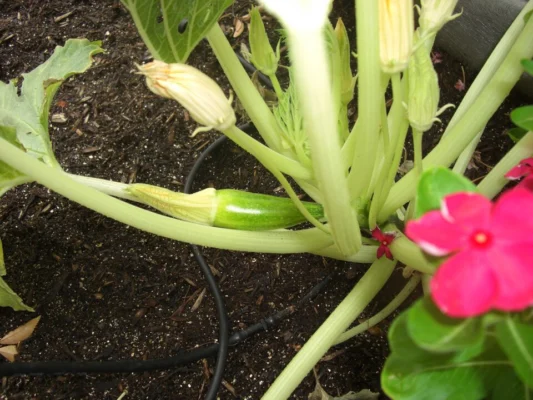
Photo: Ginabovara, Public domain. Resized and optimised; cropped for display.
Courgettes grow quickly once warm, so an indoor sowing a few weeks before planting is more useful than nursing oversized plants for months. Keep a spare plant if slugs are a recurring problem.
1.
Choose a variety suited to your available space and decide how many plants you can realistically use. Label different colours or forms at sowing.
2.
Sow one seed on its edge in a small pot of moist seed compost, about 1 to 1.5cm deep unless the packet advises otherwise.
3.
Keep the pots around 18 to 21°C until germination. Move emerged seedlings into good light and remove any close propagator cover.
4.
Grow on without allowing the compost to become either completely dry or continuously waterlogged. Pot on if roots fill the container before outside conditions are ready.
5.
Prepare the final positions with adequate organic matter and at least 90cm spacing. For a container crop, fill a suitably large drained pot with fresh growing compost.
6.
Harden plants off gradually, bringing them back under protection when nights are too cold. Plant outside only when local frost risk has passed and the ground has warmed.
7.
Set each root ball at approximately its previous level, firm gently and water in. Keep the crown clear of thick wet mulch and protect vulnerable young plants from slugs.
8.
Check establishment, then begin regular watering and harvesting as the plant expands. Direct sowings in late May or June should be thinned to one strong plant at each final position.

Watering
Large leaves and rapidly developing fruit need a steady supply of moisture. Check the soil below the surface rather than assuming a brief shower has soaked the root zone. Containers may need particularly frequent checks.
Water around the roots and allow excess water to drain. A mulch helps reduce evaporation, but leave the stem base clear and avoid creating a permanently wet collar around the crown.

Feeding
Prepare the ground with well rotted organic matter before planting. In pots, note how long the compost’s initial nutrients are expected to last and feed as needed once that period ends.
Once cropping starts, an appropriate potassium rich vegetable or tomato feed can support continued growth. Follow its dilution and frequency instructions; excessive feeding does not replace adequate water or sunlight.

Pruning
An ordinary bush courgette does not need routine pinching or elaborate pruning. Remove badly damaged or dead leaves when necessary, keeping healthy foliage that powers the crop.
Cut fruits off carefully with a short length of stalk rather than twisting the whole plant. Check underneath the canopy for hidden fruit. Gloves and covered arms make handling bristly stems more comfortable.

Winter care
Outdoor courgettes are a single season crop. Harvest usable fruit before frost damages it, then clear the plants when they have finished rather than expecting them to restart next spring.
Clean reusable pots and labels, record which varieties suited the kitchen and plan fresh sowings. Deal separately with plants suspected of a persistent disease instead of spreading their material around the next crop.
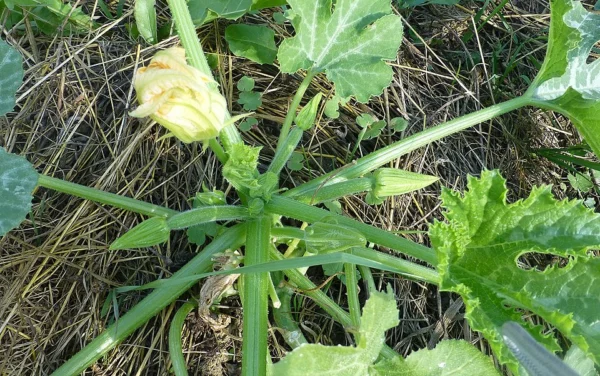
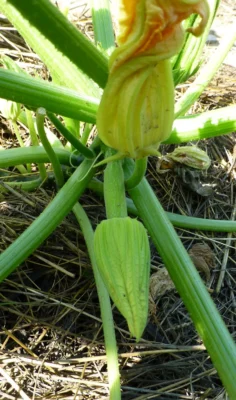
Courgettes form large lobed leaves on stout, often prickly stalks. Male flowers stand on a slender stem, while a female flower has a small developing courgette immediately behind it. Both can occur on the same plant.
Leaf markings vary by variety and can include natural pale or silvery areas. Compare new and old leaves before deciding every light patch is mildew. A dusty coating that spreads is different from a consistent varietal leaf pattern.
Photo: nociveglia from Appennino Emiliano, Italy, CC BY 2.0. Resized and optimised; cropped for display.
In warmer southern gardens, carefully hardened plants may go out in late May, but the forecast still matters. Temporary protection can help with a cool spell, while a late frost can damage unprotected tender growth.
In northern and exposed gardens, June planting is often the more sensible start. A well grown young transplant planted into warmth can overtake one that has struggled outdoors for weeks.
During a dull wet summer, keep expectations proportionate and check drainage, pollination and fruit condition. During a dry summer, focus on deep watering and mulch. The same planting date can produce very different results in different years.
Photo: George Chernilevsky, CC BY-SA 4.0. Resized and optimised; cropped for display. Adapted image under the same licence.
Young plants may initially produce mostly male flowers. Cold weather can also limit fruit set. Allow time for female flowers to develop, keep plants growing steadily and let insects reach the flowers.
Poor pollination or plant stress can cause fruitlets to fail. Remove rotting fruit, check water and light, and consider hand pollination when both flower types are open but insects are scarce.
Powdery mildew is common later in the season. Maintain root moisture and airflow, avoid crowding and remove badly affected unusable material. Choose an appropriately resistant variety where this repeatedly cuts the crop short.
Slugs and snails can seriously damage tender transplants. Inspect plants and nearby hiding places, keep spare young plants where practical and use suitable non-chemical protection.
Do not eat bitter fruit. Discard it and remove the affected plant, following RHS advice. Use reliable seed for the next sowing rather than saving seed from that plant.
Fresh seed is the simplest route to a reliable crop. A named F1 hybrid can be a useful choice for a particular habit or resistance, but its saved offspring will not reliably repeat the original plant.
Courgettes can cross with compatible members of their species. Serious seed saving therefore needs planned pollination and isolation, not simply keeping seed from a random oversized fruit. For an everyday kitchen crop, buying clearly labelled seed is straightforward.
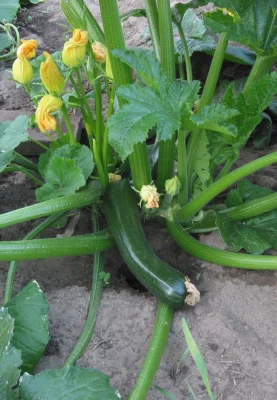
Diamant
A familiar hybrid producing long dark green fruits. Pick young for a regular kitchen crop and allow the plant enough room even though the individual fruits are narrow.
A labelled Diamant courgette plant with developing fruit.
Photo: Rasbak, CC BY-SA 3.0. Resized and optimised; cropped for display. Adapted image under the same licence.
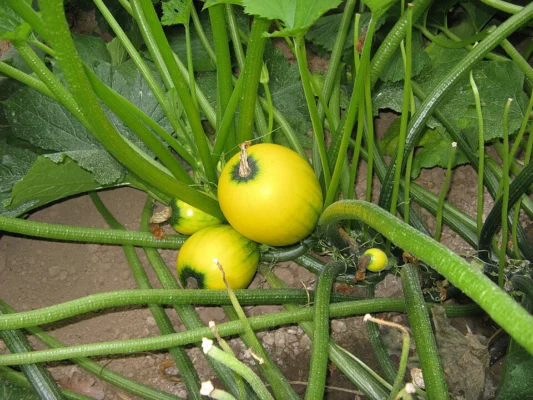
Round yellow courgettes
Round yellow varieties add a different shape and are useful for small stuffed dishes. Compare the packet’s suggested picking size rather than waiting for every fruit to reach marrow proportions.
Floridor, a round yellow courgette, growing on the plant.
Photo: Schlaghecken Josef, CC BY-SA 4.0. Resized and optimised; cropped for display. Adapted image under the same licence.
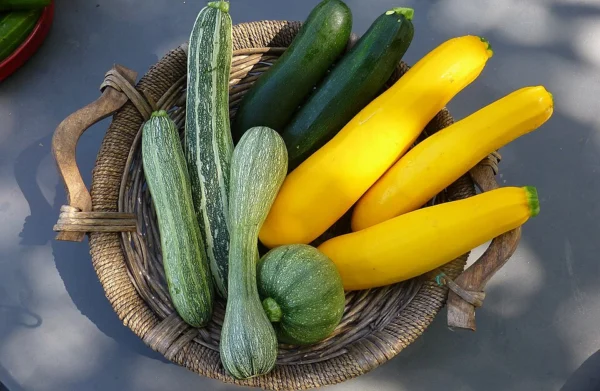
Mixed colours and stripes
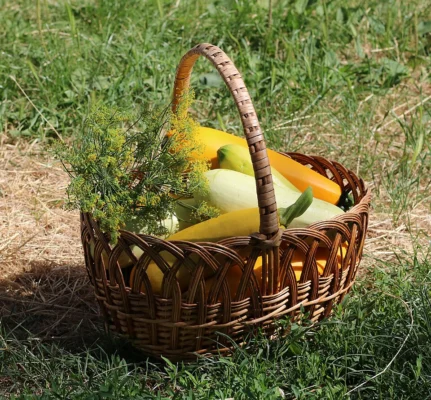
Green, striped and yellow choices bring variety to the harvest basket. Colour does not remove the need for space and regular picking, so choose only as many plants as you can use.
A harvest of long, round, green and yellow courgettes.
Photo: nociveglia from Appennino Emiliano, Italy, CC BY 2.0. Resized and optimised; cropped for display.
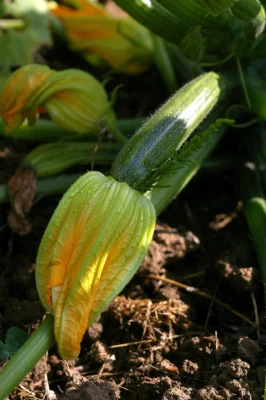
Compact container varieties
Look for a variety explicitly described for pots, such as Astia or Midnight. Compact refers to the plant habit; it still needs a substantial container, water and room for leaves.
Illustrative young courgette fruit; this plant is not identified as a container cultivar.
Photo: Meanos, Public domain. Resized and optimised; cropped for display.
Compare plant habit, fruit shape and any documented disease resistance. A compact bush variety suits a large pot, while a trailing selection needs a different space plan. Buy young plants with healthy roots and firm growth if you would rather skip the sowing stage.
Bees and other insects moving between flowers help pollination in ordinary courgette varieties. Keep a range of flowers around the vegetable plot and ensure covers are opened when pollinator access is needed.
If you harvest edible flowers, retain enough male and female flowers for the fruit crop. Inspect flowers before bringing them indoors and avoid unnecessary treatments while insects are visiting.
Published by Buy From Farmers Direct. Sources checked 6 October 2026. Growing references: RHS courgette growing guide; Garden Organic courgette and marrow; RHS courgette, marrow and squash problems; Voltz: Diamant courgette; D. T. Brown: Midnight courgette. The seasonal timeline uses the shared BFFD Growers Calendar record; adjust timings to your variety and local conditions.
One or two well cared for plants are a sensible starting point for a small household. Yield varies with the season, and frequent picking matters more than planting a crowded row.
Usually in late May or June, after local frost risk has passed and the soil has warmed. Harden plants off first and delay planting in cold or exposed gardens.
Yes. Choose a compact variety and a drained container at least 45cm wide for one plant. Check moisture frequently and feed appropriately once the compost’s initial nutrients run down.
Poor pollination or stress can stop a young fruit developing. Remove rotting fruit and check water, warmth, light and pollinator access before assuming the whole plant is diseased.
Pick long types while young, often around 10 to 12cm, and follow the variety guidance for round forms. Cut rather than pull, and inspect regularly because growth can be rapid.
No. Do not eat unusually bitter courgettes. Discard the fruit and remove the affected plant, following RHS advice.
Give each courgette space, steady moisture and regular picking. A small number of accessible plants can be far more useful than a large crop that gets away from you.
Explore more growing guides: Chilli Pepper, Comfrey, Coriander.
Want to get food independence, support your local grower, get better prices and shop more privately?
Local food isn’t just something you find. It’s something you protect. A free account helps keep local supply visible, supported, and resilient.

….it takes 30 seconds for food lovers and 5 minutes for suppliers
We built this for people who care where their food comes from. For people who want to remain food secure. For Farmers to get to the local people, who deserve a better income and to deliver a better price for you. For the environmentally conscious and the privacy-conscious. An account simply helps us make the map and supplier reach more useful to you, without changing how open it is. You’re always in control.


Find local food. Stay connected to it. Create a free account to support local producers and be part of a growing food network.


