Nectarines bring pink blossom and richly flavoured summer fruit to sunny gardens. Give early flowers and emerging leaves protection. Choose the variety, rootstock and trained shape together, especially for pots.
Smooth skinned peach relative
Self-fertile fruit tree
Sunny sheltered position
Protect early blossom
Prevent peach leaf curl
| Botanical name | Prunus persica var. nectarina |
| Family | Rosaceae |
| Plant type | Deciduous stone fruit tree |
| Relationship | A smooth skinned form of peach |
| Pollination | Self-fertile; one tree can crop |
| Flowering | Early spring, sometimes February under shelter |
| Flower protection | Blossom is vulnerable to frost |
| Winter hardiness | Dormant trees generally hardy in the UK |
| Best outdoor position | Warm south or south-west facing wall |
| Soil | Deep, fertile, moisture retentive and well drained |
| Bare-root planting | November to March in workable soil |
| Container planting | Autumn to spring preferred |
| Common rootstock | St Julien A is semi-vigorous |
| Fan width | Often 3.5–5m, depending on variety and rootstock |
| Compact choices | Genetically dwarf varieties suit pots |
| Minimum pot size | About 45cm wide and deep |
| Fruiting wood | Mainly shoots grown the previous year |
| Pruning season | Spring or summer in dry weather |
| Fruit thinning | Aim for roughly 15cm between retained fruits |
| Harvest window | July to September, varying with variety and season |
| Plant name | Crop type | Spacing |
Sow indoors
Plant outdoors
Harvest
Polytunnel | |||||||||||
|---|---|---|---|---|---|---|---|---|---|---|---|---|---|---|
| Jan | Feb | Mar | Apr | May | Jun | Jul | Aug | Sep | Oct | Nov | Dec | |||
| Nectarine | Orchard fruit | Single 400cm for a typical bush, In row 400cm, Row gap 450cm; allow 350–500cm wall width for fans and follow dwarf cultivar guidance | Plant outdoors, Polytunnel | Plant outdoors, Polytunnel | Plant outdoors, Polytunnel | Polytunnel | Polytunnel | No activity recorded | Harvest | Harvest | Harvest | No activity recorded | Plant outdoors, Polytunnel | Plant outdoors, Polytunnel |
Sow indoors: no months recorded. Plant outdoors: January, February, March, November, December. Harvest: July, August, September. Polytunnel: January, February, March, April, May, November, December.
The planting band shows the usual dormant season for nursery trees, not seed sowing. July to September is a possible harvest window rather than a guarantee. The November to May protected band refers to rain exclusion against peach leaf curl, with additional blossom frost protection when needed. A ventilated unheated greenhouse can house a potted tree; colder districts may benefit from protection during summer too.
Nectarine needs sun, shelter and attention around flowering. A fan against a warm wall makes protection easier.
Choose a compact variety for a patio pot. Root confinement alone does not make a vigorous tree a suitable miniature.
Photo: Ibrahim Echchaffani, CC BY-SA 4.0. Resized and optimised; cropped for display. Adapted image under the same licence.
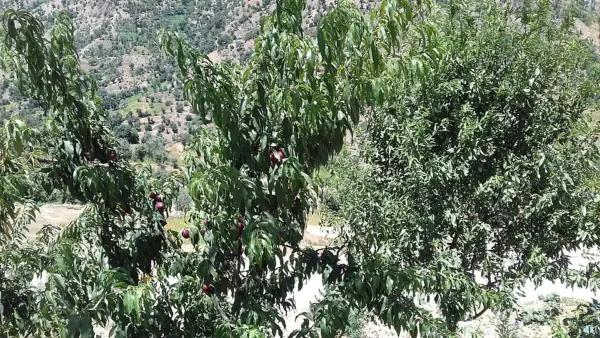
Choose a south or south-west facing wall, or a sheltered sunny position away from frost pockets. Free-standing trees are most practical in particularly favourable gardens.
Allow room for pruning and the mature canopy. A fan may need 3.5–5m of wall width at about 2m high.
Avoid compacted wet ground. Improve poor soil with well rotted organic matter before planting.
In colder regions, consider an unheated greenhouse or polytunnel, allowing ventilation and access to flowers and fruit.
Photo: Photo by David J. Stang, CC BY-SA 4.0. Resized and optimised; cropped for display. Adapted image under the same licence.
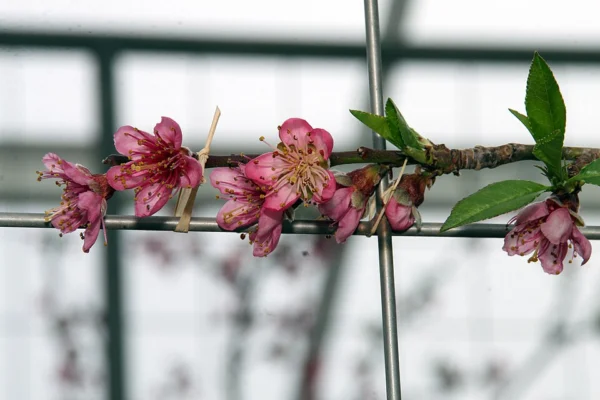
Buy a named tree with rootstock and expected size stated. A partly trained fan provides an established framework.
1.
Choose a compact container variety, a fan or a bush suited to the available space. Confirm the combination of variety and rootstock before ordering.
2.
Plant bare-root stock between November and March when soil is workable. Delay if it is frozen or waterlogged; keep waiting roots protected from drying.
3.
Water a potted tree before planting. Briefly soak dry bare roots, then prepare a hole wide enough to spread them naturally.
4.
For a fan, install secure training wires first. Position the trunk about 20–30cm from the wall, angled slightly towards it.
5.
Set the tree at its previous soil level, keeping the graft union above the ground. Backfill carefully and firm without compacting the soil heavily.
6.
Stake a free-standing tree while it establishes, or loosely tie a fan to its supports. Check ties regularly as stems thicken.
7.
Water thoroughly and mulch the surrounding soil, leaving a gap around the trunk. Keep competing weeds away from the young tree.
8.
For a dwarf tree, use a draining pot at least 45cm wide and deep with peat free loam based compost. Plan how you will shelter it during flowering.

Watering
Water newly planted trees during dry weather for their first couple of years. Wall-trained trees can sit in a rain shadow, so inspect the soil rather than assuming rainfall reached the roots.
Keep container compost evenly moist while fruit swells. Check pots even under winter rain shelters, but let surplus water drain and avoid cold saturated compost.

Feeding
An established tree in regularly mulched, fertile ground may need little extra feeding. Investigate weak growth or poor cropping before adding fertiliser indiscriminately.
Container trees need regular nutrition. Use a suitable fruit feed according to its label during active growth, commonly April to August; avoid feeding a dormant tree.

Pruning
Prune in dry spring or summer weather to reduce the risk of silver leaf and bacterial canker. Established bush trees are usually pruned after harvest; fans need work in spring and summer.
Most fruit grows on the previous season’s shoots. Renew older fruited wood gradually while retaining replacement shoots. Naturally dwarf varieties need relatively little cutting, so avoid routine hard pruning.

Winter care
The dormant tree normally tolerates British winters, but opening flowers need protection from frost. Support fleece clear of the blossom on cold nights and remove it during suitable daylight hours.
Exclude rain from emerging foliage to reduce peach leaf curl. Put a clear rainproof shelter over a fan from leaf fall in November until about mid-May, leaving its ends open. Ordinary fleece is not a rainproof cover.
Nectarines have long narrow leaves, pink blossom and smooth fruit skin. They are a form of peach, not a peach and plum cross. Flesh may be white or yellow, and stones may cling or separate readily.
The nursery label is the reliable guide to variety and eventual size. The photographs here show nectarine fruit and blossom; they are not evidence that every specimen belongs to a recommended cultivar.
Photo: jjron, CC BY-SA 3.0. Resized and optimised; cropped for display. Adapted image under the same licence.
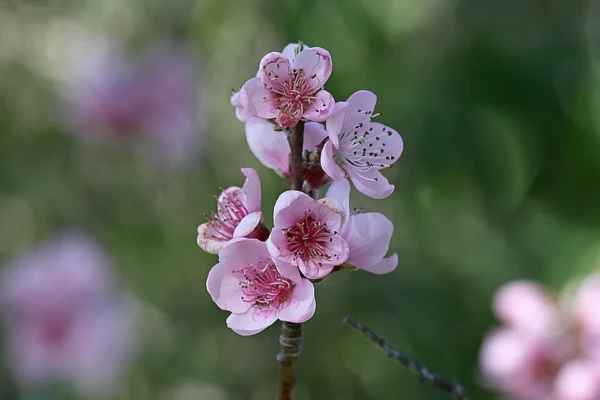
Although self-fertile, nectarines flower when insects may be scarce. Dab a soft brush gently into successive open flowers over several dry sunny days; hand pollinate trees under cover.
When fruitlets reach walnut size, remove surplus, damaged and awkwardly placed ones, aiming for about 15cm between fruits. Reduce the crop further on a young or weak tree.
Check ripening fruit frequently. Colour alone is insufficient: flesh near the stalk should soften, and a fruit cupped gently and lifted should release easily. Eat promptly for the best flavour.
Image from the BFFD media library.
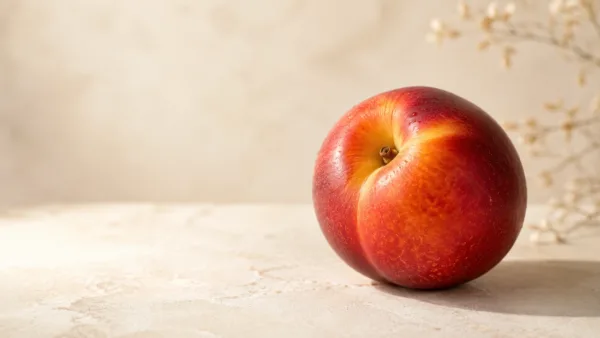
Peach leaf curl infects young growth in wet conditions. Plan rain exclusion before buds open next season. Keep an affected tree watered appropriately and avoid unnecessary stress.
Frost can damage flowers despite the tree itself being hardy. Protect blossom during cold nights and hand pollinate, particularly where insects cannot reach the flowers.
Brown rot can follow injury. Remove rotting and dried hanging fruits, keep the canopy accessible and avoid bruising or leaving damaged fruit touching healthy neighbours.
Check for aphids beneath young leaves. Small colonies may be managed by natural predators or gentle removal; inspect before treating and avoid spraying open blossom.
Cool shade, excessive crop load and irregular moisture can disrupt ripening. Thin sensibly, water consistently and reassess whether the site provides enough summer warmth.
A named grafted nursery tree offers a predictable starting point. Its variety supplies the fruit characteristics while the rootstock and cultivar together influence growth.
A stone-grown seedling may take years to fruit and will not reliably reproduce its parent. For a productive UK garden tree, choose a suitable nursery cultivar rather than relying on a supermarket fruit stone.
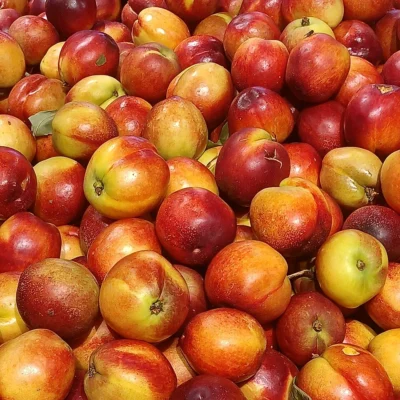
Lord Napier
A traditional white fleshed, freestone nectarine for a warm position. Give a normal vigorous form sufficient wall space and check the supplied rootstock.
Illustrative nectarines; the pictured fruit is not confirmed as Lord Napier.
Photo: Fumikas Sagisavas, CC0. Resized and optimised; cropped for display.

Nectarella
A genetically compact choice often sold for containers. Its naturally slow growth is useful on a patio, with protection during early flowering.
Illustrative smooth skinned nectarine fruit, not a confirmed Nectarella specimen.
Photo: CostaPPPR, CC BY-SA 4.0. Resized and optimised; cropped for display. Adapted image under the same licence.
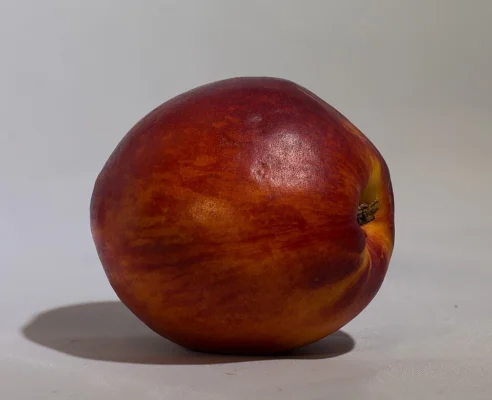
Garden Beauty
A naturally dwarf nectarine with pink blossom and yellow flesh. Select a substantial pot and allow for watering, feeding and occasional repotting.
Illustrative nectarine; this photograph is not identified as Garden Beauty.
Photo: Rhododendrites, CC BY-SA 4.0. Resized and optimised; cropped for display. Adapted image under the same licence.
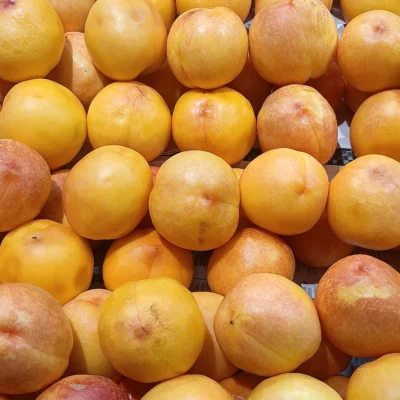
Pineapple
A traditional English yellow fleshed variety named for its tropical flavour. It remains a nectarine and needs a warm site and adequate space.
Illustrative yellow skinned nectarines, not confirmed Pineapple fruit.
Photo: Fumikas Sagisavas, CC0. Resized and optimised; cropped for display.
Check the cultivar, rootstock, eventual size and trained shape before buying. Allow room for the rain shelter as well as the mature tree.
Spring blossom can provide food for early visiting insects when weather allows. Keep rain shelters ventilated and open at the ends so pollinators can enter.
Protect ripening fruit only where needed. If using netting, keep it taut, secured and checked regularly so birds and other wildlife cannot become trapped.
Published by Buy From Farmers Direct. Growing guidance reviewed 6 October 2026. The seasonal timeline uses the shared BFFD Growers Calendar record; adjust timings to your variety and local conditions.
No. Nectarines are self-fertile, but their early flowers may still need help with pollen transfer, especially in a greenhouse or during cold weather.
Yes. Choose a genetically dwarf cultivar or nursery-recommended compact combination, and a well drained pot at least 45cm wide and deep. Water and feed regularly.
Keep emerging leaves dry with a clear rainproof shelter from November to about mid-May. Leave the ends open for ventilation. Fleece alone does not exclude rain.
Use dry spring or summer weather. Bush trees are usually pruned after fruiting, while fans need spring and summer attention. Avoid dormant winter pruning.
A dormant nectarine is generally hardy. An unheated greenhouse is useful for shelter, but flowers still need protection if temperatures fall below freezing. Avoid treating it like a tropical houseplant.
It is usually described as semi-vigorous. Naturally dwarf nectarine cultivars can remain small on it, so assess the cultivar and rootstock together rather than relying on the rootstock name alone.
Match your tree to a warm site, then focus on spring protection and steady summer care. Preserve healthy young shoots for next year’s crop.
Explore more growing guides: Apple (Dwarf), Apricot (Dwarf), Blueberry.
Want to get food independence, support your local grower, get better prices and shop more privately?
Local food isn’t just something you find. It’s something you protect. A free account helps keep local supply visible, supported, and resilient.

….it takes 30 seconds for food lovers and 5 minutes for suppliers
We built this for people who care where their food comes from. For people who want to remain food secure. For Farmers to get to the local people, who deserve a better income and to deliver a better price for you. For the environmentally conscious and the privacy-conscious. An account simply helps us make the map and supplier reach more useful to you, without changing how open it is. You’re always in control.


Find local food. Stay connected to it. Create a free account to support local producers and be part of a growing food network.


