Freshly picked peas are one of the pleasures of a summer vegetable patch. Choose shelling peas for the seeds inside, mangetout for flat edible pods, or sugarsnaps for juicy rounded pods eaten whole. All are forms of the edible garden pea, Pisum sativum. With suitable supports, steady moisture and several small sowings, you can spread the harvest across the season.
Sweet summer harvests
Shelling or edible pods
Sun and good drainage
Support climbing stems
Pick every few days
| Botanical name | Pisum sativum |
| Family | Fabaceae, the pea and bean family |
| Plant type | Annual vegetable |
| Main crop types | Shelling, mangetout and sugarsnap |
| Typical height | About 45cm to 1.8m, depending on variety |
| Climbing method | Clinging tendrils |
| Light | Full sun |
| Soil | Fertile, moist but well drained |
| Early protected sowing | February to March |
| Main outdoor sowing | March to June |
| Useful soil temperature | Around 10°C for outdoor sowing |
| Sowing depth | Usually about 5cm |
| Seed spacing | Around 7.5cm within rows |
| Space between row groups | Match the expected plant height |
| First early crop | Often around 12 weeks from sowing |
| Maincrop timing | Often around 14 to 16 weeks |
| Harvest season | June to October across suitable successions |
| Container size | At least 45cm wide for a small dwarf crop |
| Pollination | Mainly self pollinating |
| Separate shoot crop | Tender tips in about three to four weeks |
| Plant name | Crop type | Spacing |
Sow indoors
Plant outdoors
Harvest
Polytunnel | |||||||||||
|---|---|---|---|---|---|---|---|---|---|---|---|---|---|---|
| Jan | Feb | Mar | Apr | May | Jun | Jul | Aug | Sep | Oct | Nov | Dec | |||
| Peas | Legumes | Single 8cm, In row 8cm, Row gap 90cm | No activity recorded | Sow indoors, Polytunnel | Sow indoors, Plant outdoors, Polytunnel | Sow indoors, Plant outdoors | Sow indoors, Plant outdoors | Sow indoors, Plant outdoors, Harvest | Harvest | Harvest | Harvest | Harvest | No activity recorded | No activity recorded |
Sow indoors: February, March, April, May, June. Plant outdoors: March, April, May, June. Harvest: June, July, August, September, October. Polytunnel: February, March.
The calendar covers a spring and early summer pod crop: February and early March sowings start under cover; outdoor sowing follows when soil is workable and warm enough. Planting months apply to young transplants, while directly sown peas stay in place. June to October harvests require suitable varieties and successive batches, with the latest crops dependent on weather. The 8cm spacing rounds the usual 7.5cm advice; the 90cm row gap is an example for medium plants. Taller varieties need wider gaps between row groups, often equal to their height. Optional autumn sowing and indoor pea shoots are separate schedules.
Peas suit a sunny allotment, vegetable bed or raised bed where you can reach the pods easily. A few plants provide enjoyable snacks, but allow a worthwhile length of row if you want several family meals.
Mangetout and sugarsnaps are useful when you want more of the harvest to reach the plate, because the pods are eaten too. Dwarf varieties make support easier in small or windy gardens.
Image from the BFFD media library.
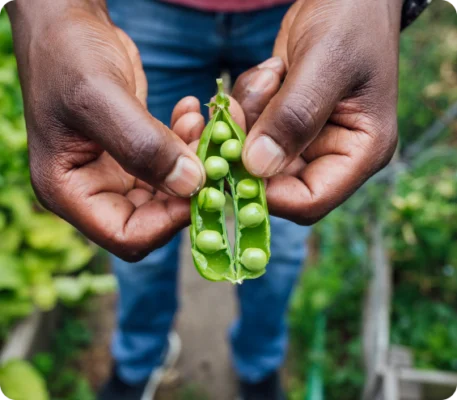
Choose a sheltered sunny place with soil that drains well. Seeds are liable to rot in cold saturated ground, so a later sowing often does better than one pushed into unsuitable conditions.
Prepare the bed ahead of time, removing weeds and improving poor soil with garden compost. Leave room beside the row for picking without standing on the root zone.
Put support in place early. Twiggy pea sticks suit short plants; tall varieties need strong posts, canes and suitable mesh that fine tendrils can grip. A single thick pole offers little purchase.
For a container crop, choose a dwarf variety and a pot at least 45cm wide with drainage. Use peat free multipurpose compost, add support and expect a modest harvest from the limited number of plants.
Image from the BFFD media library.
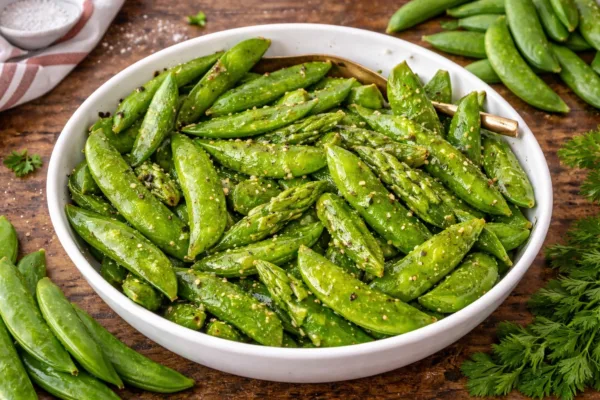
Check the packet for the height and harvest type before sowing. This determines both the support and how much space to leave between groups of rows.
1.
Choose an early variety, a later maincrop or an edible pod type. Sow manageable batches instead of using every seed on the same day.
2.
For an early start, fill deep modules or small pots with moist peat free compost. Sow about 5cm deep, with one seed per module or a few in a larger pot.
3.
Keep protected seedlings in good light and water carefully. A cool bright greenhouse suits them better than a warm dim room that produces weak stretched growth.
4.
For direct sowing, wait for workable soil approaching 10°C. Make a flat bottomed drill about 5cm deep and sow seeds roughly 7.5cm apart.
5.
Arrange short varieties in staggered rows within a broad drill. Taller plants can use a single or double row, with about 30cm between paired rows and a wider gap before the next group.
6.
Cover the seed, firm gently and water. Install suitable supports immediately so seedlings can catch hold as they grow.
7.
Harden off indoor raised plants before moving them outside. Plant intact rootballs at their previous depth, minimise disturbance and water them in.
8.
Protect new sowings from mice and vulnerable seedlings from pigeons or slugs. Keep any protective mesh securely fitted and make a dated label for each batch.

Watering
Water young plants while they establish, then concentrate on dry spells and the period from flowering to pod filling. Check soil beneath the surface rather than watering only because a day feels hot.
Container plants need closer attention because their roots cannot explore surrounding soil. Water the compost, allow excess to drain and avoid alternating drought with prolonged saturation.

Feeding
Peas in reasonably fertile garden soil usually need no extra fertiliser. They form a partnership with nitrogen fixing root bacteria, so heavy nitrogen feeding is unnecessary.
For container crops, feed from the first flowers with a suitable high potassium liquid fertiliser at the labelled rate. The RHS suggests about fortnightly feeding during cropping.

Pruning
Peas do not require routine pruning. Support stems and pick pods regularly; leaving a large number to become old and hard shortens the useful crop.
Grow a separate tray if you want plenty of pea shoots. Taking too many growing tips from plants intended for pods reduces their ability to build the main harvest.

Winter care
The usual spring sown crop finishes in autumn. Cut spent healthy stems at the base and compost them, leaving roots in the soil where practical. Clear away supports when they are no longer needed.
In mild districts, suitable hardy varieties can be autumn sown under protection for an earlier following crop. This is an optional method with its own packet instructions, not a reason to overwinter every pea variety outdoors.
Pea plants have soft climbing stems, rounded leaflets and slender curling tendrils. White flowers are common, although some edible cultivars have coloured flowers and purple or yellow pods.
Only grow known edible garden peas for food. Ornamental sweet peas, Lathyrus odoratus, are a different plant and are not a substitute. Shelling peas, mangetout and sugarsnaps also need different picking stages, even when their foliage looks similar.
Photo: Kolforn, CC BY-SA 4.0. Resized and optimised; cropped for display. Adapted image under the same licence.
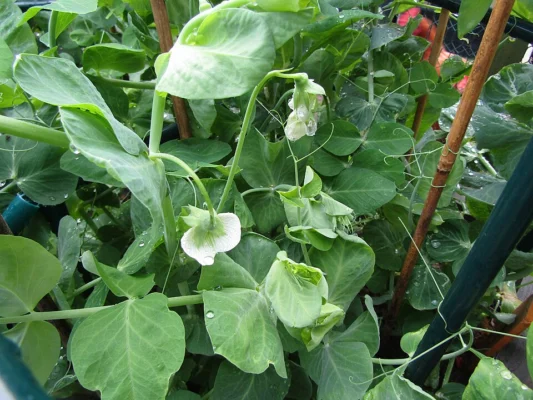
Cooler northern gardens often benefit from a protected start and patience over wet spring soil. In warmer districts, sow successively and watch for drying at flowering rather than expecting one batch to crop all summer.
Pick shelling peas when the seeds fill the pods but remain tender. Harvest mangetout while the pods are still flat; pick sugarsnaps when fleshy and juicy before they become tough. Support the stem with one hand while picking with the other.
Use peas soon after harvest for their best flavour. Shell ordinary garden peas and wash edible pods before cooking or eating fresh. Pick every few days, including the lower hidden pods, and freeze surplus rather than leaving it to harden on the plant.
Image from the BFFD media library.
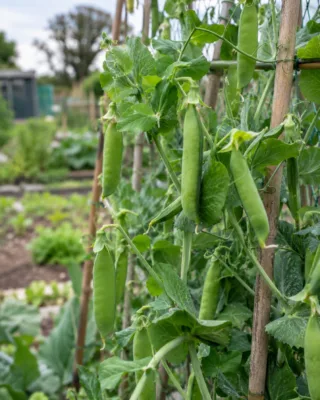
Cold wet soil can rot seed, while mice may remove it. Check a small part of the row before resowing. Use protected modules for the next batch and wait for better soil conditions outdoors.
Pigeons can tear foliage and slugs can damage seedlings. Inspect the crop, use securely fitted bird protection where needed and check vulnerable young plants after damp evenings.
Pea and bean weevils leave characteristic U shaped bites. Established plants usually tolerate this. Keep seedlings growing steadily rather than treating minor leaf damage as a failed crop.
Pea moth larvae can feed on developing seeds. Shell carefully and discard damaged peas. Fine insect mesh during flowering can exclude moths; peas mainly pollinate themselves, so pollinator exclusion need not prevent a crop.
Powdery mildew is common on stressed late crops. Improve airflow, keep roots supplied with water, remove badly affected spent material and consider varieties with resistance for future sowings.
Peas are normally raised from seed each season. You can use modules, pots or lengths of guttering for protected starts, but move plants on before their roots become a cramped mass.
To save seed, mark healthy plants of an open pollinated variety and leave their pods to turn brown and dry. Shell the fully mature seeds, dry further in an airy place and store labelled with variety and date. Keep seed crops separate from pods intended for tender eating.
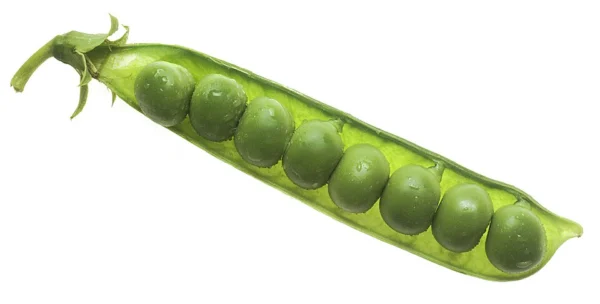
Kelvedon Wonder
A compact early shelling pea, around 60cm at picking. Useful for fresh eating and freezing, with short supports helping keep the pods off the soil.
An opened shelling pea pod; an illustration of the crop, not verified Kelvedon Wonder.
Photo: Renee Comet (photographer) AV Number: AV-9400-4164, Public domain. Resized and optimised; cropped for display.
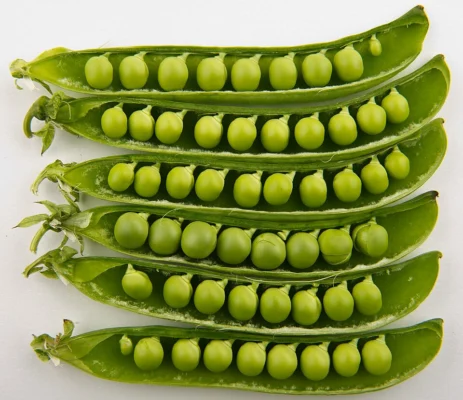
Hurst Green Shaft
A maincrop shelling pea reaching around 1m. It gives a progressive harvest of well filled pods, so provide support and keep checking as the lower pods swell.
Rows of opened pea pods; the photograph does not identify Hurst Green Shaft.
Photo: Bill Ebbesen, CC BY-SA 3.0. Resized and optimised; cropped for display. Adapted image under the same licence.
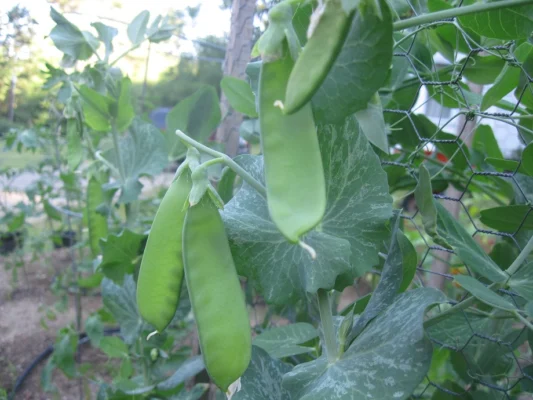
Oregon Sugar Pod
A mangetout reaching around 90cm to 1m. Pick its crisp edible pods while flat, and support the plants to make regular picking easier.
The source identifies these as Oregon Sugar Pod II, illustrating flat mangetout pods rather than proving the exact cultivar described.
Photo: Rob Duval, CC BY-SA 3.0. Resized and optimised; cropped for display. Adapted image under the same licence.
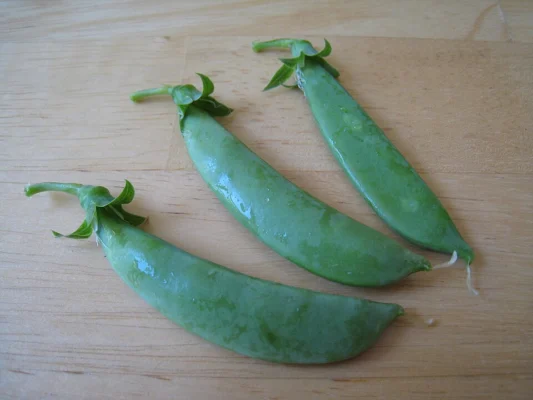
Sugar Ann
An early sugarsnap with fleshy edible pods and a compact habit. Harvest the whole pod while juicy, before the enclosed peas and pod become over mature.
Three sugarsnap pods illustrating the edible pod type; not a verified photograph of Sugar Ann.
Photo: Dvortygirl, CC BY-SA 3.0. Resized and optimised; cropped for display. Adapted image under the same licence.
Compare whether you will shell the peas or eat the pods, then check the expected height, sowing season and disease resistance. Make sure support and growing space are ready for the variety you choose.
Peas are mainly self pollinating, so an insect mesh cover used to prevent pea moth can remain in place during flowering. Keep it well supported, secure and checked regularly.
Garden birds and insects share an interest in the crop. Tolerate minor damage where plants remain productive and use targeted physical protection for vulnerable stages rather than routine spraying.
Published by Buy From Farmers Direct. Growing guidance reviewed 6 October 2026. The seasonal timeline uses the shared BFFD Growers Calendar record; adjust timings to your variety and local conditions.
Shelling peas are removed from their pods. Mangetout are eaten whole while flat, and sugarsnaps have fleshy edible pods picked before they become tough. All are edible garden pea types.
Start an early batch under cover in February or March. Sow outdoors mainly from March to June once the soil is workable and warm enough, adjusting to local weather and the variety.
Tall varieties do, and many shorter peas also benefit from twiggy sticks. Supports keep pods cleaner and easier to pick. Very compact varieties may manage without a substantial frame.
Yes, especially dwarf or quick edible pod varieties. Choose a container at least 45cm wide, add support and check watering regularly. A small pot cannot supply a large crop.
No. Ornamental sweet peas are different from edible garden peas. Grow labelled Pisum sativum varieties for the food crops described here.
They may have been picked too late. Check shelling pods regularly as they fill, harvest edible pod types at their own stage and use the crop promptly.
Choose the kind of pea you enjoy eating, provide support early and keep picking while pods are tender. A few well timed batches usually give more useful meals than one large sowing that matures together.
Explore more growing guides: Beans (Broad), Beans (French), Beans (Runner).
Want to get food independence, support your local grower, get better prices and shop more privately?
Local food isn’t just something you find. It’s something you protect. A free account helps keep local supply visible, supported, and resilient.

….it takes 30 seconds for food lovers and 5 minutes for suppliers
We built this for people who care where their food comes from. For people who want to remain food secure. For Farmers to get to the local people, who deserve a better income and to deliver a better price for you. For the environmentally conscious and the privacy-conscious. An account simply helps us make the map and supplier reach more useful to you, without changing how open it is. You’re always in control.


Find local food. Stay connected to it. Create a free account to support local producers and be part of a growing food network.


