Sweet peppers bring crisp green fruits and sweeter coloured harvests to a greenhouse or warm patio. This guide covers culinary sweet Capsicum annuum, including bell and pointed peppers; hot chillies have their own guide. The main challenge in Britain is providing enough warmth and growing time. Start with a suitable variety, raise sturdy young plants indoors and give the crop a bright protected home.
Sweet bell and pointed peppers
Warm protected growing
Suitable for large pots
Sow indoors in spring
Summer and autumn harvest
| Botanical name | Capsicum annuum, sweet cultivars |
| Family | Solanaceae |
| Crop type | Tender fruiting vegetable |
| UK treatment | Usually grown as an annual |
| Edible part | The sweet fleshy fruit |
| Fruit shapes | Blocky bells or long pointed peppers |
| Typical height | About 45 to 100cm, depending on variety |
| Position | Full sun and shelter |
| Best UK location | Greenhouse, polytunnel or bright conservatory |
| Soil | Fertile, moist but freely drained |
| Protected-crop sowing | Mid-February to early March indoors |
| Outdoor-crop sowing | Late March to early April; suitable varieties only |
| Sowing depth | About 2 to 5mm; follow the packet |
| Germination warmth | Usually 18 to 21°C or the packet recommendation |
| Typical germination time | Around two to three weeks |
| Planting season | May and June, when sufficiently warm |
| Plant spacing | 38 to 45cm; compact forms may need 30cm |
| Container size | At least 30cm wide for one plant |
| Harvest season | July to October under suitable protection |
| Main limitation | Cold nights and insufficient ripening time |
| Plant name | Crop type | Spacing |
Sow indoors
Plant outdoors
Harvest
Polytunnel | |||||||||||
|---|---|---|---|---|---|---|---|---|---|---|---|---|---|---|
| Jan | Feb | Mar | Apr | May | Jun | Jul | Aug | Sep | Oct | Nov | Dec | |||
| Pepper | Unusual & exotic | Single 40cm, In row 40cm, Row gap 45cm; compact varieties may suit 30cm spacing | No activity recorded | Sow indoors | Sow indoors | Sow indoors | Plant outdoors, Polytunnel | Plant outdoors, Polytunnel | Harvest, Polytunnel | Harvest, Polytunnel | Harvest, Polytunnel | Harvest, Polytunnel | No activity recorded | No activity recorded |
Sow indoors: February, March, April. Plant outdoors: May, June. Harvest: July, August, September, October. Polytunnel: May, June, July, August, September, October.
The February to April sowing band means indoors with warmth: sow protected crops in mid-February to early March, and suitable outdoor crops in late March to early April. May and June planting depends on temperature, not the calendar alone. The May to October polytunnel band describes the main protected growing period; provide extra warmth if nights are too cold. July to October harvesting is conditional on variety and warmth. Outdoor crops usually begin later, around August, and finish earlier.
A few plants suit a gardener who can check watering and greenhouse ventilation regularly. Buying healthy young plants in spring is useful if your home lacks enough light or a reliably warm place for seedlings.
A greenhouse makes results more dependable in much of Britain. Outdoors, choose an early cropping variety for a sheltered, sunny position and accept that cool summers may leave you with fewer fruits or mostly green peppers.
Photo: Thiamlanaa, CC BY-SA 4.0. Resized and optimised; cropped for display. Adapted image under the same licence.
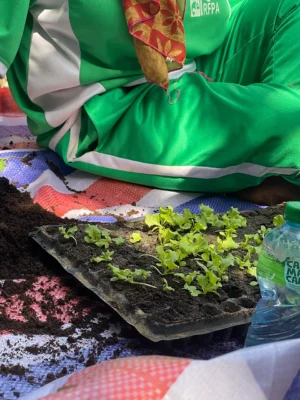
Give peppers your brightest growing space, without crowding them behind tall tomatoes or climbing crops. Allow access to the pots so you can water at root level and check the underside of leaves.
In a greenhouse or polytunnel, monitor both daytime heat and night temperatures. Growth is stronger above 15°C; established plants can tolerate nights around 12°C, but that is not a target for rapid growth.
Use fertile soil with good drainage, or one plant in a pot at least 30cm wide filled with peat free multipurpose compost. A larger container buffers moisture changes, although it still needs drainage holes.
Outdoor plants need a warm wall, sheltered patio or similarly favourable place. Acclimatise them gradually and wait until nights remain reliably above 12°C. Windy or shaded sites rarely justify the effort.
Photo: Azorbli, CC BY-SA 4.0. Resized and optimised; cropped for display. Adapted image under the same licence.
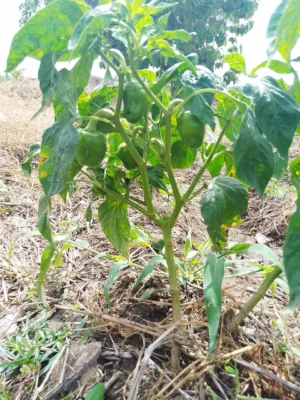
Choose clearly labelled sweet pepper seed or plants. Small or early ripening fruits are useful where summers are short; a packet photograph of a giant red pepper does not guarantee that it will ripen outdoors in your garden.
1.
Fill small pots or modules with moist seed compost. Sow thinly from mid-February to early March for protected growing, using later March or early April only for a suitable outdoor schedule.
2.
Cover seeds lightly, usually about 2 to 5mm deep. Label the variety and date so that different peppers remain identifiable throughout the season.
3.
Keep the compost warm, generally 18 to 21°C or as directed on the packet. A thermostatic propagator helps maintain warmth overnight; avoid overheating a closed tray in direct sunshine.
4.
Remove the cover after emergence and provide strong light with steady warmth. Keep compost lightly moist and turn windowsill pots regularly if seedlings lean towards the glass.
5.
When two true leaves have developed, move seedlings into individual 7.5 to 9cm pots. Handle by a leaf and retain the roots, then pot on again when the rootball fills its container.
6.
Prepare the final pot or bed and install a cane before roots spread widely. For an unheated greenhouse, mid-May may suit mild areas, but delay if cold nights persist; outdoors usually means late May or June.
7.
Plant at the previous depth and water in. Space most plants 38 to 45cm apart, adjusting to the variety, and tie the stem loosely to its support.
8.
Keep new plants protected and inspect regularly. Once flowering begins, maintain even moisture and start an appropriate high potassium feed for container plants, following its label.

Watering
Check pots frequently during hot weather. Water the compost thoroughly when needed and let surplus drain away, aiming for even moisture rather than repeated wilting followed by soaking.
Mulch plants growing in a bed to slow evaporation. Avoid leaving containers standing in water, and adjust watering as autumn temperatures fall and the plants use less.

Feeding
Container peppers benefit from a high potassium liquid feed once flowering starts; many products are used weekly, but the label determines the dilution and interval. Apply to moist compost.
Plants in well prepared fertile ground may need less feeding. Do not keep adding strong fertiliser to a stressed plant without checking root moisture, temperature and pests first.

Pruning
Keep fruiting branches supported with soft ties, as their weight can split stems. Pinching out is optional and may delay cropping, so it is usually unnecessary where the growing season is already short.
Pick with scissors or secateurs, supporting the fruit while cutting its stalk. Remove damaged or decaying material promptly and avoid tearing sound leaves away simply to expose fruits.

Winter care
Most UK gardeners finish the crop in autumn and start again the following spring. Harvest usable fruits before cold damages them; potted plants can move to a bright warm position to extend ripening.
Peppers are biologically perennial, but an unheated greenhouse is not a dependable winter home. Keeping a plant for another year needs suitable indoor conditions and pest monitoring, and is optional rather than part of this annual calendar.
Sweet pepper plants have simple pointed leaves and small pale flowers, followed by hollow fruits containing a central seed-bearing core. Bell varieties have broad lobed fruits; pointed varieties can look rather like large chillies.
Shape and colour alone do not establish sweetness. Keep the packet or plant label, especially when growing several Capsicum varieties. Black pepper, the climbing plant grown for peppercorns, is a different crop altogether.
Photo: Bekhzod.kh, CC BY-SA 3.0. Resized and optimised; cropped for display. Adapted image under the same licence.
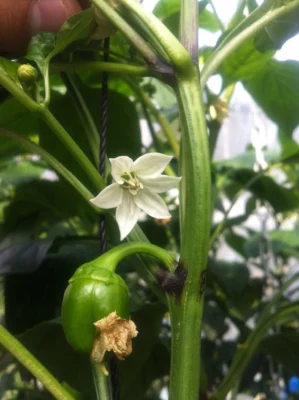
Protection helps trap useful warmth in a British summer, but it also needs management. Open vents before the greenhouse becomes excessively hot; temperatures above about 30°C can interfere with fruiting.
Northern, exposed and cooler gardens benefit particularly from a greenhouse and early varieties. Strong young plants often make better use of a short season than very early seedlings that have spent weeks in poor light.
In late summer, decide whether you want more green peppers or fewer fully coloured ones. Green fruits are usable once well developed; leaving every fruit to colour can slow further cropping. Cool autumn weather eventually ends production.
Image from the BFFD media library.
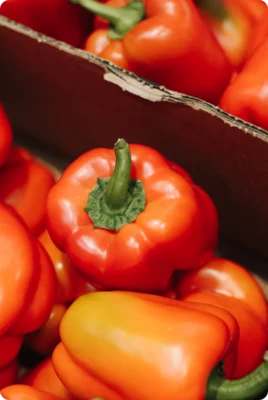
Cold, excessive heat and dry roots can interrupt fruit set. Check overnight and daytime temperatures and restore steady watering. Peppers are self-fertile, so another variety is not needed; a gentle tap of the support can help move pollen in still conditions.
Blossom end rot is a physiological problem linked to calcium reaching the developing fruit, often when water supply fluctuates. Improve watering consistency and avoid waterlogging. It is not an infectious disease, and adding more feed without diagnosis may make matters worse.
Check for aphids around new growth. Wipe off small colonies or gently dislodge them, then inspect again. Encourage natural predators and consider a suitable biological control in a greenhouse if the problem persists.
Glasshouse red spider mite thrives in hot dry conditions. Inspect leaf undersides early, improve the growing environment and use an appropriate predatory mite if needed. Avoid allowing the crop to become severely drought stressed.
Botrytis can develop where dead petals, wounds and damp foliage remain in still air. Remove affected material, space plants sensibly and ventilate. Water the root area without leaving the canopy wet into a cool night.
Seed is the usual method. Fresh seed from a reliable supplier makes the variety and sowing schedule clear; young nursery plants are a practical alternative when you only want two or three.
For seed saving, use a suitable open pollinated variety and prevent unwanted crossing with other peppers or chillies by isolating flowers. Collect mature seed from fully ripe fruit and dry it well. Seed from F1 plants will not reliably reproduce the parent variety.
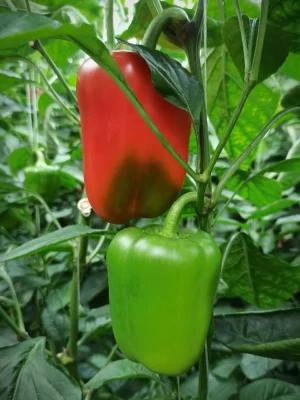
California Wonder
A familiar bell pepper with blocky fruits that change from green to red. It suits gardeners who want a classic stuffing or roasting pepper and can offer warm protected conditions. Allow enough time for red colour to develop.
Illustrative red and green bell peppers; this photograph is not verified as California Wonder.
Photo: Juan Carlos Fonseca Mata, CC BY-SA 4.0. Resized and optimised; cropped for display. Adapted image under the same licence.
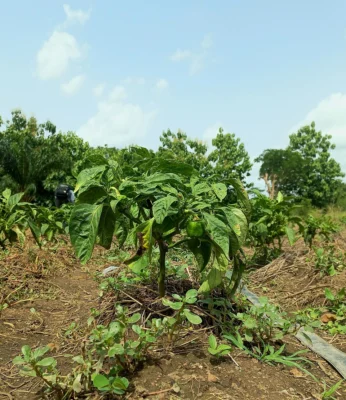
Redskin F1
A compact branching sweet pepper useful in containers. Its blocky fruits are green before becoming red. A manageable plant is still a fruiting crop with regular watering and support needs, especially once several peppers develop together.
Illustrative bell pepper plant; cultivar identity is not verified as Redskin.
Photo: Colesman25, CC BY-SA 4.0. Resized and optimised; cropped for display. Adapted image under the same licence.
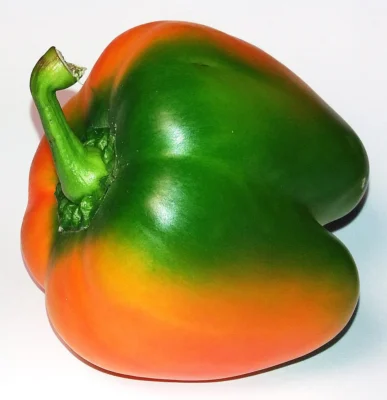
Mohawk F1
A dwarf bell pepper suited to patio containers and protected pots. The RHS describes fruits ripening from dark green to bright yellow. Give it a sunny sheltered position and bring its pot under cover when cool weather threatens the crop.
Illustrative orange and green bell pepper; this photograph is not verified as Mohawk.
Photo: Tiia Monto, CC BY-SA 4.0. Resized and optimised; cropped for display. Tiia Monto
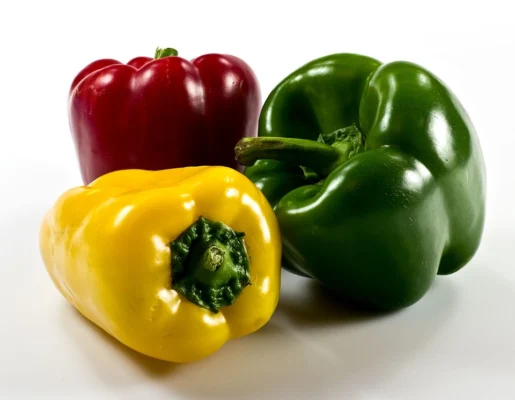
Corno di Toro Rosso
A long pointed sweet pepper whose fruits ripen from green to red. The thin skin and crisp flesh make it useful raw or cooked. Support the fruiting branches and favour greenhouse growing where late summer warmth is uncertain.
Illustrative bell peppers showing colour variation; these do not depict the pointed Corno di Toro Rosso variety.
Photo: Nikodem Nijaki, CC BY-SA 3.0. Resized and optimised; cropped for display. Adapted image under the same licence.
Compare sweetness, fruit size, plant height and cropping time before buying. A compact early variety is often more useful in a small protected space than a late giant fruit. Buy labelled culinary seed or plants and keep the identification with them.
Pepper flowers can self-fertilise, while visiting insects also move pollen. Ventilation allows beneficial insects into a greenhouse, although flowers intended for seed saving need appropriate isolation.
Grow other flowering plants around the vegetable area to support predators such as hoverflies. Inspect the crop before treating it, and avoid unnecessary broad insecticide use where natural enemies are already present.
Published by Buy From Farmers Direct. Growing guidance reviewed 6 October 2026. The seasonal timeline uses the shared BFFD Growers Calendar record; adjust timings to your variety and local conditions.
They are closely related, and many belong to Capsicum annuum, but this guide is for sweet culinary varieties. A long pointed fruit can be sweet or hot, so rely on its label rather than its shape.
Yes, in a very warm sheltered place with a suitable early variety, but results are less reliable than under cover. Wait for frost to pass and nights to remain above about 12°C. Expect a later, shorter harvest.
No. Well developed green fruits can be harvested and used. Leaving fruit to mature usually makes it sweeter, but its final colour depends on the variety and is not always red.
Usually it is optional. Pinching can encourage branching but delay fruiting, which is a disadvantage in a short season. Keep an unpinched plant supported and follow specific advice for the variety you buy.
Check the compost temperature at night as well as during the day, and allow roughly two to three weeks. Cold, saturated compost or an overheated closed propagator can all cause failure. Follow the packet’s temperature recommendation.
It may germinate, but the parent variety, hybrid status and suitability for your garden are uncertain. For predictable results, start with labelled seed. When saving your own, isolate flowers and use an open pollinated variety.
Give sweet peppers a warm start and a bright, well managed growing space. Steady watering, simple supports and timely picking make more difference than trying to force a late crop through cold autumn nights.
Explore more growing guides: Aubergine, Chilli Pepper, Cucumber.
Want to get food independence, support your local grower, get better prices and shop more privately?
Local food isn’t just something you find. It’s something you protect. A free account helps keep local supply visible, supported, and resilient.

….it takes 30 seconds for food lovers and 5 minutes for suppliers
We built this for people who care where their food comes from. For people who want to remain food secure. For Farmers to get to the local people, who deserve a better income and to deliver a better price for you. For the environmentally conscious and the privacy-conscious. An account simply helps us make the map and supplier reach more useful to you, without changing how open it is. You’re always in control.


Find local food. Stay connected to it. Create a free account to support local producers and be part of a growing food network.


