Pumpkins provide colourful autumn fruit for cooking, carving or showing. Give your chosen variety room, steady moisture and a frost-free season. Careful harvesting and curing help a mature crop store well.
Tender annual crop
Warm indoor start
Allow plenty of spreading room
Harvest before frost
Cure sound fruit for storage
| Botanical group | Pumpkin cultivars, mainly Cucurbita pepo and Cucurbita maxima |
| Family | Cucurbitaceae |
| Plant type | Tender annual, usually trailing |
| Crop category | A type of winter squash |
| Position | Sunny and sheltered from cold winds |
| Soil | Fertile, moisture retentive and well drained |
| Indoor sowing | Mid-April to May |
| Germination warmth | Approximately 18–21°C |
| Indoor sowing depth | About 1–1.5cm |
| Outdoor sowing | Late May or early June after frost, in warm soil |
| Planting out | Late May or June after hardening off |
| Bush spacing | At least 90cm, following the variety guidance |
| Trailing spacing | At least 1.5m; vigorous giants need much more |
| Container option | Compact varieties in a large draining pot |
| Pollination | Bees transfer pollen between male and female flowers |
| Usual main harvest | September and October, before frost |
| Harvesting cut | Leave around 10cm of stalk where possible |
| Curing | About 7–10 days in suitable dry, sunny, frost-free conditions |
| Storage temperature | About 10–15°C with ventilation |
| Keeping quality | Variety and maturity determine storage life |
| Plant name | Crop type | Spacing |
Sow indoors
Plant outdoors
Harvest
Polytunnel | |||||||||||
|---|---|---|---|---|---|---|---|---|---|---|---|---|---|---|
| Jan | Feb | Mar | Apr | May | Jun | Jul | Aug | Sep | Oct | Nov | Dec | |||
| Pumpkin | Cucurbits | Single 150cm for trailing plants, In row 150cm, Row gap 200cm; bush types need at least 90cm and giant varieties require much more space | No activity recorded | No activity recorded | No activity recorded | Sow indoors, Polytunnel | Sow indoors, Plant outdoors, Polytunnel | Sow indoors, Plant outdoors | No activity recorded | No activity recorded | Harvest, Polytunnel | Harvest, Polytunnel | No activity recorded | No activity recorded |
Sow indoors: April, May, June. Plant outdoors: May, June. Harvest: September, October. Polytunnel: April, May, September, October.
April and May sowing means a warm indoor start; late May or early June direct sowing requires warm soil after the last frost. Plant out only after acclimatisation and suitable weather. The September to October harvest band depends on variety and season. The protected band covers spring seed raising and optional autumn curing; the summer crop is normally outdoors, with plenty of room.
Allow room for broad leaves and spreading stems. Smaller fruit does not always mean a compact plant; check the growth habit.
For a patio, select a compact variety and pot at least 45cm wide. Check watering frequently and allow foliage space.
Image from the BFFD media library.
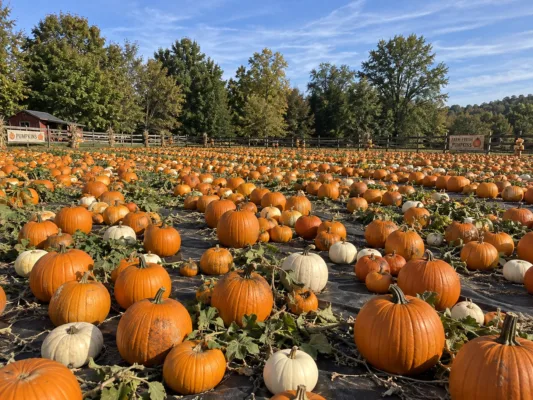
Choose sun and shelter from cold winds. Cold soil and heavy shade hinder ripening.
Improve soil with mature compost. It should hold moisture without remaining waterlogged.
Plan trailing shoots around neighbouring crops, leaving access for watering and fruit checks.
A small-fruited variety can use a strong support if suitable for its habit. Support every heavy fruit securely; ordinary flimsy pea netting is not a reliable pumpkin structure.
Photo: Enoch Lau, CC BY-SA 3.0. Resized and optimised; cropped for display. Adapted image under the same licence.
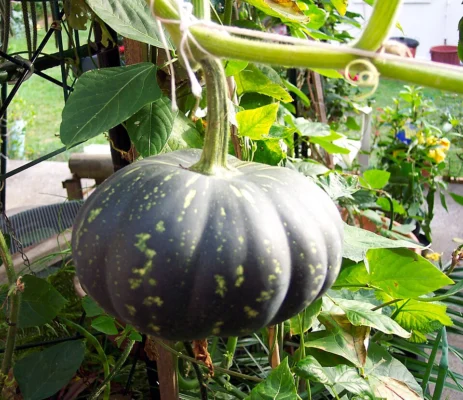
Culinary pumpkins, carving types and competition giants have different space and handling needs. Choose before buying seed.
1.
Sow indoors from mid-April to May, using individual small pots filled with peat free compost. This gives each seedling an undisturbed rootball.
2.
Insert one seed on its edge about 1–1.5cm deep. Moisten the compost and keep it around 18–21°C for germination.
3.
Once seedlings appear, give them bright light and remove any propagator cover. Water carefully without leaving the compost saturated.
4.
Pot on when roots fill the container, especially if outdoor planting must wait.
5.
Prepare the final site and check the packet’s spacing. Allow at least 90cm for bush plants or 1.5m for trailing types, with extra room for vigorous varieties.
6.
Harden plants off gradually over roughly a fortnight. Delay planting if frost remains possible, usually waiting until late May or June.
7.
Plant at the previous compost level without disturbing the roots. Water well, mulch around the planting area and protect young growth from slugs and snails.
8.
For direct sowing in warm soil after frost, place a few seeds at each prepared station and retain the strongest seedling. This later start is less dependable in cooler districts.

Watering
Water deeply at the root area during dry spells, especially while fruit grows. A marker beside the original stem helps locate the roots once leaves cover the ground.
Check pots often in hot weather. Avoid drought followed by flooding, and keep mulch clear of the stem base.

Feeding
Well prepared garden soil may supply enough nutrients for a normal crop. Good watering and adequate space are more useful than applying extra feed indiscriminately.
Container crops and plants grown for particularly large fruit may need feeding once fruit swells. Use an appropriate potassium-rich liquid fertiliser at its labelled rate and interval.

Pruning
Guide wandering stems while they are young and flexible. Do not remove large quantities of healthy foliage, which supplies the developing fruit with sugars.
A competition giant may be restricted to one selected fruit, but ordinary culinary crops need not follow that regime. Late in the season, concentrate on established fruit rather than expecting every new set to mature.

Winter care
Pumpkin vines are annual and will not survive frost. Clear the finished crop after harvesting, and remove decaying material from around sound stored fruit.
Store only mature, sound whole pumpkins after curing. Use a dry ventilated place around 10–15°C, keeping fruit apart and checking regularly. Cut, carved, damaged or frosted pumpkins are not suitable for long storage.
Pumpkin plants have coarse leaves, spreading or climbing stems, tendrils and large yellow flowers. A female flower has a tiny fruit behind it; a male flower is carried on a slimmer stalk.
Pumpkin is a culinary name covering several Cucurbita types, not a single botanical species. Choose seed sold for the intended edible crop; decorative gourds should not automatically be treated as cooking pumpkins. Discard unusually bitter fruit and remove the affected plant. Do not try to make it edible by cooking, or save its seed.
Photo: Lollykaps, CC BY-SA 4.0. Resized and optimised; cropped for display. Adapted image under the same licence.
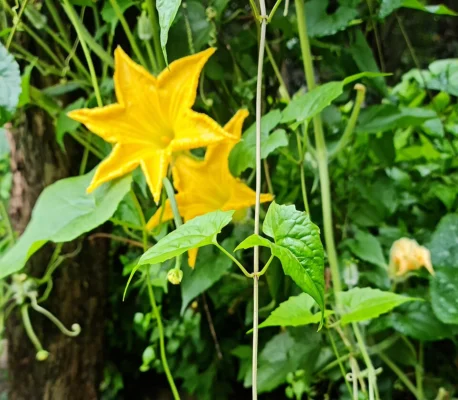
Bees usually provide pollination. If flowers are open but fruit repeatedly fails, transfer pollen from a fresh male flower to the centre of a receptive female flower, preferably in the morning.
Rest swelling fruit on a tile or board to reduce contact with damp soil. Harvest when it has reached the variety’s mature colour and the skin has hardened, before frost can damage it.
Cut with a long stalk, around 10cm where practical, and carry the fruit underneath rather than by that stalk. Cure for roughly a week to ten days in sun or a dry greenhouse, ventilating and protecting from frost and wet weather.
Image from the BFFD media library.
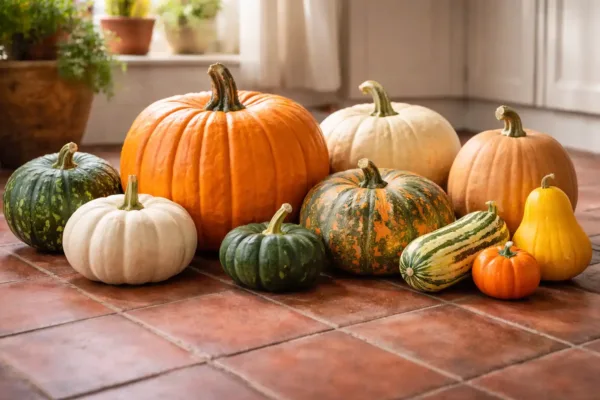
Inspect for slug and snail damage, cold exposure and excessively wet compost. Plant only after suitable weather arrives and check vulnerable seedlings frequently.
Poor pollination or unsuitable weather may be responsible. Male flowers alone cannot form pumpkins; give insects access or hand pollinate suitable open flowers.
Powdery mildew often appears later in summer. Avoid drought stress and crowding, maintain airflow and preserve healthy foliage needed to finish the crop.
Lift sound fruit onto a dry tile or board without twisting its stalk. Remove badly affected fruit and check moisture, ventilation and physical damage.
Immaturity, injury, frost or damp storage can lead to decay. Inspect frequently and remove affected fruit promptly. Curing cannot turn a rotten or badly immature pumpkin into a sound storage crop.
Start fresh plants from seed each spring, or buy young plants for a smaller planting. Choose a reliable named variety suited to your space and intended use.
Saved seed can cross with compatible pumpkins and squashes, particularly within the same species. Controlled pollination is needed to retain a variety; F1 seed will not reliably reproduce its parent crop.
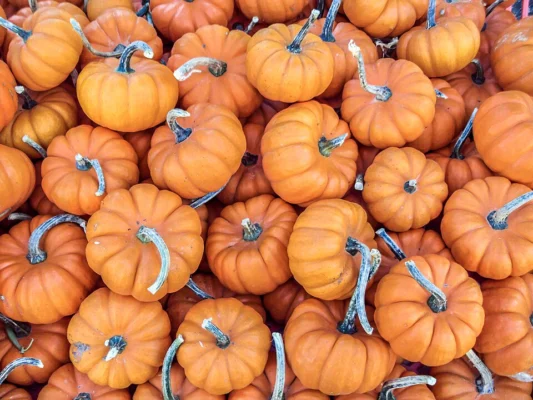
Jack Be Little
A miniature pumpkin producing small ribbed orange fruits. It is useful for individual portions or decoration, but its trailing stems still need room.
Illustrative miniature pumpkins; the source does not confirm Jack Be Little.
Photo: Drilnoth, Public domain. Resized and optimised; cropped for display.
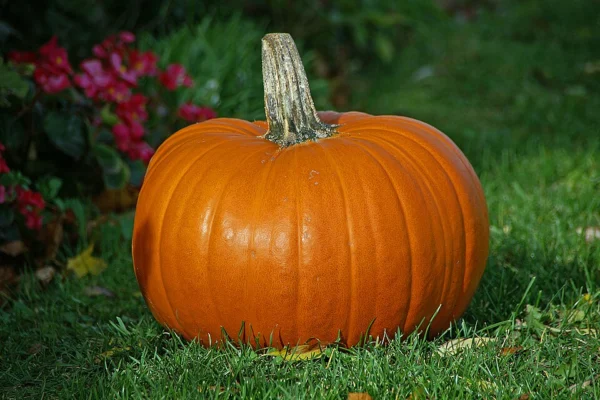
Jack O’Lantern
A familiar orange carving type that also has kitchen uses. Choose it when a recognisable Halloween pumpkin matters more than a giant competition entry.
Illustrative orange pumpkin, not a confirmed Jack O’Lantern specimen.
Photo: Fredde 99, CC BY-SA 3.0. Resized and optimised; cropped for display. Adapted image under the same licence.
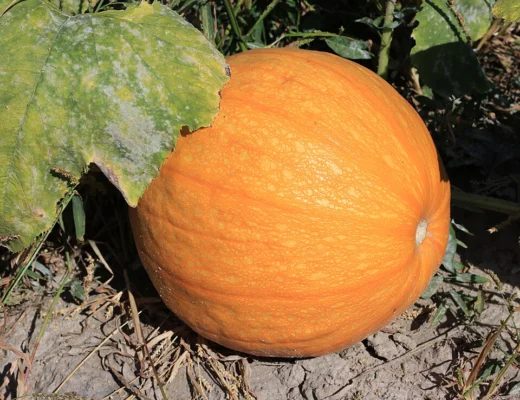
Small Sugar
A smaller culinary pumpkin valued for sweet flesh. Check the supplier’s growth habit and spacing rather than treating the name as a promise of a tiny plant.
Illustrative pumpkin growing on its plant, not confirmed Small Sugar.
Photo: George Chernilevsky, Public domain. Resized and optimised; cropped for display.
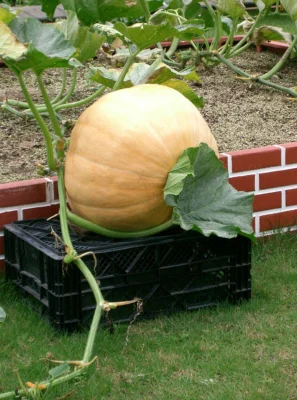
Atlantic Giant
A specialist choice for growing very large fruit. It demands substantially more room and attention than ordinary pumpkins, plus a realistic plan for moving the harvest.
Atlantic Giant, identified in the image source.
Photo: KENPEI, CC BY-SA 3.0. Resized and optimised; cropped for display. Adapted image under the same licence.
Compare plant spread, days to maturity and fruit size. For cooking and storage, a manageable mature crop is often more useful than the largest possible fruit.
Pumpkin flowers attract bees, which help the crop set. Keep flowers accessible and avoid unnecessary spraying while they are open.
Encourage natural predators through varied planting. Check beneath boards and around seedlings so slug protection can be targeted.
Published by Buy From Farmers Direct. Growing guidance reviewed 6 October 2026. The seasonal timeline uses the shared BFFD Growers Calendar record; adjust timings to your variety and local conditions.
Usually from mid-April to May indoors with warmth. Direct sowing is possible in warm soil from late May or early June after frost, but gives a shorter season.
Choose a compact variety and a container at least 45cm wide with good drainage. Allow room for foliage and check water frequently.
Look for the variety’s mature colour, a hardened skin and a maturing stalk. Keep fruit on the plant as long as conditions allow, but harvest before frost.
It is a short period of warm, dry, protected conditions after harvest that helps the rind harden. Start with mature sound fruit; curing is not a repair for rot.
It varies. Properly mature, cured storage varieties may keep for several months, sometimes up to six under ideal conditions. Inspect regularly rather than relying on a fixed date.
That approach is mainly for a giant-fruit project. Ordinary varieties can carry several suitable fruits; the right number depends on vigour, fruit size and remaining ripening time.
Start with warmth, give the vines space and harvest before frost. Careful handling, curing and sensible storage let a sound autumn crop last beyond the growing season.
Explore more growing guides: Courgette, Cucumber, Beans (French).
Want to get food independence, support your local grower, get better prices and shop more privately?
Local food isn’t just something you find. It’s something you protect. A free account helps keep local supply visible, supported, and resilient.

….it takes 30 seconds for food lovers and 5 minutes for suppliers
We built this for people who care where their food comes from. For people who want to remain food secure. For Farmers to get to the local people, who deserve a better income and to deliver a better price for you. For the environmentally conscious and the privacy-conscious. An account simply helps us make the map and supplier reach more useful to you, without changing how open it is. You’re always in control.


Find local food. Stay connected to it. Create a free account to support local producers and be part of a growing food network.


