Raspberries offer generous picking from a permanent row or, with compact varieties, a patio. Know whether your plants fruit in summer or autumn: this determines which canes to keep and which to remove.
Hardy perennial fruit
Summer or autumn cropping
Self-fertile
Support most varieties
Keep the correct young canes
| Botanical name | Rubus idaeus and cultivated raspberry varieties |
| Family | Rosaceae |
| Plant type | Deciduous perennial with renewing canes |
| Best position | Sunny and sheltered |
| Light shade | Tolerated, usually with a smaller crop |
| Soil | Moisture retentive but freely drained |
| Preferred pH | Slightly acidic, around 6–6.7 |
| Bare-root planting | Normally November to March |
| Plant spacing | 40–60cm, according to variety |
| Row spacing | 1.5–2m |
| Planting depth | Original soil mark; upper roots within about 5cm of surface |
| Summer-bearing height | Often around 1.8m |
| Autumn-bearing height | Commonly around 1.2–1.5m |
| Pollination | Self-fertile; insect visits help fruit set |
| Summer crop | Previous season’s canes |
| Autumn crop | Current season’s canes |
| Combined picking season | Approximately June to October across varieties |
| Compact pot size | At least 40cm wide and 30cm deep |
| Summer pruning | Remove fruited canes after harvest |
| Autumn pruning | For one autumn crop, cut all canes down in February |
| Plant name | Crop type | Spacing |
Sow indoors
Plant outdoors
Harvest
Polytunnel | |||||||||||
|---|---|---|---|---|---|---|---|---|---|---|---|---|---|---|
| Jan | Feb | Mar | Apr | May | Jun | Jul | Aug | Sep | Oct | Nov | Dec | |||
| Raspberry | Soft fruit | Single 50cm, In row 50cm, Row gap 180cm; adjust within 40–60cm between plants and 150–200cm between rows for the variety | Plant outdoors | Plant outdoors | Plant outdoors | No activity recorded | No activity recorded | Harvest | Harvest | Harvest | Harvest | Harvest | Plant outdoors | Plant outdoors |
Sow indoors: no months recorded. Plant outdoors: January, February, March, November, December. Harvest: June, July, August, September, October. Polytunnel: no months recorded.
The planting band shows the usual dormant bare-root season, November to March, avoiding frozen or saturated ground. Container-grown plants have a wider planting window with suitable aftercare. June to October harvest combines early and late summer varieties with autumn types; one variety does not normally crop throughout. No seed-sowing or protected-growing band is needed for an ordinary outdoor planting of named canes.
A permanent row suits a sunny boundary, with access on both sides for pruning and picking. Control new suckers.
For a patio, choose a compact variety and generous pot. Tall raspberries are harder to support and renew in containers.
Photo: Krzysztof Ziarnek, Kenraiz, CC BY-SA 4.0. Resized and optimised; cropped for display. Adapted image under the same licence.
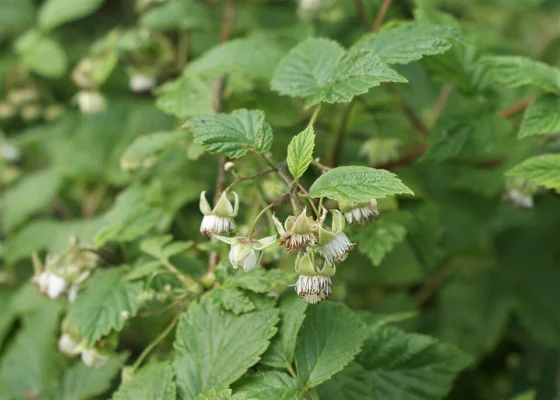
Choose shelter from strong winds, which can damage fruiting branches. Leave enough open space for light and air to reach the canes.
Avoid winter waterlogging and shallow chalky ground. A properly drained raised bed can help where the existing soil is unsuitable.
Use a fresh area when replacing an old raspberry bed, particularly after unexplained decline. New plants can inherit disease problems from an old site.
Keep the root zone free of competing weeds. Hand weeding and surface mulch are gentler than deep hoeing around the shallow roots.
Image from the BFFD media library.

Buy clearly labelled, healthy plants from a reputable fruit nursery, preferably certified virus-free. Keep summer and autumn varieties labelled separately from the start.
1.
Plan the row and fit sturdy posts and wires before roots fill the ground. Taller summer varieties especially benefit from a permanent support.
2.
Plant dormant bare-root canes from late autumn to early spring when the ground is workable. Keep their roots moist while preparing the holes.
3.
Remove perennial weeds. On poor soil, mix mature garden compost into the excavated soil; good existing soil does not need an excessively rich planting pocket.
4.
Allow roughly 40–60cm between plants and 1.5–2m between rows, adjusting to the variety and your picking access.
5.
Spread roots naturally and use the old soil mark to set the depth. Do not bury the crown deeply: the upper roots should be within about 5cm of the surface.
6.
Firm gently, water thoroughly and mulch the surrounding soil. Keep mulch away from direct contact with the stems.
7.
Ordinary newly planted dormant canes are usually shortened to around 25cm. Do not cut back summer raspberries sold as prepared long canes, which carry the first season’s crop; follow their supplier’s instructions.
8.
For a compact container variety, use a draining pot at least 40cm wide and 30cm deep, with peat free compost suitable for lasting fruit planting. Position securely and label the pruning type.

Watering
Water during dry spells, particularly while new plants establish and berries swell. A steady supply supports fruit size without keeping the roots saturated.
Containers need more frequent checks than garden rows. Water thoroughly when needed and keep drainage holes clear.

Feeding
Refresh the mulch in spring to conserve moisture and support the soil. Keep the stems clear and avoid alkaline mushroom compost.
Use an appropriate fruit fertiliser where growth or soil conditions justify it, following the label. Container plants need a regular feeding plan as their limited compost loses nutrients.

Pruning
After summer varieties finish cropping, cut their old fruited canes at ground level. Keep the strongest new unfruited canes for next year, remove surplus weak growth and tie the retained stems separately along the support.
For a straightforward autumn crop, cut every cane of autumn varieties to ground level in February. New spring growth fruits later that year. This treatment is unsuitable for summer varieties, where it would remove the coming crop.

Winter care
Raspberries normally remain outdoors through a UK winter. Check and repair supports while plants are leafless.
Ensure container drainage remains open. Move exposed pots into a sheltered position if necessary, and check moisture during prolonged dry weather even while the plant is dormant.
Raspberry canes carry toothed compound leaves, pale flowers and fruits made from many small juicy drupelets. A ripe raspberry lifts from its central receptacle, leaving a hollow fruit.
Plant shape or fruit colour alone will not reliably tell you the pruning group. Keep the cultivar label and note whether the actual fruit-bearing cane grew this year or last year.
Image from the BFFD media library.
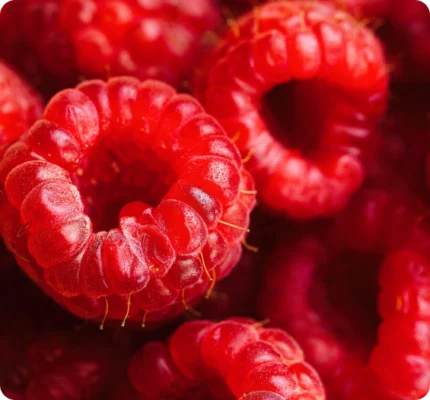
Plant a summer variety and an autumn variety to extend picking. Newly planted conventional summer canes usually need until their second summer; prepared long canes are an exception. Autumn plants may give a modest first-year crop if they establish well.
Pick frequently when fruit is fully coloured and releases easily. Dry weather is preferable; use shallow containers so delicate berries are not crushed under a deep pile. Refrigerate promptly or freeze sound surplus fruit.
Experienced growers can keep part of selected autumn canes for a second crop the following summer, but this changes the pruning routine and can reduce the autumn crop. The simple all-down-in-February method is easier for a first planting.
Image from the BFFD media library.
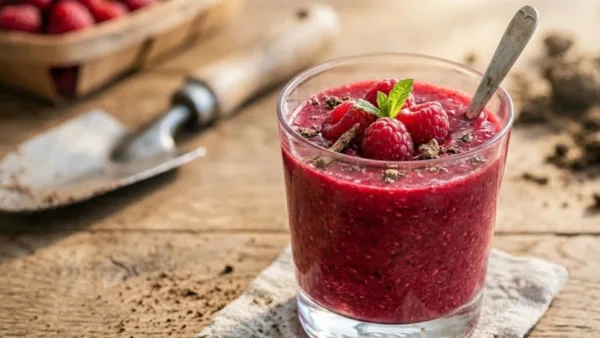
Cane blight can follow damaged stems and causes darkened, brittle cane bases. Remove affected growth, handle canes gently, prune in dry conditions and keep the row open enough to dry after rain.
Viruses can reduce vigour and cropping. Seek a diagnosis if symptoms persist, remove confirmed affected plants and do not propagate their suckers. Start replacements from healthy certified stock, preferably on a fresh site.
Raspberry beetle larvae can damage summer fruit. Check picked berries and tolerate minor losses where possible. Later autumn crops tend to suffer less, though early fruit is not immune.
Grey mould is encouraged by damp, crowded conditions. Remove decaying berries, pick regularly, avoid wetting ripening fruit unnecessarily and improve air circulation without stripping useful leaves.
Check whether summer canes were mistakenly cut down in winter. Shade, drought, poor establishment or tired diseased plants can also reduce crops; extra fertiliser alone will not correct these causes.
Healthy dormant suckers can be lifted with roots and replanted. Use recently established, healthy plants from certified stock; moving a sucker can also move an unseen virus.
Seed does not reliably preserve a named raspberry variety. For a predictable harvest season and pruning routine, buy named plants or propagate permitted healthy stock vegetatively.
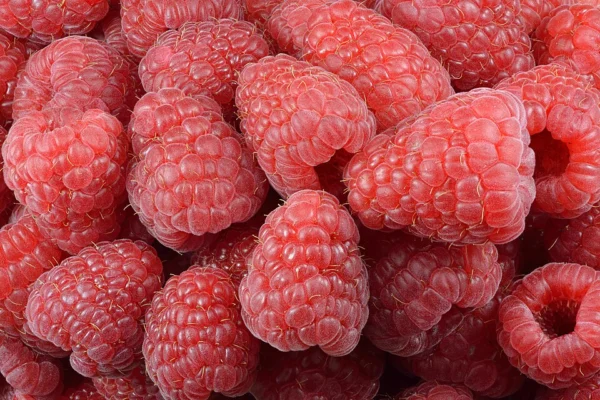
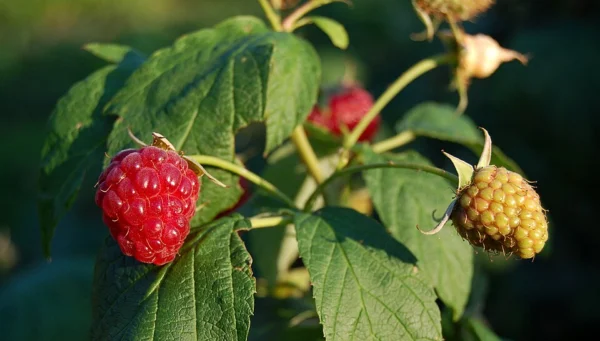
Glen Ample
A summer-fruiting choice with large red berries and spine-free canes. Give it suitable soil, support and space for strong replacement canes each year.
Illustrative red raspberries; cultivar unconfirmed.
Photo: Ivar Leidus, CC BY-SA 4.0. Resized and optimised; cropped for display. Adapted image under the same licence.
Joan J
An autumn raspberry producing large sweet red fruit. For simple management, use the annual February cutback and enjoy the crop on new growth.
Illustrative red fruit, not confirmed Joan J.
Photo: Marcin Białek, CC BY-SA 4.0. Resized and optimised; cropped for display. Adapted image under the same licence.
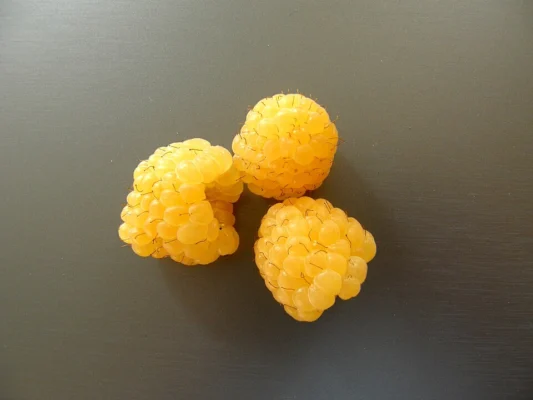
All Gold
An autumn-fruiting variety with sweet yellow berries. Its colour adds interest to a mixed planting; allow fruit to ripen fully rather than waiting for it to turn red.
Illustrative yellow raspberries; source does not identify All Gold.
Photo: Bachelot Pierre J-P, CC BY-SA 3.0. Resized and optimised; cropped for display. Bachelot Pierre J-P
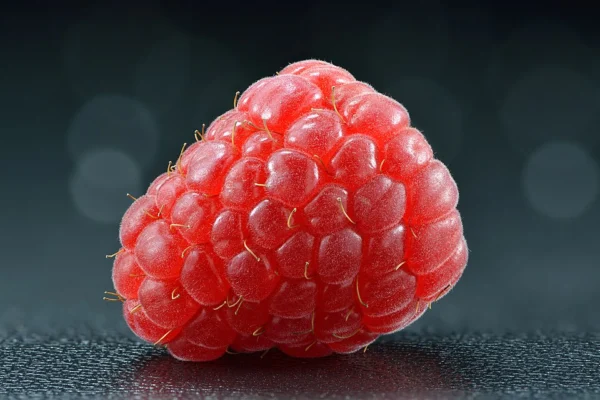
Ruby Beauty
A compact summer raspberry reaching about 1m, intended for smaller spaces and containers. Preserve its young canes for the following summer rather than applying autumn-raspberry pruning.
Illustrative raspberry fruit, not a confirmed Ruby Beauty specimen.
Photo: Ivar Leidus, CC BY-SA 4.0. Resized and optimised; cropped for display. Adapted image under the same licence.
Match the cultivar to your space and label its pruning group. Choose healthy stock and prepare its permanent position carefully.
Bees visit raspberry flowers and support reliable fruit development. Encourage other flowering plants nearby while keeping their roots from crowding the raspberry row.
If birds take too much fruit, use a well fitted fruit cage or taut wildlife-conscious netting and check it daily. Avoid loose folds that can trap wildlife, and remove protection when picking ends.
Published by Buy From Farmers Direct. Growing guidance reviewed 6 October 2026. The seasonal timeline uses the shared BFFD Growers Calendar record; adjust timings to your variety and local conditions.
No. Raspberries are self-fertile. A second variety is useful mainly for extending the picking season or providing a different colour and flavour.
Only when managing autumn-fruiting raspberries for one autumn crop. Summer raspberries need the previous season’s young canes to remain for the next harvest.
Yes, with a suitable compact variety and a generous draining pot. Watering, feeding and retaining the correct replacement canes need regular attention.
Conventional summer canes normally crop from their second summer, while prepared long canes may crop sooner. Autumn varieties may produce in their first year if well established.
The perennial roots produce suckers. Remove unwanted ones to keep access clear, or move suitable healthy suckers while dormant.
Yellow-fruited varieties remain yellow or golden at maturity. Use the cultivar description, plumpness and easy release from the plant as your picking guides.
Label the fruiting type, keep the roots comfortably moist and renew the right canes each year. A little regular tying and picking makes a raspberry row easier to manage and more rewarding.
Explore more growing guides: Blackberry, Blackcurrant, Gooseberry.
Want to get food independence, support your local grower, get better prices and shop more privately?
Local food isn’t just something you find. It’s something you protect. A free account helps keep local supply visible, supported, and resilient.

….it takes 30 seconds for food lovers and 5 minutes for suppliers
We built this for people who care where their food comes from. For people who want to remain food secure. For Farmers to get to the local people, who deserve a better income and to deliver a better price for you. For the environmentally conscious and the privacy-conscious. An account simply helps us make the map and supplier reach more useful to you, without changing how open it is. You’re always in control.


Find local food. Stay connected to it. Create a free account to support local producers and be part of a growing food network.


