Blackcurrants provide strongly flavoured summer berries from a permanent fruit bush. Renewing old stems gradually keeps young productive wood coming through. Choose a healthy named plant, allow access for picking and plan crop protection. This guide covers ordinary bushes; plants trained on a tall single stem need different planting and initial pruning.
Hardy fruit bush
Summer berries
Sun or light shade
Annual renewal pruning
One bush can crop
| Botanical name | Ribes nigrum |
| Family | Grossulariaceae |
| Plant type | Deciduous fruit shrub |
| Typical size | About 1.5m tall and wide |
| Position | Sun or light partial shade |
| Soil | Moisture retentive and well drained |
| Exposure | Sheltered from cold winds |
| Planting season | Late October to March preferred |
| Bush spacing | 1.5 to 1.8m |
| Planting depth | Bushes 5cm deeper than previously grown |
| Standard plants | Keep original planting depth |
| Flower season | Spring |
| Harvest season | Usually June to August, by variety |
| Pollination | Self fertile; insects assist pollination |
| Best fruiting wood | Strong young stems |
| Main pruning time | Winter while dormant |
| Propagation | Healthy hardwood cuttings |
| Container minimum | About 45cm wide and deep |
| Container limitation | Border planting is better long term |
| Important buying check | Healthy certified planting stock |
| Plant name | Crop type | Spacing |
Sow indoors
Plant outdoors
Harvest
Polytunnel | |||||||||||
|---|---|---|---|---|---|---|---|---|---|---|---|---|---|---|
| Jan | Feb | Mar | Apr | May | Jun | Jul | Aug | Sep | Oct | Nov | Dec | |||
| Blackcurrant | Soft fruit | Single 1.50m, In row 1.50m, Row gap 1.80m; allow more for vigorous cultivars | Plant outdoors | Plant outdoors | Plant outdoors | No activity recorded | No activity recorded | Harvest | Harvest | Harvest | No activity recorded | Plant outdoors | Plant outdoors | Plant outdoors |
Sow indoors: no months recorded. Plant outdoors: January, February, March, October, November, December. Harvest: June, July, August. Polytunnel: no months recorded.
Plant during the dormant season, from late October to March, when soil is workable. Potted plants can be planted at other times with suitable aftercare. June to August is an indicative harvest window across early and late varieties; local ripeness decides picking. Named bushes are normally bought or raised from cuttings, so no routine seed sowing or polytunnel season is shown.
Choose blackcurrants if you enjoy cooking fruit or freezing a summer surplus. A mature bush needs access for picking, pruning and fitting a fruit cage. Avoid positions where reaching the middle means standing on neighbouring crops.
One bush can fruit alone. Several varieties can spread picking dates, but first consider how much fruit you will use. A compact selection helps in a modest plot; constant hard trimming cannot replace adequate space.
Photo: Aconcagua, CC BY-SA 3.0. Resized and optimised; cropped for display. Adapted image under the same licence.
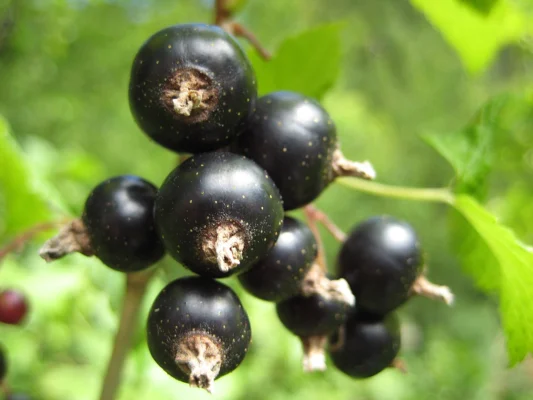
Choose sun for good ripening, or light shade if necessary. Avoid frost pockets: hardy dormant wood does not guarantee frost resistant flowers. Shelter from cold drying winds without surrounding the bush with dense shade.
Check drainage after rain and clear perennial weeds before planting. Moist soil is useful; a hole that remains waterlogged is unsuitable. Avoid disturbing new roots through repeated deep weeding.
Keep a path alongside rows and retain readable labels. Allow fruit cages enough room for the eventual plant rather than fitting a frame closely around its current pot.
A container at least 45cm wide and deep can accommodate a compact bush for a few years. Use a suitable peat free, soil based potting compost and drainage holes. Plan a future border position if roots outgrow the pot or cropping declines.
Photo: H. Zell, CC BY-SA 3.0. Resized and optimised; cropped for display. Adapted image under the same licence.
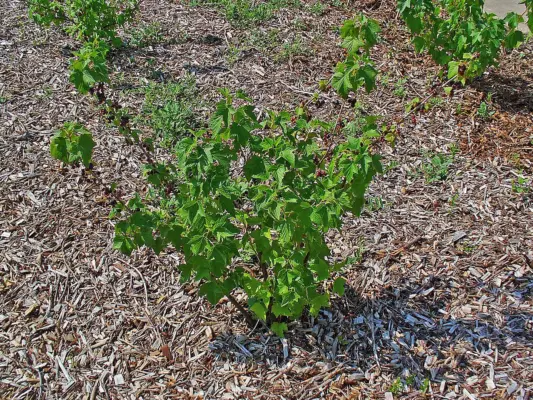
The following steps apply to dormant, ordinary bush plants. A standard blackcurrant, with its branches carried on a tall trunk, must retain its original planting depth and crown.
1.
Check the label and choose healthy stock from a reliable supplier; certified stock reduces the chance of introducing persistent problems.
2.
Keep bare roots moist before planting. Water a potted rootball thoroughly so dry compost is not buried unnoticed.
3.
Mark positions about 1.5 to 1.8m apart, leaving more space for a vigorous variety and access for picking.
4.
Prepare a hole wide enough to spread bare roots naturally or comfortably accommodate the rootball.
5.
Set an ordinary bush about 5cm deeper than its previous soil level to encourage shoots from the base.
6.
Backfill, firm gently around the roots and water thoroughly. Correct any movement before the soil settles hard.
7.
For a newly planted dormant bush, cut stems down to one or two buds above the soil. This establishes replacement shoots at the expense of the first crop.
8.
Mulch the surrounding ground while keeping the immediate stem bases clear. Label the variety and planting date.

Watering
Check new plants in dry spells during their first two growing seasons. Feel below the soil surface before watering. Apply water slowly to the root area so it soaks in.
Check pots regularly throughout growth. Maintain steady moisture, clear drainage holes and avoid leaving the container standing in a filled saucer.

Feeding
Maintain a spring mulch of mature garden compost around a border bush. Look at growth and crop performance before adding more feed: shade, poor drainage or old crowded stems cannot be corrected by fertiliser alone.
Container plants need feeding as their compost reserve declines. Follow product instructions and keep an application record to avoid feeding twice by mistake.

Pruning
Work in winter when the stems are easy to see. Established bushes, from about their fourth year, usually need up to one third of the oldest stems removed near the base. Retain strong younger shoots so the bush contains several ages of productive wood.
Remove damaged, weak or crossing growth, then assess the remaining framework. Do not shorten every stem into a tight ball. Vigorous young bushes need relatively little pruning after their initial establishment cut.

Winter care
Blackcurrants stay outdoors through winter. Check newly planted bushes for wind rock and remove weeds around their bases. Keep labels visible so neighbouring currants receive their own correct pruning treatment.
Inspect buds while the branches are bare. Unusually swollen round buds deserve a closer look for big bud mite. Check fruit cage fastenings and repair damaged netting before spring growth makes access awkward.
Blackcurrants have lobed leaves, woody stems and small hanging spring flowers followed by dark berries in short clusters. The leaves have a distinctive blackcurrant scent when rubbed. Keep the original nursery label as the dependable record of the plant and cultivar.
Do not identify unknown berries by colour alone. Redcurrants, ornamental flowering currants and unrelated shrubs require separate identification and care. Start with a correctly labelled edible Ribes nigrum plant.
Photo: Hortensja Bukietowa, CC BY-SA 4.0. Resized and optimised; cropped for display. Adapted image under the same licence.
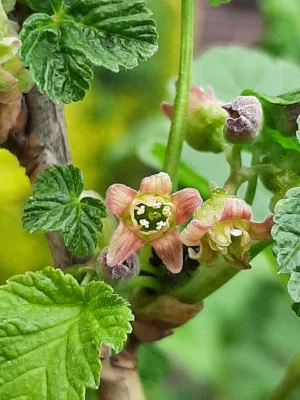
A cool British garden can be very suitable, provided the flowers avoid damaging spring frosts. Have fleece available when a cold night is forecast during flowering. Support it clear of the flowers and remove it during the day so insects can reach them.
Arrange watering before leaving a young bush unattended in dry weather. In wet districts, check drainage before adding water. Weak growth does not always mean the plant is thirsty.
Pick when the berries are fully coloured and ripe. Modern selections often ripen evenly enough to cut whole clusters; inspect older varieties berry by berry if necessary. Use shallow containers to avoid crushing fruit and move the harvest into cool storage promptly.
Photo: VerboseDreamer, CC BY-SA 3.0. Resized and optimised; cropped for display. Adapted image under the same licence.
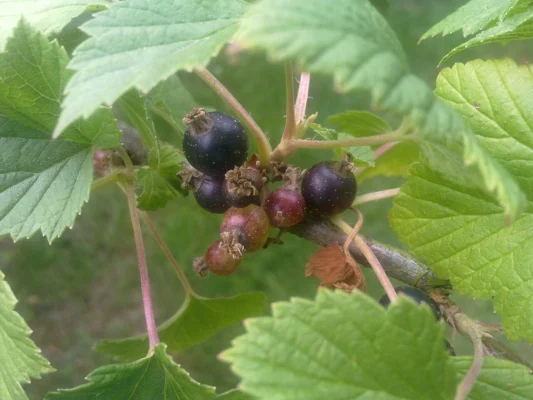
Big bud mite can distort dormant buds and transmit reversion disease. Remove a few affected buds in winter and dispose of them away from currants. Heavily affected declining plants are better replaced with clean stock.
Aphids or gall midge may affect soft growth. Inspect the folded leaves before deciding what caused the damage. A few marked tips need not mean the whole bush is failing; monitor new growth and preserve insect predators.
Mildew can spoil young growth. Avoid overcrowding and choose a resistant variety when replacing a persistently affected plant. Remove badly affected material where practical and review water stress and air movement.
Birds may find the berries first. Fit taut netting over a suitable frame before ripening, secure the edges and check frequently for trapped wildlife. Loose netting draped through branches is difficult to inspect.
Check shade, spring frost and pruning history. Removing all young wood sacrifices potential cropping stems. Note flowering and frost events before assuming poor fruiting requires more feed.
Take hardwood cuttings from healthy young stock after leaf fall. Choose firm growth from the current season, remove the soft tip and prepare pieces about 20cm long. Keep track of which end is the base and label each variety immediately.
Insert cuttings into draining soil or suitable potting medium, with most of each stem buried. Label them, allow time for rooting and prevent summer drying. Avoid propagating old bushes with unexplained symptoms.
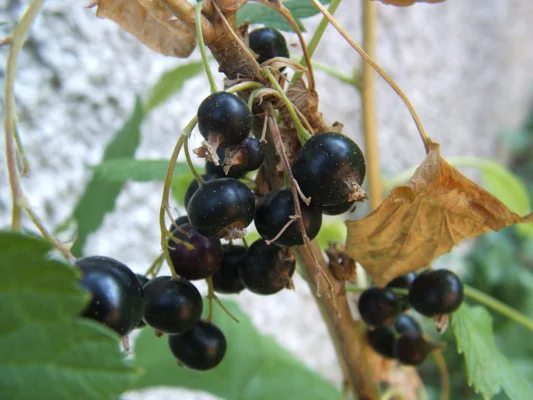
Ben Sarek
A compact option with large fruit carried in relatively short clusters. Useful where access and modest bush size matter. Give it room to develop naturally instead of pressing it between vigorous neighbours.
Illustrative Ribes nigrum photograph; the cultivar is not identified as Ben Sarek.
Photo: Luigi Chiesa, CC BY 3.0. Resized and optimised; cropped for display.
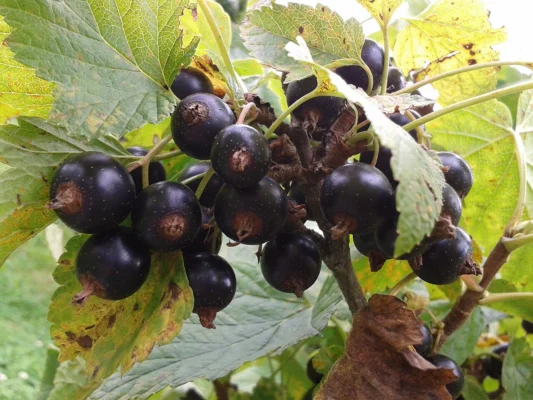
Ben Connan
A compact bush bred by the James Hutton programme, with very large berries. Its branches can bend under a crop and rise again after picking. Breeder descriptions record useful resistance to mildew, leaf spot and leaf curling midge.
Illustrative Ribes nigrum photograph; the cultivar is not identified as Ben Connan.
Photo: Dawid Skalec, CC BY-SA 3.0. Resized and optimised; cropped for display. Adapted image under the same licence.
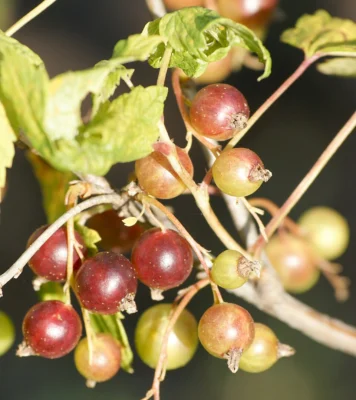
Ben Hope
A vigorous upright selection, suited to a position with generous room. The breeder records strong resistance to blackcurrant gall mite and good resistance to mildew and leaf spot. Resistance reduces a particular risk rather than removing the need to inspect plants.
Illustrative Ribes nigrum photograph; the cultivar is not identified as Ben Hope.
Photo: Mariluna, CC BY-SA 3.0. Resized and optimised; cropped for display. Adapted image under the same licence.
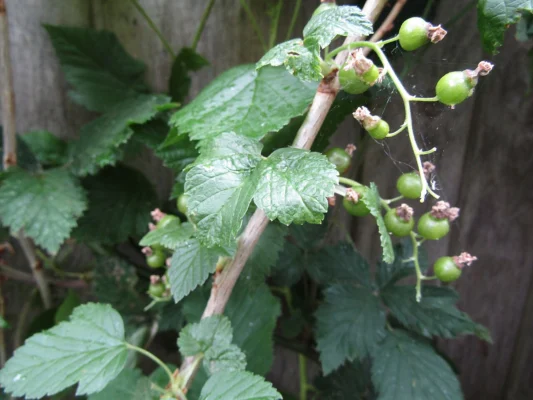
Big Ben
A large fruited selection worth considering when berry size matters. Buy a labelled plant and check mature dimensions. Berry size alone cannot identify this cultivar.
Illustrative Ribes nigrum photograph; the cultivar is not identified as Big Ben.
Photo: Kolforn (Wikimedia), CC BY-SA 4.0. Resized and optimised; cropped for display. Adapted image under the same licence.
Explore the BFFD map for fruit nurseries and local growers. Ask about healthy named blackcurrants suited to your space and confirm availability before travelling.
Spring flowers feed visiting insects and benefit from their pollination. Remove frost covers during suitable daytime weather, and position supporting hoops before delicate flower clusters develop.
Keep protective netting taut and regularly checked, removing temporary covers after harvest. Provide flowers and habitat elsewhere in the garden to support insects and other wildlife.
Published by Buy From Farmers Direct. Sources checked 4 October 2026. Growing references: RHS growing blackcurrants; James Hutton Ben Connan; James Hutton Ben Hope; RHS blackcurrant big bud mite; RHS hardwood cuttings; RHS currant aphids. The seasonal timeline uses the shared BFFD Growers Calendar record; adjust timings to your variety and local conditions.
Prune established bushes in winter while dormant. Remove selected old stems at the base and keep strong young replacements. Newly planted dormant bushes receive a different, much harder initial cut.
Late October to March is a useful window, avoiding frozen or saturated soil. Potted plants can be planted later, but need more careful watering as conditions warm.
Yes, particularly a compact variety, in a substantial container at least 45cm wide and deep. Pots need regular water and feeding, and most bushes perform better in the ground over the longer term.
No. Blackcurrants are self fertile, so one healthy plant can crop. Different varieties are useful for spreading the harvest, provided there is enough room for each mature bush.
Very swollen round buds that fail to open can indicate big bud mite. Compare them with normal pointed buds and seek a diagnosis if many are affected or the bush is declining.
Healthy hardwood cuttings are a practical method. Take labelled material after leaf fall and give it time to root. Avoid using an old diseased bush as the source of replacement plants.
Use the BFFD growers calendar to plan seasonal jobs and explore nearby suppliers. Keep the variety name, pruning dates and picking results in your own growing notes so that next season’s decisions reflect your garden.
Explore more growing guides: Blueberry, Boysenberry, Blackberry.
Want to get food independence, support your local grower, get better prices and shop more privately?
Local food isn’t just something you find. It’s something you protect. A free account helps keep local supply visible, supported, and resilient.

….it takes 30 seconds for food lovers and 5 minutes for suppliers
We built this for people who care where their food comes from. For people who want to remain food secure. For Farmers to get to the local people, who deserve a better income and to deliver a better price for you. For the environmentally conscious and the privacy-conscious. An account simply helps us make the map and supplier reach more useful to you, without changing how open it is. You’re always in control.


Find local food. Stay connected to it. Create a free account to support local producers and be part of a growing food network.


