Salsify earns its place in a vegetable patch by providing something different for the winter kitchen. Beneath its narrow blue green leaves are long pale roots with a delicate flavour, useful roasted, mashed or added to soups. This guide covers white salsify, Tragopogon porrifolius. Give it deep soil, sow it where it will stay and lift the fragile roots carefully when autumn arrives.
Winter root crop
Sow directly outdoors
Deep soil matters
Fresh seed each spring
Harvest before flowering
| Botanical name | Tragopogon porrifolius |
| Family | Asteraceae, the daisy family |
| Plant type | Biennial, usually harvested in its first winter |
| Crop grown for | Long pale edible roots |
| Other common name | Vegetable oyster plant |
| Light | Full sun |
| Best soil | Deep, loose and well drained |
| Avoid | Stony, compacted or freshly manured ground |
| Main sowing season | March to May, once soil is workable |
| Reliable spring starting point | April in many UK gardens |
| Sowing method | Directly into the final growing position |
| Typical sowing depth | About 1cm; follow the seed packet |
| Final plant spacing | 10cm, or wider if the packet advises |
| Row spacing | 30cm |
| Germination | Usually around two to three weeks |
| Main root harvest | October to March |
| Root length | Can reach about 30cm |
| Minimum container size | About 30cm wide and deep; deeper is useful |
| Flowering | Mauve to purple flowers in the second year |
| Common UK seed selection | Mammoth, also sold under Sandwich Island names |
| Plant name | Crop type | Spacing |
Sow indoors
Plant outdoors
Harvest
Polytunnel | |||||||||||
|---|---|---|---|---|---|---|---|---|---|---|---|---|---|---|
| Jan | Feb | Mar | Apr | May | Jun | Jul | Aug | Sep | Oct | Nov | Dec | |||
| Salsify | Root vegetables | Single 10cm, In row 10cm, Row gap 30cm | Harvest | Harvest | Sow indoors, Harvest | Sow indoors | Sow indoors | No activity recorded | No activity recorded | No activity recorded | No activity recorded | Harvest | Harvest | Harvest |
Sow indoors: March, April, May. Plant outdoors: no months recorded. Harvest: January, February, March, October, November, December. Polytunnel: no months recorded.
Sow in spring when the soil can be worked easily, normally March to May, with April a practical starting point in many gardens. Harvest runs from October into the following March, so the January to March band belongs to the previous year's sowing. There is no transplanting band because moving established seedlings can spoil the taproot. No polytunnel is needed for this outdoor crop. A straw covering can keep winter soil accessible, but roots in wet ground may be better lifted and stored. The calendar uses 10cm between plants and 30cm between rows; follow wider spacing on your chosen packet if specified.
Salsify suits a patient grower who can reserve a strip of soil from spring through winter. It is not a quick crop for a gap that must be cleared in midsummer. Start with a short row to see how its flavour fits your cooking.
It is a useful choice if you enjoy less familiar vegetables and have suitable soil. Straight roots are easier to prepare, so soil condition and careful sowing matter more than buying elaborate equipment or applying lots of feed.
Photo: Luis Fernández García, CC BY-SA 4.0. Resized and optimised; cropped for display. Adapted image under the same licence.
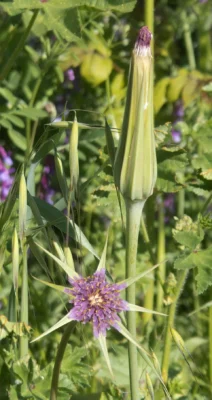
Choose an open sunny bed with enough depth for a long taproot. A loose, crumbly soil is easier for the roots to enter and makes lifting them much less frustrating later.
Remove large stones and address compaction before sowing. Avoid adding fresh manure just beforehand, which can encourage roots to fork. A bed improved for the preceding crop can be a useful place to start.
A raised bed can help where the surrounding garden is heavy or shallow, provided its filling drains well and offers real rooting depth. A thin layer of compost over hard subsoil will not solve the problem.
Use a deep container with drainage holes if you lack a suitable bed. About 30cm wide and deep is a minimum; a deeper pot gives more margin for long roots. Fill with peat free compost and allow space for regular watering.
Photo: Yujin, CC BY-SA 3.0. Resized and optimised; cropped for display. Adapted image under the same licence.

Buy fresh seed for the season and prepare its permanent position before opening the packet. Salsify is best raised directly in the ground or container where the roots will develop.
1.
Choose labelled Tragopogon porrifolius seed. Check the sowing date and avoid relying on an old opened packet, as salsify seed loses viability relatively quickly.
2.
Clear weeds from a sunny bed and gently loosen compacted soil when it is workable. Remove obvious stones without digging or walking on saturated ground.
3.
Rake the surface into a fine, even seedbed. Mark rows 30cm apart so the slow emerging seedlings will be easy to distinguish from weeds.
4.
Make a shallow drill about 1cm deep, adjusting to the packet if it gives a different depth. Water a dry drill gently before sowing.
5.
Sow thinly along the row, cover with fine soil and firm lightly. In a pot, sow into its final position rather than planning to separate crowded roots later.
6.
Label the row and keep the seedbed moist while germination takes place. Allow around two to three weeks and weed carefully rather than assuming an apparently empty row has failed.
7.
Thin small seedlings to about 10cm apart, or the wider spacing advised for your seed selection. Remove unwanted seedlings gently so the roots of the remaining plants are not disturbed.
8.
Continue gentle weeding and water during dry spells. Record the sowing date, then leave the plants to build their roots through summer for autumn and winter lifting.

Watering
Keep the surface moist while seeds and small seedlings establish. Once the crop is growing, water during prolonged dry weather, soaking the root zone rather than repeatedly wetting only the top few millimetres.
Container crops dry out more quickly and need frequent checks. Aim for steady moisture: a long dry period followed by a sudden soaking can contribute to split roots. Keep drainage holes clear.

Feeding
Salsify normally needs no additional fertiliser in reasonably fertile garden soil. Concentrate on soil structure and moisture rather than trying to force growth with repeated high nitrogen feeds.
A light mulch of well rotted compost between established rows can help retain moisture and reduce weeds. Keep it away from small crowns and do not bury the leaves or add fresh manure around the developing roots.

Pruning
There is no routine pruning for a root crop. Leave healthy foliage in place to support root growth, and remove weeds by hand close to the plants to avoid cutting their roots with a hoe.
Unless you want seed or flowers, harvest the roots before the second season is well under way. A tall flowering stem marks a change from root production to reproduction, and the root is better used before that stage.

Winter care
Roots can remain in well drained soil through winter and be lifted as required. Cover the row with straw or fleece before hard weather if you want to keep the ground easier to work.
Where the bed becomes waterlogged or access is likely to be difficult during severe cold, lift sound roots carefully and store them in sand in a cool frost free place. Inspect regularly and discard any that soften or rot.
White salsify forms a rosette of long, narrow, grasslike leaves and a pale tapering root. Plants left for a second season produce mauve or purple daisy flowers with conspicuous pointed green bracts, followed by large fluffy seedheads.
Black salsify, or scorzonera, is a different plant: Pseudopodospermum hispanicum, often still sold as Scorzonera hispanica. It has dark skinned roots and yellow flowers. Buy correctly labelled seed rather than identifying a food crop from a common name or an unfamiliar wild plant.
Photo: Steve Hurst, Public domain. Resized and optimised; cropped for display.
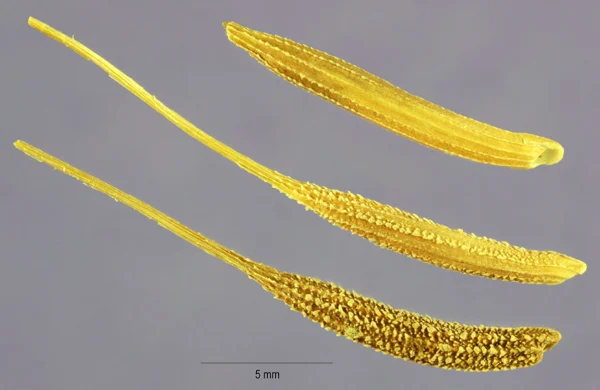
Begin lifting in autumn once the roots are a useful size, usually from October. Work a fork into the soil well beside the row, loosen a generous block and ease each root free. Pulling by the leaves alone often snaps the slender tip.
Use damaged roots promptly and keep sound ones in the ground or suitable cool storage. Wash off soil carefully. Cut roots release a milky sap, and peeled surfaces can discolour; lightly acidulated water helps protect their colour during preparation.
A practical way to handle the tough skin is to steam or simmer the washed roots first, then remove the skin before finishing the dish. Follow a suitable recipe for roasting, frying or mashing. The flavour is mild, so a simple first serving is a useful introduction.
Photo: Robert Flogaus-Faust, CC BY 4.0. Resized and optimised; cropped for display.
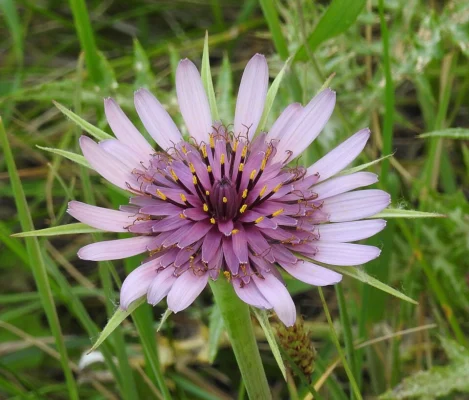
Old seed, a dry seedbed or cold wet soil can all give patchy emergence. Use fresh seed, sow within the recommended spring window and keep the shallow drill moist. Give slow germinating seed time before disturbing the row.
Stones, compaction, fresh manure and transplanting can interfere with the taproot. Prepare the permanent bed before sowing and thin small seedlings carefully. Forked roots can still be awkward to clean even when otherwise sound.
Large changes in moisture can make root crops crack. Water through extended dry spells and improve the soil's moisture retention gradually between crops. Lift damaged roots for prompt use and discard any showing rot.
Slugs and snails may feed on tender seedlings. Inspect around the row after dark and remove animals causing damage. Protect the vulnerable young crop while retaining habitat for their natural predators elsewhere in the garden.
Cold stress and interrupted growth can contribute to premature flowering in biennial vegetables. Avoid sowing into unsuitable cold soil and keep growth steady. Plants flowering in their second season are following their normal life cycle, so finish the main root harvest beforehand.
Seed is the usual way to raise salsify. For a seed saving project, reserve healthy plants to flower in their second year rather than harvesting every root. Their tall flowering stems need more room than a close root crop row.
Collect ripe seed on a dry day before its fluffy heads disperse, dry it thoroughly and store in a labelled packet somewhere cool and dry. Seed production needs isolation from other flowering salsify if you want to maintain a selection. Plan to use the seed promptly rather than keeping it for years.
Mammoth or Sandwich Island
The main UK selection is sold under names including Mammoth, Sandwich Island Mammoth and Sandwich Island. These names do not give you three distinct varieties. Compare seed freshness and packet instructions rather than expecting different crops from each name.
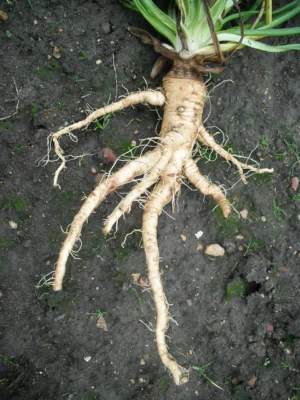
A harvested Mammoth Sandwich Island root, identified by the photographer, showing how roots can branch.
Photo: Simon Speed, CC0. Resized and optimised; cropped for display.
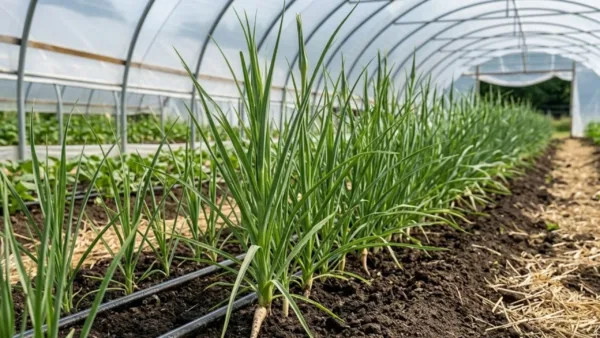
An open ground row
Choose this straightforward approach where soil is deep, loose and well drained. Direct sowing avoids moving the taproot, and a clearly marked row leaves room for careful weeding and winter lifting.
BFFD illustration of a salsify row under a polytunnel; outdoor crops do not require this protection.
Image from the BFFD media library.
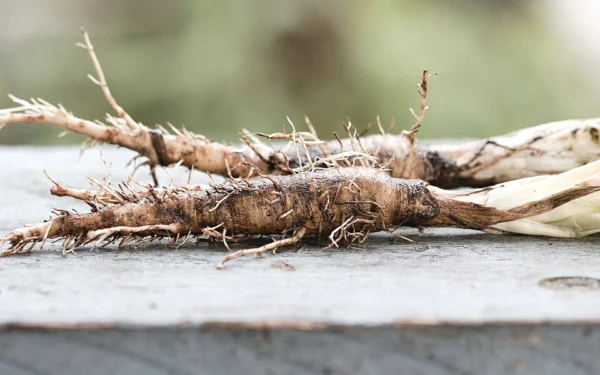
A deep raised bed
A raised bed offers an alternative where the surrounding soil is heavy or shallow. Make sure the depth is useful and the filling drains freely, then sow directly rather than transplanting an established crop.
Harvested salsify roots illustrating the crop; the growing bed is not shown.
Photo: Dennis Lamczak, CC BY-SA 2.0. Resized and optimised; cropped for display. Adapted image under the same licence.

A large deep container
A pot can provide a small trial crop close to the kitchen. Depth, drainage and reliable watering are essential. Expect a modest quantity rather than treating one container as a replacement for a full winter vegetable bed.
A salsify seedhead illustrating seed production; the photograph does not show a container crop.
Photo: John Weaver, CC BY-SA 3.0. Resized and optimised; cropped for display. Adapted image under the same licence.
Look for Tragopogon porrifolius and check the season's sowing instructions. Mammoth and Sandwich Island names describe the familiar white salsify selection; black scorzonera is a separate crop. Plan the growing space before choosing packet size.
A few second year plants can add open purple flowers to a vegetable garden and provide interest for visiting insects. Keep them separate from the main root harvest if you want both flowers and a kitchen crop.
Fluffy seedheads disperse readily on the breeze. Collect or remove them before they scatter if you want to keep salsify within its allotted space, and use targeted protection around seedlings instead of trying to remove every slug from the garden.
Published by Buy From Farmers Direct. Growing guidance reviewed 6 October 2026. The seasonal timeline uses the shared BFFD Growers Calendar record; adjust timings to your variety and local conditions.
No. This guide covers white salsify, Tragopogon porrifolius. Scorzonera is black salsify, with dark roots and yellow flowers, and belongs to a different genus.
Direct sowing is the better choice for straight roots. Transplanting can disturb the developing taproot and cause it to fork. Sow into the final bed or deep container.
The main season is October to March after a spring sowing. Lift roots when needed from well drained soil, before the plants start their second year flowering growth.
Its viability declines relatively quickly in storage. A fresh packet, suitable spring conditions and consistent moisture give a better chance of an even row than old seed in a dry drill.
Wash the roots well. Steaming or simmering them before removing the skin avoids some of the difficulty of peeling their tough skins raw. If peeling before cooking, place prepared pieces in lightly acidulated water to limit browning.
The names commonly refer to the same main UK salsify selection. Treat them as alternative seed names, then compare the supplier's growing directions and seed freshness.
A short row of salsify is a good way to bring variety to winter meals. Sow fresh seed directly, give the roots an easy route down through the soil and take your time when lifting them.
Explore more growing guides: Carrot, Beetroot, Artichoke (Jerusalem).
Want to get food independence, support your local grower, get better prices and shop more privately?
Local food isn’t just something you find. It’s something you protect. A free account helps keep local supply visible, supported, and resilient.

….it takes 30 seconds for food lovers and 5 minutes for suppliers
We built this for people who care where their food comes from. For people who want to remain food secure. For Farmers to get to the local people, who deserve a better income and to deliver a better price for you. For the environmentally conscious and the privacy-conscious. An account simply helps us make the map and supplier reach more useful to you, without changing how open it is. You’re always in control.


Find local food. Stay connected to it. Create a free account to support local producers and be part of a growing food network.


