Tatsoi produces handsome rosettes of spoon-shaped leaves with crisp stems and a gentle mustard flavour. Pick young leaves for salads or let plants grow larger for the kitchen. A late-summer sowing is a useful starting point in the UK, giving this leafy brassica cooler conditions in which to develop.
Spoon-shaped leaves
Cool-season brassica
Leaves or whole rosettes
Good autumn crop
Protection extends the season
| Botanical group | Brassica rapa, Narinosa or Rosularis Group |
| Family | Brassicaceae |
| Crop type | Non-heading leafy brassica |
| Edible parts | Leaves and their tender stalks |
| Typical leaf shape | Rounded to spoon-shaped |
| Plant habit | Usually a low rosette; some selections are more upright |
| Flavour | Mild mustard or cabbage flavour, depending on selection |
| Position | Sun; light shade can help in warm weather |
| Soil | Fertile, moisture retentive and well drained |
| Main outdoor sowing | July and August |
| Optional spring sowing | March and April, with early protection as needed |
| Later sowing | September for suitable protected autumn/winter crops |
| Sowing depth | About 1cm; follow the packet |
| Full rosette spacing | About 25–30cm |
| Row spacing | About 30cm for full rosettes |
| Baby leaf spacing | Around 8–10cm for small plants picked young |
| Baby leaf harvest | Often about a month in active growth |
| Full rosettes | Commonly around 45–75 days in suitable conditions |
| Winter harvest | From established plants, with protection where needed |
| Pollination | Not needed before the leaf crop is harvested |
| Plant name | Crop type | Spacing |
Sow indoors
Plant outdoors
Harvest
Polytunnel | |||||||||||
|---|---|---|---|---|---|---|---|---|---|---|---|---|---|---|
| Jan | Feb | Mar | Apr | May | Jun | Jul | Aug | Sep | Oct | Nov | Dec | |||
| Tatsoi | Salad & leaves | Single 25–30cm, In row 25–30cm, Row gap 30cm for full rosettes; 8–10cm for baby leaves | Harvest, Polytunnel | Harvest, Polytunnel | Sow indoors, Harvest, Polytunnel | Sow indoors, Plant outdoors, Polytunnel | Plant outdoors, Harvest | Harvest | Sow indoors | Sow indoors, Plant outdoors, Harvest | Sow indoors, Plant outdoors, Harvest, Polytunnel | Plant outdoors, Harvest, Polytunnel | Harvest, Polytunnel | Harvest, Polytunnel |
Sow indoors: March, April, July, August, September. Plant outdoors: April, May, August, September, October. Harvest: January, February, March, May, June, August, September, October, November, December. Polytunnel: January, February, March, April, September, October, November, December.
July and August are the main outdoor sowing months. March and April offer an optional spring crop, while September is mainly for protected autumn/winter growing. Planting in April/May or August/September is for modules; October planting belongs under cover. May/June and August–December harvests depend on sowing time, while January–March means limited picking from sound overwintered plants, not rapid winter growth. The protected band includes spring starts and autumn/winter shelter.
Tatsoi is useful if you enjoy leafy greens and want a quick crop after an early vegetable bed becomes free. Its low rosettes are attractive in a small garden, and the leaves can be used raw when young or briefly cooked.
Decide whether you want complete rosettes or frequent leaf picking. A closely sown baby leaf patch gives small leaves quickly, but it needs a different harvest plan from widely spaced plants intended to reach full size.
Photo: Sarah Stierch, CC0. Resized and optimised; cropped for display.
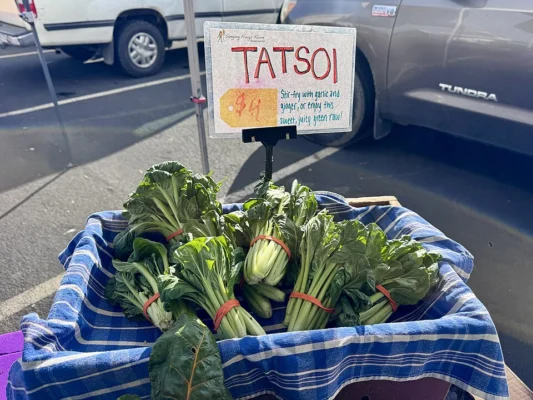
Choose fertile ground with reliable access to water. Drying out repeatedly makes a leafy crop harder to manage, especially while a summer sowing establishes.
Add mature compost to improve the soil before sowing or planting. Keep the surface reasonably fine and weed-free so the small brassica seedlings are easy to identify and protect.
A broad container or trough with drainage works for a modest crop. Allow proper spacing for full rosettes; choose a separate denser sowing if the aim is baby leaves rather than large plants.
Treat tatsoi as part of your brassica rotation, alongside cabbages and turnips. Avoid ground known to have club root and do not move contaminated soil into clean pots or beds.
Photo: Forest and Kim Starr, CC BY 3.0 us. Resized and optimised; cropped for display. Forest & Kim Starr
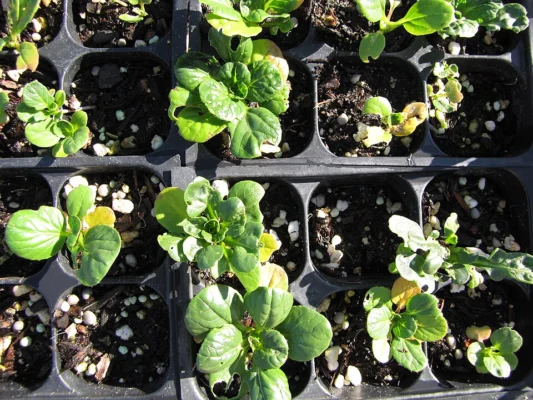
For a straightforward first crop, sow in July or August and keep it growing into cooler weather. Spring and protected autumn sowings can widen the season, but timing and variety matter more than a claim of year-round production.
1.
Choose ordinary green tatsoi or a named selection suited to your intended season. Label it clearly, especially if growing several similar Asian greens together.
2.
Sow the main crop in July or August. For a spring trial, start a small March or April batch, keeping young plants protected when necessary and harvesting promptly.
3.
Direct sow thinly in shallow drills about 1cm deep, or sow into modules of moist peat-free seed compost. Use the packet depth where it differs.
4.
Keep the seedbed evenly moist and give module trays good light. Avoid leaving young plants in a scorching greenhouse or letting tiny rootballs dry completely.
5.
Thin or transplant full-rosette plants to about 25–30cm apart, with around 30cm between rows. Use roughly 8–10cm spacing for smaller plants intended for early leaf harvests.
6.
Move module plants while they are young and actively growing. Acclimatise them first, keep the rootball intact and water before and after planting.
7.
Protect vulnerable seedlings with suitable insect mesh where flea beetles or cabbage caterpillars are a problem. Secure the edges and allow room for the crop to expand.
8.
For winter picking, establish a suitable September sowing under cover before growth slows sharply. Inspect regularly, ventilate on mild days and harvest according to the plants’ condition.

Watering
Keep moisture steady during active growth. A thorough watering when the root zone needs it is more useful than a brief daily splash that wets only the surface.
Check pots and covered beds separately from outdoor soil: rainfall may not reach them. In colder weather reduce watering as growth slows, while avoiding both severe drying and persistently soggy compost.

Feeding
A prepared bed with mature compost usually gives a short crop a good start. Check for crowding, drought or root damage before treating weak growth as a fertiliser shortage.
Containers used repeatedly for leafy crops may need fresh compost or a suitable feed at the labelled rate. Extra feeding cannot prevent a plant from flowering when season and growth stage favour it.

Pruning
For repeated picking, take a few sound outer leaves while leaving the central growing point and enough foliage intact. Allow time for recovery instead of stripping every plant bare at once.
For a single harvest, cut a mature rosette near its base and use it promptly. If cutting above the growing point for regrowth, treat the next flush as a smaller follow-on harvest, dependent on the plant and weather.

Winter care
Tatsoi tolerates cool conditions, but varieties differ and severe frost or prolonged wet can damage the crop. A cloche, fleece or unheated tunnel helps protect established plants; it does not make every selection equally hardy.
Leave frozen foliage alone until it thaws, then inspect before picking. Remove decaying leaves, maintain airflow and expect winter harvests to draw mostly on growth made earlier in autumn.
Traditional tatsoi makes an open rosette of dark, rounded leaves on relatively slender pale or green stalks. In cool conditions the rosette may sit close to the ground; some selections are naturally more upright or have reddish foliage.
It belongs to the same broad Brassica rapa crop species as pak choi, mizuna and turnips, but is grown for its characteristic leafy rosette. It is not a heading Chinese cabbage, and Yukina Savoy is a tatsoi-type leafy green rather than a savoy cabbage.
Photo: Nesnad, CC BY 4.0. Resized and optimised; cropped for display.
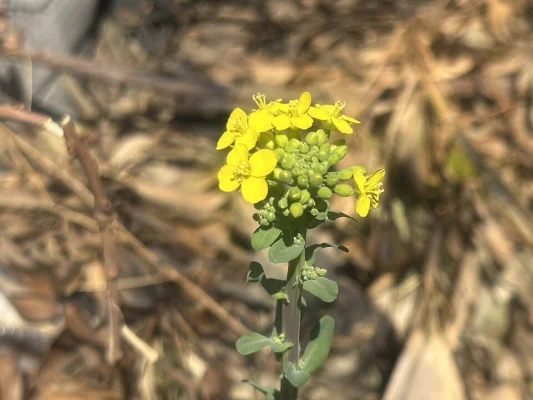
Late-summer sowing often gives a more straightforward crop than trying to grow large rosettes through the longest, hottest days. In cooler areas, sow towards the earlier part of the chosen variety’s late-summer window.
A spring crop is possible, especially for young leaves, but keep batches small and watch for a rising central stem. Do not wait for an ideal giant rosette if the plant is already switching to flowers.
Match the winter plan to your site. An established green crop in a sheltered tunnel has different prospects from newly germinated scarlet tatsoi in an exposed wet bed; harvest vulnerable plants before severe weather rather than relying on a single hardiness claim.
Photo: david silver, CC BY-SA 2.0. Resized and optimised; cropped for display. Adapted image under the same licence.
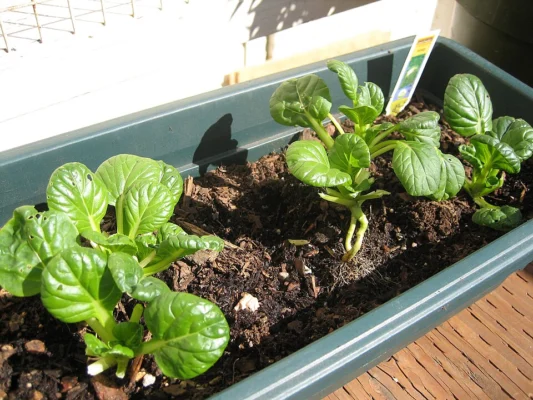
Bolting can follow unsuitable seasonal timing or stress, including hot and dry conditions. Keep moisture steady, try late-summer sowing and harvest the usable crop promptly. A flowering plant will not return to being a young leafy rosette.
Flea beetles commonly affect brassica seedlings and salad leaves. Protect new sowings with appropriate fine insect mesh and keep plants growing steadily. Some cosmetic holes are tolerable on otherwise healthy leaves.
Check the undersides of leaves for cabbage-white eggs and caterpillars. Remove small local infestations by hand where practical, and fit mesh before butterflies lay eggs rather than covering an existing infestation inside.
Slugs and snails can feed on young plants, particularly in damp beds or beneath covers. Inspect at dusk, check hiding places close to the crop and protect fresh transplants while they establish.
Club root can affect this brassica crop. Remove badly affected plants and avoid spreading soil on tools or footwear. Use an uncontaminated growing place; a short rotation alone will not make known infected soil reliably safe.
Tatsoi is usually grown from seed, either in its final bed or in modules. Repeat small sowings during a suitable seasonal window instead of expecting one planting to provide tender leaves indefinitely.
For seed saving, retain a group of healthy open-pollinated plants and prevent crossing with other flowering Brassica rapa crops. Do not select premature bolters. Named F1 hybrids such as Rozetto will not reproduce consistently from saved seed.
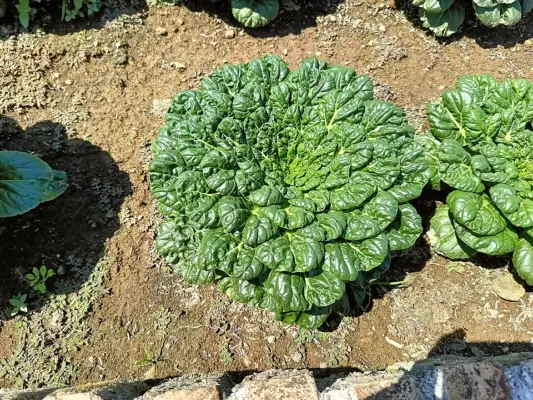
Green rosette tatsoi
The familiar dark-green type, widely sold simply as Tatsoi. It develops rounded, spoon-shaped leaves in a spreading rosette and is useful for either young salad leaves or a larger cooked crop.
A green tatsoi rosette; no named strain is claimed.
Photo: Indonesiagood, CC BY 3.0. Resized and optimised; cropped for display.
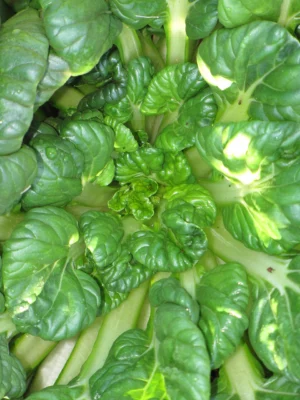
Rozetto F1
A hybrid selection with dark-green, mild-tasting leaves that develops a rosette as it matures. Use young leaves or allow proper room for full plants, following its packet for sowing dates.
Illustrative green tatsoi foliage; not confirmed as Rozetto F1.
Photo: Forest and Kim Starr, CC BY 3.0 us. Resized and optimised; cropped for display. Forest & Kim Starr
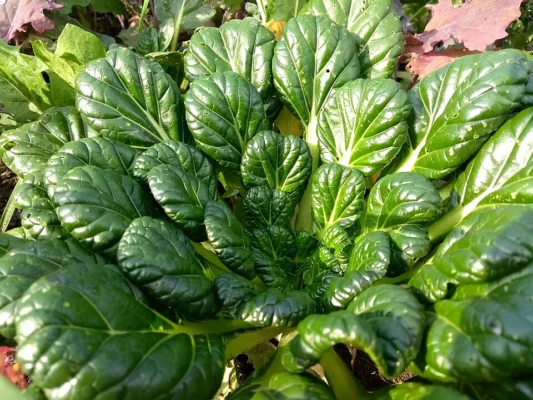
Scarlet Tatsoi
A coloured selection with purple-red leaves and contrasting greener veins and stalks. Useful for baby leaf picking, but its supplier cautions against heavy frost; protect or harvest it before damaging cold.
Illustrative green tatsoi; this photograph does not depict the red-purple Scarlet selection.
Photo: Idéalités, CC BY-SA 4.0. Resized and optimised; cropped for display. Adapted image under the same licence.
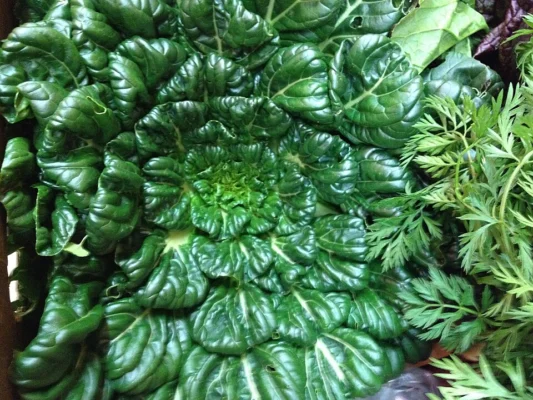
Yukina Savoy
A more upright type with textured, spoon-shaped dark leaves and a stronger mustard character. Allow around 30cm for full plants. It suits a July or August outdoor start, with later sowings grown under cover.
Illustrative green tatsoi leaves; not confirmed as Yukina Savoy.
Photo: baldeaglebluff, CC BY-SA 2.0. Resized and optimised; cropped for display. Adapted image under the same licence.
Compare sowing dates, colour, plant habit and winter guidance. A packet intended for baby leaves or protected autumn cropping may need a different approach from one grown for large outdoor rosettes.
Plants allowed to flower produce yellow brassica blooms that insects can visit. Retain selected plants for this purpose if wanted, keeping them separate from rows managed for tender leaf harvests.
The normal leaf crop needs no pollination, so insect mesh can stay in place while plants are vulnerable. Leave other suitable garden flowers accessible to insects and avoid treating every visitor to the plot as a pest.
Published by Buy From Farmers Direct. Growing guidance reviewed 6 October 2026. The seasonal timeline uses the shared BFFD Growers Calendar record; adjust timings to your variety and local conditions.
They are closely related Brassica rapa crops, and tatsoi is sometimes sold as rosette pak choi. Tatsoi usually has rounder spoon-shaped leaves and a spreading rosette, although individual selections vary.
July and August are useful main months for an outdoor autumn crop. Spring sowing is also possible, while September sowing usually needs a suitable variety and a plan for protected autumn or winter growing.
Yes. Pick outer leaves lightly and preserve the growing centre. Alternatively, cut above the growing point for possible regrowth. Cutting the whole plant at ground level is normally a single harvest.
Allow about 25–30cm for full rosettes, with rows around 30cm apart. Smaller plants picked for baby leaves can be closer, around 8–10cm apart. Follow the named selection’s guidance if it needs different spacing.
It can tolerate cold, but survival depends on the variety, establishment and weather. Severe frost and prolonged wet can damage it. Protection is useful, and no variety should be assumed to provide unlimited fresh winter growth.
Season, long days and growth stress can encourage bolting. Try a late-summer sowing, maintain moisture and harvest earlier. Once a flowering stem is rising, use the sound leaves promptly rather than waiting for a larger rosette.
Give tatsoi a suitable season, steady water and enough room for the harvest you want. A few well-timed sowings can provide crisp young leaves and useful autumn rosettes without relying on a year-round cropping promise.
Explore more growing guides: Chinese Cabbage, Endive, Coriander.
Want to get food independence, support your local grower, get better prices and shop more privately?
Local food isn’t just something you find. It’s something you protect. A free account helps keep local supply visible, supported, and resilient.

….it takes 30 seconds for food lovers and 5 minutes for suppliers
We built this for people who care where their food comes from. For people who want to remain food secure. For Farmers to get to the local people, who deserve a better income and to deliver a better price for you. For the environmentally conscious and the privacy-conscious. An account simply helps us make the map and supplier reach more useful to you, without changing how open it is. You’re always in control.


Find local food. Stay connected to it. Create a free account to support local producers and be part of a growing food network.


