Chinese cabbage brings crisp white ribs and tender leaves to a small vegetable patch. You can pick it young for salads or allow it to form a substantial head for the kitchen. Choose the crop you want before sowing: a pot of baby leaves needs a different plan from a row of large autumn cabbages.
Quick leafy crop
Good autumn harvest
Keep evenly moist
Baby leaves or full heads
Suitable for large pots
| Botanical name | Brassica rapa Pekinensis Group |
| Other names | Napa cabbage and Chinese leaves |
| Family | Brassicaceae |
| Crop type | Leaf vegetable, usually harvested in its first season |
| Position | Sun, with light shade useful in summer |
| Soil | Fertile, moisture retentive and well drained |
| Main outdoor sowing window | May to August |
| Protected early sowing | April, with a suitable variety |
| Planning spacing for heads | 30cm between plants |
| Row spacing | About 40 to 45cm |
| Baby leaf spacing | About 15cm after thinning |
| Sowing depth | About 1cm, or follow the packet |
| Container size | At least 30cm wide and deep |
| Harvest window used | July to November |
| Watering priority | Avoid repeated drying and wilting |
| Common difficulty | Bolting before a useful head forms |
| Crop rotation | Group with other brassicas |
| Propagation | Seed |
| Pollinator value | Flowers attract insects if plants are left to bloom |
| Winter use | Harvest sound heads before damaging weather |
| Plant name | Crop type | Spacing |
Sow indoors
Plant outdoors
Harvest
Polytunnel | |||||||||||
|---|---|---|---|---|---|---|---|---|---|---|---|---|---|---|
| Jan | Feb | Mar | Apr | May | Jun | Jul | Aug | Sep | Oct | Nov | Dec | |||
| Chinese Cabbage | Brassicas | Single 30cm, In row 30cm, Row gap 45cm | No activity recorded | No activity recorded | No activity recorded | Sow indoors, Polytunnel | Sow indoors, Plant outdoors, Polytunnel | Sow indoors, Plant outdoors | Sow indoors, Plant outdoors, Harvest | Sow indoors, Plant outdoors, Harvest | Harvest, Polytunnel | Harvest, Polytunnel | Harvest, Polytunnel | No activity recorded |
Sow indoors: April, May, June, July, August. Plant outdoors: May, June, July, August. Harvest: July, August, September, October, November. Polytunnel: April, May, September, October, November.
The calendar shows April to August sowing, May to August planting and July to November harvesting. April sowings need suitable protection and variety choice. For a first attempt at full heads, a summer sowing for autumn cropping is usually easier to manage. Baby leaf crops can have a shorter turnaround. Tunnel use is shown for spring and autumn shoulder seasons; ventilate carefully and avoid summer overheating.
Choose Chinese cabbage if you can keep a small area watered and would enjoy a succession of fresh leaves. A raised bed near a water supply makes the crop easier to manage. Sow a few plants at a time so that the household can use the harvest while it is in good condition.
Full heads need adequate space and a steady run of growth. If your plot regularly dries out, begin with baby leaves in a generously sized container that you can check daily. Chinese cabbage is distinct from pak choi, although both belong to Brassica rapa and share many growing needs.
Photo: Schlaghecken Josef, CC BY-SA 4.0. Resized and optimised; cropped for display. Adapted image under the same licence.
Use ground that drains after rain but does not bake hard between waterings. Remove established weeds before sowing; fast growing cabbage seedlings should not have to compete with grass roots or a carpet of annual weeds.
Improve the bed with mature garden compost before planting. Where the soil is acidic, use a soil test to guide any lime application. Do not add lime routinely or assume that it will cure an established clubroot problem.
Allow enough access to water, inspect the undersides of leaves and cut a mature head cleanly. A narrow bed that can be reached from both sides is more practical than a dense block that you must tread through.
For containers, choose drainage holes and enough compost volume to buffer hot days. A position with gentle afternoon shade can be useful in summer. The photograph shows young plants in individual soil blocks, which keep their roots together during planting.
Photo: Schlaghecken Josef, CC BY-SA 4.0. Resized and optimised; cropped for display. Adapted image under the same licence.
Work backwards from your intended harvest and follow the variety packet. Head forming varieties differ in season and size. Prepare the final growing space before seedlings outgrow their modules.
1.
Choose a variety sold for your intended sowing season and decide whether you want baby leaves, small heads or full sized cabbages.
2.
Weed the bed and improve its moisture holding capacity with mature compost. Leave a level surface that can be watered without washing seed away.
3.
Sow thinly in a shallow drill or sow into individual modules. Cover lightly, label the variety and date, and water gently.
4.
Keep the seed zone moist while plants emerge. Thin module seedlings so one healthy plant remains, rather than allowing a crowded cluster to develop.
5.
Acclimatise indoor raised plants gradually. Transplant while the root ball is still manageable, handling the young plant by its leaves or root ball.
6.
Allow about 30cm between full head plants and 40 to 45cm between rows, unless the variety requires more. Baby leaf plants can be closer.
7.
Water the root ball and surrounding soil after planting. Check protection such as insect mesh is supported and does not flatten the seedlings.
8.
Inspect growth regularly and maintain steady moisture. Sow the next small batch only when you have space and a suitable seasonal window.

Watering
Water the root area thoroughly when needed rather than repeatedly splashing the surface. Check soil beneath the top layer: a dry crust can hide moist ground, while light rain may leave a root ball dry.
Pots and recently planted modules need particular attention. Persistent moisture stress can interrupt growth and encourage bolting. Equally, clear blocked drainage holes rather than leaving a container standing in stagnant water.

Feeding
Begin with well prepared fertile ground. A short crop in a healthy vegetable bed may need little additional feeding; pale plants also warrant a check for root problems, crowding and drought.
If a container crop exhausts its compost, use an appropriate vegetable fertiliser according to its label. Avoid trying to correct poor growth with repeated strong feeds while the plant is short of water.

Pruning
No routine pruning is required. Pick young outer leaves carefully for a small harvest, or cut a developed head when it is firm enough for the variety. Use clean tools and remove badly damaged material.
For a second flush, some growers leave a short sound stump after cutting. Treat regrowth as a bonus rather than a guaranteed second full head. Replace exhausted plants when they no longer give useful leaves.

Winter care
An autumn crop can remain useful into cool weather, but variety, exposure and rainfall affect how long it lasts. Harvest good heads before a forecast spell that is likely to damage them.
A ventilated cloche or tunnel can shelter a late crop. Remove deteriorating leaves and inspect for slugs; closed, damp protection is not a substitute for a healthy, well timed planting.
Chinese cabbage usually has broad, pale leaf ribs with a crinkled green blade. The leaves overlap into an elongated or barrel shaped head, although young plants begin as an open rosette. Red and purple selections add different leaf colours.
The root photograph shows a cultivated specimen in a viewing chamber. It illustrates why seedlings need an undisturbed root system and adequate soil volume; it is not a guide to digging up plants to identify them. Use a reliable seed or plant label to establish the variety.
Photo: Schlaghecken Josef, CC BY-SA 4.0. Resized and optimised; cropped for display. Adapted image under the same licence.
In warmer southern gardens, keep a close eye on summer heat and drying soil. Partial shade during the hottest part of the day can make watering easier, but a deeply shaded corner will not compensate for an unsuitable sowing date.
In cooler or exposed districts, allow extra time for heads to develop before autumn conditions slow growth. Raise a modest batch in modules if that helps establishment, then plant promptly during a suitable spell.
On wet or heavy ground, use a prepared raised bed or large container with free drainage. The field photograph shows commercial harvesting; a home grower can take individual heads as needed instead of clearing the entire row at once.
Photo: Schlaghecken Josef, CC BY-SA 4.0. Resized and optimised; cropped for display. Adapted image under the same licence.
A rising flower stem means the plant is moving towards reproduction. Review sowing season, variety, cold exposure and watering. Harvest usable leaves promptly and plan the next sowing for a more suitable window.
Check young plants after damp evenings and look beneath pots and loose covers. Remove nearby hiding places where practical, protect vulnerable seedlings and inspect regularly instead of waiting for a whole row to disappear.
Small shot holes suggest flea beetle feeding, while larger missing areas may indicate caterpillars. Inspect the plant to identify the cause. Well fitted insect mesh installed early can reduce several brassica pests.
Poor drainage, dry soil and clubroot can all affect growth. If an affected plant has distorted swollen roots, avoid moving contaminated soil to clean beds. Use healthy plants, clean containers and a brassica rotation plan.
Remove unusable leaves and examine the growing conditions. Uneven moisture, overcrowding or prolonged wetness may be involved. Keep watering consistent and allow access and airflow around developing heads.
Start Chinese cabbage from fresh labelled seed. Small repeat sowings are usually more useful than a large batch of plants that all need harvesting together. Keep notes on the variety, sowing date and the point at which good heads formed.
Saving seed requires a separate plan: Chinese cabbage normally flowers after a period of cold and can cross with other flowering Brassica rapa crops. Hybrid seed may not reproduce the parent type. Buy a known variety when predictable head size and season are the priority.
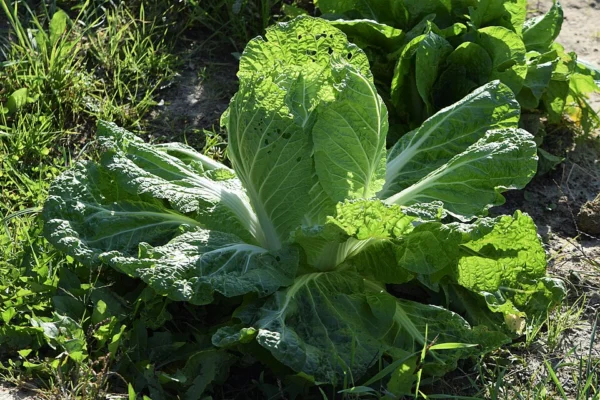
Manoko F1
An early hybrid with cylindrical heads. Check the local supplier’s seasonal guidance, as the breeder notes that performance varies between climates. Useful where you want a named variety and a relatively compact head.
Photograph identified by its source as Manoko.
Photo: Krzysztof Ziarnek, Kenraiz, CC BY-SA 4.0. Resized and optimised; cropped for display. Adapted image under the same licence.
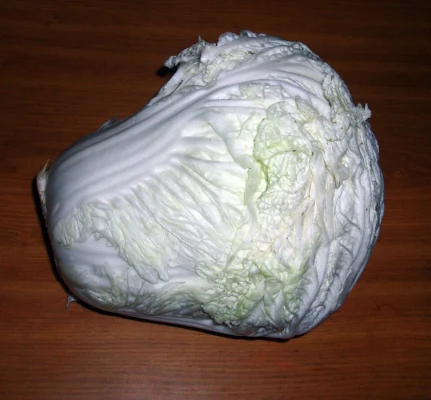
Wong Bok
A familiar choice for a substantial barrel shaped head with broad crisp ribs. Give head forming plants enough room, and choose a sowing date appropriate to your seed supplier’s instructions.
Illustrative harvested Chinese cabbage; the photographed cultivar is not confirmed.
Photo: Fanghong, CC BY 2.5. Resized and optimised; cropped for display.
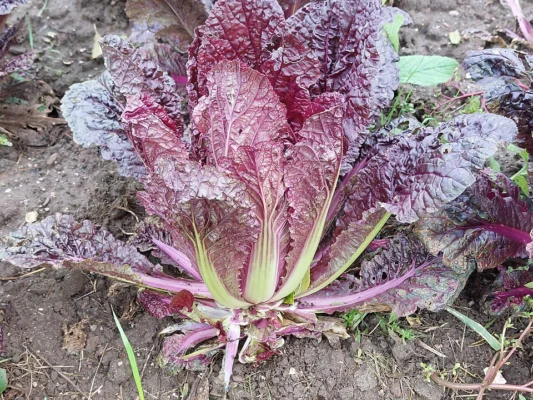
Red and purple selections
Coloured varieties offer an alternative to green Chinese leaves. Choose a named selection with clear sowing guidance, rather than assuming every purple plant has the same maturity or bolting resistance.
A red Chinese cabbage selection; the exact cultivar is not recorded.
Photo: Schlaghecken Josef, CC BY-SA 4.0. Resized and optimised; cropped for display. Adapted image under the same licence.
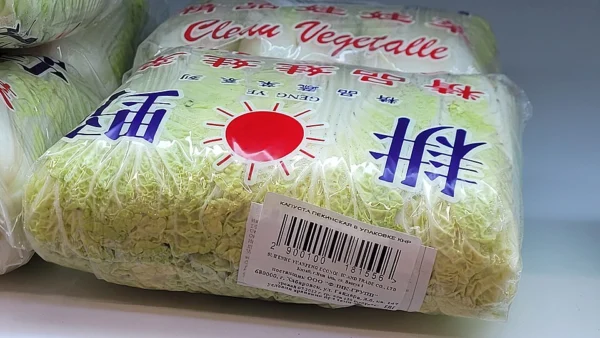
Wa Wa Sai
A compact choice described by the RHS as fast growing with tender leaves. Smaller heads can suit modest kitchens, but they still need reliable moisture and the spacing recommended for the seed you buy.
Illustrative Chinese cabbage offered for sale; this is not a confirmed Wa Wa Sai specimen.
Photo: Svetlov Artem, CC0. Resized and optimised; cropped for display.
Look for a clearly named variety, the intended sowing window and the expected head size. Match the packet to your space and how you cook. Young plants should be compact, healthy and ready to establish without spending weeks confined in a small module.
A leafy crop is usually harvested before flowering. If you keep a separate plant for flowers, insects can visit the blooms, but consider the space and seed saving implications before letting several brassicas flower together.
Protect the crop with observation and physical barriers where useful. Keep flowering plants elsewhere in the garden for beneficial insects, and inspect beneath mesh so pests already inside do not go unnoticed.
Published by Buy From Farmers Direct. Sources checked 6 October 2026. Growing references: RHS Chinese cabbage growing guide; Garden Organic Chinese cabbage; Bejo Manoko variety information; RHS Wong Bok; RHS Wa Wa Sai. The seasonal timeline uses the shared BFFD Growers Calendar record; adjust timings to your variety and local conditions.
No. Both are Brassica rapa vegetables, but this guide concerns the head forming Pekinensis Group, often sold as napa cabbage or Chinese leaves. Pak choi has a different open leafy form.
Outdoor sowing commonly runs from May to August. Suitable varieties can start under protection in spring. Summer sowing for autumn heads is a useful starting point; follow the variety packet and local conditions.
Yes. Choose a pot at least 30cm wide and deep with drainage holes. Baby leaves or small heads are practical choices. Check moisture regularly and thin the seedlings so they have room to develop.
Bolting can follow unsuitable timing or stress such as cold, heat or drying out. Choose a variety suited to the season, establish young plants steadily and keep the root zone evenly moist.
Allow about 30cm between plants for full heads, with wider rows for access. Baby leaves can be closer, around 15cm. Follow the packet where a particularly large or compact variety needs different spacing.
Yes. Young leaves are useful as a salad crop. If you want a large final head, avoid repeatedly stripping the plant; grow a separate small sowing specifically for leaf picking.
Start with a few well timed plants, keep their roots growing steadily and harvest while the leaves are fresh and crisp. Your own sowing and harvest notes will help you find the most reliable window for your garden.
Explore more growing guides: Cabbage (Summer), Cauliflower, Chicory.