Regular tomatoes are the familiar salad sized fruits you slice into sandwiches, salads and everyday meals. The name describes a useful kitchen type rather than a separate botanical group. This guide focuses on medium red salad tomatoes, including common cordon varieties. Start in warmth, maintain steady moisture and match pruning to the plant label.
Warmth and full sun
Protect from frost
Check cordon or bush type
Water consistently
Pick fully coloured fruit
| Botanical name | Solanum lycopersicum |
| Family | Solanaceae, the nightshade family |
| Meaning of regular | A practical description for salad sized tomatoes |
| UK life cycle | Tender crop usually grown as an annual |
| Main fruit use | Fresh salads, sandwiches and cooking |
| Light | Full sun |
| Outdoor position | Warm and sheltered from strong winds |
| Soil | Fertile, moisture retentive and well drained |
| Seed sowing | Late February to early April under warm cover |
| Typical germination warmth | About 18°C |
| Seedling care | Plenty of light and protection from cold |
| Outdoor planting | Usually late May to June, after frost risk |
| Typical cordon height | About 1.5 to 2m or more if not stopped |
| Plant spacing | 45 to 60cm, adjusted to the variety |
| Calendar spacing example | 60cm between plants, 90cm between rows |
| Container size | One plant in a pot around 30 to 45cm wide |
| Main harvest | July to October, depending on conditions |
| Support | Strong cane, string or frame for cordon plants |
| Cordon pruning | Remove small side shoots regularly |
| Bush pruning | Retain side shoots; support heavy branches if needed |
| Plant name | Crop type | Spacing |
Sow indoors
Plant outdoors
Harvest
Polytunnel | |||||||||||
|---|---|---|---|---|---|---|---|---|---|---|---|---|---|---|
| Jan | Feb | Mar | Apr | May | Jun | Jul | Aug | Sep | Oct | Nov | Dec | |||
| Tomato (Regular) | Unusual & exotic | Single 60cm, In row 60cm, Row gap 90cm | No activity recorded | Sow indoors | Sow indoors | Sow indoors, Plant outdoors, Polytunnel | Plant outdoors, Polytunnel | Plant outdoors, Polytunnel | Harvest, Polytunnel | Harvest, Polytunnel | Harvest, Polytunnel | Harvest, Polytunnel | No activity recorded | No activity recorded |
Sow indoors: February, March, April. Plant outdoors: April, May, June. Harvest: July, August, September, October. Polytunnel: April, May, June, July, August, September, October.
The sowing band combines late February to mid March seed for protected crops with late March to early April seed for outdoor plants. All sowing needs warmth. Planting from April includes a suitably warm greenhouse or tunnel; outdoor planting usually waits until late May or June after local frost risk. April to October protection is a growing option, not proof that an unheated structure stays frost free. July to October harvest combines sites and varieties: outdoor crops often finish earlier, while protected crops may continue in autumn. The 60cm plant and 90cm row gaps are a practical cordon layout, with access and airflow; follow wider requirements for vigorous plants.
A few salad tomatoes can provide regular kitchen pickings in a small space. Check watering frequently and tie in new growth before it becomes tangled.
A greenhouse or polytunnel makes ripening more dependable in cooler districts. Outdoors, choose a suitable variety and a warm sheltered spot. Buy healthy plants if you lack space for spring seedlings.
Image from the BFFD media library.
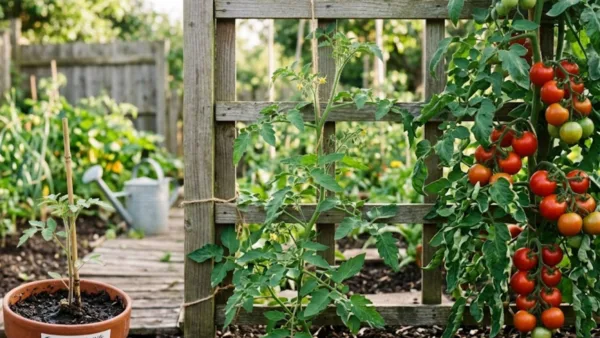
Choose full sun and shelter from cold winds. A sunny wall or fence can help an outdoor crop, provided it does not put the plants in a rain shadow you forget to water. Keep enough space to reach each plant.
Prepare fertile soil that drains well but does not dry immediately after watering. Add well rotted organic matter where needed and avoid planting into a bed that remains cold and saturated. Rotate growing positions where practical.
Containers make a good option for patios and protected structures. Use peat free compost and a pot around 30 to 45cm wide for one plant, with drainage holes. A standard growing bag is usually more manageable with two well spaced plants.
Install supports that will carry the mature crop, not just the small transplant. In a greenhouse, secure overhead strings safely or use sturdy canes. Keep paths and vents accessible so ventilation is not sacrificed as the plants grow.
Image from the BFFD media library.
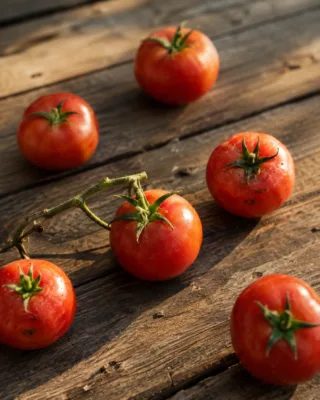
Read the label for growing habit and preferred site. A salad tomato may be a cordon or bush, and treating them alike can produce an overcrowded crop.
1.
Select a salad variety suited to your greenhouse or outdoor position. Decide how many mature plants you can support and water before sowing a whole packet.
2.
Sow in small pots or modules of seed compost in late winter or spring, covering as the packet directs. Provide warmth around 18°C for germination rather than relying on a cold windowsill.
3.
As seedlings appear, remove the propagator cover and give them bright light. Keep them protected from cold, turning windowsill pots regularly so growth does not lean strongly towards the glass.
4.
When true leaves develop, move seedlings into individual pots. Hold them gently by a leaf and support the roots rather than squeezing the delicate stem. Pot on again if roots fill the container.
5.
Gradually harden off plants intended for outdoors over about two to three weeks. Bring them back into shelter during cold nights; this process does not make tomatoes resistant to frost.
6.
Prepare the final position once conditions are warm enough. For ordinary plants, a leggy stem can be planted deeper to encourage roots; for grafted plants keep the graft union above the compost and follow the supplier's instructions.
7.
Water in and attach a cordon stem loosely to its support. Space plants for their eventual size, typically 45 to 60cm apart, and leave an accessible gap between rows.
8.
Label each variety and check the root zone frequently while plants establish. Begin training cordons as they grow, and keep bush side shoots instead of automatically pinching every shoot you see.

Watering
Aim for evenly moist compost throughout flowering and fruit growth. Check containers daily in hot weather and water thoroughly enough to wet the root ball. A dry growing bag can be difficult to rewet evenly.
Water the soil carefully and avoid leaving foliage wet overnight. Mulch border plants to reduce evaporation, keeping the stem base clear. Automatic watering can help, but check its operation and adjust it to the weather rather than assuming one setting suits the season.

Feeding
Once the first fruits start swelling, container tomatoes benefit from a suitable high potassium liquid feed at the label rate, often every ten to fourteen days. Apply it to moist compost rather than a dry root ball.
Plants in a well enriched border may need less extra feeding. Too much fertiliser can worsen water uptake problems, so do not respond to every yellow leaf or damaged fruit by adding a stronger mixture.

Pruning
For cordons, keep one main stem and remove small shoots from the joint between a leaf and that stem. Tie in regularly. Leave flower trusses intact and avoid confusing a fruiting cluster with a leafy side shoot.
Stop cordons when they reach their support or the season's useful crop limit, leaving two leaves above the top truss. Around four trusses outdoors and seven under cover are common guides. Bush tomatoes retain their side shoots and need support only where growth or fruit weight requires it.

Winter care
Tomatoes are normally finished as the UK season cools. Pick sound mature green fruit before frost and bring it indoors to ripen; an unheated greenhouse does not reliably carry an actively growing crop through winter.
Clear spent plants and clean reusable supports and containers. Handle diseased material appropriately rather than leaving it beside the next crop, and plan fresh compost or a different bed where soil problems have developed.
Tomatoes have divided, strongly scented leaves, hairy stems and small yellow star shaped flowers arranged in trusses. Salad varieties develop fleshy fruits of a convenient slicing size, although the exact size depends on the cultivar and growing conditions.
Regular is not a formal tomato species or a guarantee of growth habit. Cherry, plum and beefsteak are other fruit descriptions within the same species. Use named plants and seed labels, and keep tomato foliage out of kitchen harvests.
Image from the BFFD media library.
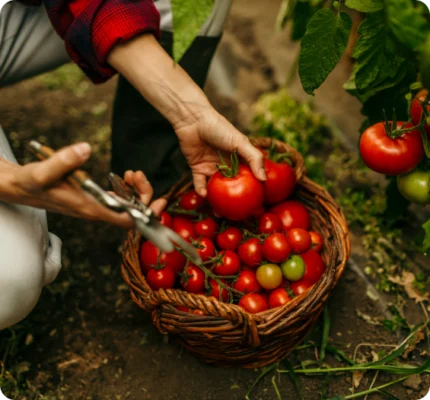
Pick red salad tomatoes when they are fully coloured and ready to use, checking plants every few days in the main season. Hold the fruit gently and detach it with its short stalk without pulling a whole truss from the plant.
At the end of summer, improving light and airflow can help the remaining crop, but stripping all healthy leaves is not a shortcut to ripening. Keep enough foliage to support fruit growth and avoid exposing fruit suddenly to scorching sun.
Bring sound mature unripe fruits indoors before cold weather ends the crop. Keep them somewhere suitably warm, check regularly and remove any that rot. Use ripe fruit fresh or follow a suitable cooking or preservation recipe for a surplus; do not keep damaged, mouldy fruit for later use.
Image from the BFFD media library.
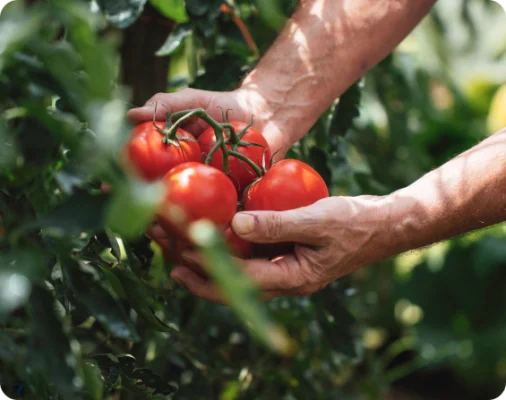
Blossom end rot is linked to insufficient calcium reaching the developing fruit, often because water supply fluctuates. Improve watering consistency and drainage. Adding calcium or extra feed without checking moisture is unlikely to solve the underlying problem.
Rapid changes in water supply can crack the skin of swelling fruit. Keep moisture steadier, especially in pots, and inspect ripe tomatoes after rain. Use sound freshly split fruit promptly, discarding any that show decay.
Tomato blight can affect leaves, stems and fruit, particularly outdoors. Remove affected material promptly and keep greenhouse foliage dry. Do not assume picking off a few leaves cures an infected plant, and discard rotting fruit.
Temperature extremes, water stress and poor pollen transfer can interfere with fruit set. Ventilate protected crops and keep roots steadily moist. Gently tapping open flower trusses can help pollen move; a second variety is not normally required.
Glasshouse whitefly can feed underneath leaves and leave sticky honeydew. Check new plants and inspect regularly before populations build. Suitable biological control can help under cover when introduced early and used according to the supplier's conditions.
Seed is the usual starting point for a new crop. Buy fresh seed of a named variety if you want predictable growth habit and fruit. Healthy young plants offer the same practical route without needing indoor propagation space.
Seed saving is best attempted with a healthy, open pollinated variety whose fruit you like. F1 hybrid seedlings may not repeat the parent's qualities. Keep seed clearly labelled and follow a proper tomato seed cleaning and drying method before storage.
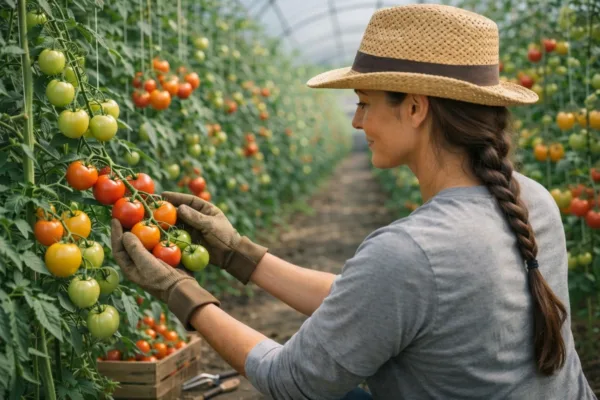
Moneymaker
A traditional cordon with medium red salad tomatoes, suitable for a greenhouse or a warm outdoor site. It needs regular side shoot removal and a sturdy support as the crop develops.
BFFD illustration of a protected tomato crop; Moneymaker identity is not verified.
Image from the BFFD media library.
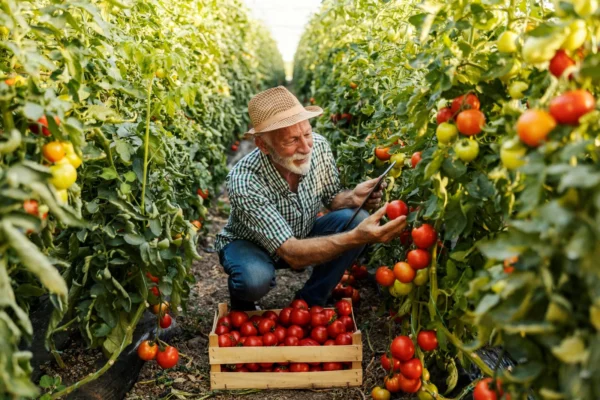
Shirley
A cordon variety valued for heavy trusses of medium red fruit, commonly grown in an unheated greenhouse. It can also be grown outdoors in suitable conditions; warmth and timely planting still matter.
BFFD illustration of tomato harvesting under cover; the pictured variety is not verified as Shirley.
Image from the BFFD media library.
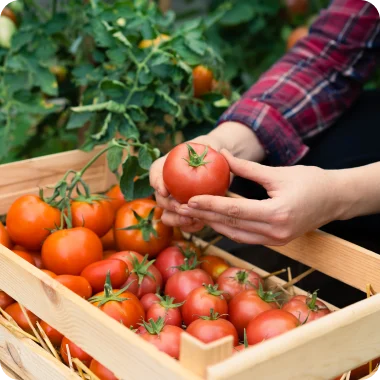
Alicante
An established cordon salad tomato for greenhouse or outdoor growing. Choose it when you want familiar red slicing fruit and are ready to provide the usual support, watering and training.
A tomato harvest illustrating salad sized fruit; cultivar identity is not established.
Image from the BFFD media library.
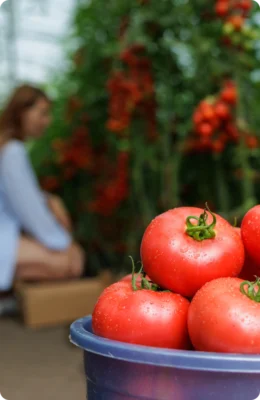
Cristal
A cordon salad tomato suited to protected growing, with outdoor potential in a sunny sheltered spot. It offers some disease resistance, but still needs good ventilation and ordinary crop hygiene.
Harvested red tomatoes illustrating the crop; these are not verified Cristal fruits.
Image from the BFFD media library.
Look for a named salad tomato suited to your available warmth, then check whether it is a cordon or bush. Choose healthy plants if indoor sowing space is limited, and make sure you can provide enough root space and reliable summer watering.
Tomato flowers are self fertile, and visiting insects or gentle movement help release pollen. Open greenhouse vents when conditions allow, giving insects access while preventing excessive heat around flowers.
Use careful inspection and targeted controls around the crop. Keep useful flowering plants nearby without allowing them to crowd tomato stems or block airflow, and avoid promising that a companion plant alone will prevent disease.
Published by Buy From Farmers Direct. Growing guidance reviewed 6 October 2026. The seasonal timeline uses the shared BFFD Growers Calendar record; adjust timings to your variety and local conditions.
It is a practical description for familiar salad sized tomatoes, not a separate species or formal growth habit. Read the label to learn whether your chosen variety is a cordon or bush.
Yes, with a suitable variety and a warm, sunny, sheltered position. Plant after local frost risk. Protected growing is usually more dependable in cooler districts and can extend the cropping season.
Remove small side shoots from cordon varieties to maintain their main stem. Leave them on bush varieties, where they form part of the productive plant. Fruit size alone does not tell you which pruning method to use.
One plant usually needs a pot around 30 to 45cm wide, with drainage holes and suitable compost. Larger root volumes are easier to keep evenly moist than very small pots.
Developing fruit is not receiving enough calcium, often because irregular watering interrupts uptake. Keep moisture consistent and avoid excessive fertiliser; adding extra calcium is not a reliable cure.
Sound, mature fruit can ripen indoors at the end of the season. Check it regularly and remove anything rotting. Very small immature fruit may not develop into a useful ripe tomato.
A good salad tomato crop comes from matching the variety to your space and keeping care consistent. Give the roots room, watch watering closely and train each plant according to its actual growth habit.
Want to get food independence, support your local grower, get better prices and shop more privately?
Local food isn’t just something you find. It’s something you protect. A free account helps keep local supply visible, supported, and resilient.

….it takes 30 seconds for food lovers and 5 minutes for suppliers
We built this for people who care where their food comes from. For people who want to remain food secure. For Farmers to get to the local people, who deserve a better income and to deliver a better price for you. For the environmentally conscious and the privacy-conscious. An account simply helps us make the map and supplier reach more useful to you, without changing how open it is. You’re always in control.


Find local food. Stay connected to it. Create a free account to support local producers and be part of a growing food network.


