


Lamb shoulder chops from a Welsh hill farm taste nothing like the cuts you find in plastic trays. The muscle has worked harder. The fat sits differently. The meat needs different heat, different timing, and a different kind of attention. If you cook these chops like you would a supermarket loin chop, you will end up chewing through disappointment. Shoulder chops reward slow cooking or careful searing followed by gentle heat. They want time.
How to Cook a Lamb Shoulder Chop
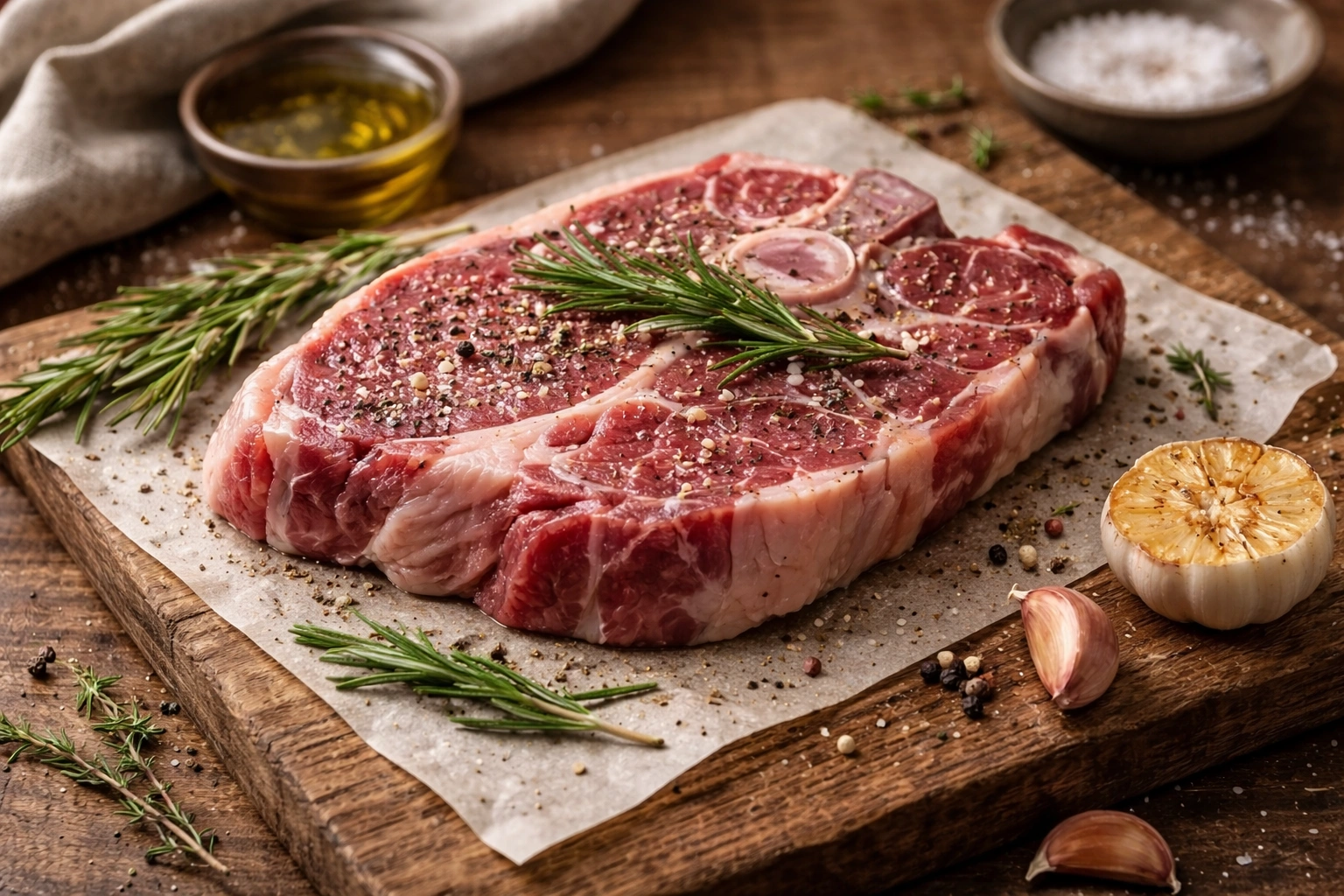
The chop itself matters most. A proper lamb shoulder chop comes from the top of the front leg where the meat is marbled with fat and crossed with connective tissue. It should be about two centimetres thick, bone in, with a good layer of fat around the edge. Look for meat that is deep red, not pale pink. The fat should be cream-coloured and firm.
You need a heavy-based frying pan or skillet. Cast iron works best because it holds heat evenly and does not cool down when the meat hits it. A roasting tin works if you are finishing the chops in the oven. Avoid non-stick pans for this. They do not get hot enough to form the crust you want.
For seasoning, sea salt and black pepper are essential. Garlic, rosemary, and thyme all work well with lamb shoulder. Some cooks add a bay leaf or two. A splash of red wine or stock helps deglaze the pan and creates a simple sauce.
You will want a meat thermometer if you have one, though it is not essential for shoulder chops the way it is for larger roasts. A pair of tongs, a sharp knife, and a board for resting the meat complete the kit.
Timing matters. Take the chops out of the fridge at least half an hour before cooking. Cold meat does not sear properly and the muscle fibres tense up when they hit high heat. Room temperature meat cooks more evenly. This is something we explore further in our guide to how to cook steak on the bbq: the proper guide.
Step-by-Step
Preparing the Chops
Pat the chops dry with kitchen paper. Wet meat steams rather than sears. Season generously with salt on both sides and let them sit for ten minutes. The salt draws moisture to the surface which then gets reabsorbed along with the salt. This seasons the meat through, not just on the surface.
Join Buy From Farmers Direct
Create a free account to discover local farm shops, farmers markets and producers near you, save your favourites, and support British farming directly.
Trim any excess fat if the layer is thicker than about half a centimetre, but leave most of it on. Shoulder chops need that fat. It bastes the meat as it cooks and carries flavour. Score the fat layer in a few places if it is particularly thick. This stops the chop from curling up in the pan.
Crush a clove of garlic and strip a few sprigs of rosemary if you are using them. Keep these ready. They go into the pan near the end.
Searing the Meat
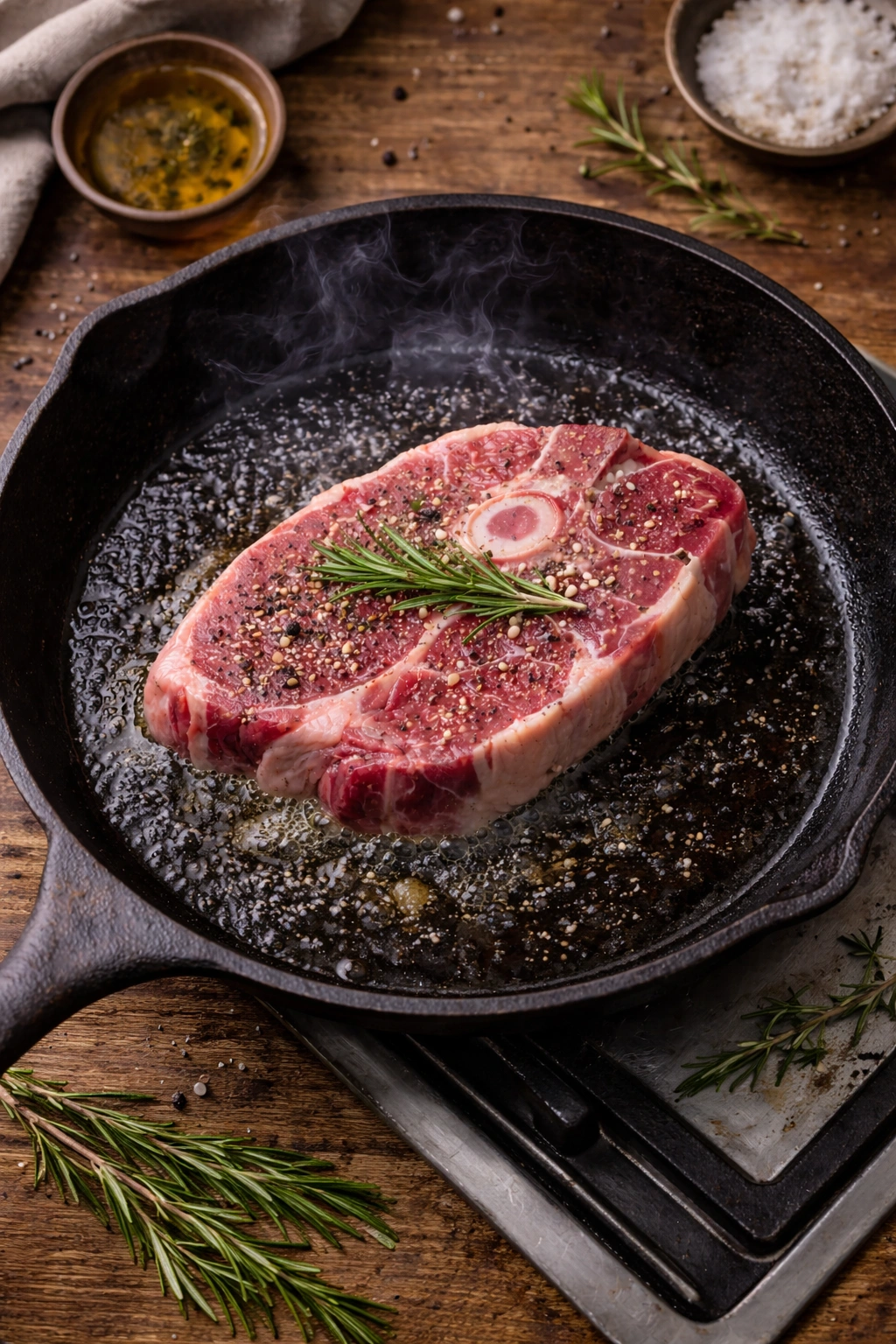
Heat your pan over medium-high heat until it is properly hot. You should feel the heat rising when you hold your hand a few inches above the surface. Add a thin film of oil. Rapeseed oil or light olive oil both work. Avoid butter at this stage because it burns before the pan gets hot enough.
Lay the chops in the pan away from you so the oil does not splash. Do not move them. Let them sit for three to four minutes. The meat will release naturally from the pan when a crust has formed. If you try to turn them too early, they will stick and tear.
Turn the chops once. Cook for another three minutes on the second side. The edges should be dark brown, almost charred in places. This is where the flavour develops. Press the meat gently with your finger. It should feel firmer than raw meat but still yield under pressure.
Stand the chops on their fat edge using tongs. Let that thick layer of fat render down for a minute or two. This crisps it up and releases more flavour into the pan.
Finishing in the Oven
If your chops are particularly thick or if you prefer them cooked through rather than pink, transfer the whole pan to an oven preheated to 180 degrees. Six to eight minutes will take them from medium-rare to medium. Ten minutes gives you meat that is cooked through but still tender.
Add your garlic and herbs to the pan before it goes in the oven. They infuse the fat and perfume the meat without burning the way they would on the hob.
Check the internal temperature if you have a thermometer. Fifty-five degrees gives you medium-rare. Sixty degrees is medium. Sixty-five degrees is well done. Shoulder chops can handle being cooked to medium or even medium-well because the connective tissue and fat keep them moist.
Resting and Serving
Take the chops out of the pan and put them on a warm plate. Tent loosely with foil and let them rest for five minutes. This is not optional. The muscle fibres contract during cooking and squeeze moisture towards the centre. Resting lets them relax and reabsorb that moisture. Cut into a chop straight from the pan and juice runs everywhere. Wait five minutes and it stays in the meat.
While the meat rests, make a quick pan sauce. Pour off most of the fat but leave the dark sticky bits. Add a good splash of red wine or stock and scrape the bottom of the pan with a wooden spoon. Let it bubble and reduce by half. That is your sauce. Strain it if there are burnt bits, but usually it is fine as it is.
Serve the chops with the sauce spooned over. Simple mashed potatoes, roasted roots, or spring greens all work well. Lamb shoulder chops are rich enough that you want something plain alongside them.
Common Mistakes
The biggest mistake is treating shoulder chops like loin chops. Loin is tender and lean. It cooks fast and stays pink in the middle. Shoulder has more connective tissue and benefits from slower cooking or a combination of high heat followed by gentle heat. Cook a shoulder chop rare and it will be chewy.
Cooking straight from the fridge is another problem. Cold meat does not brown properly because the surface moisture does not evaporate quickly enough. The temperature difference between the outside and inside is too great, so you end up with meat that is overcooked on the surface and undercooked in the centre. This is something we explore further in our guide to how to cook duck breast in air fryer: the proper way.
Not drying the meat before seasoning stops you getting a good crust. Moisture on the surface has to evaporate before browning can start. That wastes time and heat. Dry meat browns faster and better.
Moving the chops around in the pan is tempting but counterproductive. Let them sit. Trust the heat. The crust forms through sustained contact with the hot metal. Flip them once and leave them alone.
Skipping the rest means losing moisture and tenderness. Five minutes makes a noticeable difference. Use that time to make a sauce or get the vegetables ready.
Overcrowding the pan drops the temperature too much. The meat steams instead of searing. Cook in batches if you are doing more than two chops in a standard pan.
Practical Tips
Buy your lamb shoulder chops from a farm shop or a butcher who knows the farm. The difference in flavour between a chop from a sheep that has grazed on salt marsh or upland pasture and one from an intensive system is stark. Local lamb in season, especially spring lamb or hogget in late autumn, has more character.
Ask the butcher to cut the chops to the thickness you want. Two centimetres is ideal for pan cooking. Thicker chops need the oven. Thinner ones cook too fast and dry out.
Marinating works if you have time. Olive oil, lemon juice, garlic, and rosemary for a few hours adds flavour without overwhelming the lamb. Do not marinate for more than four hours or the acid starts to break down the meat texture.
Use the bone. Once you have eaten the meat, save the bones for stock. Lamb stock adds depth to soups and stews that chicken stock cannot match. Roast the bones first, then simmer them with onion, carrot, and celery for a couple of hours.
Shoulder chops work brilliantly in a slow braise. Brown them as described, then put them in a low oven with onions, tomatoes, and stock. Two hours at 150 degrees turns them fall-apart tender. This method suits older lamb or mutton particularly well.
Pairing lamb with strong flavours brings out the meat rather than masking it. Anchovies, capers, mustard, and sharp cheeses all work. So do earthy flavours like mushrooms and root vegetables.
Different breeds have different fat distribution and flavour. A chop from a Herdwick sheep tastes different to one from a Texel or a Suffolk. If you are buying direct from farms, try a few breeds and find what you prefer.
Season boldly. Lamb shoulder can take it. The fat carries the seasoning and the meat is rich enough to balance strong flavours. Under-seasoned lamb tastes muddy.
If you are cooking for people who say they do not like lamb, the issue is often the fat. Shoulder chops have more fat than leg or loin. Render it properly and crisp up the edges. That changes the texture and mellows the flavour.
Leftover cooked lamb shoulder chop is excellent cold. Slice it thinly and use it in sandwiches or on top of a salad. The fat sets as it cools and carries the herbs and garlic through the meat.
Want to keep going? We have gathered our meat, eggs, dairy and livestock guides in one place, along with the rest of our cooking and preserving guides.
If you enjoyed this, try these next:
- How to Cook Pork Loin Steaks So They Are Tender
- How Long to Cook Salmon on the Stove
- How to Cook Deer Sausage
Looking for a local supplier? Our Lamb Producers page brings them together.
Want to cook what is in season? Members on our paid plans get the Growers’ Calendar, so you always know what is at its best this month.
Frequently Asked Questions
How long should I cook lamb shoulder chops for?
Pan-fry for three to four minutes on each side over medium-high heat, then finish in a 180-degree oven for six to ten minutes depending on thickness and how well done you want them. Shoulder chops need more time than loin chops because the connective tissue requires gentle heat to break down. The bone conducts heat into the centre, so bone-in chops cook more evenly than boneless ones. Always rest the meat for five minutes after cooking to let the juices redistribute.
Can I cook lamb shoulder chops in an air fryer?
You can, though the results differ from pan-frying. Preheat the air fryer to 200 degrees and cook the chops for twelve to fifteen minutes, turning halfway through. You will not get the same deep crust that forms in a hot pan, and you miss the opportunity to make a pan sauce from the sticky bits. Air fryers work better for leaner cuts. If you are interested in how air fryers handle fatty meat with skin, duck breast cooks particularly well using that method, though the principle differs because duck benefits from rendering fat slowly under the skin.
What is the difference between shoulder chops and loin chops?
Shoulder chops come from the front leg where the muscle works harder. They have more connective tissue, more fat marbling, and more flavour. Loin chops come from the back and are leaner and more tender. Shoulder chops need slightly longer cooking and can handle being cooked to medium or medium-well without drying out. Loin chops are best served pink. Shoulder chops cost less and reward slower cooking methods or a combination of searing and oven finishing.
Should lamb shoulder chops be pink in the middle?
They can be, but they do not have to be. Unlike loin or leg, shoulder chops remain tender even when cooked to medium or medium-well because of the fat and connective tissue. If you prefer pink meat, aim for an internal temperature of fifty-five to sixty degrees. If you prefer it cooked through, take it to sixty-five degrees. The texture changes but the meat stays moist. This is one of the advantages of shoulder over leaner cuts.
How do I stop lamb shoulder chops from curling up?
Score the fat layer in two or three places before cooking. Cut through the fat and the thin membrane underneath but not into the meat itself. This stops the fat from contracting faster than the meat and pulling the chop into a curl. Bringing the chops to room temperature before cooking also helps because the muscle fibres relax. Press down gently with a spatula during the first minute of cooking if they start to curl despite scoring.
Can I use lamb shoulder chops for a stew or casserole?
Absolutely. Brown them in a hot pan first to develop flavour, then add them to a casserole with onions, root vegetables, and stock. Cook low and slow at 150 degrees for two hours. The meat will fall off the bone and the connective tissue breaks down into gelatin that thickens the sauce. Shoulder chops are excellent for this because they stay moist during long cooking. You can use them anywhere you would use diced lamb shoulder or neck.
What herbs go best with lamb shoulder chops?
Rosemary and thyme are traditional and work particularly well because their strong flavour balances the richness of the meat. Mint is classic with lamb but suits lighter cuts better. Oregano and marjoram both work, especially if you are cooking with tomatoes or Mediterranean flavours. Bay leaves add depth in slow-cooked dishes. Garlic is not a herb but it belongs with lamb shoulder. Crush it and add it to the pan in the last few minutes so it flavours the fat without burning.
Cooking lamb shoulder chops well comes down to understanding the cut. These are not quick weeknight chops. They come from a hard-working part of the animal and they carry the flavour of the pasture and the breed. Buy them from a farm or a butcher who can tell you where the sheep grazed. Season them well, sear them hard, and give them time to cook through gently. Rest them properly and serve them simply. The meat will do the rest.
Ready to support British farmers directly? Create your account and discover local producers, farm shops and seasonal food near you.

Author: Isla Harper
Isla writes about rural life, farm shops, and discovering the best places to buy directly from producers. She enjoys exploring local markets, small farms, and independent growers, sharing stories that highlight the people behind the food. Her work helps readers find trusted places to shop while celebrating the character and community of Britain’s farming landscape.