Basil rewards frequent picking for the kitchen. In the UK, warmth is decisive: a bright windowsill, greenhouse or sheltered summer patio can work, while a chilly bed often disappoints. Sow several small batches and harvest the tips to build leafy plants. This guide focuses on sweet basil, Ocimum basilicum, and its culinary forms.
Tender herb
Sunny position
Good in pots
Regular tip picking
Summer harvest
| Botanical name | Ocimum basilicum and culinary forms |
| Family | Lamiaceae |
| Plant type | Usually grown as an annual in the UK |
| Hardiness | Tender; protect from frost and cold nights |
| Position | Warm, sunny and sheltered |
| Soil | Fertile and well drained |
| Water | Keep evenly moist, never waterlogged |
| Typical height | About 20cm to 60cm, variety dependent |
| Typical spread | About 20cm to 30cm, variety dependent |
| Sow indoors | March to July in successive batches |
| Germination warmth | Around 20°C |
| Plant outside | Late May to June when nights are warm |
| Outdoor temperature | Wait for nights consistently above 10°C |
| Harvest | Mainly June to September outdoors |
| Plant spacing | About 30cm for full sized plants |
| Containers | Very suitable with drainage |
| Pruning | Pinch shoots above a pair of leaves |
| Flowers | Small white or pinkish flowers on spikes |
| Propagation | Seed is the usual method |
| Main disease concern | Basil downy mildew |
| Plant name | Crop type | Spacing |
Sow indoors
Plant outdoors
Harvest
Polytunnel | |||||||||||
|---|---|---|---|---|---|---|---|---|---|---|---|---|---|---|
| Jan | Feb | Mar | Apr | May | Jun | Jul | Aug | Sep | Oct | Nov | Dec | |||
| Basil | Herbs | Single 0.30m, In row 0.30m, Row gap 0.30m; adjust for compact forms | No activity recorded | No activity recorded | Sow indoors | Sow indoors, Polytunnel | Sow indoors, Plant outdoors, Polytunnel | Sow indoors, Plant outdoors, Harvest, Polytunnel | Sow indoors, Harvest, Polytunnel | Harvest, Polytunnel | Harvest, Polytunnel | No activity recorded | No activity recorded | No activity recorded |
Sow indoors: March, April, May, June, July. Plant outdoors: May, June. Harvest: June, July, August, September. Polytunnel: April, May, June, July, August, September.
Sowing months refer to warm indoor sowings, including summer succession batches. Plant outside only after frost risk has passed and nights remain above 10°C, often late May or June. June to September is the main outdoor harvest window; warm indoor plants may crop beyond it. Polytunnel months show the protected growing season, not a promise of frost protection or winter heat.
Basil suits a beginner who can check a pot frequently and offer enough light. Regular picking keeps it useful before flowering and woody growth reduce leaf production.
Think about the flavour you want before buying seed. Sweet, Thai and purple forms are not interchangeable in every dish. Growing two labelled pots side by side lets you compare them without committing a whole bed.
Photo: O, CC BY-SA 3.0. Resized and optimised; cropped for display. Adapted image under the same licence.
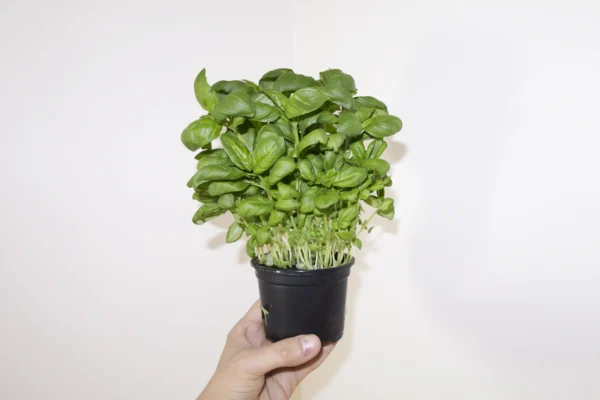
Choose a bright windowsill, keeping foliage clear of cold glass. Turn pots regularly for even light and avoid hot radiators.
Outside, use the warmest sheltered part of a patio or herb bed. A position beside a sun warmed wall is useful, provided the soil or pot still drains freely.
A greenhouse or polytunnel can provide an earlier start, but open vents on warm days. Stagnant damp air is unhelpful, especially when many pots are packed tightly together.
Use a drained container and fresh peat free compost. Keep basil separate from drought loving herbs that need a different watering routine.
Photo: Amada44, Public domain. Resized and optimised; cropped for display.
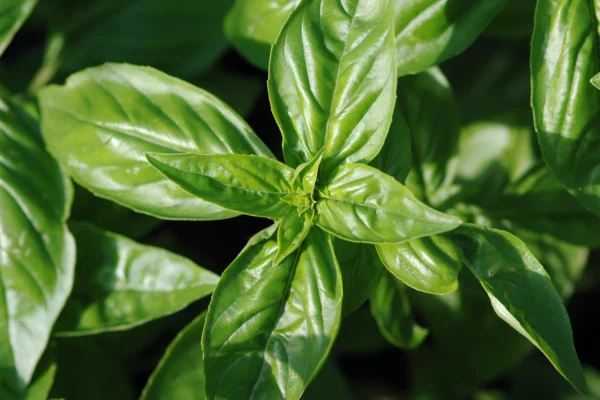
For reliable UK results, raise basil indoors and move it outside gradually when summer conditions settle. Prepare a second small sowing while the first is growing so you have replacements if plants flower early or decline.
1.
Fill a clean small pot or seed tray with peat free seed compost and moisten it before sowing.
2.
Scatter the seed thinly across the surface. Follow packet guidance for any very light covering; do not bury it deeply.
3.
Keep the pot warm, around 20°C, using a propagator or a bright indoor position. Avoid intense sun beneath a closed cover.
4.
Remove the cover after germination and give seedlings good light and gentle ventilation.
5.
Move seedlings into individual pots once they can be handled safely, lifting by a leaf rather than squeezing the stem.
6.
Grow them on with enough space between pots for leaves to dry after watering.
7.
Acclimatise plants gradually before leaving them outdoors. Wait until nights are reliably warm as well as frost free.
8.
Plant full sized basil about 30cm apart, or give each plant suitable container space, then water and label the variety.

Watering
Check the compost before watering. Water thoroughly when needed, let excess drain and empty any standing water from the outer pot. A light dry surface can hide wetter compost beneath it.
Water near the base, preferably earlier in the day. Pots in a hot greenhouse may dry quickly, while a cool cloudy spell greatly reduces demand. Use the plant and compost as your guide rather than a fixed daily amount.

Feeding
A plant in reasonably fertile garden soil rarely needs constant feeding. Heavy fertiliser is not a substitute for warmth or light and can encourage soft excessive growth.
Container compost has a limited nutrient supply. If growth slows after the initial feed is used, apply a suitable balanced liquid feed at the label rate, checking water and root space first.

Pruning
Once the plant is established, pinch or snip a shoot just above a healthy pair of leaves. This leaves growing points that can produce side shoots and keeps the plant more compact.
Pick little and often, leaving enough foliage to support recovery. Remove flower spikes from plants grown mainly for leaves, or dedicate a separate plant to flowers and seed. Do not strip a struggling plant bare for one large harvest.

Winter care
Sweet basil does not tolerate UK outdoor winter conditions. Take final useful harvests before cold weather and clear declining annual plants rather than expecting spring regrowth.
A healthy plant can continue indoors with warmth and good light, but short winter days restrict growth. Keep watering modest and inspect for pests. Starting again in spring is often simpler than maintaining a weak old plant.
Sweet basil has aromatic opposite leaves on branching stems, with shape and colour varying between forms. New shoots are soft, and older stems become firmer as the plant matures. Flower spikes carry many small blooms.
This guide is not an identification key for wild plants. Buy labelled culinary basil. Holy basil and other Ocimum species have different identities and flavours; a common name such as Thai basil may be used inconsistently, so retain the botanical label.
Photo: Risacher, CC BY-SA 2.5. Resized and optimised; cropped for display. Adapted image under the same licence.
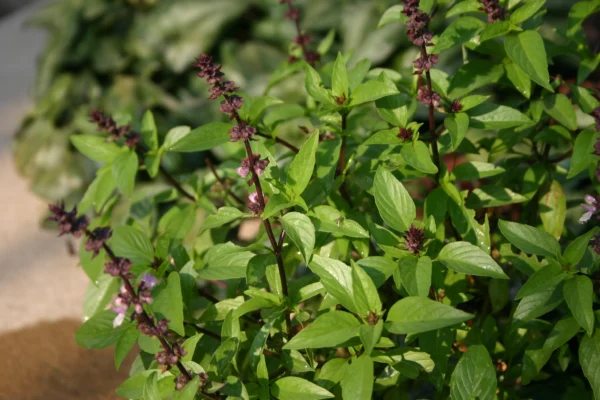
The best outdoor planting date varies sharply between a sheltered southern courtyard and an exposed northern allotment. Measure night temperatures where the plants will stand rather than relying only on a daytime forecast.
Small pots can move indoors during unsettled weather. A tray makes carrying them practical, but remove pots from standing drainage water afterwards.
For a steady kitchen supply, plan several small sowings instead of one crowded tray. Label each date and begin picking the next batch before the older one becomes woody or runs short of root space.
Photo: Kolforn (Wikimedia), CC BY-SA 4.0. Resized and optimised; cropped for display. Adapted image under the same licence.
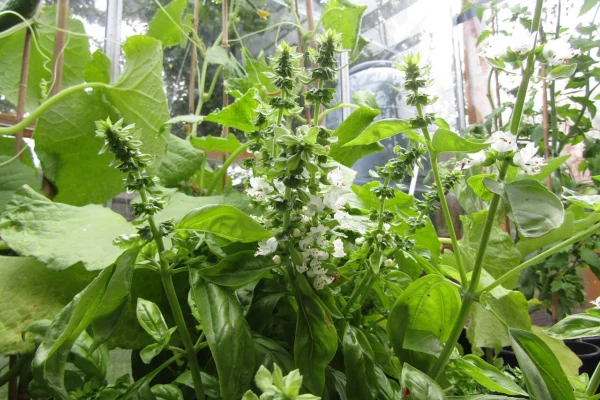
Check the undersides for the downy growth associated with basil downy mildew. Remove affected plants promptly, improve airflow and consider resistant seed varieties for the next sowing.
Basil is sensitive to chilling. Move healthy pots to warmth and wait to see which shoots recover. Delay outdoor planting until nights are consistently suitable.
Waterlogged roots or a damaged root system may be responsible. Check drainage before adding more water, and replace a badly collapsed plant rather than keeping its pot saturated.
Insufficient light, crowded seedlings or repeated picking of isolated leaves can leave a sparse plant. Improve light and harvest shoots above leaf pairs to encourage branching.
Slugs and snails can quickly damage outdoor seedlings. Check pots and their bases, remove hiding places and protect vulnerable young plants while they establish.
Seed is the straightforward way to produce a succession of healthy basil plants. Use clean pots, fresh compost and labelled seed, and keep new seedlings apart from any crop showing disease symptoms.
A supermarket pot often contains many seedlings competing for a small space. Gently separate a healthy pot into smaller rooted groups and repot them. Keep supermarket plants indoors, following RHS advice to reduce the risk of introducing plant pests or diseases outside.
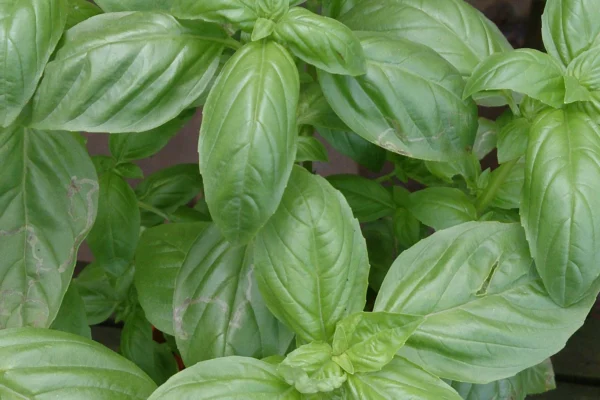
Sweet basil, Ocimum basilicum
The familiar green culinary basil is a useful first choice for tomato dishes and pesto. Choose a named variety when you want predictable leaf size or documented disease resistance.
Photo: Mokkie, CC BY-SA 3.0. Resized and optimised; cropped for display. Adapted image under the same licence.
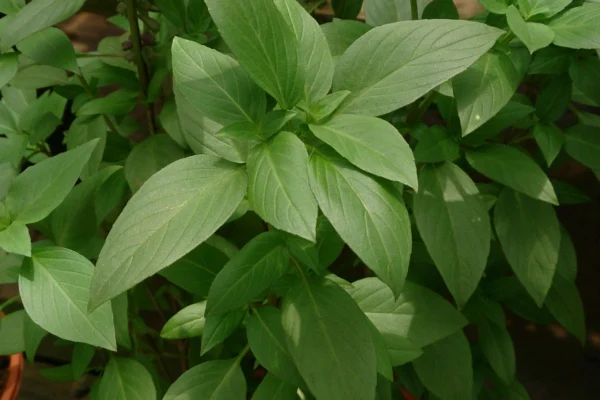
Thai basil, Ocimum basilicum ‘Horapha’
A distinct culinary option with an aniseed or liquorice character. It is worth keeping separately labelled so you can choose the flavour a recipe needs rather than mixing every harvest.
Photo: Mokkie, CC BY-SA 3.0. Resized and optimised; cropped for display. Adapted image under the same licence.
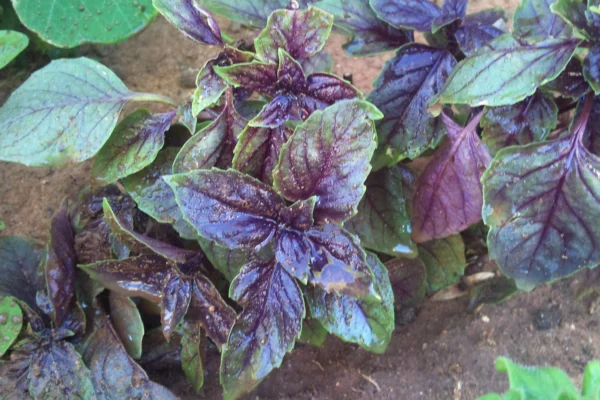
Purple leaved basil
Purple forms add colour to containers and to fresh dishes. They remain culinary basil, but colour alone does not establish a cultivar name or guarantee resistance to downy mildew.
Purple Ocimum basilicum photographed; the named cultivar is not identified.
Photo: Megalibrarygirl, CC BY-SA 3.0. Resized and optimised; cropped for display. Adapted image under the same licence.
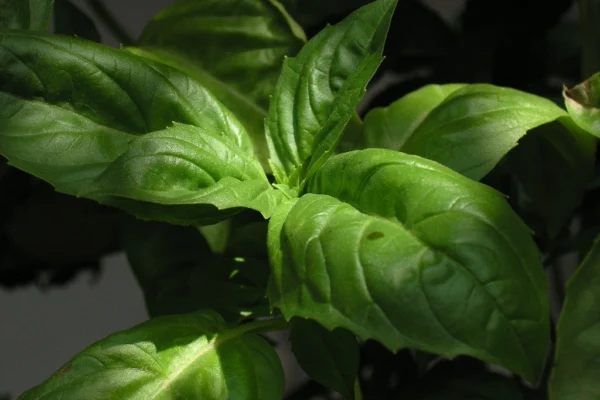
Greek basil, Ocimum basilicum ‘Bush’
A compact, small leaved form useful where space is limited. Give it the same warmth and drainage as larger sweet basil, while judging watering by its pot and growth.
Illustrative sweet basil photograph; this plant is not verified as the Greek ‘Bush’ cultivar.
Photo: Cliff Hutson, CC BY 2.0. Resized and optimised; cropped for display.
Use the BFFD map to find nearby growers and food producers. Ask which basil forms or herb plants they offer and check current availability before visiting.
Basil flowers can be visited by pollinating insects. Leave one spare plant to bloom if you want to observe visitors while keeping the main kitchen plants in leaf production.
A few flowering herbs around containers can make a small patio more varied. Keep the space accessible for checking pests by hand, and avoid unnecessary spraying on a crop picked frequently for meals.
Published by Buy From Farmers Direct. Sources checked 4 October 2026. Growing references: RHS: Growing basil; Garden Organic: Basil; University of Minnesota Extension: Growing basil; University of Maryland Extension: Growing basil; University of Minnesota Extension: Basil downy mildew; RHS: Greek bush basil; RHS: Thai basil Horapha; RHS: Plants for free, hidden costs; RHS: Herbs in containers; RHS: Herb propagation. The seasonal timeline uses the shared BFFD Growers Calendar record; adjust timings to your variety and local conditions.
Sow thinly in warm indoor conditions from March to July. Keep the seed compost lightly moist, then give emerged seedlings plenty of light. Pot them on before the roots and leaves become crowded.
Cut a growing shoot just above a pair of healthy leaves, leaving foliage below. Repeat lightly as the plant branches. Harvesting only the biggest individual leaves can leave a tall, sparse stem.
A small pot often contains many crowded seedlings, and a move into colder or darker conditions adds stress. Repot healthy rooted groups, provide good light and check moisture rather than watering automatically.
Yes, during a warm summer in a sheltered sunny position. Wait until frost risk has passed and nights consistently exceed 10°C. Pots make it easier to bring plants in when conditions deteriorate.
The basil family includes different growth habits, but common culinary basil is usually managed as an annual in the UK because it is tender. It should not be treated like a hardy perennial herb.
Yes. Freezing a surplus is a practical way to preserve it for cooking when the outdoor season ends. Use clean healthy leaves and label the portion and date so it is easy to use later.
Use the BFFD calendar for sowing reminders and the directory to explore local herb growers. Warmth, succession sowings and regular tip picking help a few pots supply everyday cooking.
Explore more growing guides: Aubergine, Bay, Beans (French).
Want to get food independence, support your local grower, get better prices and shop more privately?
Local food isn’t just something you find. It’s something you protect. A free account helps keep local supply visible, supported, and resilient.

….it takes 30 seconds for food lovers and 5 minutes for suppliers
We built this for people who care where their food comes from. For people who want to remain food secure. For Farmers to get to the local people, who deserve a better income and to deliver a better price for you. For the environmentally conscious and the privacy-conscious. An account simply helps us make the map and supplier reach more useful to you, without changing how open it is. You’re always in control.


Find local food. Stay connected to it. Create a free account to support local producers and be part of a growing food network.


