Bok choy, usually called pak choi in the UK, is a quick leafy crop with crisp stems and tender leaves. Grow it as small salad leaves or allow individual plants to form substantial rosettes for cooking. The best results come from steady growth in mild weather, with enough moisture to avoid a rushed flowering stem.
Also called pak choi
Quick leafy crop
Good for containers
Cool season growing
Sow small batches
| Botanical name | Brassica rapa, Chinensis Group |
| Family | Brassicaceae |
| Common names | Bok choy, pak choi and pak choy |
| Crop type | Leafy vegetable grown as an annual |
| Edible parts | Leaves and fleshy leaf stalks |
| Typical mature height | About 30 to 45cm, depending on variety |
| Position | Sun in cool weather, light shade in summer |
| Soil | Fertile, moist and well drained |
| Soil pH | Approximately 6.0 to 7.5 |
| Sowing depth | About 2cm outdoors; follow the packet |
| Germination | Often about one week in suitable conditions |
| Baby leaf spacing | 8 to 10cm |
| Small rosette spacing | About 20cm |
| Full rosette spacing | 25 to 30cm |
| Row spacing | At least 30cm |
| Container width | At least 30cm |
| Baby leaf harvest | May begin after about four weeks |
| Larger rosette harvest | Often eight to ten weeks |
| Main risk | Bolting after temperature or moisture stress |
| Propagation | Seed or bought young plants |
| Plant name | Crop type | Spacing |
Sow indoors
Plant outdoors
Harvest
Polytunnel | |||||||||||
|---|---|---|---|---|---|---|---|---|---|---|---|---|---|---|
| Jan | Feb | Mar | Apr | May | Jun | Jul | Aug | Sep | Oct | Nov | Dec | |||
| Bok Choy | Brassicas | Single 0.30m, In row 0.30m, Row gap 0.30m | No activity recorded | No activity recorded | Sow indoors, Polytunnel | Sow indoors, Polytunnel | Sow indoors, Plant outdoors, Harvest | Sow indoors, Plant outdoors, Harvest | Sow indoors, Plant outdoors, Harvest | Sow indoors, Plant outdoors, Harvest | Plant outdoors, Harvest, Polytunnel | Harvest, Polytunnel | Harvest, Polytunnel | No activity recorded |
Sow indoors: March, April, May, June, July, August. Plant outdoors: May, June, July, August, September. Harvest: May, June, July, August, September, October, November. Polytunnel: March, April, September, October, November.
March and April sowings are protected starts, with outdoor sowing and transplanting from late spring after frost risk. July and August are especially useful for autumn rosettes. Summer sowings suit baby leaves or cooler sites. Polytunnel months indicate optional protected growing, not guaranteed warmth or a frost free environment. Harvest dates vary with sowing date and size wanted.
Pak choi suits growers who want a useful crop from a short row or broad container. Decide whether you want repeated small leaves or whole rosettes before sowing. That choice determines spacing and picking time.
It also fills gaps after early crops, provided those crops were outside the cabbage family. Several small sowings spread the picking season.
Photo: Karl-Heinz Wellmann, CC BY-SA 3.0. Resized and optimised; cropped for display. Adapted image under the same licence.
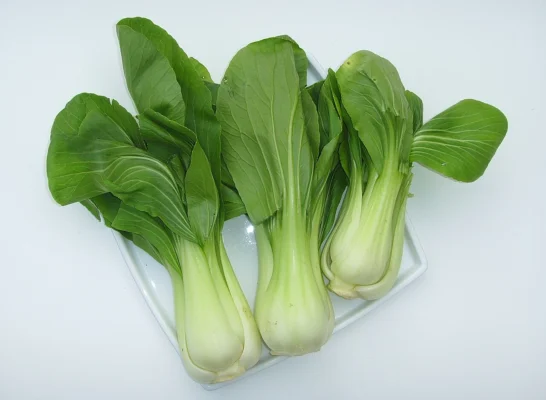
Choose fertile soil that holds moisture without remaining saturated. Add well rotted organic matter in advance and remove competing weeds. Rake a fine surface for even emergence.
Early and late crops benefit from sun and shelter. In hot weather, light afternoon shade can reduce stress. Avoid deep shade and hot, dry suntraps.
For containers, use peat free multipurpose compost in a pot at least 30cm wide. Provide drainage and easy watering access.
Treat pak choi as a brassica when planning rotation. Cabbage, broccoli, radish and turnip are relatives. Where clubroot is known, clean containers and fresh compost are preferable to moving affected soil around.
Photo: Forest & Kim Starr, CC BY 3.0. Resized and optimised; cropped for display.
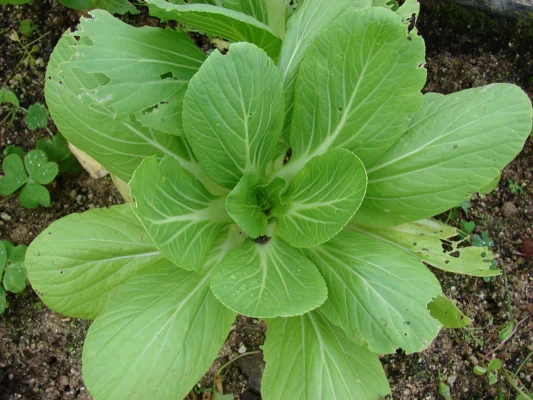
Direct sowing avoids root disturbance. Modules are useful when slugs are troublesome or a bed is not yet ready, but move plants on before the roots become congested.
1.
Choose a variety and sowing date suitable for the season and the harvest size you want.
2.
Prepare moist, weed free soil, or fill clean modules with peat free seed compost.
3.
Outdoors, sow thinly about 2cm deep in rows at least 30cm apart.
4.
In modules, sow one or two seeds per cell and retain the stronger seedling.
5.
Water gently and keep the seed zone evenly moist until seedlings emerge.
6.
Thin direct sowings gradually to 8 to 10cm for leaves or 25 to 30cm for full rosettes.
7.
Harden off protected plants and transplant from late spring, handling the rootball carefully.
8.
Water in and secure suitable insect mesh over hoops, leaving space for expanding leaves.

Watering
Keep growth steady by checking soil moisture frequently. Dryness can reduce tenderness and encourage bolting. Water the root area thoroughly when needed instead of repeatedly wetting only the leaf surfaces.
Check containers in warm, windy weather. Rain may wet the leaves while leaving the compost dry beneath them. Lift a leaf and check the root zone, then empty standing water from saucers.

Feeding
Good soil preparation is usually more useful than repeated feeding during this short crop. In fertile ground, a healthy fast growing batch may need little additional fertiliser. Check moisture before feeding slow growth.
Compost in containers has a limited nutrient supply. If a prolonged baby leaf crop exhausts it, use a vegetable feed according to the label. Do not apply lawn feeds or products containing weedkiller to edible crops.

Pruning
Pak choi needs harvesting rather than routine pruning. Take outer leaves while they are tender and leave the growing centre intact if you want further picking. Avoid stripping a small plant until only its heart remains.
For a whole rosette, cut at the base with a clean knife. Once a flowering stem rises, harvest usable growth promptly. Removing the stem does not reliably turn an ageing, stressed plant back into a compact leafy crop.

Winter care
Late summer sowings can provide autumn leaves under glass or in a polytunnel. Ventilate on mild days and avoid keeping the foliage constantly damp. Growth slows markedly as daylight and temperature fall.
Cold tolerance differs between varieties and does not guarantee winter production everywhere. Protect useful autumn crops when frost threatens, but plan to harvest before severe weather rather than relying on large new leaves through midwinter.
Pak choi forms an open, upright rosette with broad leaves and fleshy white or pale green stalks. Some varieties have purple upper leaf surfaces. It does not make the tightly packed, elongated head typical of napa Chinese cabbage.
Bok choy and pak choi describe the same crop. Choy sum and tatsoi are related vegetables with their own habits, so check the packet name rather than treating every oriental salad mix as pure pak choi.
Photo: Forest & Kim Starr, CC BY 3.0. Resized and optimised; cropped for display.
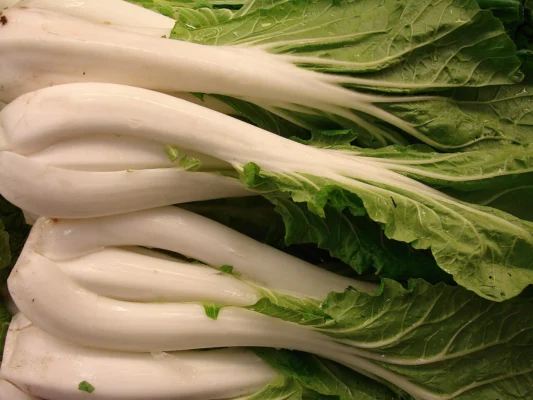
For full rosettes, a late summer start is often easier than trying to hold plants through hot midsummer. Spring crops are possible, but protected starts should not be rushed from a warm windowsill into prolonged cold. Sudden checks can affect growth later.
In cooler northern and exposed gardens, adjust sowing to local conditions and allow extra time in autumn. In warmer southern gardens, prioritise moisture, light shade and quick picking. Calendar dates are a starting point, not a replacement for checking the plants.
Pick while leaves and stalks are crisp, preferably before the day becomes hot. Wash off soil and insects, and use the crop soon after harvesting. Mature rosettes do not hold their quality indefinitely.
Photo: David Monniaux, CC BY-SA 3.0. Resized and optimised; cropped for display. Adapted image under the same licence.
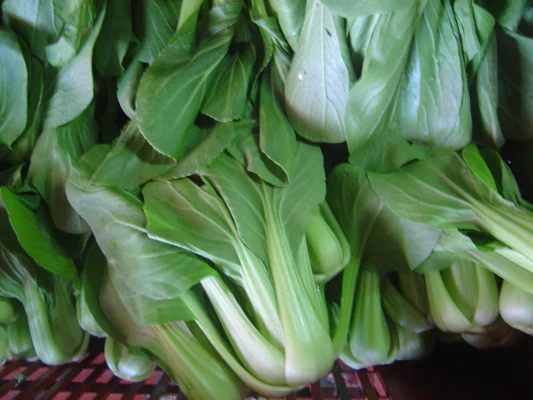
This is bolting. Temperature changes, lengthening days and dry roots can contribute. Harvest what is usable, resow in a more suitable window and choose a variety with bolting resistance for larger rosettes.
Flea beetles commonly make pits and holes, and may jump when disturbed. Protect vulnerable seedlings with suitable insect mesh, keep them growing steadily and tolerate minor damage on larger plants.
Look for slugs and snails after dark or in damp hiding places. Check under pots and around thick mulch. Protect young plants early rather than waiting until only stalks remain.
Inspect leaf undersides as well as the centre. Cabbage caterpillars can feed on pak choi. Secure mesh before adults reach the crop, check its edges and inspect plants before covering them.
Clubroot can stunt brassicas and distort their roots. Confirm the cause before replanting. Avoid transferring contaminated soil on tools or footwear; ordinary short rotations do not remove an established infection.
Raise new crops from seed, sowing a manageable quantity every few weeks in suitable weather. Label each batch with its variety and date.
Bought plugs can save time, but inspect them for pests and reject badly congested or already flowering plants. F1 varieties do not reliably reproduce their original qualities from saved seed.
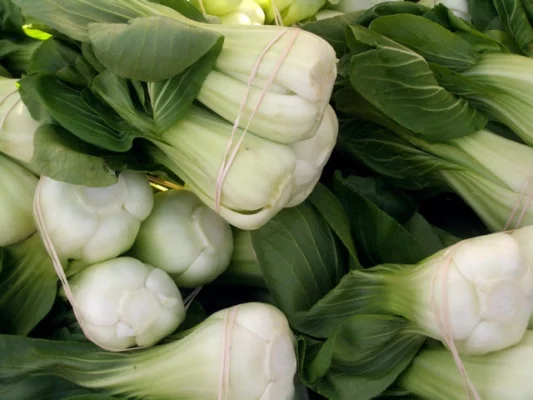
Summer Breeze
A variety selected for resistance to bolting, suitable for baby leaves or larger succulent stalks. It offers some tolerance of temperature variation, but still needs moisture and prompt harvesting.
Illustrative pak choi photograph; the cultivar is not identified.
Photo: The Marmot, CC BY 2.0. Resized and optimised; cropped for display.
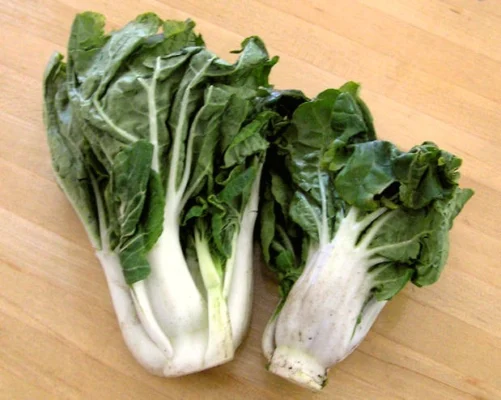
Ivory
A white stemmed variety with dark green fleshy leaves and crisp stalks. Consider it when you want a clear contrast between leaf and stem, and allow enough spacing for broad rosettes.
Illustrative white stemmed pak choi photograph; the cultivar is not identified.
Photo: Benjwong, Public domain. Resized and optimised; cropped for display.
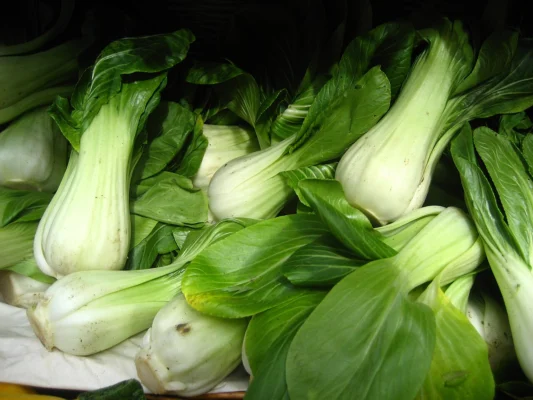
Glacier
Bred for British conditions, with broad white stems and deep green leaves. Slower bolting makes it useful for a longer picking opportunity, although resistance does not mean a plant can remain unharvested indefinitely.
Illustrative pak choi photograph; the cultivar is not identified.
Photo: Jeremy Keith, CC BY 2.0. Resized and optimised; cropped for display.
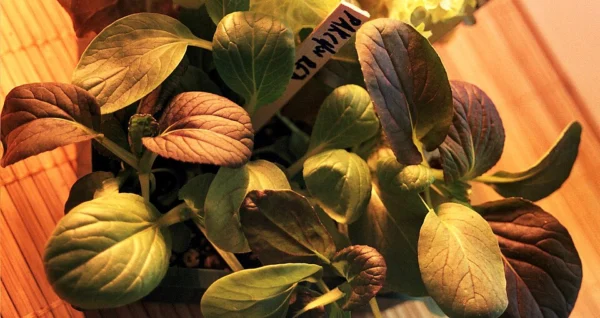
Red Choi
Purple to red upper leaf surfaces contrast with green undersides and green stems. Useful for adding colour to a baby leaf harvest, with the same need for fertile soil and consistent watering.
Illustrative red pak choi seedlings; the named cultivar is not confirmed.
Photo: Victoria Grima at V’s Plug Plants, CC BY-SA 3.0. Resized and optimised; cropped for display. Adapted image under the same licence.
Use the BFFD map to explore nearby growers and plant suppliers. Ask about pak choi seed varieties or young plants, checking current availability and the recommended sowing season before visiting.
Pak choi is normally picked before flowering. Grow flowering plants nearby to support insects without sacrificing every vegetable plant to pest feeding.
Fine mesh can protect leaves without routine spraying. Keep it secured and raised above the crop, and check underneath regularly. Garden shelter supports predators; seed rows still need slug monitoring.
Published by Buy From Farmers Direct. Sources checked 4 October 2026. Growing references: RHS: How to grow pak choi; University of Minnesota Extension: Growing Chinese cabbage and bok choy; RHS: Bolting in vegetables; RHS: Flea beetles on brassicas; RHS: Club root; RHS: Summer Breeze pak choi; RHS: Glacier pak choi; RHS: Red Choi pak choi; RHS: Ivory pak choi. The seasonal timeline uses the shared BFFD Growers Calendar record; adjust timings to your variety and local conditions.
Yes. Pak choi is the name most often used in the UK. Both refer to the open rosette crop with fleshy leaf stalks, distinct from heading napa Chinese cabbage.
Start protected batches in spring and sow outdoors from late spring after frost risk. July and August are useful for autumn rosettes. In midsummer, prioritise baby leaves, moisture and a cooler position.
Heat, cold spells, changing day length and water stress can trigger flowering. Avoid growth checks, use suitable seasonal varieties and harvest promptly. Late summer sowing often makes full rosettes easier.
Yes. Choose a freely draining pot at least 30cm wide and peat free multipurpose compost. Baby leaves or small rosettes suit containers well, provided watering remains consistent.
Baby leaves may be ready in about four weeks, while larger rosettes often need eight to ten. Variety, temperature and autumn daylight affect the pace, so judge tenderness and size as well as the date.
Yes. Take a few outer leaves and leave the central growing point intact. Continue only while growth is healthy and tender; sow another batch instead of expecting indefinite regrowth.
Use the BFFD growers calendar to plan small sowings around the other crops in your space. Record dates and bolting behaviour in your own growing notes to find the most reliable local window.
Explore more growing guides: Cabbage (Spring), Broccoli (Green), Brussels Sprouts.
Want to get food independence, support your local grower, get better prices and shop more privately?
Local food isn’t just something you find. It’s something you protect. A free account helps keep local supply visible, supported, and resilient.

….it takes 30 seconds for food lovers and 5 minutes for suppliers
We built this for people who care where their food comes from. For people who want to remain food secure. For Farmers to get to the local people, who deserve a better income and to deliver a better price for you. For the environmentally conscious and the privacy-conscious. An account simply helps us make the map and supplier reach more useful to you, without changing how open it is. You’re always in control.


Find local food. Stay connected to it. Create a free account to support local producers and be part of a growing food network.


