Brussels sprouts turn spring sowing into an autumn and winter harvest. Buttons develop along tall stems for picking as meals require them. Start with the right variety, sufficient space and steady summer growth, especially when Christmas is the aim.
Winter vegetables
Hardy outdoors
Sun preferred
Generous spacing
Long growing season
| Botanical name | Brassica oleracea Gemmifera Group |
| Family | Brassicaceae |
| Crop type | Leaf buds on upright stems |
| Life cycle | Biennial, grown for one crop |
| Typical height | About 90cm, variety dependent |
| Position | Sunny and sheltered |
| Soil | Fertile, firm and well drained |
| Soil reaction | Avoid strongly acid soil |
| Main sowing | March and April |
| Main planting | Late May to June |
| Harvest season | Late September to February |
| Plant spacing | Usually 60cm |
| Row spacing | At least 60cm |
| Propagation | Seed |
| Winter protection | Support and pigeon cover |
| Container option | One compact plant in a large pot |
| Picking stage | Firm, tightly closed buttons |
| Picking sequence | Lower sprouts first |
| Additional harvest | Tender sprout tops |
| Crop rotation group | Brassicas |
| Plant name | Crop type | Spacing |
Sow indoors
Plant outdoors
Harvest
Polytunnel | |||||||||||
|---|---|---|---|---|---|---|---|---|---|---|---|---|---|---|
| Jan | Feb | Mar | Apr | May | Jun | Jul | Aug | Sep | Oct | Nov | Dec | |||
| Brussels Sprouts | Brassicas | Single 0.60m, In row 0.60m, Row gap 0.60m | Harvest | Harvest | Sow indoors, Polytunnel | Sow indoors, Polytunnel | Plant outdoors | Plant outdoors | No activity recorded | No activity recorded | Harvest | Harvest | Harvest | Harvest |
Sow indoors: March, April. Plant outdoors: May, June. Harvest: January, February, September, October, November, December. Polytunnel: March, April.
The calendar shows a typical UK spring sowing: March to April seed, late May to June planting and late September to February harvest across early and late varieties. A single variety will not necessarily crop throughout that period. February sowing under suitable protection and later May sowing are possible for particular schedules. Polytunnel months describe raising young plants in March and April; mature winter crops normally stand outdoors.
Sprouts suit gardeners who can reserve a bed for much of the year. Start with a short row and record how many meals it supplies before increasing next year’s planting.
Choose a compact selection for narrow plots. A few well grown plants are easier to cover and pick than a crowded row. Containers need enough volume and weight for tall plants in autumn winds.
Photo: Visitor7, CC BY-SA 3.0. Resized and optimised; cropped for display. Adapted image under the same licence.
Find a sunny bed with some shelter from prevailing winds. Leave a workable path beside the row so winter harvesting does not require standing on wet growing soil.
Use fertile ground with good drainage and moisture retention. Add mature compost ahead of planting. Test very acid soil before deciding whether lime is appropriate, and follow the test and product guidance rather than applying it automatically.
Keep sprouts with cabbage relatives in the crop rotation. If club root is known on the plot, plan management before buying plants. Resistant cultivars can help, but do not remove the need for drainage and soil hygiene.
Allow space for a tall mesh enclosure and supports, with an accessible flap for picking. Adjust the frame while plants are small.
Photo: Downtowngal, CC BY-SA 3.0. Resized and optimised; cropped for display. Adapted image under the same licence.
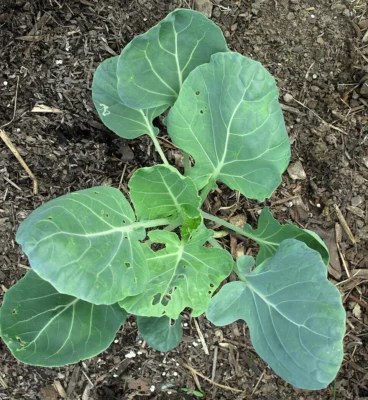
Raise a few spare seedlings so damaged plants can be discarded. Aim for sturdy transplants with healthy roots ready to establish in the final bed.
1.
Select early or later varieties to match the meals and season you want. Retain the packet so the sowing date and harvest expectation remain available.
2.
Sow during March or April in clean modules or a prepared outdoor seedbed. Use the packet’s recommended depth and label immediately.
3.
Keep seedlings moist and well lit. Thin crowded sowings before plants stretch or compete, and protect outdoor seedlings from slugs.
4.
Prepare the final bed while seedlings grow. Remove persistent weeds and ensure the soil has settled after any cultivation or compost addition.
5.
Harden off plants raised under cover by gradually exposing them to outside conditions. Continue watering during this transition.
6.
Plant sturdy seedlings around 10 to 15cm tall in late May or June. Water them beforehand and handle the rootball gently.
7.
Space plants about 60cm apart with at least 60cm between rows. Set deeply enough for the lowest leaves to sit near soil level, firm and water in.
8.
Fit an appropriate insect mesh cover and check it immediately for gaps. Revisit after a few days to inspect rooting, moisture and any slug damage.

Watering
Keep establishment even, then check soil moisture through summer. A developing sprout plant needs sustained access to water; prolonged drying can leave poorly formed buttons. Inspect below the surface before deciding that a brief shower was enough.
Mulch moist soil and keep competing weeds small. Water containers according to compost condition rather than a fixed weekly rule. Make sure drainage holes stay clear and do not leave pots standing in collected water.

Feeding
Prepare a fertile bed rather than relying on repeated rescue feeds. Where soil is poor or growth is slow, an appropriate nitrogen feed in June or July may help. Follow the labelled rate and account for compost already supplied.
Check roots, watering and planting date before treating poor growth with fertiliser. Record applications so different people tending the plot do not repeat them.

Pruning
Remove yellowing lower leaves as necessary to keep the stem accessible and improve airflow. Preserve healthy foliage that is still supporting growth. Routine severe stripping is unnecessary for a home crop.
Pick firm buttons from the bottom upwards, taking only what is ready. Topping can encourage more simultaneous development, but is optional; for a prolonged household harvest, retaining the growing top is a reasonable default.

Winter care
Mature plants are hardy, but tall stems need physical stability. Earth up around their bases in late summer and stake where exposure demands it. Check the ties and the root zone after strong winds.
Keep pigeon protection secure and remove snow that strains the frame. Pick while sprouts remain tight and sound. A standing crop still needs regular inspection; cold weather does not preserve every button indefinitely.
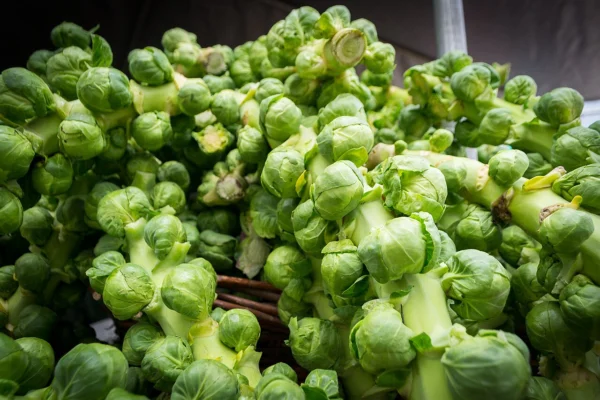
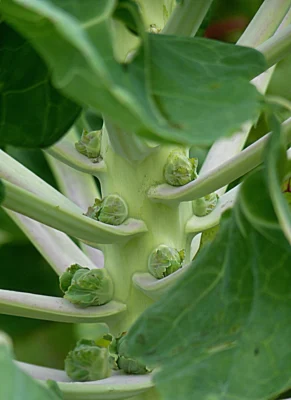
Brussels sprouts carry rounded leaf buds where leaves join the main stem. These buds enlarge into small, tightly wrapped heads, usually beginning lower down. Broad leaves and a leafy crown remain above the developing crop.
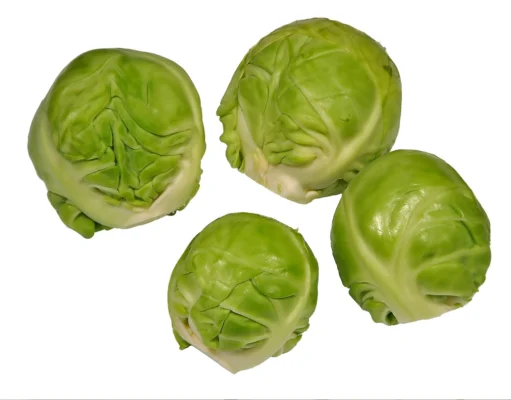
Sprouting broccoli has flower buds, while kalettes are a sprout and kale hybrid. These generic cultivar card photographs illustrate Brussels sprouts without authenticating named selections.
Photo: Amada44, CC BY-SA 3.0. Resized and optimised; cropped for display. Adapted image under the same licence.
Match the harvest window to your area. Early, middle and late are useful categories, but weather affects readiness. Note when firm buttons actually appear on your plot.
For Christmas, buy a variety whose supplier lists winter or December cropping and follow its sowing timetable. Buying tiny plants in autumn is not a reliable shortcut to a mature festive harvest.
In cold, wet springs, modules help maintain plants until the bed is workable. Avoid planting into saturated soil simply to meet a calendar date.
Photo: Alabama Extension / Janet Guynn, CC0 1.0. Resized and optimised; cropped for display.
Poor growth and variety choice are common contributors. Review soil fertility, summer moisture and sowing date. Select a reliable modern cultivar next time; firm planting alone will not correct an unsuitable growing schedule.
Check moisture first. If the root system is damaged or plants are unusually loose, cabbage root fly may be involved. Use collars or suitable insect mesh preventively and rotate the growing position.
Suspect club root when roots are distorted and plants fail to thrive. Avoid carrying contaminated soil elsewhere. Improve drainage and consider resistant cultivars, remembering that resistance is not immunity.
Look for caterpillars beneath leaves and for pigeon damage. Inspect the protective cover, remove visible caterpillars where practical and repair openings. Leave enough clearance that foliage does not press against butterfly netting.
Cabbage whitefly often gathers on leaf undersides. Modest numbers on established plants can be tolerated. Inspect before acting, remove badly deteriorated leaves and maintain plant vigour rather than assuming every insect requires treatment.
Raise replacements from named seed. F1 selections offer predictability, while suitable open pollinated varieties may interest seed savers. Match either choice to your sowing and harvest schedule.
Seed saving takes the crop into its flowering year. Brussels sprouts cross with other flowering Brassica oleracea vegetables, so maintaining a variety requires isolation and an adequate group of plants. Saved F1 seed may produce variable offspring.
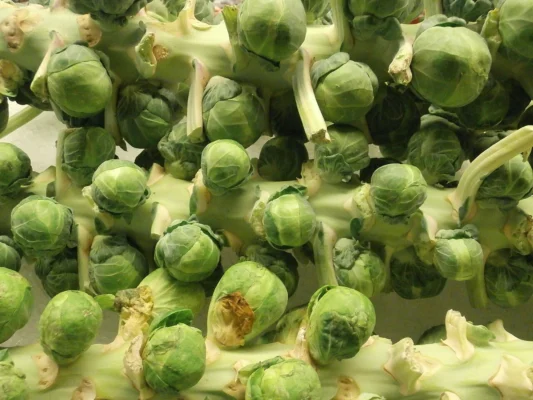
Igor
A middle to late season cultivar with uniform dark green buttons and a sturdy stem reaching about 80cm. Consider it for a winter row where a fairly even crop is useful.
Illustrative Brussels sprouts; cultivar unidentified.
Photo: Jeffery Martin, CC0 1.0. Resized and optimised; cropped for display.
Crispus
Produces firm green buttons from autumn into winter and offers club root resistance. It is a practical option to investigate where the disease is a concern, alongside wider soil management.
Illustrative Brussels sprouts; cultivar unidentified.
Photo: Jamain, CC BY-SA 3.0. Resized and optimised; cropped for display. Adapted image under the same licence.
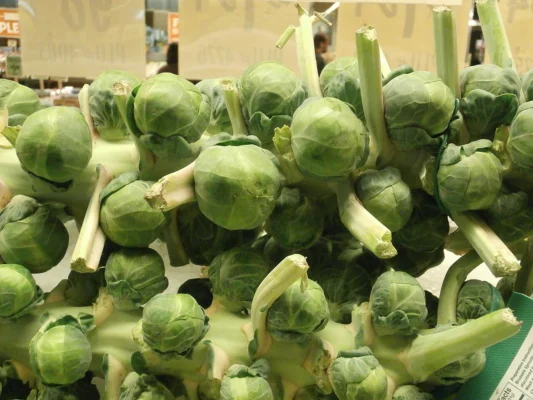
Cascade
A winter selection described by the RHS for November to February harvest, with good standing ability. Tall plants still benefit from sensible support and accessible picking space.
Illustrative Brussels sprouts; cultivar unidentified.
Photo: Jeffery Martin, CC0 1.0. Resized and optimised; cropped for display.
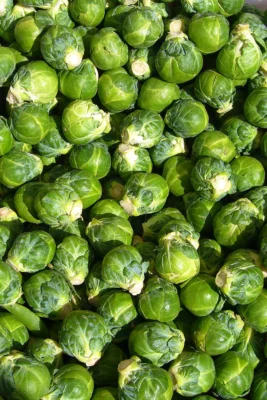
Maximus
An early to middle season choice with smooth buttons spaced along the stem. Useful when you want the first picking to precede the main winter row; check the seed supplier’s exact calendar.
Illustrative Brussels sprouts; cultivar unidentified.
Photo: Eric Hunt, CC BY 2.5. Resized and optimised; cropped for display.
Use the BFFD map to find nearby growers and farm shops, then check what is available. Ask whether sprouts are sold loose or on the stalk, or whether spring plants are offered for growing at home.
Protect the crop with a properly secured barrier and avoid loose netting that can entangle birds. Inspect covers during every harvest visit, particularly after storms or adjustments.
Vegetative sprouts do not need pollinating insects to form edible buttons. A plant retained for seed must eventually flower and receive appropriate pollination, which requires a different management plan from a covered food crop.
Published by Buy From Farmers Direct. Sources checked 4 October 2026. Growing references: RHS: How to grow Brussels sprouts; Garden Organic: Brussels sprouts; RHS: Brussels sprouts problems; University of Minnesota Extension: Growing Brussels sprouts; RHS: Igor; RHS: Crispus; RHS: Cascade; RHS: Club root; RHS: Insect proof mesh; RHS: Cabbage root fly; Real Seeds: Seed saving instructions; RHS: Cabbage whitefly. The seasonal timeline uses the shared BFFD Growers Calendar record; adjust timings to your variety and local conditions.
March and April are useful main sowing months. Some early schedules begin under cover in February and some extend into May. Follow the variety’s instructions rather than using one date for every selection.
Allow about 60cm between plants and at least 60cm between rows, unless the named variety requires more. Keep enough room for airflow, supports and comfortable access beneath the cover.
Yes, with a compact variety and one plant per large, stable container. Use fresh suitable compost, good drainage and regular moisture checks. Crowding several plants into one small pot is unlikely to succeed.
Cold weather can improve sweetness, but a ready crop does not have to wait for a frost. Harvest firm, closed buttons before they deteriorate, and match the variety to its intended season.
Topping can encourage a more even final crop, but it is optional. For repeated household picking, leave the plant growing and remove buttons as they mature. Tender tops can be used when cropping finishes.
No. It is normally grown for one extended harvest. If left into its second spring it tends towards flowering, so plan a fresh sowing rather than relying on the old stem for another winter crop.
Use the BFFD growers calendar alongside the seed packet’s harvest window. Keep the winter row accessible and explore the map for local produce while plants mature.
Explore more growing guides: Broccoli (Green), Broccoli (Purple), Cabbage (Autumn).
Want to get food independence, support your local grower, get better prices and shop more privately?
Local food isn’t just something you find. It’s something you protect. A free account helps keep local supply visible, supported, and resilient.

….it takes 30 seconds for food lovers and 5 minutes for suppliers
We built this for people who care where their food comes from. For people who want to remain food secure. For Farmers to get to the local people, who deserve a better income and to deliver a better price for you. For the environmentally conscious and the privacy-conscious. An account simply helps us make the map and supplier reach more useful to you, without changing how open it is. You’re always in control.


Find local food. Stay connected to it. Create a free account to support local producers and be part of a growing food network.


