Boysenberries produce large, dark, juicy summer fruits on long canes. They have blackberry, raspberry, loganberry and dewberry ancestry. Give them strong support and keep this year’s new canes separate from those carrying the current crop.
Hybrid cane fruit
Self fertile
Summer harvest
Needs support
Annual pruning
| Botanical name | Rubus 'Boysenberry' |
| Family | Rosaceae |
| Plant type | Deciduous perennial cane fruit |
| Habit | Long trailing canes |
| Supported height | Usually 1.5 to 2.5m |
| Trained spread | Allow about 3 to 4m |
| Plant spacing | About 3m, adjusted to vigour |
| Light | Sun; tolerates light shade |
| Soil | Fertile and freely drained |
| Exposure | Sheltered is preferable |
| Best planting season | Autumn to early spring |
| Container plants | Plant in workable soil; avoid hot dry spells |
| Pollination | Self fertile |
| Flowers | White or pale pink |
| Fruit colour | Dark purple to black when ripe |
| Main UK harvest | Usually July, sometimes into August |
| Fruiting wood | Canes grown the previous year |
| Pruning | Remove fruited canes after harvest |
| Propagation | Tip layering healthy plants |
| Best use | Fresh fruit, freezing and preserves |
| Plant name | Crop type | Spacing |
Sow indoors
Plant outdoors
Harvest
Polytunnel | |||||||||||
|---|---|---|---|---|---|---|---|---|---|---|---|---|---|---|
| Jan | Feb | Mar | Apr | May | Jun | Jul | Aug | Sep | Oct | Nov | Dec | |||
| Boysenberry | Soft fruit | Single 3.00m, In row 3.00m, Row gap 3.00m | Plant outdoors | Plant outdoors | Plant outdoors | No activity recorded | No activity recorded | No activity recorded | Harvest | Harvest | No activity recorded | Plant outdoors | Plant outdoors | Plant outdoors |
Sow indoors: no months recorded. Plant outdoors: January, February, March, October, November, December. Harvest: July, August. Polytunnel: no months recorded.
The planting band shows the preferred dormant season, October to March, when soil is workable. Potted plants can be planted outside that window with suitable aftercare. July and August are a guide to harvesting established plants; local weather and the supplied selection alter timing. Routine seed sowing and polytunnel growing are not required.
Choose boysenberry if you can give one plant a permanent run of support and reach the fruit regularly. Its soft crop rewards home growing because ripe berries can go straight from the garden to the kitchen without a long journey.
Buy a labelled, healthy plant from a reliable nursery. Confirm whether it is thornless and allow access for tying in and pruning.
Photo: Fir0002/Flagstaffotos, GFDL 1.2. Resized and optimised; cropped for display. Resized and cropped for display. This derivative photograph is licensed under GFDL 1.2. Original photograph: Fir0002/Flagstaffotos. Full licence: http://www.gnu.org/licenses/old-licenses/fdl-1.2.html
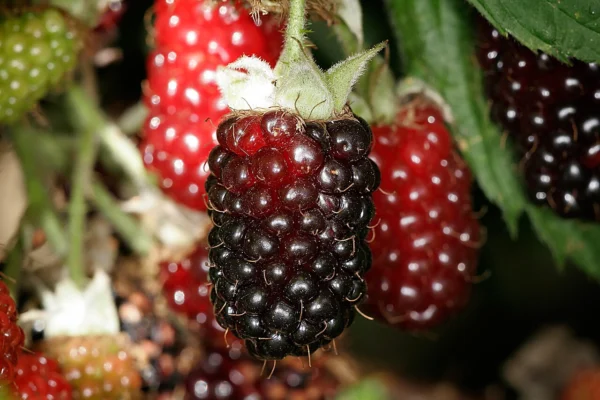
Choose sun and shelter for good ripening and easier training. Avoid dense tree roots that compete for water and light.
Avoid sites that become waterlogged in winter. Improve drainage before planting or choose another location; extra feed will not solve root problems in saturated soil.
Install posts and wires before planting. Space horizontal wires roughly 45cm apart, with fixings strong enough for wet foliage and fruit. Check an existing fence before using it as support.
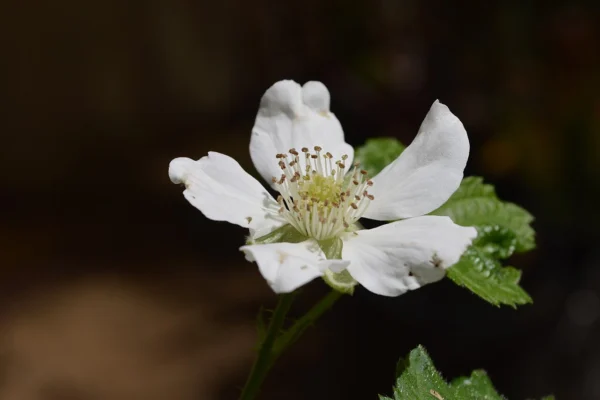
Plant from autumn to early spring when the ground is workable. Keep bare roots moist during preparation and water a dry rootball before removing its pot.
1.
Check the label and identify the support space needed by the supplied plant.
2.
Remove persistent weeds from the planting area without burying their roots again.
3.
Set up the support and mark the final planting position before digging.
4.
Dig a hole wide enough for the rootball or comfortably spread bare roots.
5.
Plant a container specimen at its previous depth; for bare roots, follow the nursery’s planting instructions.
6.
Backfill, firm gently and water thoroughly to settle soil around the roots.
7.
Follow the supplier’s initial pruning advice; establishing new canes usually takes priority over a first year crop.
8.
Mulch the surrounding soil, leave the stem base clear and label the plant.

Watering
Water newly planted boysenberries during prolonged dry spells while their roots establish. Apply water over the root area rather than only beside the stem. Check beneath the mulch before deciding whether more is needed.
Established plants are more resilient, but prolonged drought can still affect growth and developing fruit. Check moisture when berries are swelling. Do not assume a few minutes of overhead sprinkling has soaked the soil.

Feeding
A spring mulch of well rotted organic material helps maintain soil condition. Keep it away from the crown and renew it as needed rather than repeatedly burying the base of the canes.
Regularly mulched, fertile soil may need no additional feed. If growth or cropping is poor, first check watering, shade and pruning. Use a general fertiliser according to its label only where extra nutrients are justified.

Pruning
After harvest, trace each cane that carried fruit back to the base and cut it out. Retain the healthy new canes produced during the same summer: these are the framework for next year’s crop.
Tie replacement canes along the wires with soft, loose ties. Keeping young canes in a separate central or upper position during summer makes the changeover easier. Never cut every cane down annually as you might an autumn raspberry.

Winter care
Check supports and ties after storms. Untangle canes carefully while they are accessible, but do not force stiff stems into sharp bends. Remove loose netting when it is no longer protecting a crop.
In spring, inspect overwintered canes for dead or damaged sections and remove damaged growth. A sheltered position is valuable in cold exposed gardens; a hardy root system does not guarantee every exposed cane escapes winter injury.
Boysenberry carries compound green leaves on long canes, with pale flowers followed by clusters of fruit. Ripening berries darken from green through red towards purple or black. Red fruit is normally not yet ready to pick.
The ripe fruit consists of many small, joined segments and is often elongated. Fruit colour and shape alone cannot reliably identify every Rubus hybrid. Keep the nursery label so pruning records and any future propagation remain attached to the right plant.
Photo: Solarence, CC0 1.0. Resized and optimised; cropped for display.
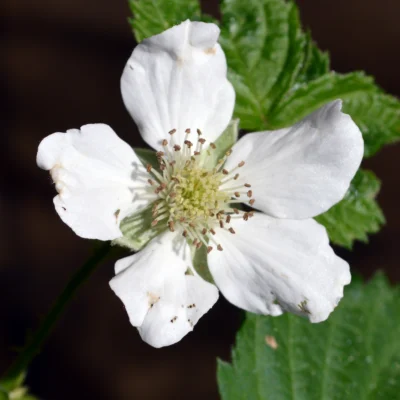
Expect the main crop in July in many UK gardens, with variation between sites and selections. Check fruit frequently once colour changes begin. Pick when fully ripe and releasing readily, rather than relying on a fixed date.
Use shallow containers and avoid piling delicate berries into deep buckets. Pick sound fruit regularly, remove mouldy berries separately and use or chill the harvest promptly. Fruit picked too early will not develop the same ripeness afterwards.
An outdoor support normally provides everything needed. Growing under cover adds watering, ventilation and pollinator access requirements, so it is not an automatic improvement. In a cool garden, prioritise shelter and sunlight before investing in a tunnel.
Photo: Fir0002/Flagstaffotos, GFDL 1.2. Resized and optimised; cropped for display. Resized and cropped for display. This derivative photograph is licensed under GFDL 1.2. Original photograph: Fir0002/Flagstaffotos. Full licence: http://www.gnu.org/licenses/old-licenses/fdl-1.2.html
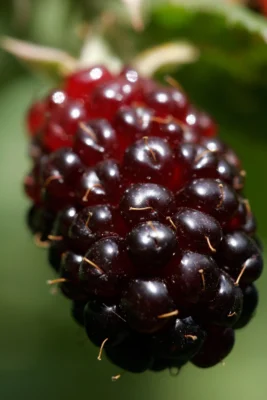
First year canes normally build the following season’s crop. Check whether the previous year’s canes were accidentally removed, and whether the plant is still establishing. More fertiliser will not replace missing fruiting wood.
Remove affected fruit carefully and harvest ripe berries frequently. Open training and adequate spacing help air move through the plant. Avoid leaving damaged fruit trapped among crowded canes.
Inspect tender shoots and leaf undersides. Small populations can often be tolerated or removed by hand. Encourage natural predators and keep watching the plant rather than treating every curled leaf as the same problem.
Water or nutrient problems can resemble disease, but viruses can also affect hybrid berries. Seek a diagnosis if symptoms persist and do not propagate from a declining plant.
Trailing tips can root where they touch soil. Tie them up before they reach neighbouring beds. Remove unwanted rooted tips deliberately, checking that you are not cutting a cane reserved for next year.
Tip layering uses a healthy flexible cane while it remains attached to the parent. In mid to late spring, bury its tip about 7.5cm deep in a small prepared area or suitable pot and keep the rooting area moist.
Wait until a useful root system has formed before separating the new plant, usually by autumn or the following spring. Only use healthy stock. Growing seedlings is not a reliable way to reproduce the original named boysenberry.
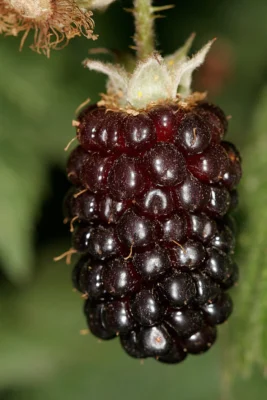
Boysenberry
Choose labelled boysenberry for large dark fruit and its distinctive hybrid flavour. Thornless material is available. The following cards compare related cane fruits; they are alternatives, not boysenberry varieties.
Boysenberry fruit; the photograph does not identify a particular thornless selection.
Photo: Fir0002/Flagstaffotos, GFDL 1.2. Resized and optimised; cropped for display. Resized and cropped for display. This derivative photograph is licensed under GFDL 1.2. Original photograph: Fir0002/Flagstaffotos. Full licence: http://www.gnu.org/licenses/old-licenses/fdl-1.2.html
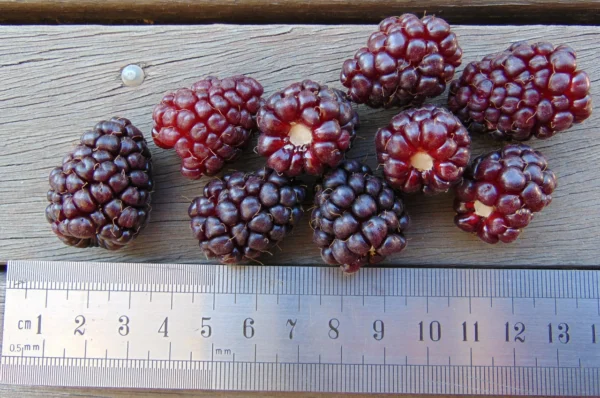
Loganberry, a related hybrid
A separate raspberry and blackberry hybrid, usually with dark red, comparatively sharp fruit. It suits cooking and preserves and needs similar attention to support and replacement canes.
Loganberries shown for comparison; these are not boysenberries.
Photo: Nadiatalent, CC BY-SA 4.0. Resized and optimised; cropped for display. Adapted image under the same licence.
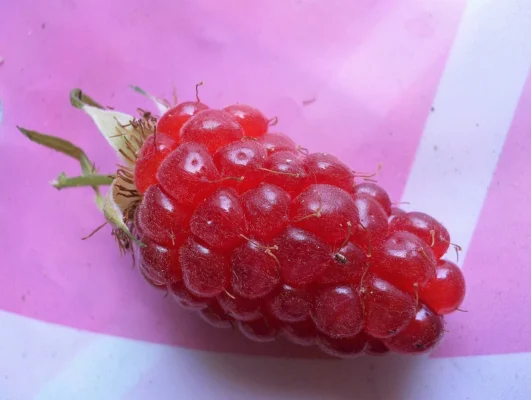
Tayberry, a related hybrid
Another distinct raspberry and blackberry hybrid, with elongated red fruit. It can suit a gardener choosing between summer cane fruits, but plant and label it separately from boysenberry.
Tayberry fruit shown for comparison; these are not boysenberries.
Photo: Albarubescens, CC BY-SA 4.0. Resized and optimised; cropped for display. Adapted image under the same licence.
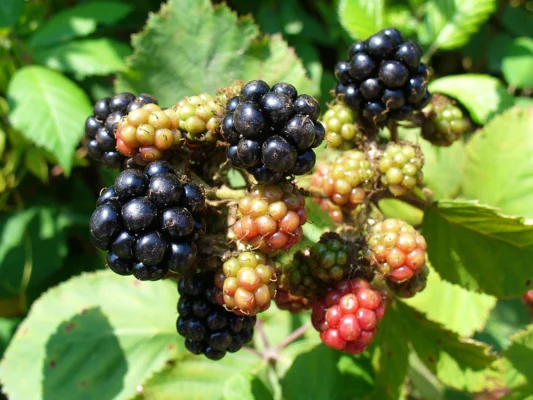
Blackberry, a related crop
Garden blackberries offer many named choices with different growth habits and ripening dates. Compare vigour and harvest season before buying. Compact blackberries may suit limited space better than a trailing boysenberry.
Illustrative blackberry fruit, cultivar unidentified; shown as a related crop, not boysenberry.
Photo: George Chernilevsky, Public domain. Resized and optimised; cropped for display.
Explore the BFFD map for nurseries and fruit specialists. Confirm the plant name, whether it is thornless, its expected spread and current availability before visiting.
Pale flowers attract bees and other visitors. Self fertility means a second variety is unnecessary, but flowers still benefit from insect activity. Avoid covering flowering plants with barriers that prevent access.
Birds may take ripe fruit. If protection is needed, use a properly secured fruit cage or taut netting held away from berries. Check it frequently and avoid loose folds where wildlife could become trapped.
Published by Buy From Farmers Direct. Sources checked 4 October 2026. Growing references: RHS: blackberries and hybrid berries; RHS: Rubus Boysenberry; RHS: pruning and training hybrid berries; Victoriana Nursery: boysenberry; Buckingham Nurseries: thornless boysenberry; Oregon State University: blackberry cane biology; RHS: tip layering; RHS: grey mould; RHS: raspberry and blackberry aphids; RHS: viruses affecting cane fruit; Victoriana Nursery: loganberry comparison; Victoriana Nursery: tayberry comparison. The seasonal timeline uses the shared BFFD Growers Calendar record; adjust timings to your variety and local conditions.
Boysenberry is a particular hybrid cane fruit with several Rubus relatives in its ancestry. Blackberry covers a much wider range of species and garden cultivars. Their support and pruning needs can be similar, but flavour, vigour and cropping dates vary.
No. Boysenberry is self fertile, so one healthy plant can crop. Give that plant adequate space and access for pollinating insects rather than adding a second solely for pollination.
Remove canes that have finished fruiting after the crop, then train the healthy new canes into position. Check for winter damage in spring. Keep track of cane age before making cuts.
Do not depend on it. Initial pruning and establishment commonly mean the first season is spent making new canes. Those canes normally fruit in their second year.
A small pot is a poor long term home for this vigorous trailing fruit. A border with permanent support is more practical. If container growing is essential, discuss a large container and manageable selection with the nursery.
Usually during July, sometimes continuing into August according to conditions. Wait for dark, fully ripe fruit that releases easily. Harvest frequently and handle gently because ripe berries squash readily.
Use the BFFD calendar to plan planting and harvest. Record replacement cane training and first ripe fruit in your own growing notes, and explore the directory for local fruit growing suppliers.
Explore more growing guides: Blackcurrant, Blueberry, Blackberry.
Want to get food independence, support your local grower, get better prices and shop more privately?
Local food isn’t just something you find. It’s something you protect. A free account helps keep local supply visible, supported, and resilient.

….it takes 30 seconds for food lovers and 5 minutes for suppliers
We built this for people who care where their food comes from. For people who want to remain food secure. For Farmers to get to the local people, who deserve a better income and to deliver a better price for you. For the environmentally conscious and the privacy-conscious. An account simply helps us make the map and supplier reach more useful to you, without changing how open it is. You’re always in control.


Find local food. Stay connected to it. Create a free account to support local producers and be part of a growing food network.


