Buckwheat is a quick summer annual for covering empty beds, feeding flower visiting insects or trying a small grain crop. Decide the purpose before sowing: green manure is cut before seed develops, while grain must remain in place longer.
Summer annual
Frost tender
Useful green manure
Flowers for insects
Grain needs processing
| Botanical name | Fagopyrum esculentum |
| Family | Polygonaceae |
| Common type | Common buckwheat |
| Life cycle | Annual |
| Plant group | Broadleaved pseudocereal |
| Typical height | Often 50 to 100cm |
| Position | Open and sunny |
| Soil | Well drained with available moisture |
| Frost tolerance | Very sensitive to frost |
| Main sowing window | May to August for cover |
| Grain trial sowing | Late May to June after frost |
| Propagation | Direct sowing |
| Planting out | Usually unnecessary |
| Sowing depth | About 1 to 1.5cm |
| Spacing | Broadcast or narrow rows |
| Flowers | Usually white or pale pink |
| Leaf shape | Broadly triangular with a heart shaped base |
| Seed shape | Distinctly three sided |
| Nitrogen fixation | Does not fix atmospheric nitrogen |
| Cover crop ending | Before viable seed forms |
| Plant name | Crop type | Spacing |
Sow indoors
Plant outdoors
Harvest
Polytunnel | |||||||||||
|---|---|---|---|---|---|---|---|---|---|---|---|---|---|---|
| Jan | Feb | Mar | Apr | May | Jun | Jul | Aug | Sep | Oct | Nov | Dec | |||
| Buckwheat | Grains | Broadcast at supplier rate; grain rows about 0.15m apart | No activity recorded | No activity recorded | No activity recorded | No activity recorded | Sow indoors | Sow indoors | Sow indoors | Sow indoors, Harvest | Harvest | No activity recorded | No activity recorded | No activity recorded |
Sow indoors: May, June, July, August. Plant outdoors: no months recorded. Harvest: August, September. Polytunnel: no months recorded.
The calendar’s red band uses the generic label “Sow indoors”; for buckwheat it marks direct sowing outdoors. Sow outdoors from May to August for a summer cover crop, once frost risk has passed and soil is warm. Later sowings have less growing time. For a small grain trial, late May to June sowing gives more opportunity to ripen before autumn frost; August and September are indicative seed harvest months, not a guarantee. Green manure cutting is earlier, according to growth and flowering, and is not the seed harvest shown here. There is no routine transplanting or polytunnel requirement.
Use buckwheat in a warm gap between vegetables. Its canopy shades emerging weeds and soft growth is manageable with hand tools. Decide when the bed must return to food production before sowing.
Grain needs cutting, drying, threshing and dehulling. Start with a small patch you can process. Containers can demonstrate the plant but yield little useful grain.
Photo: SAplants, CC BY-SA 4.0. Resized and optimised; cropped for display. Adapted image under the same licence.
Choose an open, sunny position. Deep shade prevents the dense cover you want. Keep a path for inspection without flattening plants.
Aim for a drained seedbed that retains some moisture. Buckwheat can grow on relatively poor ground, but that does not make it a solution for waterlogged, compacted or completely dry soil.
Remove established weeds first. Buckwheat suppresses emerging seedlings more readily than established couch grass or bindweed. Deal with persistent roots separately.
Separate buckwheat from vegetables that still need light and space. Mark the boundary, clearing date and next crop on your bed plan.
Photo: Forest & Kim Starr, CC BY 3.0 US. Resized and optimised; cropped for display.

Direct sow into the final position. Prepare only as much ground as you can sow and water promptly, particularly during a dry spell. Use seed sold for sowing, with a clear species label and instructions.
1.
Choose between green manure, flowers or grain. Write the main purpose on the bed label so another gardener does not cut a seed crop prematurely.
2.
Check local frost risk and soil condition. May is a useful starting point in many gardens, but exposed and northern sites may need to wait longer.
3.
Clear weeds and produce a reasonably fine, firm seedbed. Avoid working saturated soil or creating a dry powdery surface through unnecessary cultivation.
4.
Measure the bed and weigh out seed at the supplier’s rate. Broadcast evenly for cover, or use narrow rows for an organised grain trial.
5.
Cover seed shallowly, around 1 to 1.5cm unless the packet specifies otherwise. Rake gently and press the surface to improve seed contact.
6.
Water with a gentle rose if the seedbed is dry. Maintain moisture during emergence without puddling or washing seed into heaps.
7.
Inspect the emerging stand for bare patches and competing weeds. Decide whether a patch needs resowing while enough warm season remains.
8.
Record emergence and flowering dates. Start checking for developing seed as soon as flowers appear if the crop is intended as green manure.

Watering
Keep emergence even, then inspect soil moisture in dry weather. A brief sprinkling that quickly evaporates may not reach the roots.
Buckwheat can droop during hot afternoons, then recover as conditions cool. Recheck in the morning and inspect the soil before concluding that temporary wilting means the crop has failed. Persistent wilting needs attention.

Feeding
Heavy feeding is usually unnecessary for garden cover. Buckwheat uses existing soil nutrients rather than creating an unlimited supply. Base additions on the bed’s condition and next use.
Excess nitrogen can encourage growth that falls over. Avoid applying several fertilisers in an attempt to accelerate a short cover crop. On very poor ground, seek advice based on a soil test rather than guessing.

Pruning
For green manure, cut or hoe plants while growth is still soft and before viable seed develops. Watch plant development rather than relying on a fixed number of weeks, because warm conditions can advance flowering quickly.
Chop the material and leave it on the surface as a mulch, add it to compost, or incorporate it appropriately. Check afterwards for surviving plants. Keep a small separate flowering strip if insects are a priority and manage its seed carefully.

Winter care
Buckwheat is not a winter cover crop in the UK. Frost normally ends it, and soft residues break down relatively quickly. Plan another suitable cover or mulch if the bed needs protection through the wet months.
Record where mature seed fell and remove unwanted seedlings early next season. Frost killing parent plants does not mean they produced no seed.
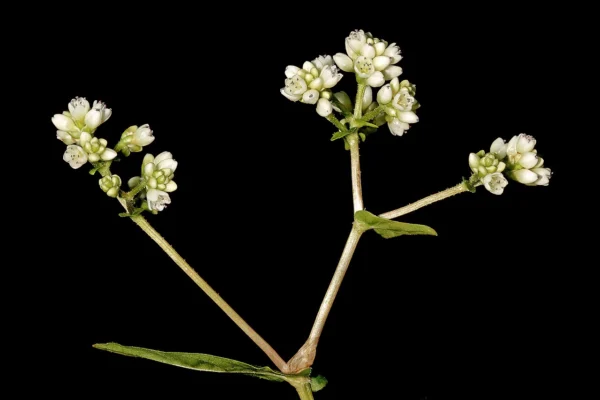
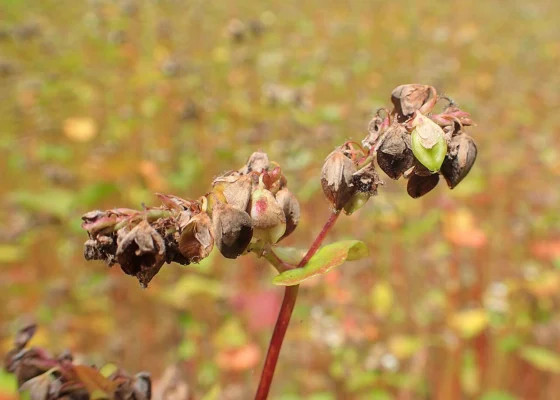
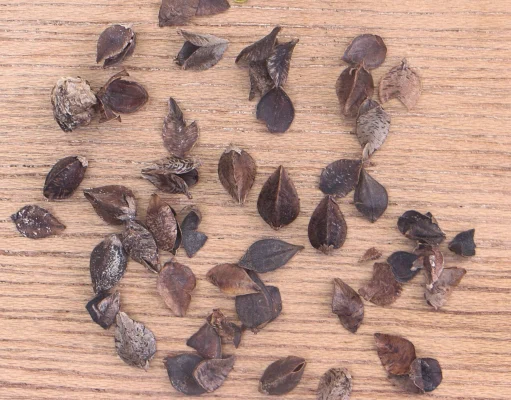
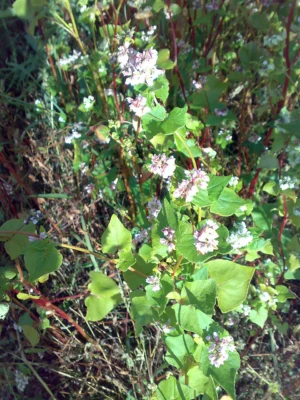
Common buckwheat has branching stems and broadly triangular leaves with a heart shaped base. Small white or pinkish flowers develop in clusters, followed by angular fruits. The familiar grain is contained inside those three sided hulls.
It belongs to Polygonaceae rather than the grass family, so it is botanically distinct from wheat, barley and oats. This guide concerns Fagopyrum esculentum. Do not identify unknown weeds as an edible crop from the common name “buckwheat” alone.
Photo: Krzysztof Ziarnek, Kenraiz, CC BY-SA 4.0. Resized and optimised; cropped for display. Adapted image under the same licence.
Treat sowing dates as a warm season opportunity rather than a deadline. A mild southern garden may offer a longer window than an exposed upland plot. Late sowings are useful only while enough warmth remains for meaningful growth.
A UK grain trial benefits from realistic expectations. Flowering and seed ripening overlap, so the crop will not become uniformly brown all at once. Check mature seed and the weather forecast together when choosing a cutting day.
For a small trial, cut over a sheet when most seed has darkened, then finish drying in a sheltered, airy place. Thresh and clean the seed, remove hulls for food use and ensure it is fully dry before storage. Do not eat sowing seed treated with crop protection products.
Photo: Rasbak, CC BY-SA 3.0. Resized and optimised; cropped for display. Adapted image under the same licence.
Check whether the seedbed dried, seed was buried too deeply or soil was cold. Inspect several gaps before resowing. Restore suitable moisture and contact rather than scattering more seed onto an unchanged surface.
Frost can kill buckwheat even when earlier weather felt summery. Start again only if a sufficient warm window remains, or choose a cover crop suited to the coming season.
An uneven or slow start leaves light for competing plants. Remove larger weeds early and review bed preparation. Buckwheat is a useful suppressor, not a substitute for dealing with established perennial weeds.
Wind, lush growth and heavy rain can flatten stems. Avoid excessive nitrogen, inspect exposed plots and bring forward cover crop cutting when appropriate. Grain plants may lose seed if harvest is delayed.
The previous stand probably set and shed seed. Hoe volunteers while small and avoid another seed crop unless intended. For green manure, move the next cutting date earlier and inspect flowering plants frequently.
Direct sow an identified seed lot and retain its label. The recommended rate may differ with seed size and whether it is drilled or broadcast.
Save only fully mature, clean seed from a healthy crop. Dry it carefully, label the harvest year and test a small sample before committing a whole bed. Common buckwheat uses insect pollination, so isolated plants are a poor basis for a seed saving project.
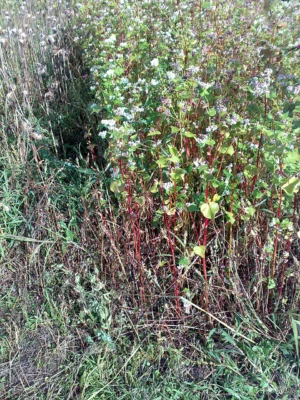
Common buckwheat, variety not stated
The practical cover crop choice is usually Fagopyrum esculentum with no named variety. That label cannot establish cultivar identity. Follow the sowing instructions supplied with the seed lot.
Common buckwheat species photograph; cultivar unidentified.
Photo: Bjoertvedt, CC BY-SA 3.0. Resized and optimised; cropped for display. Adapted image under the same licence.
Mancan
An established Canadian selection with relatively large seed and vigorous growth. It appears in grain and cover crop literature, but named seed availability in the UK should be checked before planning a comparison.
Illustrative Fagopyrum esculentum; not verified as Mancan.
Photo: C T Johansson, CC BY-SA 3.0. Resized and optimised; cropped for display. Adapted image under the same licence.
Manor
Another established Canadian selection, broadly similar to Mancan. Its larger leaves, stems and seed distinguish these types from older small seeded selections. A generic cover crop lot cannot be assumed to be pure Manor.
Illustrative Fagopyrum esculentum; not verified as Manor.
Photo: C T Johansson, CC BY-SA 3.0. Resized and optimised; cropped for display. Adapted image under the same licence.
Koto
A named grain selection in commercial production literature. Check specialist availability and suitability before ordering; its reputation does not guarantee better UK garden yield.
Illustrative Fagopyrum esculentum; not verified as Koto.
Photo: Bjoertvedt, CC BY-SA 3.0. Resized and optimised; cropped for display. Adapted image under the same licence.
Find growers, farm shops and grain producers on the BFFD map, then check availability. Specify whether you need sowing seed, cleaned groats or flour.
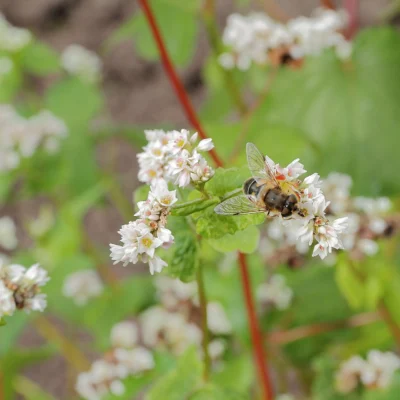
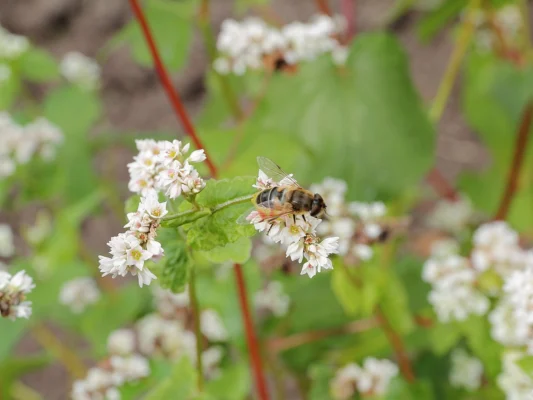
Buckwheat flowers attract bees and other insects, including beneficial wasps and flies. A deliberately managed flowering patch can add a useful summer resource alongside other flowers.
Balance flowers with the need to prevent unwanted seed. Cut the main cover crop on time and, where practical, retain a smaller marked patch. Observe the flowers before cutting and avoid unnecessary pesticide use around visiting insects.
Published by Buy From Farmers Direct. Sources checked 4 October 2026. Growing references: RHS: Green manures; Garden Organic: Green manures; Cotswold Seeds: Sowing and growing buckwheat; University of Missouri Extension: Growing buckwheat for grain or cover crop use; UC Sustainable Agriculture Research and Education Program: Buckwheat; Cornell: Garden green manures; Cornell: Buckwheat, a historic crop with modern opportunities; Thomas Jefferson Agricultural Institute: Buckwheat; Kew Plants of the World Online: Fagopyrum esculentum. The seasonal timeline uses the shared BFFD Growers Calendar record; adjust timings to your variety and local conditions.
May to August is a practical cover crop window once frost risk has passed. Colder sites need later starts and earlier finishes. Grain trials are best planned earlier in that window so seed has time to ripen.
It does not fix atmospheric nitrogen because it is not a legume. Its benefits include ground cover, organic material and nutrient cycling. Those benefits differ from nitrogen fixation by a suitable legume.
Cut while growth is soft and before viable seed forms. Check frequently once flowering begins. The correct moment depends on weather, growth and when the next crop needs the bed.
Retaining plants for grain changes the plan: the bed stays occupied longer, seed may shed and processing is needed. Decide before the scheduled cutting date.
It is very frost sensitive and normally dies in a UK winter. It is useful as summer cover, but choose a suitable winter crop or mulch for longer protection.
No. Common buckwheat is a broadleaved plant in Polygonaceae. Its seed is used like grain, which is why it is called a pseudocereal, but it is not a wheat species.
Use the BFFD growers calendar to plan a warm gap, then note your intended cutting or seed harvest date in your own calendar. Decide the purpose before sowing.
Explore more growing guides: Borage, Butter Bean, Broccoli (Green).
Want to get food independence, support your local grower, get better prices and shop more privately?
Local food isn’t just something you find. It’s something you protect. A free account helps keep local supply visible, supported, and resilient.

….it takes 30 seconds for food lovers and 5 minutes for suppliers
We built this for people who care where their food comes from. For people who want to remain food secure. For Farmers to get to the local people, who deserve a better income and to deliver a better price for you. For the environmentally conscious and the privacy-conscious. An account simply helps us make the map and supplier reach more useful to you, without changing how open it is. You’re always in control.


Find local food. Stay connected to it. Create a free account to support local producers and be part of a growing food network.


