Chicory gives a salad bed colour and a pleasantly bitter bite. Choose the crop you want before sowing: crisp red radicchio, green sugarloaf heads or pale witloof shoots forced from roots in winter. Each belongs to the same broad group, but the route to harvest is different.
Autumn salad crop
Seed grown
Container options
Choose your crop type
Winter forcing option
| Botanical name | Cichorium intybus cultivars |
| Family | Asteraceae |
| Main crops | Radicchio, sugarloaf and forcing chicory |
| Edible part | Leaves and forced young shoots |
| Leaf flavour | Distinctly bitter, varying with type and conditions |
| Position | Sun, with some summer shade if needed |
| Soil | Fertile, moisture retentive and freely draining |
| Calendar sowing | May to July outdoors |
| Planting out | Late May onwards when conditions are suitable |
| Head spacing used | 30cm between plants and rows |
| Forcing root spacing | About 15cm between plants |
| Baby leaf spacing | Closer than plants grown for full heads |
| Main harvest band | September to January across crop types |
| Seed depth | About 1cm; follow the packet |
| Watering priority | Avoid prolonged drying out |
| Container choice | A pot at least 30cm wide |
| Forcing requirement | A suitable variety, established roots and darkness |
| Flower colour | Usually blue |
| Not the same crop | Curly endive, Cichorium endivia |
| Seed saving | Separate named varieties to avoid crossing |
| Plant name | Crop type | Spacing |
Sow indoors
Plant outdoors
Harvest
Polytunnel | |||||||||||
|---|---|---|---|---|---|---|---|---|---|---|---|---|---|---|
| Jan | Feb | Mar | Apr | May | Jun | Jul | Aug | Sep | Oct | Nov | Dec | |||
| Chicory | Salad & leaves | Single 30cm, In row 30cm, Row gap 30cm | Harvest | No activity recorded | No activity recorded | No activity recorded | Sow indoors, Plant outdoors | Sow indoors, Plant outdoors | Sow indoors, Plant outdoors | Plant outdoors | Harvest | Harvest | Harvest | Harvest |
Sow indoors: May, June, July. Plant outdoors: May, June, July, August. Harvest: January, September, October, November, December. Polytunnel: no months recorded.
The calendar shows a straightforward May to July outdoor sowing programme, with planting from late May into summer and a combined September to January harvest. Headed chicory and forced witloof do not follow identical schedules. The 30cm spacing is for full non-forcing heads; use the variety’s instructions for roots or baby leaves. Earlier protected salad sowings are optional and are not represented as a necessary polytunnel season.
Try a short row if you enjoy the flavour and want leaves beyond the main summer lettuce season. A few plants of two different types can teach you more than a large bed of one unfamiliar variety. Note which you prefer raw and which you enjoy cooked.
Forcing witloof is a separate winter project. It requires room to raise roots through summer and somewhere dark to produce the shoots later. If that does not fit your space, start with ordinary radicchio or sugarloaf grown for heads.
Photo: Goldlocki, CC BY-SA 3.0. Resized and optimised; cropped for display. Adapted image under the same licence.
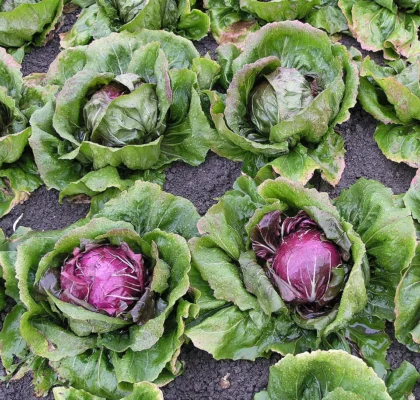
Choose a prepared bed that you can reach easily for watering and picking. Clear weeds before sowing so small seedlings are easy to distinguish. Plan around the space the heads will need rather than the size of the first leaves.
In a hot garden, some summer shade can help keep growth steady. Avoid crowding the plants beneath a crop that takes all their light and water. A shared bed still needs an accessible edge for maintenance.
Containers are useful for a small trial or baby leaves. Use a broad pot with drainage holes and a suitable peat free compost. Place it where you will notice drying compost before the leaves become stressed.
Reserve a labelled area for forcing varieties. Their roots must build up before lifting, so do not treat them as a disposable salad row. Keep the sowing date and cultivar name with the plants.
Photo: Schlaghecken Josef, CC BY-SA 4.0. Resized and optimised; cropped for display. Adapted image under the same licence.
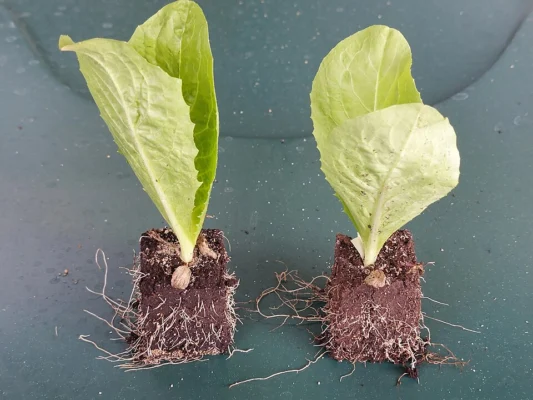
Choose the seed packet by crop type and intended harvest season. Follow its specific dates where they differ from the general calendar.
1.
Decide whether the plants will supply full heads, baby leaves or roots for winter forcing.
2.
Prepare a fine, weed free surface in fertile soil, or fill a suitable container with fresh compost.
3.
Sow thinly about 1cm deep and label the row with the variety and date.
4.
Water gently and keep the seedbed evenly moist while seedlings emerge.
5.
Thin progressively so head forming plants have their intended space, usually about 30cm here.
6.
If starting in modules, move young plants on before they become cramped and acclimatise them before outdoor planting.
7.
Plant on a mild day when the soil is workable, then water around the roots.
8.
Keep a few notes on establishment and protect vulnerable seedlings from slugs and snails.

Watering
Water in dry spells to maintain steady leaf growth. Check the soil rather than judging only from the surface. Containers need particular attention when wind and sunshine increase water loss.
If several plants begin to flower early, look back at cold exposure, dry periods and the sowing date. Consistent watering helps, but it cannot reverse a flowering stem that has already developed.

Feeding
Good soil preparation is usually more useful than repeatedly applying liquid feed. Garden compost can improve the bed before planting. Keep additions moderate and appropriate to the soil you have.
For a long container crop, assess growth and follow the compost or fertiliser instructions if feeding becomes necessary. Do not increase the dose in an attempt to make a late sowing mature instantly.

Pruning
Chicory is harvested rather than pruned like a shrub. Take young leaves carefully if growing a salad crop, or leave the centre undisturbed when a firm head is the goal.
Cut a mature head when it feels firm and is ready for the kitchen. Keep tools clean and remove spoiled outer leaves. A plant already stretching into flower is unlikely to become the dense head originally intended.

Winter care
Choose winter capable varieties and check them regularly in prolonged wet or freezing weather. Remove damaged material without disturbing sound inner leaves. Harvest according to condition rather than leaving every head until the final calendar month.
For witloof, lift suitable roots in autumn, trim the foliage and stand the roots in a moist growing medium in darkness, following the variety’s forcing instructions. Bring manageable batches into production so the shoots are ready when you need them.
Radicchio often develops red or mottled leaves with pale veins; sugarloaf forms a tall green head; forced witloof produces a compact pale shoot. These are useful crop descriptions, but appearance alone does not establish the exact cultivar.
A chicory plant allowed to flower develops branching stems carrying blue flowers. Curly endive is a related but different species. Keep labels when comparing seedlings because their eventual head shape is not obvious at the earliest stage.
Photo: Alvesgaspar, CC BY 2.5. Resized and optimised; cropped for display.

For a first outdoor crop, the May to July sowing window avoids pushing seedlings into the coldest spring conditions. Match the choice to your location and the seed supplier’s harvest season. A late Italian selection may need a longer season than your site provides.
Make small successive sowings where the variety permits. This spreads the risk of one difficult spell of weather and reduces the chance of every head being ready at once. Keep the dates on the row labels until harvest.
Winter forcing allows an indoor harvest from roots grown earlier outdoors. It does not mean sowing a packet in a dark cupboard will produce chicons. The stored energy in a well grown root is central to the process.
Photo: Schlaghecken Josef, CC BY-SA 4.0. Resized and optimised; cropped for display. Adapted image under the same licence.
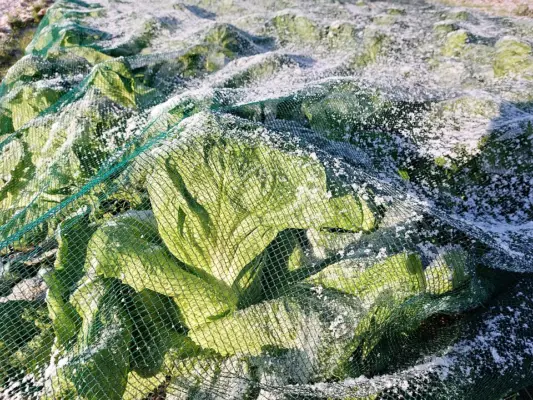
Bolting can follow cold stress, drought or an unsuitable sowing date. Review the growing record and use a variety suited to the planned season. Harvest usable leaves and plan a replacement sowing rather than expecting the flower stem to turn back into a head.
Some bitterness is characteristic. Compare crop types and harvest stages, keep plants growing steadily and try cooking suitable heads. Sugarloaf or correctly forced witloof may suit your taste better than exposed mature leaves.
Inspect for slugs and snails around nearby hiding places, particularly in damp weather. Protect young plants and check regularly after planting. A gap in a row is not by itself evidence of failed germination.
Check variety, spacing and time to maturity. Plants raised for baby leaves or crowded into a shallow pot may not form the heads shown on a packet. Keep the intended harvest method clear from the start.
Check that the forcing place is genuinely dark and that the medium is damp without standing water. Start with sound roots, inspect the batch and remove rotten material. Follow the temperature guidance for the specific forcing selection.
Seed is the normal starting point. Buy a named variety suited to the crop you want and store unused seed according to the packet. Keep different types clearly separated when sowing several trays.
Saving true to type seed needs more planning than simply letting adjacent varieties flower together. Chicory can cross, and plants must be retained beyond the normal harvest. For dependable repeats in a small mixed plot, fresh labelled seed is straightforward.
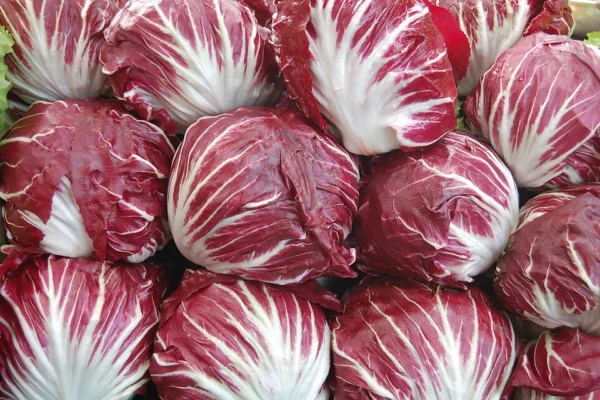
Round red radicchio
Chioggia and Palla Rossa types provide compact red heads with pale veins. Select the particular strain for your sowing season. They make a useful starting point when colour and a firm salad head are the priorities.
Pictured: Chioggia type radicchio. This does not identify a particular packet strain.
Photo: Michel Chauvet, CC BY-SA 3.0. Resized and optimised; cropped for display. Adapted image under the same licence.
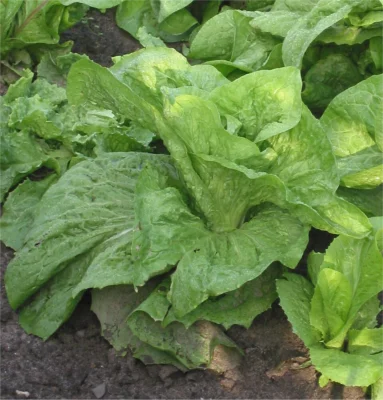
Sugarloaf
Pan di Zucchero and similar selections develop upright green heads with paler inner leaves. They offer a comparatively mild option for autumn salads. Give the full head enough room rather than using baby leaf spacing.
Pictured: sugarloaf chicory; the exact cultivar is unspecified.
Photo: Rasbak, CC BY-SA 3.0. Resized and optimised; cropped for display. Adapted image under the same licence.
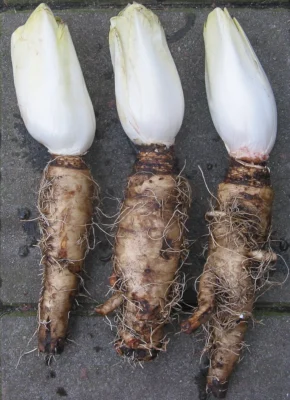
Witloof or Belgian chicory
Choose an explicit forcing variety such as Brussels Witloof. Grow the roots first, then use darkness to produce pale chicons in winter. Ordinary salad seedlings cannot substitute for prepared mature roots.
Pictured: a witloof shoot with its supporting root.
Photo: Rasbak (attributed by Wikimedia Commons), CC BY-SA 3.0. Resized and optimised; cropped for display. Adapted image under the same licence.
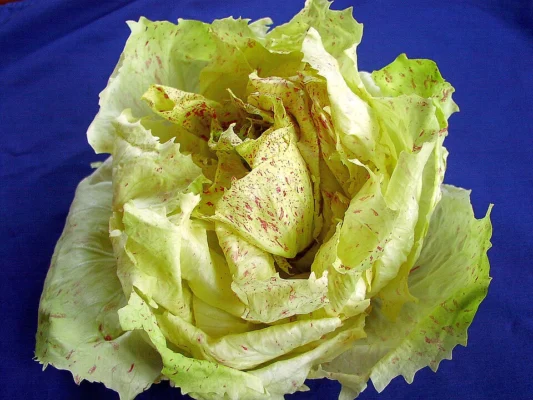
Castelfranco radicchio
This group adds cream and red mottled leaves to the choices. Compare the selected strain’s maturity period with your local season. Expect a different appearance from a tightly rounded red radicchio.
Pictured: Castelfranco type radicchio.
Photo: Goldlocki, CC BY-SA 3.0. Resized and optimised; cropped for display. Adapted image under the same licence.
Use the BFFD map to find local seed and plant suppliers. Ask for the crop type, sowing dates and expected harvest window, especially when buying a variety intended for forcing.
If space allows, a few chicory plants left to flower can provide forage for visiting insects. Keep these separate from the plants you need for firm edible heads so that both aims are realistic.
Check protective mesh regularly and maintain access for harvesting. Observe what is causing damage before choosing a response. Avoid allowing crop covers to become loose or tangled around wildlife.
Published by Buy From Farmers Direct. Sources checked 6 October 2026. Growing references: RHS: Growing chicory; Garden Organic: Chicory; Vital Seeds: Chicory and radicchio; Kings Seeds: Rossa di Treviso; Kings Seeds: Brussels Witloof; RHS: Cichorium intybus. The seasonal timeline uses the shared BFFD Growers Calendar record; adjust timings to your variety and local conditions.
Radicchio is a cultivated leaf form of Cichorium intybus. Sugarloaf and forcing witloof are other chicory crop types, with different appearances and growing methods.
May to July is the straightforward outdoor window used here. Exact dates depend on variety and harvest method. Earlier protected sowings and later salad crops need their own instructions.
Allow around 30cm each way for the full non-forcing heads in this guide. Forcing roots and baby leaves can be closer. Check the particular packet before thinning.
Yes. Use a broad container with drainage and keep the compost evenly moist. Decide whether you want baby leaves or a full head before choosing the number of plants.
Grow a forcing variety outdoors to develop substantial roots, then lift and prepare those roots for growth in darkness. Follow its forcing instructions and keep the medium moist without waterlogging.
Cold stress, drying out, unsuitable timing or the plant reaching its reproductive stage can cause flowering. Check your variety and sowing record. A flowering plant will not reliably form the intended compact head.
Keep a note of the crop type as well as the sowing date in your calendar. That makes it much easier to judge whether you are waiting for a firm head, picking young leaves or preparing roots for a winter harvest.
Explore more growing guides: Celery, Carrot, Cabbage (Summer).
Want to get food independence, support your local grower, get better prices and shop more privately?
Local food isn’t just something you find. It’s something you protect. A free account helps keep local supply visible, supported, and resilient.

….it takes 30 seconds for food lovers and 5 minutes for suppliers
We built this for people who care where their food comes from. For people who want to remain food secure. For Farmers to get to the local people, who deserve a better income and to deliver a better price for you. For the environmentally conscious and the privacy-conscious. An account simply helps us make the map and supplier reach more useful to you, without changing how open it is. You’re always in control.


Find local food. Stay connected to it. Create a free account to support local producers and be part of a growing food network.


