Herb fennel brings feathery foliage, yellow flowerheads and an aniseed flavour to the garden. Green and bronze forms are perennials grown for leaves and seeds, rather than swollen white bulbs. Give one a sunny permanent position with room to develop.
Perennial culinary herb
Green or bronze foliage
Full sun
Leaves and aromatic seeds
Allow room for tall stems
| Botanical name | Foeniculum vulgare |
| Family | Apiaceae |
| Plant type | Herbaceous perennial |
| Main forms | Green fennel and bronze fennel |
| Bronze cultivar | Purpureum, also sold as Bronze |
| Crop | Leaves and seeds, not bulbs |
| Typical mature height | Around 1.5 to 2m, depending on conditions |
| Mature spread | Often 50cm to 1m |
| Position | Full sun with shelter from strong winds |
| Soil | Free draining, without persistent winter wet |
| Indoor sowing | March to April |
| Outdoor sowing | April to June as soil warms |
| Planting young plants | May to June after acclimatising |
| Suggested permanent spacing | Around 60cm, with more room for broad clumps |
| Leaf harvest | Spring to early autumn while fresh growth is available |
| Ripe seed harvest | Late summer to autumn |
| Container | Large, deep, stable pot with drainage holes |
| Winter habit | Old stems die back; growth returns from the base |
| Self seeding | Frequent unless seedheads are removed |
| Routine feeding | Usually unnecessary in garden soil |
| Plant name | Crop type | Spacing |
Sow indoors
Plant outdoors
Harvest
Polytunnel | |||||||||||
|---|---|---|---|---|---|---|---|---|---|---|---|---|---|---|
| Jan | Feb | Mar | Apr | May | Jun | Jul | Aug | Sep | Oct | Nov | Dec | |||
| Fennel (Herb) | Herbs | Single plant 60cm, In row 60cm, Row gap 90cm; allow more room for broad mature clumps | No activity recorded | No activity recorded | Sow indoors | Sow indoors, Harvest | Sow indoors, Plant outdoors, Harvest | Sow indoors, Plant outdoors, Harvest | Harvest | Harvest | Harvest | Harvest | No activity recorded | No activity recorded |
Sow indoors: March, April, May, June. Plant outdoors: May, June. Harvest: April, May, June, July, August, September, October. Polytunnel: no months recorded.
The harvest band combines spring and summer leaves from established plants with ripe seed in late summer and autumn. Seeds are not ready in April. March sowing needs protection; outdoor sowing waits for warmer soil. A permanent polytunnel position is unnecessary.
A sunny herb bed or mixed border suits fennel where height is welcome. One established plant can supply occasional leaf pickings.
Choose Florence fennel if you want white bulbs. This tall herb needs more space than its fine foliage suggests, so plan around its mature size.
Photo: Alvesgaspar, CC BY-SA 3.0. Resized and optimised; cropped for display. Adapted image under the same licence.
Choose full sun, placing tall stems where they will not shade lower crops. Leave an accessible edge for picking.
Drainage matters most in winter. Avoid a hollow that collects water and consider a raised growing area where heavy soil remains wet for long periods.
Shelter helps keep tall flower stems upright. Put supports in early, before plants lean across paths.
Use a stable pot at least 30cm wide and deep, preferably larger. Keep drainage holes clear and expect more watering than in the ground.
Photo: Shi Annan, CC BY-SA 4.0. Resized and optimised; cropped for display. Adapted image under the same licence.
Direct sowing avoids root disturbance. Move plants raised under cover into their final position while young.
1.
Check the packet or label for herb fennel or Foeniculum vulgare. Bronze fennel is suitable for the same culinary uses as the green form.
2.
Prepare a sunny patch and remove persistent weeds. Decide where the mature plant will stand before sowing.
3.
Sow outdoors from mid spring as soil warms, or start earlier in individual deep modules or small pots of peat free seed compost.
4.
Cover seed to about 1cm deep, water gently and keep the sowing evenly moist. Give indoor seedlings bright light after emergence.
5.
Thin outdoor seedlings before they crowd each other. For a permanent clump, allow about 60cm between plants and increase this if neighbouring plants need more room.
6.
Acclimatise plants raised under cover to outdoor conditions. Avoid putting soft young growth straight into a cold windy bed.
7.
Plant without breaking up the rootball, at its previous depth. Water in and check the surrounding soil during the first dry spells.
8.
Label the plant and let it establish before taking substantial harvests. Remove unwanted seedlings early in later years.

Watering
Water new plants when the soil begins to dry while their roots are establishing. Once rooted into garden soil, fennel tolerates dry conditions much better than a recently planted specimen.
Check pots regularly throughout the growing season. Water thoroughly when needed, let excess drain away and avoid leaving the container in a water filled saucer.

Feeding
Garden plants usually need no regular fertiliser. Heavy feeding is not a substitute for sunlight, drainage or enough growing room.
For a permanent container, monitor growth and the condition of the compost. Refresh exhausted growing material and use a modest suitable feed only when needed, following its label.

Pruning
Snip young leaves as required, leaving plenty of foliage on a small plant. Removing developing flower stems favours leafy growth, but also removes the future seed crop and flowers for insects.
For seed, retain selected heads until they ripen. Cut them before seed scatters, finish drying in an airy place over paper and store only when thoroughly dry. Remove other heads before they shed.

Winter care
Leave sound dead stems standing for winter interest if they are not obstructing a path. Cut them down in late winter before fresh shoots develop, taking care around the crown.
A wet root zone is a greater practical concern than untidy stems. Keep containers draining freely, and avoid repeatedly watering a dormant plant whose compost is already moist.
Herb fennel has finely divided threadlike foliage, branching upright stems and yellow flowers grouped into broad umbels. Bronze forms have darker young foliage that may become greener as it ages.
Use a labelled cultivated plant for the kitchen. These photographs describe a garden crop and are not a way to identify unfamiliar wild plants. Herb fennel is also distinct from the bulb forming Florence type.
Photo: Ryan Hodnett, CC BY-SA 4.0. Resized and optimised; cropped for display. Adapted image under the same licence.
In colder or exposed gardens, let the ground warm before direct sowing. A sheltered start can help young plants, but move them on promptly rather than allowing roots to become tightly confined.
In milder districts, growth and flowering may begin earlier. Judge leaf picking by the fresh growth available, and judge seed harvest by ripeness rather than a fixed date.
A permanent allotment edge or herb border makes management easier. Remove unwanted seedlings from nearby paths and beds each spring.
Photo: Javier martin, Public domain. Resized and optimised; cropped for display.
That is normal for herb fennel. Choose a Florence fennel variety if your aim is a swollen white vegetable bulb; extra feeding will not change the type you planted.
Remove surplus flowerheads before seed ripens and pull unwanted seedlings while small. Leave selected heads only where you can manage the resulting seed fall.
Check for slugs and snails around vulnerable seedlings and new shoots. Protect young plants and inspect nearby hiding places before assuming that poor germination is the cause.
Inspect the growing tips and flower stems. Small colonies can often be tolerated while predators arrive; remove badly affected tips if necessary and avoid routine spraying of flowering plants.
Check whether roots are sitting in saturated soil or a blocked pot. Improve the growing position rather than adding feed to a plant whose roots cannot function properly.
Seed is the simplest route to new plants. Save some from a known cultivated fennel, label it and keep it dry, or buy fresh seed of the form you want.
Small self sown seedlings can be moved with care, keeping soil around their roots. An established plant with a long root system is harder to relocate successfully, so choose its permanent position early.
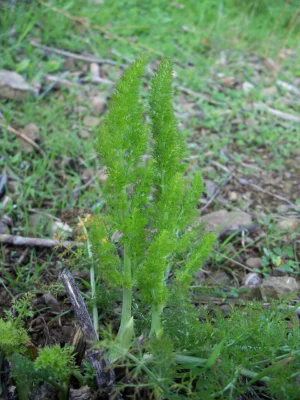
Common green fennel
The familiar green form provides aromatic foliage, yellow summer flowers and seeds. It works as a useful kitchen herb and a tall border plant.
Young green herb fennel growing in the ground.
Photo: Eugene Zelenko, CC BY-SA 4.0. Resized and optimised; cropped for display. Adapted image under the same licence.
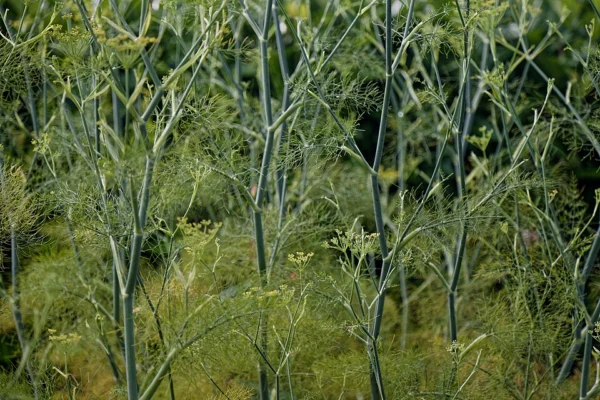
Bronze fennel
Purpureum brings bronze tinted young leaves to the same basic plant. Its colour makes it particularly useful among flowers, and the foliage is also suitable for cooking.
Purpureum growing in a West Sussex garden; mature foliage can become greener.
Photo: Acabashi, CC BY-SA 4.0. Resized and optimised; cropped for display. Adapted image under the same licence.
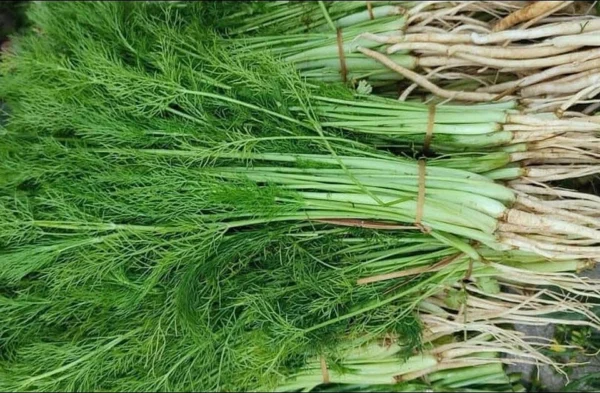
Grow mainly for leaves
Harvest lightly and remove flower stems if fresh foliage is the priority. Leave a plant time to recover between substantial cuts.
Harvested fennel plants illustrating the fine foliage used as a herb.
Photo: စာကလေး SarKaLay, CC0. Resized and optimised; cropped for display.
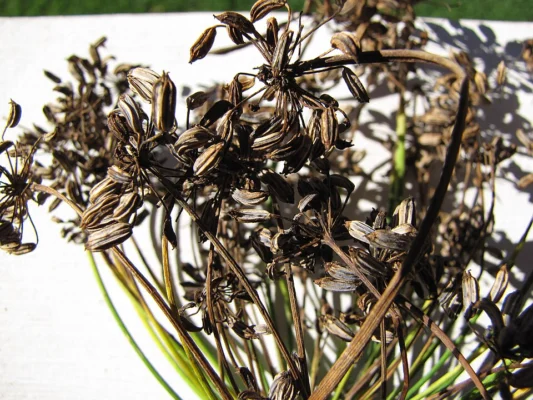
Grow for flowers and seed
Leave selected stems to flower and ripen. This gives a different seasonal crop from repeated leaf cutting, with time for insects to visit the flowers.
Fennel seed illustrating the crop collected after flowering.
Photo: Forest and Kim Starr, CC BY 3.0 us. Resized and optimised; cropped for display. Forest & Kim Starr
Look for a clearly labelled green or bronze herb fennel plant or seed packet. Check the mature size before buying, and choose Florence fennel separately if bulbs are the crop you want.
Fennel’s open yellow flowers attract hoverflies and other visiting insects. Keeping some flowering stems lets a kitchen herb also provide a useful summer food source for garden wildlife.
Balance seed saving with room for other plants. A few retained heads may be welcome, but a whole plant shedding seed beside a small growing bed can create extra weeding the following spring.
Published by Buy From Farmers Direct. Sources checked 6 October 2026. Growing references: RHS: growing herb fennel; RHS: bronze fennel profile; Jekka’s: bronze fennel; RHS: growing and using fennel; RHS: Giant Bronze fennel profile; RHS: bronze fennel for wildlife. The seasonal timeline uses the shared BFFD Growers Calendar record; adjust timings to your variety and local conditions.
Herb fennel is a tall perennial grown for aromatic leaves and seeds. Florence fennel is grown as a vegetable for its swollen stem base. Buy the correct type for your intended crop.
Yes, it normally regrows from the base in spring. Clear old stems before new shoots emerge and provide good drainage.
Yes, leaves from correctly labelled cultivated bronze fennel are used as a culinary herb in the same way as green fennel. Pick fresh young foliage as needed.
Yes. Use a large, deep, stable pot with drainage holes in a sheltered sunny position. Check moisture regularly.
Remove dead stems in autumn or winter, or leave them until late winter for structure. Finish before new spring shoots grow. Remove flowerheads earlier if preventing self seeding is the priority.
Usually from late summer into autumn, when the seedheads mature and the seeds turn brown. Collect before they scatter, dry thoroughly and keep the stored seed dry.
Allow sunlight, drainage and room to grow. Keep selected stems for seed and take modest leaf pickings from the rest.