Common flax links summer flowers with two familiar materials: linen and linseed. Linum usitatissimum is an annual grown outdoors in Britain. Choose seed for your intended use: a branching garden plant and a dense stand for fibre need different spacing and harvest decisions.
Hardy annual
Sow directly outdoors
Summer flowers
Fibre or linseed types
Match spacing to your purpose
| Botanical name | Linum usitatissimum |
| Family | Linaceae |
| Common names | Common flax or linseed |
| Life cycle | Annual |
| Typical height | Often around 60 to 100cm, depending on selection |
| Flower colour | Usually blue; white forms also occur |
| Flowering season | Summer |
| Individual flowers | Short lived, with further buds opening |
| Position | Open and sunny |
| Soil | Prepared soil with good drainage |
| Main sowing window | Late March to early May |
| Sowing method | Directly in the final position |
| Garden seed depth | About 3mm, following the packet |
| Spring germination | Approximately 10 to 25 days, weather dependent |
| Garden display spacing | Thin to about 15cm |
| Garden row spacing | About 30cm |
| Fibre crop density | Much closer; use the supplier’s rate per square metre |
| Harvest period used | July to September, depending on purpose and ripeness |
| Main propagation | Seed |
| Polytunnel requirement | None for the spring outdoor crop |
| Plant name | Crop type | Spacing |
Sow indoors
Plant outdoors
Harvest
Polytunnel | |||||||||||
|---|---|---|---|---|---|---|---|---|---|---|---|---|---|---|
| Jan | Feb | Mar | Apr | May | Jun | Jul | Aug | Sep | Oct | Nov | Dec | |||
| Flax | Grains | Single 15cm for garden display, In row 15cm, Row gap 30cm; fibre crops use denser packet rates | No activity recorded | No activity recorded | Sow indoors | Sow indoors | Sow indoors | No activity recorded | Harvest | Harvest | Harvest | No activity recorded | No activity recorded | No activity recorded |
Sow indoors: March, April, May. Plant outdoors: no months recorded. Harvest: July, August, September. Polytunnel: no months recorded.
The calendar follows a spring sown outdoor crop, so there is no separate transplanting or polytunnel band. The listed 15cm spacing is for a garden display, not a fibre bed. Fibre growers sow much more densely. Harvest months cover possible stem and seed collection; fibre is generally taken earlier than fully ripe seed.
A modest sunny patch lets you observe flax flowers, capsules and the stems used for linen. It suits a border, allotment experiment or craft project.
Decorative plants can be spaced individually; fibre production needs a uniform close stand. A container demonstrates the life cycle but offers only a small harvest.
Photo: Roger Ward, CC BY 2.0. Resized and optimised; cropped for display.
Choose an open position with plenty of light. Plants leaning out from deep shade are harder to keep upright and make a less even crop.
Prepare a fine seedbed and remove established weeds before sowing. Tiny flax seedlings need a fair start rather than immediate competition with vigorous perennial roots.
Avoid ground that remains waterlogged. Wait for heavy soil to become workable instead of compressing a wet bed while trying to meet a calendar date.
For a pot, use a generous drained container and suitable compost. Put it in its final bright position before sowing so developing roots need not be disturbed later.
Photo: Rasbak, CC BY-SA 3.0. Resized and optimised; cropped for display. Adapted image under the same licence.
These steps describe a small garden planting. If growing for fibre, replace the ornamental spacing and shallow sowing depth with the instructions supplied for your fibre seed lot.
1.
Buy clearly labelled Linum usitatissimum seed and identify whether it is intended for garden display, linseed or fibre.
2.
In spring, wait until the soil is warming and workable. Prepare a level surface with small crumbs rather than large clods.
3.
Mark the patch and its purpose. For a measured fibre project, record the bed area and weigh the seed at the supplier’s recommended rate.
4.
For a garden display, sow thinly about 3mm deep in rows around 30cm apart, or follow the packet’s own depth instructions.
5.
Cover lightly and water gently if needed. Avoid washing seed into heaps or letting the surface form a hard dry crust.
6.
Watch for seedlings over the following weeks. Hand weed carefully while the flax is small, keeping the row label in place.
7.
Thin a garden display to about 15cm between plants. Do not apply this wide spacing to a densely sown fibre stand.
8.
Record flowering and capsule development. Prepare a dry place for harvested material before the stems or seeds become ready.

Watering
Keep the sowing surface moist enough for even germination. Once rooted, outdoor plants need less attention, but inspect a young stand during prolonged dry weather.
Containers dry faster than beds and need separate checks. Water when necessary and let surplus drain; alternating severe drought with saturation is unhelpful.

Feeding
Flax normally needs little supplementary feeding in a reasonably fertile garden bed. Avoid repeated high nitrogen feeds that encourage weak, lush growth.
Soil preparation still matters. For a fibre project, assess the soil and follow the grower’s advice; neither heavy feeding nor exhausted ground guarantees useful stems.

Pruning
No routine pruning is required. For flowers alone, removing spent blooms may prolong interest. Leave the capsules to develop when seed or decorative seed heads are the aim.
For long fibre, plants are usually pulled to preserve stem length. Rippling removes capsules; retting then loosens fibres from the stem. These are separate craft stages, and practical instruction is useful before processing a whole crop.

Winter care
Spring sown common flax completes its life cycle in one season. Clear the finished crop after taking the material you want and plan a fresh sowing for the following year.
Keep saved seed and completely dried stems labelled and dry. Autumn sowing needs a separate plan suited to the variety and site; it is not the routine covered by this calendar.
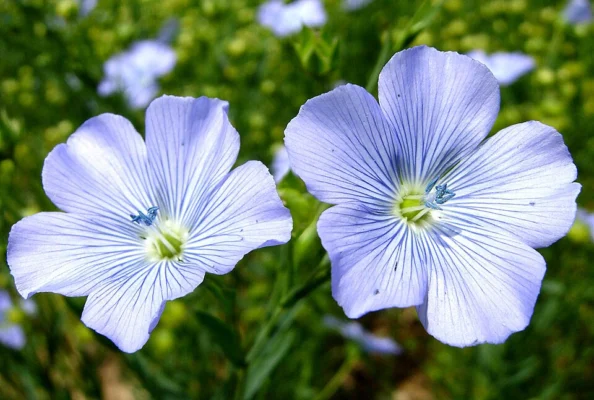
Common flax has slender stems, narrow leaves and five petalled flowers, usually pale blue with fine darker veins. Rounded capsules follow the flowers and contain the seeds.
On light soils, watch moisture during establishment. An early sowing gains nothing if seed lies in cold wet ground or germinating roots then dry out.
Scottish trials demonstrate that variety and conditions affect flax performance. Results from one site do not guarantee the same yield in another garden.
For a community project, label and measure separate plots. Record variety, sowing, flowering and harvest to compare what actually worked locally.
Photo: Colin, CC BY-SA 4.0. Resized and optimised; cropped for display. © User:Colin / Wikimedia Commons
Check sowing depth, moisture and the condition of the seedbed. Thick crusts, clods and seed washed into hollows can leave gaps. Use fresh labelled seed for a small comparison sowing if necessary.
Deal with established weeds before sowing and remove new competitors while they are small. Pull gently so their roots do not lift neighbouring flax seedlings.
Review light, exposure and excessive feeding. For a small decorative patch, discreet support may help. For fibre, avoid repeatedly handling a lodged stand and record the conditions for next season.
Each flower is short lived, so lost petals need not indicate a problem. Check for fresh buds and developing capsules before deciding the entire plant has failed.
Material was probably packed while damp or stored without enough air. Separate affected material, improve drying and do not seal a fresh harvest into airtight containers.
Direct sowing avoids root disturbance and is simpler than raising hundreds of individual plants for a small fibre bed.
For saved seed, leave healthy plants until capsules are brown and dry. Collect, finish drying and label the seed. These plants may mature later than the main fibre crop.
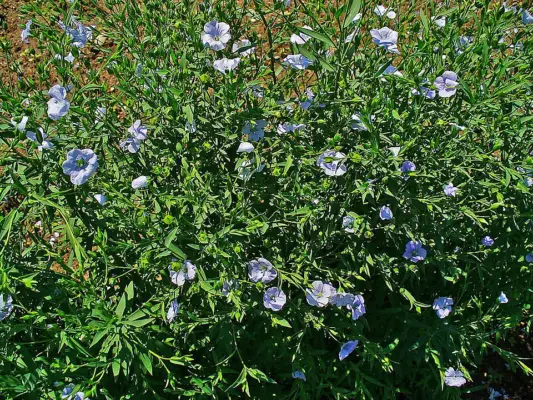
Blue flowered common flax
A labelled packet of Linum usitatissimum makes a simple garden introduction. Give plants room to branch and enjoy the flowers and rounded seed heads.
Common flax flowering in a garden; no named cultivar is recorded.
Photo: H. Zell, CC BY-SA 3.0. Resized and optimised; cropped for display. Adapted image under the same licence.
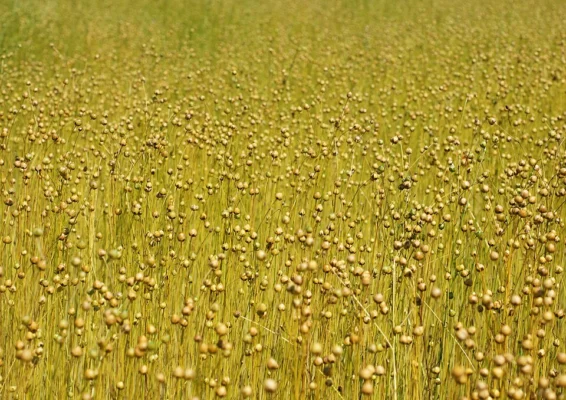
Linseed selections
These are selected mainly for seed production and tend to be shorter and more branched than long fibre types. Choose a named sowing variety when seed is the main objective.
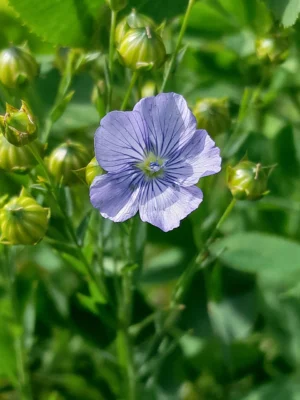
Illustrative flax seed capsules; the photographed variety is not identified.
Photo: Hans Hillewaert, CC BY-SA 3.0. Resized and optimised; cropped for display. © Hans Hillewaert
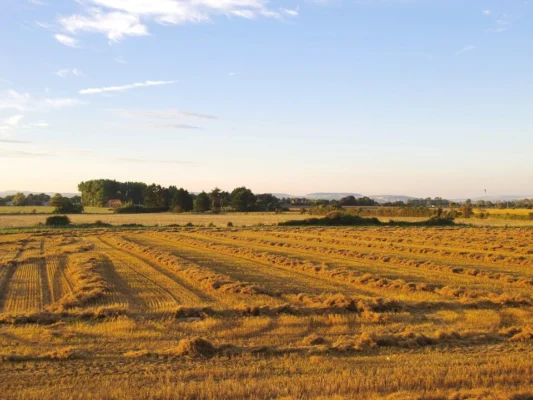
Fibre flax
Select seed specifically for a fibre project. Avian, Delta and Tango have featured in UK trials, but seed availability and local advice should guide your choice.
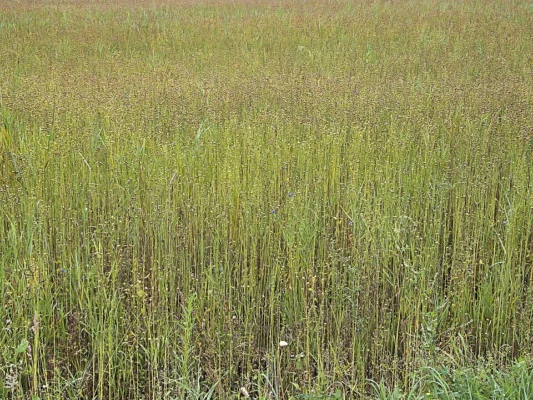
Harvested flax at Atherington; not identified as any of the named trial varieties.
Photo: Stefan Czapski, CC BY-SA 2.0. Resized and optimised; cropped for display. The flax harvest at Atherington by Stefan Czapski

White flowered forms
Common flax can also have white flowers. Flower colour alone does not tell you whether a selection is best for seed or fibre, so read the supplier’s description.
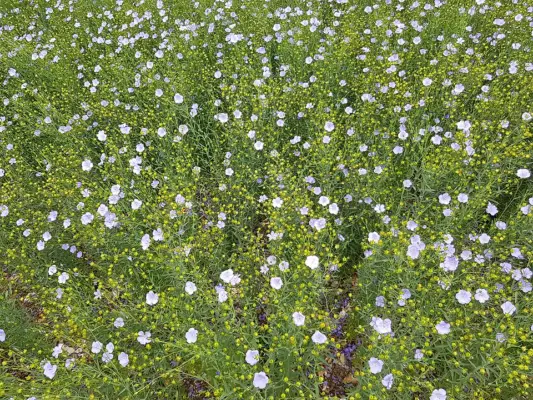
White flowered flax photographed in Dorset; the cultivar is not recorded.
Photo: Trish Steel, CC BY-SA 2.0. Resized and optimised; cropped for display. Trish Steel
Check the botanical name and intended use. For fibre, measure the area and retain the seed lot’s instructions. A small garden packet suits a first ornamental trial.
Flowers can receive insect visits, but a short flowering crop cannot provide a whole season of forage. Keep a varied planting around the flax patch.
Inspect problems before intervening and avoid routine spraying. A small garden stand also offers an opportunity to observe which insects visit the flowers and capsules.
Published by Buy From Farmers Direct. Sources checked 6 October 2026. Growing references: RHS: common flax identity; Chiltern Seeds: common flax garden cultivation; Flaxland: growing and sowing fibre flax; Wild Fibres: harvesting flax for fibre; Wild Fibres: retting flax; Innovative Farmers: UK flax trials; Innovative Farmers: January 2026 field update; Amanda Haran: a community flax growing project. The seasonal timeline uses the shared BFFD Growers Calendar record; adjust timings to your variety and local conditions.
Both names refer to Linum usitatissimum. In growing practice, fibre flax is selected for useful stems and linseed mainly for seeds, so variety and spacing differ.
Late March to early May is a practical spring window once the soil warms. Direct sowing in the final position avoids disturbing the roots.
The plant is an annual. It can shed seed and produce new seedlings, but that is a new generation rather than the same plant returning as a perennial.
For a garden display, around 15cm between plants and 30cm between rows is a useful guide. Fibre beds need much closer sowing at the seed supplier’s measured rate.
The timing depends on your aim. Fibre stems are often taken while yellowing, whereas seed plants are left until capsules are brown and dry. Follow crop development rather than a fixed date.
Yes, for flowers or a small demonstration. Use a drained container in good light and monitor water. A pot will not provide the quantity or uniformity of a dedicated fibre bed.
Choose the purpose and begin with a manageable patch. Clear labels, good records and careful drying help turn a flowering crop into a useful seed or fibre project.
Want to get food independence, support your local grower, get better prices and shop more privately?
Local food isn’t just something you find. It’s something you protect. A free account helps keep local supply visible, supported, and resilient.

….it takes 30 seconds for food lovers and 5 minutes for suppliers
We built this for people who care where their food comes from. For people who want to remain food secure. For Farmers to get to the local people, who deserve a better income and to deliver a better price for you. For the environmentally conscious and the privacy-conscious. An account simply helps us make the map and supplier reach more useful to you, without changing how open it is. You’re always in control.


Find local food. Stay connected to it. Create a free account to support local producers and be part of a growing food network.


