Goji berries grow on a vigorous deciduous shrub with arching stems, purple flowers and orange-red fruit. Lycium barbarum grows outdoors in the UK, but a healthy bush does not guarantee a heavy harvest. Give it sun, space and time to establish, while controlling its spreading shoots.
Deciduous fruit shrub
Full sun for fruit
Train arching stems
Control root suckers
Late summer and autumn berries
| Botanical name | Lycium barbarum |
| Family | Solanaceae |
| Common names | Goji berry, wolfberry, Duke of Argyll’s tea tree |
| Habit | Vigorous scrambling shrub |
| Foliage | Deciduous, with narrow green leaves |
| Typical mature height | Around 3m, depending on selection and pruning |
| Potential spread | Around 4m or more if unmanaged |
| Preferred position | Full sun |
| Soil | Well drained; avoid persistent waterlogging |
| Minimum spacing | At least 2m; allow additional room for access |
| Planting options | Established nursery plants or rooted cuttings |
| Useful planting windows | Spring and late summer to autumn |
| Flowers | Small purple flowers in summer |
| Pollination | Self-fertile |
| First fruit | Often after 2 to 3 years; timing varies |
| Typical UK harvest | August to October, before damaging frost |
| Edible harvest | Fully ripe fruit from a correctly identified plant |
| Support | Wires, trellis or a sturdy framework |
| Main maintenance issue | Vigorous stems and root suckers |
| Container growing | Possible with regular watering, feeding and pruning |
| Plant name | Crop type | Spacing |
Sow indoors
Plant outdoors
Harvest
Polytunnel | |||||||||||
|---|---|---|---|---|---|---|---|---|---|---|---|---|---|---|
| Jan | Feb | Mar | Apr | May | Jun | Jul | Aug | Sep | Oct | Nov | Dec | |||
| Goji Berry | Soft fruit | Single at least 200cm, In row at least 200cm, Row gap allow mature spread and access | No activity recorded | No activity recorded | Sow indoors, Plant outdoors | Sow indoors, Plant outdoors | Plant outdoors | No activity recorded | No activity recorded | Plant outdoors, Harvest | Plant outdoors, Harvest | Plant outdoors, Harvest | Plant outdoors | No activity recorded |
Sow indoors: March, April. Plant outdoors: March, April, May, August, September, October, November. Harvest: August, September, October. Polytunnel: no months recorded.
Plant in spring or late summer to autumn, avoiding frozen, saturated or drought-dry ground. March and April sowing refers to an optional indoor seed project. Harvest dates apply to established fruiting bushes. Bought plants need no seed-sowing stage, and a polytunnel is not essential.
Goji suits a gardener with room for an energetic shrub and willingness to prune it. A sunny fence makes the flexible stems easier to organise and berries easier to reach.
Consider the mature size before planting a small garden. Root suckers and long shoots need attention, and a cool or shaded site may produce more foliage than useful fruit.
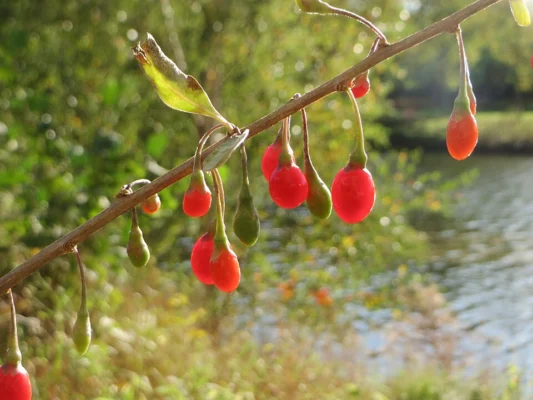
Photo: Sten Porse, CC BY-SA 3.0. Resized and optimised; cropped for display. Adapted image under the same licence.
Choose the sunniest practical position. Although the shrub tolerates some shade, good light supports fruiting.
Provide well-drained soil and space around the root area. Improve poor structure with suitable organic matter before planting rather than leaving roots in a waterlogged pocket.
Keep spiny arching stems away from narrow paths. Fit strong supports before growth becomes tangled, leaving access for tying shoots, pruning and picking.
A substantial container can help manage the root system, but increases dependence on watering and feed. Use a stable drained pot and suitable loam-based compost; pot on gradually as the plant grows.
Photo: Sten Porse, CC BY-SA 3.0. Resized and optimised; cropped for display. Adapted image under the same licence.
Start with a correctly labelled nursery plant. Retain its botanical name and cultivar details for matching pruning and cropping advice.
1.
Check the eventual size and choose a permanent sunny position with room to manage suckers and arching stems.
2.
Install wires or another strong support before planting where you intend to train the bush.
3.
Water the root ball thoroughly. Acclimatise plants raised under cover before planting outdoors.
4.
Prepare a broad planting hole no deeper than the root ball. Loosen compacted sides and remove competing perennial weeds.
5.
Set the plant at its previous soil level, keeping the base of the stems clear. Gently loosen tightly circling roots if necessary.
6.
Backfill and firm carefully, then water well. Leave at least 2m between plants, with more space where their training system requires it.
7.
Mulch the root area, leaving a clear gap around the stems. Keep moisture reliable during establishment.
8.
Tie useful stems loosely to the support and retain the label. Check ties and remove unwanted spreading shoots as the plant develops.

Watering
Water regularly until established, especially after spring planting. Later drought tolerance is not a reason to let a young root ball dry out.
Established bushes still benefit from water during fruit development in dry weather. Containers need frequent checks, while drainage must remain clear through wet periods.

Feeding
Apply a suitable general fertiliser in spring if needed, following its label. Judge the result by balanced growth and flowering rather than trying to produce the longest possible shoots.
Feed container plants during the growing season with a suitable fruiting-plant feed at its stated rate. Repeatedly fertilising an already vigorous bush may not resolve poor cropping.

Pruning
In early spring, remove dead, damaged or congested growth and shorten overlong stems to a useful side branch. Keep a clear framework and tie in suitable replacement growth.
Hard renovation stimulates vigorous shoots but can reduce the immediate crop. Named selections may have particular pruning instructions, so follow their supplier’s guidance rather than shearing every stem to the same height.

Winter care
Established plants are hardy in suitable UK conditions. Leaf fall is normal; it does not mean the shrub has failed. Check supports after winter winds.
Give young seedlings and newly rooted cuttings protection during their first winter. Container roots are more exposed than those in the ground, so protect vulnerable pots during severe weather and prevent waterlogging.
Lycium barbarum has narrow leaves, flexible woody stems that can carry spines, and small purple flowers. Its berries become orange-red as they ripen. These features describe a labelled cultivated plant, not a complete wild identification key.
Goji belongs to the nightshade family, which also includes plants with poisonous fruit. Do not identify an unknown berry by colour or a photograph alone. Harvest only fully ripe fruit from a confirmed edible goji plant.
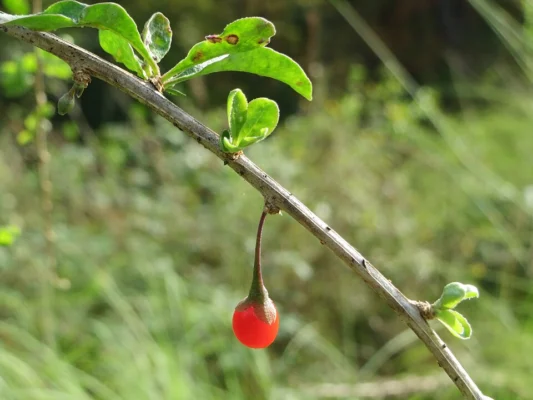
Photo: TeunSpaans, CC BY-SA 3.0. Resized and optimised; cropped for display. Adapted image under the same licence.
In warmer gardens, a sunny wall or fence offers a practical training position. Pick ripe berries as they become ready, handling them gently because they can bruise and darken.
In cooler districts, survival through winter does not guarantee fruit ripening. Allow establishment time, choose a suitable named selection and observe how it crops at your site.
Coastal gardens may suit established goji because it tolerates salt-laden winds. Young plants still need establishment care, and exposed stems should be secured before they become long and heavy.
Photo: TeunSpaans, CC BY-SA 3.0. Resized and optimised; cropped for display. Adapted image under the same licence.
Review plant age, light, pruning and the variety’s expected behaviour. A young or heavily renovated bush may need time. More fertiliser is not an automatic answer to poor fruiting.
These can be root suckers. Remove unwanted shoots near their point of origin while manageable, taking care around the parent roots. Check regularly rather than allowing a thicket to develop.
Inspect affected shoots and look for predators. Remove small colonies by hand where practical and avoid routine treatment of the whole shrub.
Check root moisture, drainage and whether the pot is crowded with roots. A large canopy can dry a small container rapidly; saturated compost can also damage roots.
Birds may take berries as they colour. If protection is necessary, fit netting securely over a framework, inspect it regularly and remove it when harvesting is finished.
Seed can be sown under cover in spring, following the packet’s instructions. Seedlings require growing on and patience, and they do not reliably reproduce the characteristics of a named selection.
Softwood cuttings in early summer, hardwood cuttings in winter and rooted layers offer alternatives. Keep the identity of the parent plant with each new plant and protect young material until established.
No.1 Lifeberry
Sweet Lifeberry
Selected for fruit flavour and sold as a self-fertile goji. Check the nursery’s size and care information when comparing it with unnamed seedlings.
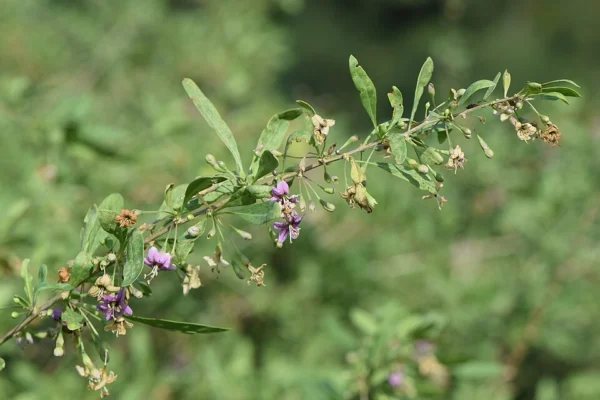
A flowering Lycium barbarum branch; this is not verified Sweet Lifeberry.
Photo: Krzysztof Ziarnek, Kenraiz, CC BY-SA 4.0. Resized and optimised; cropped for display. Adapted image under the same licence.
Big Lifeberry
Instant Success
Lubera’s selection was chosen for earlier cropping and a more compact habit. Treat its name as a variety description, not a guarantee of an immediate harvest in every UK garden.
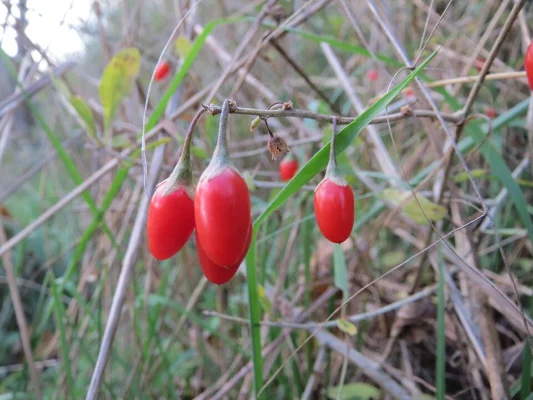
Illustrative goji berries; not a confirmed Instant Success plant.
Photo: AnRo0002, CC0. Resized and optimised; cropped for display.
Ask the nursery about mature size, cropping age and pruning needs. Choose a healthy labelled plant and retain its details for future care.
Birds may enjoy part of the berry crop. Decide whether to share the harvest or protect selected trained branches, ensuring any netting remains taut and clear of animals.
Check a dense shrub for nesting birds before pruning. Keep the plant within its intended growing area by managing suckers and disposing of unwanted rooted material responsibly.
Published by Buy From Farmers Direct. Sources checked 6 October 2026. Growing references: RHS goji berry growing guide; RHS Lycium barbarum plant profile; Pomona Fruits: goji pollination and harvest season; RHS shrub planting advice; RHS controlling root suckers; RHS container growing advice; Chiltern Seeds: growing goji from seed; Thompson & Morgan: No.1 Lifeberry; Proven Winners: Sweet Lifeberry; Proven Winners: Big Lifeberry; Lubera: Instant Success selection. The seasonal timeline uses the shared BFFD Growers Calendar record; adjust timings to your variety and local conditions.
Yes. Established Lycium barbarum is hardy in suitable conditions. It needs sun and drainage, and reliable fruiting still depends on age, variety and the growing season.
Many plants begin after about two or three years, although named selections and growing conditions vary. Do not judge a newly planted bush by its first season.
Goji is self-fertile, so a second plant is not normally essential. Good light, suitable care and a mature plant remain important for cropping.
Yes, with a stable drained container, appropriate compost and regular watering and feeding. Expect to manage the stems and repot as the root system develops.
Goji can produce shoots from its roots. Remove unwanted suckers while small and keep checking the surrounding ground rather than allowing separate bushes to establish.
Harvest fully coloured, ripe berries, usually from late summer into autumn before frost. Use fruit only from a correctly identified edible goji plant and handle it gently.
Give goji a sunny site and a clear structure. Establish it carefully, control spreading growth and record its flowering and harvest to guide next season’s care.
Explore more growing guides: Cranberry, Blueberry, Blackcurrant.