Cranberries combine trailing evergreen foliage, delicate flowers and tart autumn fruit in a plant that can be grown in a container. Their essential requirement is acidic growing conditions with reliable moisture. This guide covers American cranberry, Vaccinium macrocarpon, using rooted plants rather than the much slower route from seed.
Evergreen fruit plant
Acid loving
Good in containers
Autumn berries
Keep roots consistently moist
| Botanical name | Vaccinium macrocarpon |
| Family | Ericaceae |
| Common name | American cranberry |
| Habit | Low trailing evergreen shrub |
| Origin | North America |
| Height | Usually low growing, within roughly 10 to 50cm |
| Position | Sun or light partial shade |
| Soil requirement | Acidic, lime free and moisture retentive |
| Indicative pH | Around 4.5 is suitable |
| Container compost | Ericaceous compost |
| Preferred watering | Collected rainwater where available |
| Usual planting material | Rooted cuttings or potted plants |
| Planting windows used | March to May and September to November |
| Spacing for small rooted plants | About 30cm; allow more for larger plants |
| Flowering season | Summer |
| Harvest window | September and October, depending on ripeness |
| Crop establishment | Allow several seasons for a substantial crop |
| Winter appearance | Foliage can turn bronze or red |
| Greenhouse requirement | Normally grown outdoors |
| Main uses | Sauces, preserves and baking |
| Plant name | Crop type | Spacing |
Sow indoors
Plant outdoors
Harvest
Polytunnel | |||||||||||
|---|---|---|---|---|---|---|---|---|---|---|---|---|---|---|
| Jan | Feb | Mar | Apr | May | Jun | Jul | Aug | Sep | Oct | Nov | Dec | |||
| Cranberry | Soft fruit | Single 30cm for small rooted plants, In row 30cm, Row gap 30cm | No activity recorded | No activity recorded | Plant outdoors | Plant outdoors | Plant outdoors | No activity recorded | No activity recorded | No activity recorded | Plant outdoors, Harvest | Plant outdoors, Harvest | Plant outdoors | No activity recorded |
Sow indoors: no months recorded. Plant outdoors: March, April, May, September, October, November. Harvest: September, October. Polytunnel: no months recorded.
The calendar is for planting established cranberry plants, so there is no routine seed sowing band. Spring and autumn are useful planting windows when the ground is workable and moisture can be maintained. Harvest dates depend on variety, season and local frost. No polytunnel period is needed for an ordinary outdoor planting.
Cranberries work well where a low evergreen plant and a modest fruit crop are both welcome. A pot makes it possible to provide the right compost even on a chalky site.
Set realistic harvest expectations. A newly bought small plant first needs to establish its roots and spread; a decorative pot will not immediately supply a large preserving crop.
Photo: Douglas Goldman, CC BY-SA 4.0. Resized and optimised; cropped for display. Adapted image under the same licence.
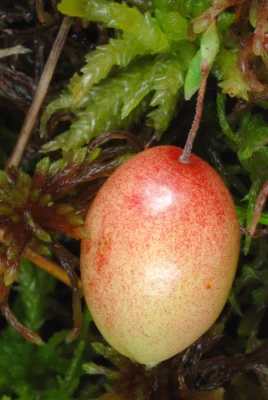
Test garden soil before planting directly into a bed. On alkaline ground, a container of ericaceous compost is generally easier to manage than repeatedly trying to alter the surrounding soil.
Choose sun or light partial shade, with enough light to support flowering and fruit ripening. Avoid hiding a small cranberry under the dense canopy of a much larger plant.
Use a pot with drainage and sufficient compost volume to resist rapid drying. Trailing stems can soften the edge, but keep them clear of heavily used paths.
Keep roots consistently moist without leaving the pot submerged. Flooded commercial harvest photographs describe a harvesting method, not a requirement to grow a home cranberry permanently underwater.
Photo: Kristine Paulus, CC BY 2.0. Resized and optimised; cropped for display.
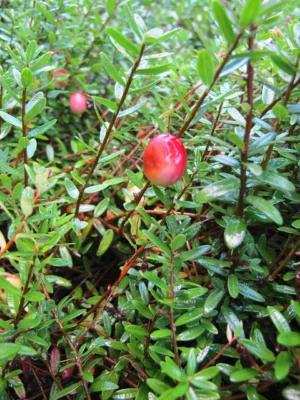
Start with a named potted plant or healthy rooted cutting. Prepare its permanent growing conditions before disturbing the roots.
1.
Choose Vaccinium macrocarpon and retain the cultivar label. Check the supplier’s hardiness advice for your specific plant.
2.
Prepare an acidic bed or a drained container with suitable ericaceous compost. Remove competing perennial weeds first.
3.
Water the root ball before planting if it is dry. Handle fine roots gently and avoid tearing a small plant apart unnecessarily.
4.
Plant at approximately the same depth as in its nursery pot, firming lightly around the root ball.
5.
For a carpet of small rooted plants, about 30cm spacing is a useful starting point. Give larger nursery plants the space advised by their supplier.
6.
Water in and check moisture closely while new roots establish. Use rainwater where possible, especially in hard water areas.
7.
Keep weeds from smothering the spreading stems. Work by hand so shallow roots are not damaged by vigorous hoeing.
8.
Label the plant and record its first flowers and fruit. Allow it to establish before expecting a generous harvest.

Watering
Check containers throughout the year, including during dry winter spells. Evergreen foliage still loses moisture, and rain may miss a pot standing close to a wall.
Collected rainwater helps avoid repeated additions of lime in hard water districts. Do not let a plant wilt while waiting for rainwater; also check drainage if the compost stays saturated.

Feeding
Use a suitable ericaceous feed only as needed and at the label rate. Cranberries do not benefit from being treated like heavily fed summer vegetables.
Excess nitrogen can favour spreading foliage over fruit. If a plant grows strongly but crops poorly, review light, pollination and pruning as well as feeding.

Pruning
After harvesting, remove dead material and thin congested or excessively long growth lightly where needed. Preserve useful upright shoots and avoid shearing the whole planting indiscriminately.
Keep the canopy open enough for light and air. A small pot may need only modest tidying, while an older tangled patch requires more selective attention.

Winter care
The plant remains outdoors in normal suitable UK conditions, with foliage often changing to bronze or red. Hardiness varies by cultivar, so follow its label rather than treating every cranberry as identical.
Protect exposed containers from prolonged severe freezing and drying winds when necessary. Maintain drainage and moisture; moving a hardy plant into a warm living room is not its normal winter routine.
American cranberry has slender trailing stems, small evergreen leaves and distinctive pink flowers with swept back petals. Rounded berries develop after flowering and colour as autumn approaches.
It differs from common cranberry, Vaccinium oxycoccos, and from unrelated plants sold as cranberry bush. Buy a correctly labelled fruit plant rather than identifying an unknown garden berry from colour alone.
Photo: Torresmeraz, CC BY-SA 4.0. Resized and optimised; cropped for display. Adapted image under the same licence.

On naturally acidic ground, cranberries can become part of an outdoor fruit planting if moisture is reliable. The main challenge is keeping weeds and more vigorous neighbours from overwhelming the low stems.
In chalk and limestone districts, containers offer control over the compost. Regular checks are still needed because hard water and repeated drying can gradually undermine good initial planting conditions.
In colder or exposed gardens, choose a locally suitable cultivar and a sheltered position. Protect flowers from late frost where practical, then remove temporary covers so pollinating insects can reach them.
Photo: Superraptor123, CC BY-SA 4.0. Resized and optimised; cropped for display. Adapted image under the same licence.
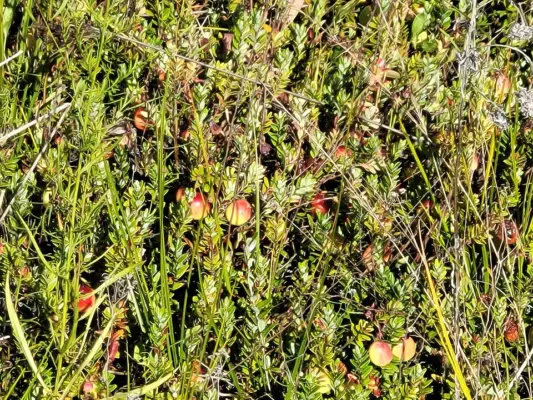
Check compost acidity, water quality and root condition. Unsuitable pH can interfere with nutrient uptake; adding ordinary fertiliser without checking the cause may not solve it.
Inspect root moisture promptly. Small pots, sunny walls and drying winds can create drought even when the wider garden appears damp.
Moisture is essential, but stagnant saturated conditions can damage roots. Check blocked drainage holes and avoid leaving a container permanently standing underwater.
Young plants need time. Also review light, excessive nitrogen, frost at flowering and insect access before assuming a particular variety cannot fruit.
Look for the actual cause, including birds or caterpillars. If fruit protection is necessary, use securely fitted wildlife safe netting and inspect it regularly.
Softwood cuttings in late spring or semi-ripe cuttings in early summer can be rooted under suitable protected conditions. Keep the cultivar identity with each batch.
For a first crop, bought rooted plants are simpler. Seedlings take patience and do not reliably reproduce a named variety, so seed is better treated as a separate experiment.
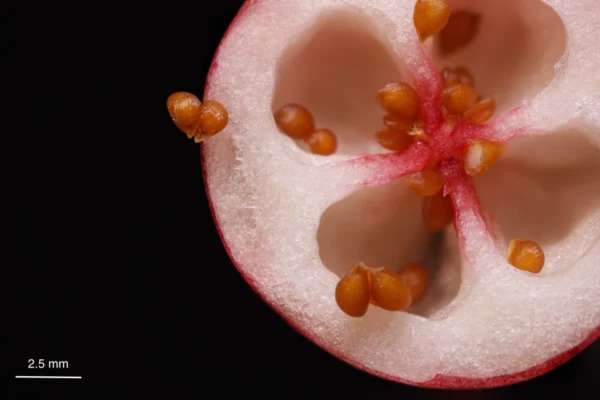
Pilgrim
A familiar choice for containers, with trailing foliage and red autumn fruit. It is sold as self-fertile, although insect visits still help a successful crop.
Illustrative cranberry fruit cut open to reveal its seeds; not confirmed Pilgrim.
Photo: Torresmeraz, CC BY-SA 4.0. Resized and optimised; cropped for display. Adapted image under the same licence.
Early Black
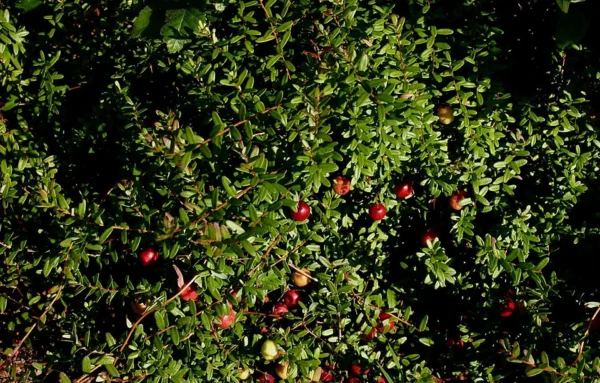
An established named variety with relatively small fruit. Ask the nursery about its local ripening performance if your garden has a short autumn season.
Illustrative fruiting cranberry ground cover; the cultivar is not recorded.
Photo: Sten Porse, CC BY-SA 3.0. Resized and optimised; cropped for display. Sten
Stevens
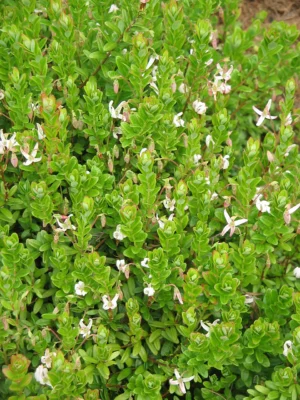
A widely grown selection worth comparing when fruit size and cropping are priorities. Suitable soil and moisture remain more important than a name alone.
Illustrative flowering American cranberry plants; not confirmed Stevens.
Photo: Meneerke bloem, CC BY-SA 3.0. Resized and optimised; cropped for display. Adapted image under the same licence.
Redstar
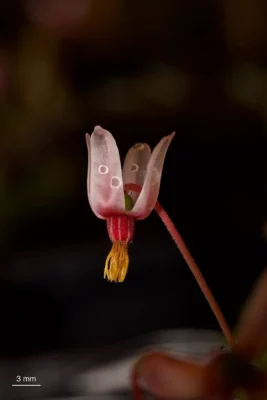
Another option listed for UK gardens and container growing. Compare the mature habit and supplier’s site advice before choosing a pot or planting position.
An American cranberry flower; this image is not identified as Redstar.
Photo: Torresmeraz, CC BY-SA 4.0. Resized and optimised; cropped for display. Adapted image under the same licence.
Choose healthy rooted plants from a fruit nursery and check the botanical name, cultivar and hardiness information. Buy suitable ericaceous compost at the same time if your soil is alkaline.
Insect visits to cranberry flowers support fruit development. Keep the planting accessible during flowering and include other suitable flowers around the garden.
A low dense patch provides cover, but fruit protection must be carefully fitted to avoid trapping wildlife. Check any netting often and remove it when the harvest is finished.
Published by Buy From Farmers Direct. Sources checked 6 October 2026. Growing references: RHS American cranberry profile; RHS cranberry growing feature; RHS Pilgrim cranberry profile; Pomona Fruits: Pilgrim cranberry; UMass: home garden cranberry propagation and care. The seasonal timeline uses the shared BFFD Growers Calendar record; adjust timings to your variety and local conditions.
No. Keep their acidic root zone consistently moist, with drainage. Commercial wet harvesting does not mean a home plant should remain submerged.
Yes. Use a drained container and ericaceous compost, keep moisture reliable and choose a suitable named variety such as Pilgrim or Redstar.
They need acidic, lime free conditions. A pH around 4.5 is suitable. Use a soil test before planting into the garden.
A few berries may appear early, but allow several seasons for establishment and a more useful crop. Plant size, light and growing conditions all affect the timing.
Pick when the berries have developed the variety’s mature colour, usually in September or October. Plan around local frost and use sound ripe fruit for the kitchen.
Bronze or reddish winter foliage can be normal. Sudden wilting, severe yellowing or dead stems still warrant checking moisture, drainage and root conditions.
Get the compost and watering right from the beginning. A healthy cranberry can then provide flowers, changing foliage and an autumn harvest in surprisingly little space.
Explore more growing guides: Blueberry, Blackcurrant, Azalea.
Want to get food independence, support your local grower, get better prices and shop more privately?
Local food isn’t just something you find. It’s something you protect. A free account helps keep local supply visible, supported, and resilient.

….it takes 30 seconds for food lovers and 5 minutes for suppliers
We built this for people who care where their food comes from. For people who want to remain food secure. For Farmers to get to the local people, who deserve a better income and to deliver a better price for you. For the environmentally conscious and the privacy-conscious. An account simply helps us make the map and supplier reach more useful to you, without changing how open it is. You’re always in control.


Find local food. Stay connected to it. Create a free account to support local producers and be part of a growing food network.


